


Mastering the Art of Closing Deals: Your Expert Playbook
For over two decades in the high-stakes world of B2B sales, I've witnessed firsthand the exhilaration of a signed contract and the crushing disappointment of a deal that just wouldn't close. I've seen brilliant products, compelling presentations, and dedicated sales teams falter at the final hurdle, leaving revenue on the table and morale in decline. The truth is, while pitching is an art, mastering the science of closing deals is where true sales mastery lies.
The problem isn't always a lack of interest or an inferior product; often, it's a breakdown in process, a misinterpretation of buyer psychology, or a failure to navigate the complex emotional and logistical landscape of the final sales stages. Many sales professionals focus intensely on generating leads and delivering pitches, only to find their pipeline choked with 'stalled' or 'no decision' opportunities, leading to unpredictable revenue and significant frustration.
In this definitive guide, I'll share the frameworks, battle-tested strategies, and psychological insights I've developed and refined over my career. You'll learn not just what to do, but *why* it works, empowering you to approach closing deals with renewed confidence, precision, and a significantly higher success rate. We'll move beyond generic advice to actionable steps that will transform your sales outcomes.
Understanding the Modern Buyer's Journey
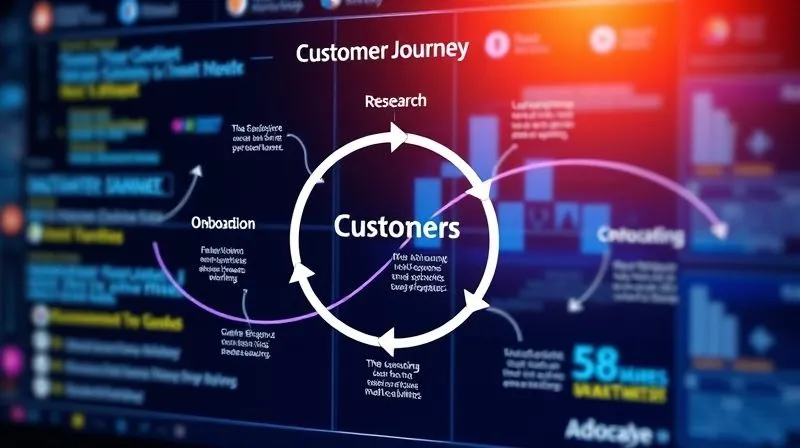
Before we can effectively close, we must understand the landscape we're operating in. The buyer's journey has evolved dramatically. Today's customers are more informed, more empowered, and often prefer to conduct significant research independently before ever engaging with a sales professional. They don't want to be 'sold to'; they want to be guided and advised.
The Shift from Seller-Centric to Buyer-Centric
Gone are the days when a salesperson held all the information. Now, buyers can access reviews, competitor analyses, and pricing comparisons with a few clicks. This means our role has shifted from being information providers to being trusted advisors who can synthesize complex information, provide unique insights, and help buyers navigate their internal decision-making processes.
"The modern buyer's journey isn't a linear path; it's a dynamic, multi-touch exploration. Sales professionals must meet buyers where they are, offering value at every interaction, not just at the point of sale." - My observation from countless client engagements.
This shift necessitates a proactive approach to understanding their challenges, goals, and internal stakeholders long before the final negotiation. We need to be present and valuable throughout their entire consideration phase.
Pre-Emptive Objection Handling: Beyond the Reactive "No"
One of the biggest hurdles in closing deals is the dreaded objection. Most salespeople treat objections as roadblocks that appear unexpectedly. In my experience, many objections are entirely predictable and can be handled before they even arise, or at least mitigated significantly.
Mapping Common Objections to Solutions
Think of your sales process as a chess game. You anticipate your opponent's moves. Similarly, in sales, you should map out the most common objections your prospects raise – price, timing, perceived complexity, need for internal consensus, fear of change, or competition – and integrate their solutions into your narrative early on.
- Identify Core Objections: List the top 3-5 objections you hear most frequently.
- Understand the Root Cause: Is 'too expensive' really about budget, or is it about a lack of perceived value? Is 'bad timing' a genuine issue or a polite brush-off?
- Integrate Solutions Early: Weave answers to these objections into your initial presentations and discovery calls. For example, if 'integration complexity' is common, highlight your seamless onboarding process and dedicated support team from the outset.
- Frame as Benefits: Instead of waiting for the objection, proactively present the solution as a benefit. "Many clients worry about X, which is why we've designed Y to ensure Z outcome."
- Practice Active Listening: When an objection does arise, don't interrupt. Listen fully, acknowledge their concern, and then reframe or offer a tailored solution.
Case Study: How Stellar Solutions Streamlined Their Sales Cycle
Stellar Solutions, a B2B SaaS company, struggled with prolonged sales cycles, often losing deals late in the pipeline due to 'integration concerns' and 'lack of internal champions'. By implementing a pre-emptive objection handling strategy, they transformed their approach. They started by conducting detailed discovery calls to identify potential integration roadblocks and key stakeholders early. Their sales reps then proactively addressed these points in their proposals and presentations, often including testimonials from clients with similar integration challenges and offering a dedicated 'integration specialist' during the trial phase. This resulted in a 25% reduction in average sales cycle length and a 15% increase in their close rate over two quarters, primarily by neutralizing common objections before they could derail the deal.
The Power of Value Proposition Reinforcement
In the final stages of closing deals, buyers often need a strong, clear reminder of *why* they started this journey with you. It's not just about features; it's about the tangible value and return on investment (ROI) you deliver.
Quantifying ROI and Impact for Your Client
Many sales professionals talk about value, but few truly quantify it in terms understandable and compelling to the client's specific business context. This is where your expertise shines. Don't just say you save them money; show them *how much* money, *over what period*, and *what the impact* will be on their bottom line or strategic goals.
- Connect to Their Goals: Reiterate how your solution directly addresses the core problems and aspirations discussed during discovery.
- Demonstrate Tangible ROI: Use data, case studies, and projections to show monetary savings, revenue generation, efficiency gains, or risk reduction.
- Highlight Intangible Benefits: Don't forget the softer benefits like improved employee morale, enhanced brand reputation, or competitive advantage, but always link them back to business outcomes.
- Use Their Language: Frame the value in terms of their industry, their specific metrics, and their strategic objectives.
As marketing guru Seth Godin often says, "People don't buy what you do; they buy why you do it and what it does for them." Reinforce that 'why' relentlessly and with data.
According to a study published in the Harvard Business Review, sales professionals who effectively articulate and quantify value early in the sales process achieve significantly higher win rates and command better pricing. This isn't just theory; it's a proven method for solidifying commitment.
| Metric | Current State | With Our Solution | Impact |
|---|---|---|---|
| Annual Cost Savings | $50,000 (Estimated) | $150,000 (Guaranteed) | 200% Improvement |
| Time-to-Market Reduction | 6 Months | 2 Months | 67% Faster |
| Customer Satisfaction (NPS) | 45 | 65+ | Significant Brand Boost |
Negotiation as Collaboration, Not Confrontation
Negotiation is often seen as a battle of wills, a zero-sum game where one party wins and the other loses. This adversarial mindset is a major impediment to effectively closing deals, especially in long-term B2B relationships. My philosophy is rooted in collaborative negotiation, where both parties seek a mutually beneficial outcome.
Strategies for Win-Win Outcomes
The goal isn't to 'beat' the client on price or terms, but to find common ground that satisfies their core needs while protecting your profitability and value. This approach builds trust and sets the stage for a successful long-term partnership.
- Understand Their Interests, Not Just Positions: A client's 'position' might be a lower price, but their 'interest' might be budget certainty, faster implementation, or better support. Address the interest.
- Expand the Pie: Instead of focusing solely on price, introduce other variables like extended support, training packages, phased implementation, or additional features that add value without drastically reducing your margin.
- Be Prepared to Walk Away: This isn't about bluffing; it's about knowing your minimum acceptable terms. Having a clear BATNA (Best Alternative to a Negotiated Agreement) gives you power and prevents you from making bad deals.
- Focus on the Relationship: Maintain a respectful, empathetic tone throughout. Remember, you're trying to build a partnership, not just close a transaction.
- Anchor High, but Justifiably: Start your negotiation from a position that reflects the full value of your solution, but be ready to justify every aspect of that value.
"Effective negotiation isn't about being tough; it's about being prepared, empathetic, and creative enough to find solutions that serve both parties' core interests." - A principle I've lived by for years.
As Chris Voss, author of 'Never Split the Difference', often advises, focus on active listening and tactical empathy to uncover hidden motivations and build rapport during negotiations. This shifts the dynamic from confrontation to understanding, making closing deals a much smoother process.
Mastering the Art of the "Soft Close" and Trial Closes
Many sales professionals wait for the grand finale to ask for the business. This is a mistake. The best closers are constantly testing the waters, gauging commitment, and addressing concerns incrementally throughout the sales cycle. These are often referred to as 'trial closes' or 'soft closes'.
When and How to Test the Waters
A soft close isn't about forcing a decision; it's about identifying where the prospect stands and what remaining obstacles exist. It provides valuable feedback and allows you to address concerns before they become deal-breakers.
- After a Successful Demo: "Based on what you've seen today, does this solution align with the goals we discussed for [specific goal]?"
- Following a Value Proposition Discussion: "If we can deliver X and Y, as discussed, is there any reason you wouldn't move forward with us?"
- After Presenting Pricing: "Does this investment feel appropriate given the ROI we've outlined?"
- When Discussing Implementation: "Assuming we move forward, what would be your ideal start date for implementation?"
- During Objection Handling: "If we can successfully resolve this concern about Z, would you be ready to proceed?"
The key is to ask open-ended questions that invite feedback, not just a 'yes' or 'no'. This approach makes closing deals feel like a natural progression rather than an abrupt demand. Look for buying signals – questions about implementation, contracts, timelines, or specific features for their team – and use these as opportunities for a trial close.
The Critical Role of Post-Proposal Follow-Up
You've sent the proposal. Now what? This is where many deals die – not from a lack of interest, but from a lack of strategic follow-up. The period immediately after sending a proposal is crucial for maintaining momentum and guiding the prospect towards a decision.
Strategic Nurturing vs. Annoying Persistence
There's a fine line between helpful follow-up and becoming a nuisance. Your follow-up strategy should be value-driven, not just checking in. Every touchpoint should add value, answer potential questions, or reinforce the solution's benefits.
- Initial Check-in (24-48 hours): A brief email or call to confirm they received the proposal and to offer to answer any initial questions. "Just checking in to ensure you received the proposal. I'm available if any initial questions have popped up."
- Value Reinforcement (Day 3-5): Share a relevant case study, a testimonial from a similar client, or a link to a valuable resource that reinforces a key benefit outlined in the proposal. "I thought you might find this case study relevant, as it highlights how [similar company] achieved [specific result] using our solution, much like we discussed for your team."
- Addressing Internal Concerns (Day 7-10): Offer to present to their internal team or provide additional information for their stakeholders. "Often, at this stage, internal teams have specific questions. I'd be happy to schedule a brief call to address any points for your colleagues."
- Re-engaging with a New Angle (Day 10-14+): If things are still quiet, consider a 'breakup email' or a final value-add piece that subtly creates urgency or re-establishes contact without being pushy. Sometimes, a direct but empathetic approach like, "If this isn't the right time, I completely understand. Could you let me know if we should close your file for now?" can elicit a response.
Remember, the goal is to keep the conversation going and remove any remaining friction points for closing deals. According to Forbes Advisor, nearly 80% of sales require 5 or more follow-up calls after the initial meeting. Persistence, when coupled with value, pays off.

Leveraging Social Proof and Urgency Ethically
People are inherently influenced by the actions and experiences of others. This psychological principle, known as social proof, can be incredibly powerful in the final stages of closing deals. However, it must be used ethically and transparently. Similarly, urgency, when applied correctly, can motivate action, but manipulative tactics will backfire.
Building Trust Through Testimonials and Scarcity
Social proof isn't just about showing a logo; it's about demonstrating tangible results and positive experiences from clients similar to your prospect. Urgency, on the other hand, should always be based on legitimate reasons, such as upcoming price increases, limited availability, or time-sensitive benefits.
- Relevant Case Studies: Share detailed success stories from clients in the same industry or with similar challenges. Focus on quantifiable results.
- Client Testimonials and Reviews: Provide direct quotes or links to third-party reviews. Video testimonials are particularly impactful.
- Expert Endorsements: If your solution has been recognized by industry experts or analysts, highlight these accolades.
- Referrals: Offer to connect prospects with existing satisfied clients (with permission, of course) for an unfiltered perspective.
- Time-Sensitive Offers: "This special implementation package is only available until the end of the quarter."
- Limited Availability: "We only take on X new clients per month to ensure quality onboarding, and we have Y slots remaining."
- Upcoming Price Changes: "Our pricing model is set to adjust next month; securing your contract now will lock in current rates."
- Seasonal Benefits: "To achieve full benefits before the peak season, we'd need to start onboarding by [date]."
The key is authenticity. Fabricated urgency or social proof will erode trust and ultimately hinder your ability to close. Ethical application builds confidence and provides a compelling reason to act.
The Post-Close Handoff: Ensuring Client Success and Referrals
Many sales professionals consider their job done once the contract is signed. In my view, this is just the beginning. A smooth post-close handoff is critical not only for client retention and satisfaction but also for generating future referrals and repeat business – the ultimate testament to effective closing deals.
From Sales to Success: A Seamless Transition
The transition from sales to implementation or customer success should be seamless and well-communicated. Any friction here can immediately sour the new client relationship, undermining all the hard work that went into closing the deal.
- Pre-Handoff Briefing: Thoroughly brief the onboarding or customer success team on the client's specific needs, challenges, goals, key stakeholders, and any promises or expectations set during the sales process.
- Joint Introduction: Facilitate a warm, personal introduction between the client and their new primary contact(s) from the customer success team. This can be a brief video call or a detailed email.
- Clear Expectations: Clearly outline the next steps for the client, including timelines, who they will be working with, and what they can expect during the onboarding phase.
- Follow-Up Post-Handoff: As the sales professional, check in with the client after a week or two to ensure the transition was smooth and they are feeling supported. This demonstrates ongoing commitment.
- Document Everything: Ensure all relevant client information, discussions, and agreements are meticulously documented in your CRM for continuity.
A well-executed handoff transforms a closed deal into a successful partnership, fostering loyalty and creating powerful advocates for your business. This is where the long-term value of your sales efforts truly manifests.

Frequently Asked Questions (FAQ)
What if a client ghosts me after a proposal? This is frustrating but common. First, re-evaluate your follow-up strategy for value-add. Consider a 'breakup email' (e.g., "If this isn't the right time, I understand. Should I close your file for now?") to prompt a response. Sometimes, a direct question about their decision-making timeline or a final offer of help can re-engage them. Always leave the door open for future engagement, even if they're not ready now.
How do I handle price objections effectively? Price objections are rarely about the number itself; they're about perceived value. Revisit the ROI and the unique benefits your solution provides. Ask, "Compared to what?" or "What specifically about the price is a concern?" Explore payment terms, phased implementation, or scope adjustments rather than just discounting. Never devalue your solution by cutting price without removing equivalent value.
Is it ever okay to walk away from a deal? Absolutely. Knowing when to walk away is a sign of a truly experienced professional. If a deal requires you to compromise your integrity, significantly undervalue your solution, or demands resources that make it unprofitable, it's better to politely disengage. A bad deal can be more costly than no deal at all, tying up resources and potentially harming your reputation.
What's the biggest mistake sales reps make when trying to close? The biggest mistake I've observed is talking too much and listening too little. Many reps 'pitch to close' rather than 'listen to close'. They fail to uncover the prospect's true motivations, fears, and decision-making process. Another common error is failing to ask for the business clearly and confidently, or asking too early without sufficient value established.
How important is CRM in deal closure? A robust CRM is indispensable. It's your single source of truth for all client interactions, prospect information, and deal stages. It allows for consistent follow-up, personalization at scale, and provides critical data for forecasting and identifying bottlenecks in your sales process. Without it, effective deal management, especially for complex sales, becomes nearly impossible.
Key Takeaways and Final Thoughts
Mastering the art of closing deals is not about manipulation or aggressive tactics; it's about becoming an indispensable advisor, understanding your prospect's world, and guiding them confidently towards a decision that genuinely benefits them. It requires a blend of empathy, strategic thinking, and disciplined execution.
- Be a Value Architect: Consistently articulate and quantify the unique value you bring.
- Anticipate and Neutralize: Proactively address objections before they become barriers.
- Collaborate, Don't Confront: Approach negotiation as a search for mutual gain.
- Test the Waters: Use soft closes to gauge commitment and uncover hidden concerns.
- Follow Up with Purpose: Every interaction should add value and move the deal forward.
- Build Trust Ethically: Leverage social proof and urgency with integrity.
- Ensure Seamless Handoffs: Your commitment extends beyond the signature to client success.
Embrace these strategies, practice them diligently, and observe the transformative impact on your close rates and the quality of your client relationships. The journey to becoming a master closer is continuous, but with this playbook, you're well-equipped to turn more opportunities into closed-won revenue. Go forth and close with confidence!
Recommended Reading
- Cracking the Code: How to Get Executive Buy-In for Disruptive Internal Ventures
- 5 Proven Strategies: Maintain Ethics Under Extreme Business Pressure
- 7 Proven Steps: How to Quickly Identify Truly Viable Franchise Opportunities?
- 5 Proven Strategies: Avoid Customs Delays for Urgent International Shipments
- Prove Social Impact ROI: 7 Strategies for Skeptical Stakeholders





Comments
Leave a comment below. Your email will not be published. Required fields marked with *