


How marketing consultants prove ROI to skeptical clients?
For over two decades in the marketing consulting arena, I've witnessed the evolving landscape where marketing's role has shifted from a 'nice-to-have' expense to a quantifiable driver of business growth. My journey has taken me through countless client engagements, from startups to Fortune 500 companies, and one constant challenge remains: proving the tangible return on investment (ROI) to clients who are, understandably, skeptical.
The skepticism isn't born of malice; it often stems from past experiences with vague reports, unfulfilled promises, or a fundamental disconnect between marketing activities and core business objectives. Clients invest significant capital, time, and trust in us, and they deserve to see a clear, undeniable link between our strategies and their bottom line. This isn't just about showing numbers; it's about building enduring trust and demonstrating genuine value.
In this definitive guide, I will share my battle-tested frameworks, actionable strategies, and real-world insights on how marketing consultants can not only measure but eloquently articulate ROI. You'll learn how to transform client skepticism into unwavering confidence, ensuring your engagements are not just successful, but demonstrably profitable for your clients, fostering long-term partnerships built on results.
Understanding the Root of Skepticism
Before we can prove ROI, we must first understand why clients are skeptical. Often, it's not a personal attack on your capabilities but a systemic issue rooted in previous experiences or a lack of clear communication from past consultants. Clients have likely been burned by agencies or individuals who promised the moon but delivered only vanity metrics, failing to connect marketing spend to revenue or profit.
Their skepticism is a protective mechanism. They are safeguarding their budgets and their business's future. They need assurance that their investment will yield a measurable, positive impact. This means moving beyond likes, shares, and impressions to talk in terms of leads, conversions, customer lifetime value (CLV), and ultimately, profit.
The Common Pitfalls of Misaligned Expectations
One of the biggest culprits behind client skepticism is a fundamental misalignment of expectations from the outset. If a client expects a 10x ROI in three months from a brand awareness campaign, and you haven't managed those expectations, you're setting yourself up for failure.
It's crucial to acknowledge that not all marketing activities have an immediate, direct financial ROI. Brand building, for instance, has long-term value that's harder to quantify in the short term but is vital for sustained growth. The challenge is to educate clients on these nuances while still providing clear, measurable indicators of progress.
Expert Insight: "Skepticism isn't a wall to break down, but a door to open with clear, compelling evidence and transparent communication. It's an opportunity to educate and align."
Laying the Foundation: Pre-Engagement Clarity and Goal Setting
The journey to proving ROI begins long before the first campaign launches. It starts with meticulous preparation and an ironclad agreement on what success looks like. This initial phase is perhaps the most critical for mitigating future skepticism.
I've found that the clearer we are about goals, metrics, and measurement methodologies upfront, the smoother the entire engagement becomes. This proactive approach builds a foundation of trust and accountability from day one.
- Define Specific, Measurable, Achievable, Relevant, Time-bound (SMART) Goals: Work collaboratively with the client to establish clear, quantifiable objectives. These shouldn't just be marketing goals, but business goals. For example, instead of 'increase website traffic,' aim for 'increase qualified leads by 20% within six months, leading to a 10% increase in sales conversions.'
- Identify Key Performance Indicators (KPIs) and Metrics: Once goals are set, determine the precise KPIs that will be tracked. These must directly align with the SMART goals. For a lead generation campaign, KPIs might include cost per lead (CPL), lead-to-opportunity conversion rate, and opportunity-to-win rate. For e-commerce, it could be average order value (AOV), customer acquisition cost (CAC), and customer lifetime value (CLV).
- Establish Baselines and Benchmarks: Before any work begins, gather historical data to establish a baseline. What is the client's current CPL? What's their current conversion rate? Without a starting point, demonstrating improvement is impossible. Research industry benchmarks to provide context for expected performance.
- Agree on Measurement Methodology and Reporting Frequency: Explicitly define how data will be collected, attributed, and reported. Will you use Google Analytics, CRM data, specific marketing automation platforms? How often will reports be shared? This transparency is key to building trust.

The Power of Data-Driven Storytelling: Beyond the Numbers
Raw data, while essential, can be overwhelming and abstract for clients. Your role as a consultant isn't just to present numbers; it's to weave those numbers into a compelling narrative that clearly demonstrates impact. This is where data-driven storytelling becomes an invaluable skill.
As I've learned, clients don't just want to know *what* happened; they want to know *why* it happened, *what it means for their business*, and *what's next*. This narrative bridges the gap between complex analytics and understandable business outcomes.
Connecting Metrics to Business Outcomes
Every metric you present should ultimately tie back to a tangible business outcome – revenue, profit, market share, or customer retention. Don't just report an increase in website traffic; explain how that traffic increase led to more leads, which then converted into sales, directly impacting revenue.
Use analogies and simple language. Avoid jargon. Imagine you're explaining it to someone who understands business but isn't an expert in marketing analytics. Highlight the 'so what?' factor for every piece of data. For instance, 'Our SEO efforts increased organic traffic by 30%, which resulted in 150 new qualified leads this quarter. Based on your historical conversion rates, this translates to an additional $X in projected revenue.' This level of specificity and connection is profoundly impactful.
For more insights on effectively communicating data, I often refer to resources that emphasize clarity and impact. Harvard Business Review offers excellent guidance on telling stories with data, which I've found incredibly useful in my practice.
Implementing Robust Tracking & Attribution Models
Accurate measurement is the bedrock of proving ROI. Without reliable data, all your compelling narratives are just conjecture. In today's complex digital landscape, simply looking at 'last-click' attribution is no longer sufficient. Clients need a more sophisticated understanding of how their marketing spend is truly contributing across the entire customer journey.
This means implementing robust tracking mechanisms and choosing the right attribution model that best reflects the client's sales cycle and marketing mix. It's about ensuring every touchpoint, from initial awareness to final conversion, is accounted for.
Multi-Touch Attribution Simplified
Multi-touch attribution models provide a more holistic view of the customer journey, assigning credit to various marketing touchpoints that contributed to a conversion. Explaining these models simply to clients is crucial. Here are a few common types:
- First-Touch Attribution: Gives 100% credit to the first marketing touchpoint a customer interacted with. Good for understanding initial awareness.
- Last-Touch Attribution: Gives 100% credit to the last marketing touchpoint before conversion. Simple, but often overlooks earlier influences.
- Linear Attribution: Distributes credit equally across all touchpoints in the conversion path. Recognizes all efforts.
- Time Decay Attribution: Gives more credit to touchpoints closer in time to the conversion. Useful for shorter sales cycles.
- U-Shaped / Position-Based Attribution: Gives more credit to the first and last touchpoints (e.g., 40% each) and distributes the remaining credit (20%) among middle touchpoints. Balances awareness and conversion drivers.
Choosing the right model depends on the client's business, typical customer journey, and goals. For instance, a long B2B sales cycle might benefit from a linear or time-decay model, while a quick e-commerce purchase might lean towards U-shaped or last-touch.
| Attribution Model | Primary Benefit | Use Case Example |
|---|---|---|
| First-Touch | Identifies initial awareness drivers | Brand new product launch, measuring initial interest |
| Last-Touch | Simple, good for direct response campaigns | E-commerce, direct ad clicks leading to immediate purchase |
| Linear | Fairly distributes credit across all touchpoints | Complex B2B sales cycle with many interactions |
| Time Decay | Prioritizes recent interactions | Shorter sales cycles where recent touches are more influential |
| Position-Based (U-Shaped) | Balances initial discovery and final conversion points | Medium-length sales cycles, valuing both discovery and closing |
Beyond attribution, ensure all tracking pixels, UTM parameters, and CRM integrations are correctly set up and continuously monitored. Discrepancies in data can quickly erode client trust. Regularly audit tracking setup to catch any issues early.

Crafting Compelling ROI Reports and Dashboards
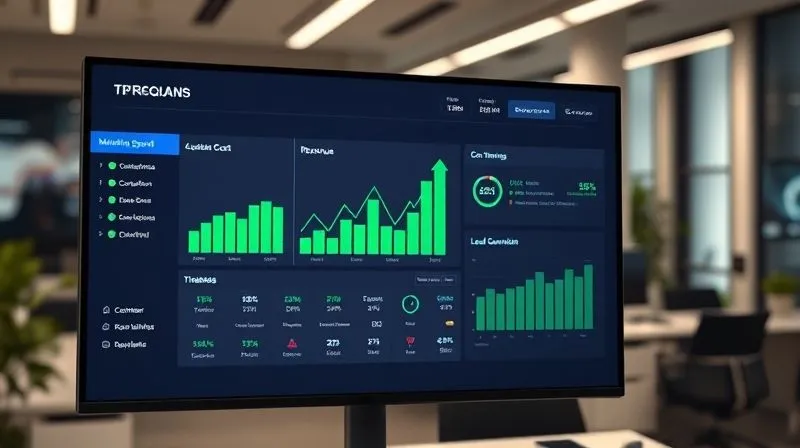
The report is your ultimate vehicle for proving ROI. It's not merely a dump of data; it's a carefully constructed argument supported by evidence. I've found that the best reports are clear, concise, visually appealing, and directly address the client's initial goals and concerns.
Think of your report as a story with a clear beginning (goals), middle (strategies and results), and end (ROI and next steps). Avoid overwhelming clients with too much data. Focus on the most critical KPIs and their business implications.
- Start with an Executive Summary: This is paramount. Provide a high-level overview of key achievements, ROI, and strategic recommendations right at the beginning. Busy executives need to grasp the core message quickly.
- Visual Data Representation: Utilize charts, graphs, and infographics to make complex data digestible. Trends, comparisons, and progress are much clearer when visualized. Ensure visuals are clean, easy to understand, and directly support your narrative.
- Connect to Business Goals: For each section, reiterate how the marketing performance ties back to the client's overarching business objectives. For example, 'Our lead generation campaign generated X leads, directly contributing to a Y% increase in your sales pipeline, moving you closer to your annual revenue target.'
- Show the 'Why' and 'So What': Explain the reasons behind performance fluctuations. Did a new competitor emerge? Was there a change in market conditions? Then, explain the business impact of these findings.
- Include Actionable Insights and Next Steps: Don't just report what happened; recommend what should happen next. This demonstrates your ongoing value and strategic thinking. What adjustments will you make? What new opportunities have emerged?
- Quantify ROI Clearly: Use specific financial terms. 'For every $1 invested, you received $X back.' Calculate Customer Acquisition Cost (CAC) vs. Customer Lifetime Value (CLV). Show profit margins where possible.
Case Study: Transforming a Doubter into a Champion
Case Study: How 'InnovateTech' Gained Confidence and Growth
I recall an engagement with InnovateTech, a B2B SaaS company that was deeply skeptical about marketing's ability to drive tangible sales. Their previous experiences had left them with a pile of 'impressions' and 'clicks' but no discernible impact on their sales pipeline. When I first met their CEO, Sarah, her arms were crossed, and her primary question was, "How marketing consultants prove ROI to skeptical clients?"
Our approach began with meticulously defining their sales-qualified lead (SQL) criteria and establishing a baseline. We discovered their existing CPL was $300, and their lead-to-SQL conversion rate was a dismal 5%. Our goal was clear: reduce CPL by 20% and increase SQL conversion to 15% within six months.
We implemented a content marketing strategy focused on solving specific pain points for their target audience, coupled with highly targeted LinkedIn advertising. Every piece of content was gated, and leads were scored based on engagement. We integrated their marketing automation platform directly with their CRM to track every lead's journey.
By the end of the six-month period, we presented a report showing a 25% reduction in CPL to $225 and an impressive jump in SQL conversion to 18%. This meant they were acquiring more qualified leads for less money. We also demonstrated that these new SQLs had a 30% higher close rate than leads from other sources, directly translating to an additional $1.2 million in annual recurring revenue (ARR) for InnovateTech. Sarah, once skeptical, became our biggest advocate, extending our contract and referring us to her industry peers. This resulted in a significant expansion of our engagement, focusing on scaling these proven strategies across new markets.
Proactive Communication and Continuous Feedback Loops
Proving ROI isn't a one-time event; it's an ongoing process supported by consistent, transparent communication. Skepticism thrives in a vacuum of information. Your role as a consultant is to fill that vacuum with clarity, honesty, and proactive updates.
I've learned that even when results aren't exactly as planned, timely and transparent communication about challenges, lessons learned, and proposed adjustments builds far more trust than silence or sugar-coating. Clients appreciate honesty and a clear path forward.
Expert Insight: "Transparency isn't just about sharing numbers; it's about sharing the journey, the challenges, and the continuous efforts to optimize and improve. It's the antidote to skepticism."
Regular check-ins, beyond formal reporting, are vital. These can be quick weekly calls to discuss progress, challenges, and any emerging opportunities. Use these opportunities to:
- Address concerns proactively: Don't wait for the client to ask. If you see a metric dipping, explain why and what you're doing about it.
- Educate and inform: Use these touchpoints to gently educate clients on the complexities of marketing, the timelines involved, and the strategic rationale behind your decisions.
- Solicit feedback: Actively ask for their input. Do they feel the reports are clear? Are their questions being answered? This shows you value their perspective and are responsive to their needs.
- Celebrate small wins: Don't wait for the big ROI reveal. Acknowledge and communicate incremental successes, as these build momentum and confidence.
The importance of consistent and clear communication cannot be overstated. A study published by Forbes Communications Council highlights how proactive communication builds stronger client relationships, a principle I've seen validated repeatedly in my own consulting practice.
The Long-Term Play: Building Trust Beyond the Project
Our ultimate goal as marketing consultants is not just to prove ROI for a single project, but to build a lasting relationship where our value is inherently understood and trusted. This requires a long-term perspective and a commitment to being a true strategic partner, not just a vendor.
Trust isn't built overnight. It's forged through consistent performance, transparent communication, and a genuine interest in the client's enduring success. When clients truly trust you, their skepticism transforms into reliance, and they become advocates for your work.
Educating Clients on Marketing's Strategic Value
Beyond campaign-specific ROI, it's crucial to educate clients on the broader strategic value of marketing. Help them understand how marketing contributes to brand equity, market positioning, customer loyalty, and long-term growth — aspects that might not have an immediate dollar-for-dollar return but are indispensable for sustainable business success.
This involves shifting their perspective from viewing marketing as a cost center to a vital investment in their future. Share industry trends, insights from thought leaders, and examples of how competitors are leveraging strategic marketing. As marketing guru Seth Godin often emphasizes, focusing on the long-term impact of marketing builds enduring value, a philosophy that resonates deeply with my experience.
- Become a thought partner: Offer insights even outside the scope of your immediate project.
- Share industry knowledge: Keep them abreast of new technologies, regulations, or market shifts.
- Demonstrate adaptability: Show how you can pivot strategies based on market changes or new client needs.
- Measure beyond immediate ROI: Introduce metrics for brand health, customer satisfaction, and market share growth over time.
Frequently Asked Questions (FAQ)
Question: What if my client's data tracking is poor or non-existent? This is a common challenge. My first step is always to conduct a comprehensive data audit. If tracking is poor, I prioritize setting up proper analytics (e.g., Google Analytics 4, CRM integration, pixel implementation) as the foundational phase of the engagement. It's crucial to explain to the client that accurate ROI measurement is impossible without reliable data, positioning this setup as a critical investment. Sometimes, you might need to start with proxy metrics or qualitative data while the robust tracking is being established.
Question: How do I handle a client who only cares about 'last-click' attribution? While 'last-click' is easy to understand, it rarely tells the full story. I educate clients by presenting a simplified customer journey map and showing how different touchpoints (e.g., a blog post, a social media ad, an email) contribute before the final click. I might start with a last-click report but then introduce a linear or position-based model alongside it, demonstrating the 'hidden' value of earlier interactions. Visualizing the journey helps immensely in expanding their perspective.
Question: What if the marketing results are not meeting expectations? How do I communicate this? Honesty and proactivity are key. As soon as you see a potential shortfall, communicate it. Don't wait for the client to discover it. Explain the variance, provide your analysis of why it's happening (e.g., market shift, competitor activity, campaign fatigue), and most importantly, present a clear action plan to course-correct. Frame it as an opportunity to learn and optimize, demonstrating your problem-solving skills and commitment to their success.
Question: How do I quantify the ROI of brand awareness campaigns, which are notoriously hard to measure? While direct financial ROI is harder, brand awareness can be measured through proxy metrics that eventually contribute to financial outcomes. This includes tracking brand mentions, social media engagement, website direct traffic, search volume for branded keywords, brand sentiment analysis, and conducting brand lift studies (e.g., surveys on recall, perception). Over time, these can be correlated with sales cycles, indicating an indirect but significant contribution to long-term revenue and customer acquisition efficiency.
Question: My client insists on an unrealistic ROI target. How do I manage this? Managing unrealistic expectations is a critical part of the initial goal-setting phase. I use industry benchmarks, historical data (if available), and my own experience to set realistic, yet ambitious, targets. If a client's target is truly unachievable, I present data-backed arguments explaining why and propose a revised, realistic goal. It's better to push back respectfully at the beginning than to fail to meet an impossible target later and erode trust. Educate them on the typical timelines and investment required for their desired outcomes.
Key Takeaways and Final Thoughts
- Start with Clarity: Define SMART goals, KPIs, and measurement methodologies collaboratively before any work begins.
- Master Data Storytelling: Translate raw data into compelling narratives that connect directly to business outcomes, not just marketing metrics.
- Implement Robust Tracking: Utilize sophisticated attribution models and ensure all data sources are integrated and accurate.
- Craft Compelling Reports: Deliver clear, visual, executive-summary-led reports that quantify financial ROI and provide actionable insights.
- Embrace Proactive Communication: Maintain transparent, frequent dialogue, addressing challenges and celebrating wins to build trust.
- Cultivate Long-Term Partnerships: Educate clients on marketing's strategic value beyond immediate ROI, fostering enduring trust and advocacy.
Proving ROI to skeptical clients is not merely a task; it's an art and a science that defines the credibility of a marketing consultant. It demands a blend of analytical rigor, persuasive communication, and unwavering commitment to client success. By meticulously applying the strategies I've outlined, you won't just report numbers; you'll build unshakeable trust, transform client relationships, and cement your reputation as an indispensable strategic partner. Embrace the challenge, equip yourself with these frameworks, and confidently demonstrate the profound impact of your marketing expertise.
Recommended Reading
- Cracking the Code: How to Get Executive Buy-In for Disruptive Internal Ventures
- 5 Steps: How to Pivot Business Model When Disruption Hits Suddenly
- 7 Steps: What To Do When Your Best Small Business Employee Resigns?
- 5 Steps to Quickly Re-engage Underperforming B2B Channel Partners
- Unlock Your Resilience: Mastering Mental Health on Your Entrepreneurial Journey





Comments
Leave a comment below. Your email will not be published. Required fields marked with *