


How to Accelerate Sluggish Innovation Tech Adoption Rates?
For over 18 years in the innovation management and technology adoption space, I've seen countless organizations invest heavily in groundbreaking tech, only to watch it gather digital dust. The common thread? A profound misunderstanding that technology adoption isn't just about the tech itself, but about the people who need to use it. It's a human challenge, not just a technical one.
The pain points are palpable: wasted resources, missed opportunities for competitive advantage, frustrated leadership, and a workforce resistant to change. This sluggishness can cripple a company's ability to innovate, respond to market shifts, and ultimately, survive in an increasingly dynamic landscape. It’s a silent killer of progress, often masked by the initial excitement of a new system or tool.
In this definitive guide, I'll share my battle-tested frameworks, expert insights, and actionable strategies designed to help you not just introduce new technology, but to embed it deeply within your organizational DNA. You’ll learn how to ignite enthusiasm, dismantle resistance, and truly accelerate sluggish innovation tech adoption rates, transforming your enterprise into a nimble, future-ready powerhouse.
Understand the "Why": Deconstructing Resistance to Change
Before we can accelerate anything, we must first understand what's holding it back. Resistance to change is a natural human response, often rooted in fear, uncertainty, and a perceived loss of control. It’s rarely about the technology itself, but what the technology signifies for an individual's role, routine, or even job security.
I've observed that many leaders make the mistake of assuming resistance is irrational. It rarely is. Employees often have valid concerns, which, if unaddressed, fester into widespread disengagement. Acknowledging these concerns openly and empathetically is the first, crucial step.
The Psychology of Adoption: Fear, Comfort, and Perceived Value
People are creatures of habit. New technology disrupts established workflows, requiring new skills and often, more effort initially. The perceived value of the new system must significantly outweigh the effort and discomfort of learning it. If the benefits aren't crystal clear and directly relevant to their daily tasks, why would they bother?
"Innovation isn't just about the new; it's about making the new feel familiar, valuable, and ultimately, indispensable to the user's success."
According to a study by Harvard Business Review, successful change initiatives prioritize understanding employee psychology, addressing anxieties, and communicating a compelling vision of the future. Ignoring this human element is akin to building a race car and expecting it to win without a driver.

Cultivating a Culture of Curiosity and Experimentation
Top-down mandates for technology adoption often breed resentment and superficial compliance. True acceleration comes from within, by fostering an organizational culture where curiosity is encouraged, experimentation is rewarded, and failure is viewed as a learning opportunity, not a punishable offense.
I advise clients to shift from a 'command and control' approach to one that empowers employees to explore and discover the benefits of new tools for themselves. This builds intrinsic motivation, which is far more powerful and sustainable than extrinsic pressures.
Empowering Internal Champions and Early Adopters
Identify individuals within your organization who are naturally curious, technologically savvy, and respected by their peers. These are your innovation champions. They can act as bridges between the new technology and the broader workforce, translating technical jargon into practical benefits and providing peer-to-peer support.
- Benefits of Internal Champions:
- Builds trust and credibility among peers.
- Provides localized, contextual support.
- Generates authentic enthusiasm and word-of-mouth.
- Identifies practical use cases and challenges quickly.
These champions aren't just trainers; they are evangelists who demonstrate the 'art of the possible'. Their visible success with the technology inspires others and helps to accelerate sluggish innovation tech adoption rates across departments.
- Steps to Identify and Empower Champions:
- Survey and Observe: Identify employees who frequently explore new tools or offer tech help.
- Provide Early Access: Give them beta access to new tech before general rollout.
- Offer Specialized Training: Equip them with in-depth knowledge and troubleshooting skills.
- Formalize Their Role: Acknowledge their contribution; perhaps a 'Tech Ambassador' program.
- Facilitate Peer-to-Peer Learning: Create platforms for champions to share best practices.
The Power of Seamless UX and Intuitive Onboarding
A clunky, unintuitive user experience (UX) is arguably the single biggest blocker to technology adoption. No matter how powerful the backend, if the front end is frustrating, users will revert to old methods or find workarounds. The 'learning curve' should feel more like a gentle slope, not a sheer cliff face.
From my vantage point, many companies prioritize feature lists over user journeys. This is a critical error. The goal isn't just to implement a new system; it's to make that system effortlessly integrate into the daily lives of your employees, making their work easier and more efficient.
Designing for Human-Centricity, Not Just Functionality
Invest in UX design from the outset. Involve end-users in the design and testing phases. Conduct usability studies, gather feedback, and iterate quickly. This human-centered design approach ensures that the technology solves real problems for real people, rather than creating new ones.
Case Study: How Novatech Transformed Adoption with UX
Novatech, a mid-sized IT services firm, struggled with the adoption of a new CRM system. Initial adoption rates hovered around 20% after six months, leading to incomplete data and fragmented customer insights. The system was powerful but complex, with a steep learning curve.
Recognizing the issue, Novatech engaged a UX specialist and formed an internal 'User Experience Task Force' comprising representatives from sales, marketing, and customer service. They conducted workshops, user interviews, and developed simplified workflows. They also customized the interface to remove unnecessary features for general users and redesigned the onboarding process to be highly interactive and task-oriented.
Within three months of these UX improvements, active user adoption surged to 85%. Sales teams reported spending 30% less time on data entry and 20% more time engaging with clients. This resulted in a significant improvement in customer satisfaction scores and a 15% increase in pipeline conversion rates, directly demonstrating how focusing on the human element can dramatically accelerate sluggish innovation tech adoption rates.
This table illustrates the stark difference between a user-centric approach and a feature-centric one:
| Aspect | User-Centric Design | Feature-Centric Design |
|---|---|---|
| Focus | User needs, tasks, and experience | Technical capabilities, comprehensive features |
| Design Process | Iterative, user feedback loops, prototypes | Linear, 'build it and they will come' mindset |
| Onboarding | Intuitive, guided tours, contextual help | Comprehensive manuals, one-off training |
| Success Metric | Adoption rates, user satisfaction, efficiency gains | Feature implementation, system uptime |
| Outcome | High adoption, increased productivity, positive ROI | Low adoption, frustration, wasted investment |
Strategic Communication: Beyond the "Launch" Email
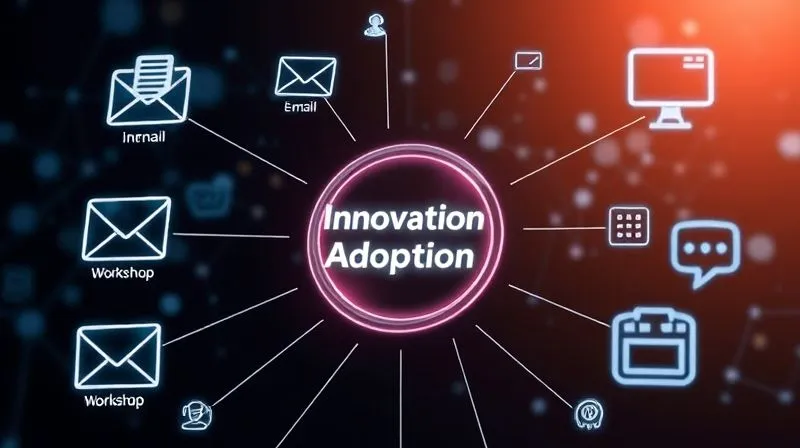
Many organizations treat technology rollout communication as a one-off event: a launch email, maybe a town hall, and then silence. This is a recipe for sluggish adoption. Effective communication is a continuous, multi-faceted narrative that evolves with the adoption journey.
It's not just about informing; it's about inspiring, educating, and reassuring. I always emphasize that communication needs to address the 'WIIFM' (What's In It For Me?) for every employee. Generic messages rarely resonate.
Crafting a Multi-Channel Adoption Narrative
Your communication strategy should be as dynamic as the technology itself. Use a blend of channels to reach different segments of your workforce, tailoring messages to their specific roles and concerns. Don't just announce features; tell stories about how the technology is making a difference.
- Effective Communication Channels:
- Internal Newsletters/Intranet: Regular updates, success stories, tips & tricks.
- Team Meetings/Stand-ups: Leaders and champions share progress and address questions.
- Workshops & Roadshows: Hands-on demonstrations, Q&A sessions.
- Dedicated Support Portals: FAQs, video tutorials, live chat.
- Leadership Messaging: Consistent reinforcement of the strategic importance.
- Peer-to-Peer Forums: Platforms for users to share experiences and help each other.
Remember, communication isn't just pushing information out; it's also actively listening to feedback and addressing concerns transparently. This builds trust and helps to mitigate resistance before it becomes entrenched.
Data-Driven Insights: Measuring and Iterating for Success
You can't manage what you don't measure. Guessing whether your innovation tech is being adopted or not is a luxury no modern organization can afford. Robust data analytics provides the objective insights needed to identify bottlenecks, understand user behavior, and iterate your adoption strategy effectively.
In my experience, many companies focus on deployment metrics (e.g., 'system is live') rather than adoption metrics (e.g., 'system is used effectively'). This oversight leads to a false sense of security and perpetuates sluggish adoption rates.
Key Metrics for Tracking Tech Adoption Progress
Establish clear, measurable KPIs (Key Performance Indicators) from the outset. These metrics should go beyond simple login counts and delve into actual usage patterns and outcomes.
- Essential Tech Adoption Metrics:
- Active User Rate: Percentage of users logging in regularly.
- Feature Adoption Rate: How many users are utilizing key features?
- Time Spent in Application: Indicates engagement and depth of use.
- Task Completion Rate: Are users successfully completing their intended tasks?
- Error Rates: Frequency of user-generated errors, indicating friction points.
- User Feedback Scores: Surveys, NPS (Net Promoter Score) for the tech.
- Productivity Gains: Quantifiable improvements in efficiency or output.
By continuously monitoring these metrics, you can identify areas of friction, understand which user segments are struggling, and pinpoint features that are underutilized. This data then informs targeted interventions, training, or UX improvements, creating a powerful feedback loop.
- Steps for a Data-Driven Feedback Loop:
- Define Metrics: Clearly outline what success looks like for each piece of tech.
- Implement Tracking: Use analytics tools embedded within the software or external platforms.
- Regular Reporting: Share adoption dashboards with relevant stakeholders.
- Analyze & Identify Trends: Look for patterns, drops, or spikes in usage.
- Hypothesize & Test: Formulate solutions based on data and test their impact.
- Iterate & Optimize: Continuously refine your strategy based on results.
This approach moves you from reactive problem-solving to proactive optimization, ensuring you continually accelerate sluggish innovation tech adoption rates.
| Metric | Goal | Current Value (Month 1) | Trend | Action |
|---|---|---|---|---|
| Active User Rate | 80% within 3 months | 45% | +5% wk/wk | Targeted training for departments below 60% |
| Key Feature Usage (e.g., 'Dashboard Reporting') | 70% of active users | 30% | Stagnant | Create micro-learning videos, highlight in newsletters |
| User Satisfaction (NPS) | +30 | +10 | Improving | Address top 3 feedback issues from surveys |
| Support Ticket Volume (Tech-related) | -20% from baseline | -5% | Slight decrease | Enhance FAQ section, empower champions for first-line support |
Leadership Buy-In and Visible Sponsorship
It's a cliché for a reason: change starts at the top. If leadership isn't visibly invested in and actively advocating for new technology, employees will quickly sense a lack of genuine commitment, leading to skepticism and slow adoption. This isn't just about approving budgets; it's about active participation and consistent messaging.
I've witnessed firsthand how a CEO's casual mention of a new tool in a town hall, backed by their own demonstrable use, can spark more interest than a dozen corporate emails. Leaders must not only articulate the 'why' but also embody it.
Leading by Example: Active Participation and Advocacy
Leaders need to become early adopters themselves. They should be seen using the new tools, sharing their experiences, and championing the benefits. This sends a powerful signal to the entire organization that the technology is important, valuable, and here to stay.
"Leaders don't just approve innovation; they participate in it, model it, and make its adoption an undeniable priority."
According to McKinsey & Company, strong, visible leadership sponsorship is one of the most critical factors for successful digital transformations. Without it, even the best technology initiatives are likely to flounder, leaving behind a trail of sluggish innovation tech adoption rates.
Training and Continuous Learning: More Than Just a Manual
The days of distributing a hefty user manual and expecting full proficiency are long gone. Effective training for new technology must be ongoing, engaging, and tailored to diverse learning styles and roles. It's an investment, not an expense, directly impacting adoption speed and proficiency.
My experience shows that a one-size-fits-all approach to training is destined to fail. Different departments and roles will interact with the technology in unique ways, requiring specialized guidance. Moreover, learning isn't a single event; it's a continuous journey, especially as tech evolves.
Blended Learning Approaches for Diverse Needs
Implement a blended learning strategy that combines various formats to cater to different preferences and schedules. This might include:
- Hands-on Workshops: Instructor-led sessions for practical application.
- Micro-learning Modules: Short, digestible videos or guides for specific tasks.
- Contextual Help: In-app tutorials, tooltips, and guided walkthroughs.
- Peer Mentorship Programs: Connecting new users with experienced champions.
- Dedicated Support Hubs: Centralized resources for FAQs, troubleshooting, and best practices.
- Advanced Training: For power users or those needing deeper dives into functionality.
Regular refreshers, advanced topic sessions, and 'lunch & learns' can keep the momentum going long after the initial rollout. This continuous learning environment is vital to sustain and accelerate sluggish innovation tech adoption rates, ensuring proficiency grows over time.

Frequently Asked Questions (FAQ)
What's the biggest mistake companies make when trying to accelerate tech adoption? The most common and impactful mistake is treating technology adoption as a purely technical project rather than a human-centric change management initiative. They focus on features over user experience, mandate usage without clear benefits, and neglect ongoing communication and support, leading to profound resistance.
How do small businesses approach this without large budgets? Small businesses can leverage many of these strategies by focusing on agility and authenticity. They can identify natural champions, use free or low-cost communication tools, prioritize simple, intuitive SaaS solutions, and foster a strong, transparent culture. Peer-to-peer learning and direct leadership involvement become even more critical in a smaller setting.
How long does it typically take to see significant results in tech adoption? While there's no fixed timeline, you should start seeing positive trends within 3-6 months if you implement a comprehensive strategy. Full proficiency and widespread, habitual adoption can take anywhere from 9-18 months, depending on the complexity of the technology and the size of the organization. Consistent effort is key.
What if employees actively resist the new technology, even with support? Active resistance often stems from unaddressed fears or a strong belief that the new system is genuinely detrimental to their work. This requires direct, empathetic engagement. Understand their specific concerns, involve them in finding solutions or workarounds, and if necessary, demonstrate how others have overcome similar challenges. In rare cases, some roles may need to be re-evaluated if they cannot adapt.
How do you measure the ROI of accelerating tech adoption? Measuring ROI involves tracking direct and indirect benefits. Direct benefits include increased productivity (e.g., time saved on tasks), reduced errors, and improved data quality. Indirect benefits can include enhanced employee satisfaction, better decision-making due to improved data access, increased innovation capacity, and ultimately, a stronger competitive position. Aligning adoption metrics with business outcomes is crucial for demonstrating ROI.
Key Takeaways and Final Thoughts
Accelerating sluggish innovation tech adoption rates is far from a simple flip of a switch; it's a strategic, multi-faceted journey that prioritizes people over pixels. It demands empathy, clear communication, continuous learning, and unwavering leadership. The organizations that master this challenge won't just implement technology; they'll transform their very way of working, unlocking unprecedented levels of efficiency, innovation, and competitive advantage.
- Prioritize the 'Why': Address the underlying reasons for resistance, focusing on human psychology.
- Cultivate Champions: Empower internal advocates to drive peer-to-peer adoption.
- Design for Humans: Invest in intuitive UX and seamless onboarding.
- Communicate Continuously: Craft a dynamic, multi-channel narrative that resonates.
- Measure & Iterate: Use data to understand behavior and refine your strategy.
- Lead by Example: Ensure visible, active sponsorship from the top.
- Train & Support: Provide ongoing, diverse learning opportunities.
Don't let your innovative investments gather digital dust. By embracing these strategies, you can transform your organization from one that reluctantly adopts to one that eagerly embraces the future, ensuring your technology investments yield their full, transformative potential. The future of innovation belongs to those who can effectively bring their people along for the ride.
Recommended Reading
- 5 Proven Strategies: How to Regain Leverage When Deal Negotiation Stalls Unexpectedly
- Why Your Emails Hit Spam: 9 Critical Fixes for Deliverability
- Struggling Franchise? 7 Steps to a Profitable Sale Revealed
- Unmasking the Truth: Overcoming Bias in Data-Driven Business Analytics
- Global Rivals Stealing Share? 7 Urgent Steps to Reclaim Your Market





Comments
Leave a comment below. Your email will not be published. Required fields marked with *