


How to Accurately Forecast Cash Flow for Volatile Markets?
For over two decades in financial management, I've witnessed firsthand how even robust businesses can falter not from a lack of revenue, but from a sudden, unexpected cash crunch. I've seen countless companies, from nimble startups to established enterprises, caught off guard by market shifts, simply because their cash flow forecasting wasn't equipped for the unpredictable.
The problem is exacerbated in today's increasingly volatile markets. Traditional, static forecasting methods, once reliable, are now akin to navigating a storm with a sun-drenched map. Economic downturns, supply chain disruptions, rapid technological shifts, and geopolitical events can turn a predictable financial landscape into a minefield overnight, leaving businesses vulnerable, unable to seize opportunities, or worse, facing insolvency.
This article isn't just about crunching numbers; it’s about building a resilient financial nervous system for your business. I'll share a comprehensive framework, drawing from my experience, that moves beyond simple spreadsheets. You'll learn how to accurately forecast cash flow for volatile markets using dynamic models, scenario planning, cutting-edge technology, and crucial operational insights, empowering you to navigate uncertainty with confidence and strategic foresight.
Understanding the 'Why' Behind Volatility: Beyond the Headlines
Before we can master forecasting, we must first understand the beast we're trying to tame: market volatility itself. In my experience, many businesses react to volatility rather than proactively anticipating it, largely because they don't fully grasp its multifaceted origins. It’s not just about a bad news headline; it’s a complex interplay of forces.
Macroeconomic factors often cast the longest shadows. Think about the ripple effects of inflation, which erodes purchasing power and increases operational costs, or interest rate hikes that make borrowing more expensive and impact consumer spending. Geopolitical tensions can disrupt global supply chains overnight, leading to material shortages and soaring logistics costs. These aren't abstract concepts; they directly impact your revenue streams, cost of goods sold, and working capital needs.
Then there are the microeconomic and industry-specific shifts. A sudden change in consumer preference, the emergence of a disruptive technology, or aggressive competition can create immense pressure on your pricing, sales volumes, and ultimately, your cash inflows. Regulatory changes, too, can introduce unforeseen compliance costs or restrict market access. Understanding these underlying drivers allows you to identify potential triggers for cash flow disruption long before they hit your balance sheet.
Key Insight:
True cash flow resilience begins with a deep, nuanced understanding of both the broad economic currents and the specific industry tides that can rock your boat. Ignoring these 'why' factors leaves you perpetually playing catch-up.

Shifting from Static to Dynamic Forecasting Models
The Achilles' heel of traditional financial planning in volatile times is its static nature. A fixed annual budget, meticulously crafted at the end of the previous year, becomes obsolete almost as soon as the ink dries. In my career, I've seen businesses cling to these outdated plans, leading to misallocations of capital, missed opportunities, and ultimately, financial stress.
To accurately forecast cash flow for volatile markets, you must embrace dynamic forecasting models. These are living documents, continuously updated to reflect current realities and emerging trends. The two most powerful approaches I advocate for are:
- Rolling Forecasts: Instead of an annual budget, imagine a forecast that 'rolls' forward. Typically, this means extending your forecast by one month (or quarter) as the current month (or quarter) concludes. For example, if you have a 12-month forecast, at the end of January, you drop January's actuals and add January of the next year. This ensures you always have a forward-looking view, typically 12-18 months out, keeping your planning horizon relevant and continuously refreshed.
- Driver-Based Forecasting: This method links your cash flow components directly to key operational drivers. Instead of simply predicting revenue, you predict the drivers of revenue (e.g., number of customers, average order value, conversion rates). For costs, you link them to production volumes, employee count, or raw material prices. When these drivers change due to market volatility, your cash flow forecast automatically adjusts. This provides a much more robust and responsive model than simply adjusting line items manually.
The beauty of these dynamic models is their agility. They force you to regularly review assumptions, integrate new data, and adapt your financial strategy. As Harvard Business Review emphasizes, rolling forecasts are crucial for maintaining relevance in an unpredictable environment, providing a continuous feedback loop that static budgets simply cannot offer.
The Power of Scenario Planning: Preparing for Multiple Futures
If dynamic forecasting is about adapting to the present, then scenario planning is about preparing for the future's many faces. No one has a crystal ball, especially in volatile markets, but I've found that businesses that proactively consider multiple potential futures are far more resilient than those that bet on a single outcome.
Scenario planning involves identifying key uncertainties and then developing plausible 'stories' or scenarios about how these uncertainties might play out. For cash flow, this means mapping out how different market conditions could impact your inflows and outflows. Here's a practical approach:
- Identify Key Variables: What are the most significant external factors that could impact your cash flow? (e.g., economic growth rate, interest rates, raw material prices, customer demand, exchange rates).
- Define Best-Case, Worst-Case, and Most-Likely Scenarios: For each key variable, determine its potential range of outcomes.
- Construct Scenarios: Combine these variable outcomes into 3-5 distinct, plausible scenarios.
- Optimistic Scenario: Favorable market conditions, strong demand, stable supply chains.
- Base Case Scenario: Current trends continue, moderate growth, expected challenges.
- Pessimistic Scenario: Economic downturn, severe supply chain disruptions, sharp decline in demand.
- Stress Test Scenario: An extreme, but possible, event (e.g., a major competitor enters the market, a key supplier goes bankrupt).
- Model Cash Flow for Each Scenario: Run your dynamic cash flow forecast for each scenario. What does your cash position look like under each? What are the trigger points for action?
- Develop Contingency Plans: For each adverse scenario, what specific actions will you take? (e.g., delay capital expenditures, negotiate payment terms, seek additional financing, reduce discretionary spending).
This exercise isn't about predicting the future; it's about understanding potential risks and opportunities, and having a pre-defined response. As McKinsey & Company highlights, integrating scenario planning into your financial strategy is vital for navigating modern business complexity.
| Scenario | Revenue Impact | Cost Impact | Liquidity Outlook | Key Actions |
|---|---|---|---|---|
| Optimistic Growth | +15% | -5% | Strong | Invest in expansion, R&D |
| Base Case | +5% | +2% | Stable | Maintain current operations |
| Economic Downturn | -10% | +8% | Challenged | Cut discretionary spending, negotiate terms |
| Supply Chain Crisis | -15% | +12% | Critical | Seek alternative suppliers, emergency financing |
Leveraging Technology: Tools for Real-time Cash Flow Visibility
In a volatile market, speed and accuracy are paramount. Relying solely on manual spreadsheets for cash flow forecasting is like trying to catch raindrops with a sieve. The sheer volume of data, the need for continuous updates, and the complexity of scenario modeling demand technological assistance. In my experience, the right tools can transform your forecasting from a laborious chore into a strategic advantage.
Modern financial software offers capabilities that were once the exclusive domain of large corporations. Here’s what I recommend looking for:
- Integrated ERP Systems: Enterprise Resource Planning (ERP) systems (like SAP, Oracle, NetSuite) consolidate all your business data – sales, purchasing, inventory, accounting – into a single platform. This integration is crucial for accurate cash flow forecasting as it provides a unified source of truth.
- Dedicated Cash Flow Management Software: Solutions specifically designed for cash flow (e.g., Float, CashAnalytics, Trovata) specialize in aggregating bank data, accounting data, and open invoices/payables to provide real-time cash positions and forecasts. They often have built-in scenario planning tools.
- AI and Machine Learning for Predictive Analytics: The cutting edge of forecasting involves AI and ML algorithms that can analyze historical data, identify complex patterns, and predict future cash flows with greater accuracy than traditional models. They can also detect anomalies and provide early warnings.
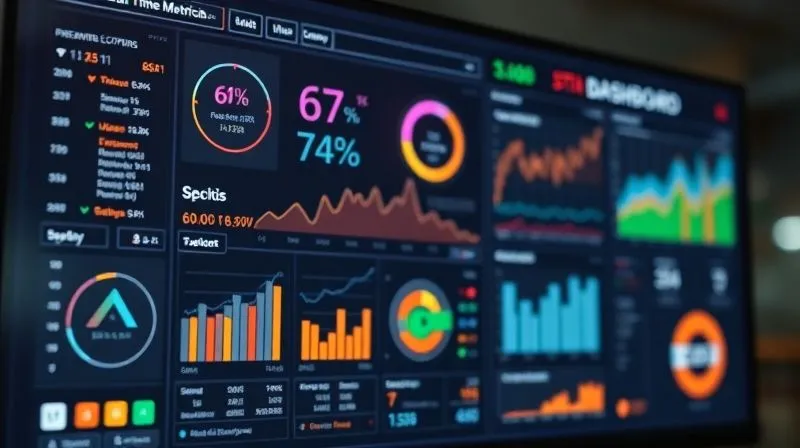
- Business Intelligence (BI) Tools: Platforms like Tableau, Power BI, or Qlik Sense can visualize your cash flow data in dynamic dashboards, making it easier to identify trends, outliers, and the impact of different scenarios.
The key is to move beyond static data entry. You need systems that automatically pull in bank feeds, reconcile transactions, and update your forecast in near real-time. This not only significantly reduces human error but also provides the immediate insights needed to make timely decisions in a rapidly changing environment. As Deloitte's insights on the future of finance suggest, technology is reshaping how we manage and predict financial performance.
Integrating Operational Insights: The Human Element in Forecasting
While technology provides the framework and data, I've learned that truly accurate cash flow forecasting, especially in volatile markets, is incomplete without integrating rich, qualitative operational insights. Numbers alone tell only part of the story; the human element provides crucial context and foresight.
This means fostering cross-functional collaboration. Your finance team, no matter how skilled, cannot operate in a vacuum. They need input from:
- Sales Team: Their pipeline visibility, customer sentiment, and understanding of market demand shifts are invaluable for revenue forecasts. They can spot changes in buying behavior or competitive pressures before they appear in accounting data.
- Operations/Production Team: Insights into production schedules, raw material availability, potential bottlenecks, and lead times directly impact your cost of goods sold and inventory levels, which are significant cash outflows.
- Procurement/Supply Chain: They understand supplier relationships, potential price increases, and supply chain risks that could impact your payables and overall liquidity.
- HR Team: Anticipated hiring, layoffs, or changes in compensation directly affect payroll, a major cash outflow.
I advocate for regular, structured meetings where these teams can share their perspectives and data. Encourage them to think proactively about potential disruptions. What if a key supplier raises prices by 20%? What if a major customer delays a large order? These qualitative inputs, when integrated into your quantitative models, create a far more robust and realistic forecast.
Key Insight:
The most sophisticated financial models are only as good as the data and assumptions fed into them. Operational insights provide the 'ground truth' that transforms a theoretical forecast into a genuinely actionable strategic tool.
Building a Resilient Cash Flow Culture: Beyond the Numbers
Forecasting accurately in volatile markets isn't just a technical exercise; it's a cultural shift. I've observed that businesses that thrive amidst uncertainty possess a shared understanding of cash flow's importance and a collective commitment to its management. It's about instilling a 'cash-first' mindset throughout the organization.
This resilient cash flow culture involves several key components:
- Continuous Learning and Adaptability: Market conditions are constantly evolving. Your team needs to be equipped with the skills and mindset to continuously learn, adapt, and refine forecasting methodologies. This means ongoing training in new tools, economic principles, and critical thinking.
- Transparency and Communication: Openly communicate the importance of cash flow to all departments. When employees understand how their actions impact the company's financial health, they are more likely to make cash-conscious decisions. Share high-level insights from your forecasts (without revealing sensitive data) to foster a sense of shared responsibility.
- Empowerment and Accountability: Empower department heads to manage their cash inflows and outflows effectively. Set clear KPIs related to cash flow (e.g., Days Sales Outstanding for sales, inventory turnover for operations) and hold teams accountable for their contribution to overall cash health.
- Proactive vs. Reactive Mindset: Shift the organizational mindset from reacting to cash problems to proactively anticipating and mitigating them. Encourage 'what-if' thinking and scenario planning at all levels, not just in finance.
A strong cash flow culture ensures that forecasting is not just a finance department's responsibility, but a collective effort that permeates every decision, from sales strategy to procurement choices. It's about building an organization that inherently understands and prioritizes financial resilience.
Key Metrics and Early Warning Signals for Volatile Periods
To accurately forecast cash flow for volatile markets, you need more than just a projected balance; you need a system of early warning signals. In my career, I've learned that monitoring the right metrics can provide crucial advance notice of potential cash flow issues, allowing you to take corrective action before a crisis hits. Here are some critical indicators:
- Days Sales Outstanding (DSO): This metric measures the average number of days it takes for your company to collect revenue after a sale. A rising DSO in a volatile market can signal that customers are struggling to pay, or that your collections process is inefficient, both of which directly impact cash inflow.
- Days Payable Outstanding (DPO): This measures the average number of days your company takes to pay its suppliers. While a higher DPO can sometimes mean you’re holding onto cash longer, a sudden, uncontrolled increase can signal liquidity problems, forcing you to delay payments.
- Cash Conversion Cycle (CCC): This metric measures the time it takes for a company to convert its investments in inventory and accounts receivable into cash, minus the time it takes to pay its accounts payable. A lengthening CCC indicates that cash is tied up for longer, reducing liquidity.
- Current Ratio & Quick Ratio: These liquidity ratios assess your ability to meet short-term obligations. A declining trend, especially in a volatile period, suggests shrinking financial buffers.
- Sales Pipeline Health: Beyond just booked sales, monitor the health and conversion rates of your sales pipeline. A weakening pipeline is an early indicator of future revenue (and cash) shortfalls.
- Customer Payment Behavior: Track changes in customer payment patterns – an increase in late payments, requests for extended terms, or partial payments are red flags.
Regularly reviewing these metrics, ideally on a weekly or bi-weekly basis during periods of high volatility, allows you to detect subtle shifts that could escalate into significant cash flow challenges. Setting clear thresholds for these metrics can trigger automatic alerts, ensuring that you're always one step ahead. As Investopedia explains, financial ratios are essential tools for assessing a company's performance and health.
| Metric | Trend in Volatility | Implication | Action Trigger |
|---|---|---|---|
| Days Sales Outstanding (DSO) | Increasing | Slow collections, potential bad debt | > 45 days |
| Cash Conversion Cycle (CCC) | Lengthening | Cash tied up longer in operations | > 60 days |
| Current Ratio | Decreasing | Reduced short-term liquidity | < 1.5 |
| Sales Pipeline Conversion | Decreasing | Future revenue risk | < 20% |

Case Study: Navigating a Sector Downturn with Proactive Forecasting
How 'GlobalTech Solutions' Maintained Liquidity Amidst Market Turmoil
Let me share a fictional, yet highly realistic, scenario from my experience. GlobalTech Solutions, a mid-sized software company specializing in enterprise cloud solutions, faced a sudden and severe downturn in their primary market due to unexpected regulatory changes and a global economic slowdown. Their traditional annual budgeting process was rendered useless almost overnight, projecting stable growth while reality screamed contraction.
Recognizing the immediate threat, GlobalTech's CFO, leveraging the principles I've outlined, swiftly pivoted their financial strategy:
- Implemented a Weekly Rolling Forecast: Instead of monthly, they moved to weekly updates for their 13-week cash flow forecast, providing granular, real-time visibility. This allowed them to see cash ebbs and flows with unprecedented clarity.
- Aggressive Scenario Planning: They developed three core scenarios: a 'moderate downturn,' a 'severe recession,' and a 'protracted recovery.' For each, they modeled the impact on subscription renewals, new sales, operational costs, and capital expenditures. This revealed critical cash runway limitations under the adverse scenarios.
- Cross-Functional Cash Flow Team: A dedicated task force, comprising leaders from Sales, Marketing, Product Development, and Operations, met bi-weekly. Sales provided real-time pipeline updates and early warnings of churn; Operations identified areas for cost optimization and delayed non-critical projects; Product focused on retaining high-value customers.
- Technology-Driven Insights: They leveraged their ERP system for automated data aggregation and a new BI tool to visualize cash position and forecast variances daily. This eliminated manual reconciliation and provided instant alerts.
- Proactive Contingency Actions: Based on their scenario planning, they proactively engaged with key clients to understand their financial health, negotiated extended payment terms with non-critical vendors, temporarily froze non-essential hiring, and secured a flexible line of credit before liquidity became a pressing issue.
The Result: While many competitors struggled with layoffs and delayed vendor payments, GlobalTech Solutions navigated the downturn with remarkable agility. They maintained sufficient liquidity, avoided mass layoffs, and even managed to acquire a smaller competitor at a favorable valuation during the crisis. Their proactive, dynamic approach to forecasting not only averted disaster but positioned them for stronger growth when the market eventually recovered. This experience underscores the profound impact of strategic, resilient financial planning.
Frequently Asked Questions (FAQ)
Q: How often should I update my cash flow forecast in a volatile market? A: In my experience, during periods of high volatility, a weekly or even daily review of your 13-week rolling forecast is highly advisable. For longer-term strategic planning, maintain a monthly update for your 12-18 month rolling forecast. The key is continuous monitoring and adaptation, as market conditions can shift rapidly, making yesterday's assumptions obsolete today.
Q: What's the biggest mistake companies make when forecasting in uncertainty? A: The single biggest mistake I've observed is relying on linear projections and failing to conduct robust scenario planning. Businesses often assume current trends will continue or that the 'most likely' scenario is the only one worth planning for. This leaves them utterly unprepared for 'black swan' events or even significant deviations from the norm, leading to reactive and often costly decisions.
Q: Can small businesses effectively use these advanced forecasting methods? A: Absolutely. While they might not have the budget for enterprise-level ERP systems, the core principles of dynamic forecasting, scenario planning, and cross-functional collaboration are scalable. Small businesses can use simpler tools like advanced spreadsheets with macros, cloud-based accounting software with forecasting modules, and regular, structured team meetings to achieve similar benefits. The mindset is more important than the specific tool.
Q: How do I get buy-in from other departments for collaborative forecasting? A: Start by clearly articulating the 'why.' Explain how accurate cash flow forecasting benefits everyone – from ensuring job security to enabling investment in new projects. Demonstrate how their unique insights are critical and how their input directly impacts the company's financial health. Make it easy for them to contribute, provide clear templates, and celebrate successes that result from their collaboration. Frame it as a collective strategic advantage, not just a finance chore.
Q: What role does external economic data play in volatile market forecasting? A: External economic data is foundational. Monitoring indicators like GDP growth, inflation rates, consumer confidence indices, interest rate forecasts, and industry-specific reports provides vital context. This data helps you validate your assumptions, identify potential triggers for your scenarios, and understand the broader forces that will influence your cash inflows and outflows. Integrating insights from sources like the Federal Reserve, IMF, or reputable financial news outlets is crucial for an informed forecast.
Key Takeaways and Final Thoughts
Navigating the unpredictable currents of volatile markets demands a profound shift in how businesses approach financial planning. As I've seen time and again, those who simply react are destined to struggle, while those who proactively adapt, plan for multiple futures, and leverage every available insight are poised not just to survive, but to thrive.
- Embrace Dynamic Models: Ditch static budgets for agile rolling and driver-based forecasts that reflect real-time conditions.
- Master Scenario Planning: Prepare for best, worst, and stress-test cases to build resilience and pre-define responses.
- Leverage Technology: Utilize modern software for real-time visibility, automation, and predictive analytics.
- Integrate Operational Insights: Foster cross-functional collaboration to enrich your forecasts with invaluable qualitative data.
- Cultivate a Cash-First Culture: Make cash flow management a collective responsibility, driven by transparency and accountability.
- Monitor Early Warning Signals: Track key metrics like DSO and CCC to anticipate and address issues before they escalate.
Accurately forecasting cash flow for volatile markets is no longer a luxury; it's a fundamental requirement for sustained business health. By adopting these expert strategies, you're not just predicting the future; you're actively shaping your ability to withstand storms and seize opportunities. The journey to financial resilience begins now – equip your business with the foresight and agility it deserves.
Recommended Reading
- 7 Reasons New Franchise Owners Fail (And How to Avoid Them)
- Unveiling the Pitfalls: What to Avoid in a Franchise Disclosure Document?
- Unlock Growth: Applying Hypothesis Testing for Business Strategy Validation
- 7 Proven Ways to Shatter Ideation Groupthink for Novel Ideas
- Unmasking Deception: How Corporate Governance Prevents Fraud Effectively





Comments
Leave a comment below. Your email will not be published. Required fields marked with *