


How to Automate Manual Quality Checks to Reduce Human Error?
For over 20 years in operations management, I've witnessed firsthand the silent erosion of profit and reputation caused by a seemingly innocuous culprit: human error in quality control. It's a pervasive issue, from the smallest discrepancies in product assembly to critical misjudgments in service delivery, and it costs businesses billions annually.
The pain points are universal: inconsistent product quality, costly reworks, customer complaints, and a constant drain on resources as teams scramble to catch mistakes that should never have happened. Manual checks, while foundational, are inherently vulnerable to fatigue, distraction, and subjective interpretation, creating an unavoidable ceiling on your quality aspirations.
But there's a powerful antidote: strategic automation. In this definitive guide, I'll walk you through a proven framework to automate manual quality checks to reduce human error, offering actionable steps, real-world insights, and the expert knowledge I've accumulated to help you build a more resilient, efficient, and ultimately, more profitable operation.
The Hidden Costs of Manual Quality Checks
Many organizations view manual quality checks as a necessary evil, a cost of doing business. However, the true cost extends far beyond the wages of your inspection team. I've seen companies inadvertently sabotage their own growth by underestimating the cumulative impact of human fallibility.
Consider the direct costs: scrap and rework expenses, warranty claims, increased labor for re-inspection, and the administrative burden of managing defects. Then there are the indirect, often more damaging, costs: brand damage, lost customer loyalty, decreased employee morale due to repetitive, unfulfilling tasks, and the missed opportunity to innovate because resources are tied up in reactive problem-solving.
“The cost of poor quality is almost always higher than the cost of preventing it. Automation isn't just about efficiency; it's about investing in your brand's future and customer trust.”
A single overlooked defect can cascade into a major product recall, eroding years of trust and market share. This isn't just theory; it's the stark reality I've observed in numerous industries. Recognizing these hidden costs is the first step towards embracing a transformative approach.
Understanding the 'Why' Behind Human Error in QC
To effectively automate manual quality checks to reduce human error, we must first understand *why* human error occurs. It's rarely about a lack of effort or skill on the part of your team. Instead, it's often a systemic issue rooted in the nature of manual work.
Psychological Factors
Human beings are not machines. Fatigue, stress, and monotony significantly impair attention and decision-making. After hours of repetitive inspection, even the most diligent employee can miss a critical flaw. Subjectivity also plays a role; what one inspector deems acceptable, another might flag, leading to inconsistencies.
Environmental & Process Factors
Poor lighting, noisy environments, insufficient training, or unclear inspection criteria can all contribute to errors. Complex products with numerous checkpoints further exacerbate the problem, overwhelming human cognitive capacity. As a study by the Harvard Business Review highlighted, even highly trained professionals are susceptible to errors when processes are not optimized for human limitations.
Understanding these root causes allows us to design automation solutions that address the specific vulnerabilities of manual processes, rather than just layering technology on top of existing inefficiencies.
Phase 1: Assessing Your Current Manual QC Landscape
Before you can automate, you must analyze. This phase is critical and often overlooked. It's where you gain clarity on exactly what needs fixing and where automation will yield the greatest return.
Identify Bottlenecks and High-Error Points
Begin by mapping your current quality control processes. Which stages involve the most manual intervention? Where do defects most frequently occur? Which checks are most time-consuming or require the most subjective judgment?
- Process Mapping: Document every step of your current QC process, from raw material inspection to final product verification. Use flowcharts or process diagrams.
- Data Analysis: Review historical defect data, rework logs, and customer complaints. Identify patterns: specific product lines, shifts, or types of defects that are most prevalent.
- Time Studies: Measure the time spent on various manual checks. This will help quantify the potential time savings from automation.
- Employee Interviews: Talk to your QC staff. They are on the front lines and can provide invaluable insights into pain points, ambiguities, and areas ripe for improvement.
Document Current Processes
Create a detailed inventory of every manual check, including the tools used, the criteria for acceptance/rejection, and the documentation required. This forms your baseline and helps identify which checks are suitable for immediate automation and which require a more phased approach.
| Process Step | Current Method | Error Rate | Time per Unit (sec) | Automation Potential |
|---|---|---|---|---|
| Visual Inspection - Component A | Manual, Human Eye | 3.5% | 15 | High |
| Dimensional Check - Part B | Caliper, Micrometer | 0.8% | 20 | Medium |
| Functional Test - Assembly C | Operator Activation & Check | 1.2% | 30 | High |
| Packaging Integrity | Manual, Human Eye | 0.1% | 5 | Medium |
This systematic approach ensures that your automation efforts are targeted, data-driven, and aligned with your most pressing quality challenges.
Phase 2: Strategic Automation Technologies for Quality Control
Once you understand your current state, it's time to explore the technologies that will enable you to automate manual quality checks to reduce human error. The landscape is rich with innovative solutions, each offering unique advantages.
Machine Vision Systems: The 'Eyes' of Automation
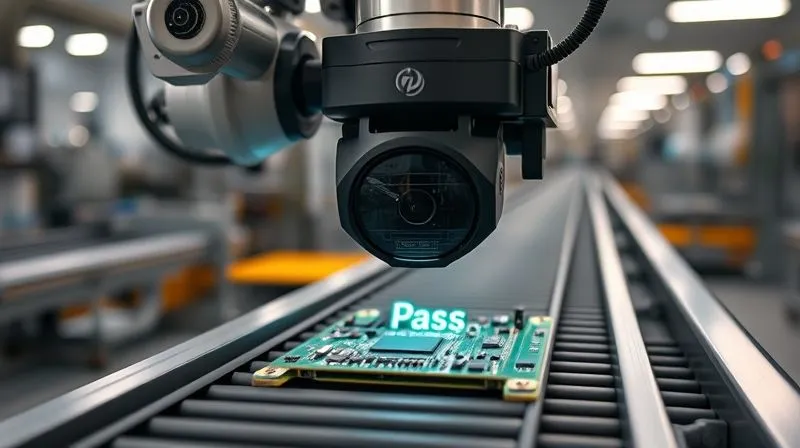
Machine vision is perhaps the most direct replacement for human visual inspection. These systems use cameras and powerful software to inspect products for defects, verify assembly, measure dimensions, and read barcodes with incredible speed and accuracy. They excel at repetitive, high-volume tasks where human attention falters.
IoT Sensors: Real-time Data for Proactive QC
Internet of Things (IoT) sensors can be embedded directly into production lines or products themselves to collect real-time data on temperature, pressure, vibration, humidity, and countless other parameters. This data can be continuously monitored to detect anomalies that indicate potential quality issues *before* they become defects, enabling proactive adjustments.
Robotics and Collaborative Bots (Cobots)
Robots can perform highly repetitive or physically demanding inspection tasks with unwavering consistency. Collaborative robots (cobots) are designed to work alongside humans, assisting with tasks like precise handling of parts for inspection or automated testing, freeing human operators for more complex, cognitive work.
AI and Machine Learning: Predictive Quality Analytics
This is where automation gets truly intelligent. AI and ML algorithms can analyze vast datasets from machine vision systems, IoT sensors, and production logs to identify complex patterns indicative of future defects. This allows for predictive quality control, where potential issues are flagged and corrected before they even manifest, moving beyond reactive inspection to proactive prevention.
Phase 3: Implementing Automation – A Step-by-Step Framework
Implementing automation requires a structured approach to ensure success and avoid common pitfalls. This framework has guided countless organizations in their journey to enhance quality control.
Step 1: Pilot Project Selection and Scope Definition
Don't try to automate everything at once. Select a small, manageable pilot project that has a clear problem, high potential for impact, and minimal complexity. This allows your team to learn, refine processes, and demonstrate early wins. Clearly define the scope, objectives, and success metrics for this pilot.
Step 2: Vendor Selection and Integration Planning
Research and select automation technology vendors with proven expertise and solutions relevant to your needs. Focus on scalability, ease of integration with existing systems (ERP, MES), and robust support. Develop a detailed integration plan, considering hardware, software, network infrastructure, and data flow.
Step 3: Data Collection and Algorithm Training
For AI/ML-driven automation, high-quality data is paramount. Collect diverse datasets of both acceptable and defective products to train your algorithms. The more comprehensive and accurate your training data, the more intelligent and reliable your automated system will become. This is a continuous process.

Step 4: Phased Rollout and Performance Monitoring
Once the pilot is successful, implement a phased rollout strategy across other relevant areas. Continuously monitor the performance of your automated systems against your defined KPIs. Be prepared to iterate and fine-tune algorithms, adjust sensor thresholds, and optimize robotic movements based on real-world data.
Case Study: Zenith Manufacturing's Journey to Zero Defects
Zenith Manufacturing, a mid-sized producer of precision components, struggled with a 4% defect rate for a critical aerospace part, leading to significant rework costs and delayed shipments. By implementing a machine vision system combined with AI-driven defect classification, they automated 95% of their visual inspections. Within six months, their defect rate for that specific part dropped to a remarkable 0.2%, and inspection time was reduced by 70%. This not only saved them over $500,000 annually in rework but also significantly boosted their reputation for reliability, leading to new contracts.
Overcoming Implementation Challenges: A Practical Guide
While the benefits of automation are clear, implementation isn't without its hurdles. Proactive planning can mitigate most challenges.
Addressing Employee Concerns and Reskilling
One of the biggest obstacles is often internal resistance. Employees may fear job displacement. It's crucial to communicate openly, emphasize that automation aims to *enhance* their roles by removing monotonous tasks, and invest in reskilling programs. Train existing staff to operate, maintain, and troubleshoot the new automated systems, transforming them into valuable 'automation supervisors' rather than redundant inspectors.
Ensuring Data Integrity and Cybersecurity
Automated systems generate vast amounts of data. Ensuring its integrity – accuracy, consistency, and reliability – is paramount. Implement robust data validation protocols. Furthermore, as you connect more devices to your network, cybersecurity becomes a major concern. Work with IT to establish strong security measures, including encryption, access controls, and regular audits, as recommended by cybersecurity experts like those at Deloitte.
Integration Complexities and Scalability
Integrating new automation systems with legacy infrastructure can be complex. Plan for APIs, middleware, and data connectors. Consider scalability from the outset; choose solutions that can grow with your business needs without requiring a complete overhaul.
Measuring Success: KPIs for Automated Quality Control
To truly understand the impact of your automation efforts, you need to measure the right things. Here are key performance indicators (KPIs) I recommend tracking:
| KPI | Description | Target |
|---|---|---|
| Defect Rate Reduction | Percentage decrease in detected defects post-automation. | 50-90% |
| Rework/Scrap Costs | Reduction in expenses related to fixing or discarding faulty products. | 30-70% |
| Throughput Increase | Percentage increase in units processed per hour/day due to faster inspection. | 15-50% |
| Customer Complaint Reduction | Decrease in customer-reported quality issues. | 20-60% |
| Inspection Time per Unit | Time saved in quality checks per individual product. | 50-95% |
| First Pass Yield (FPY) | Percentage of products that pass quality checks the first time without rework. | Increase by 5-20 percentage points |
Regularly review these KPIs and use the data to continuously optimize your automated systems. A visual dashboard can be incredibly powerful for tracking these metrics in real-time, providing immediate feedback on your success.

The Future of Quality: Continuous Improvement and AI Integration
The journey to automate manual quality checks to reduce human error is not a one-time project; it's a commitment to continuous improvement. As technology evolves, so too will the capabilities of your quality control systems.
The future lies in increasingly sophisticated AI and machine learning, moving towards self-optimizing quality systems that can predict and prevent issues with minimal human intervention. Imagine systems that not only detect defects but also identify their root cause in real-time and suggest process adjustments autonomously. This level of predictive quality is becoming a reality, as explored in detailed analyses by organizations like the PwC Global Industry 4.0 Survey.
Embrace a culture of innovation, stay informed about emerging technologies, and continuously seek ways to refine your automated processes. The goal isn't just to eliminate human error, but to foster an environment where quality is embedded into every aspect of your operation, driving unparalleled reliability and customer satisfaction.
Frequently Asked Questions (FAQ)
Q: Is automation only for large manufacturing companies? No, automation in quality control is scalable and applicable across various industries and business sizes. While large manufacturers might use complex robotics, smaller businesses can implement simpler, cost-effective solutions like basic machine vision for specific checks or IoT sensors for environmental monitoring. The key is to identify high-impact areas.
Q: How do I justify the initial investment in automation to my leadership? Focus on the ROI. Quantify the hidden costs of manual errors (rework, scrap, warranty claims, lost customers) and project the savings and benefits (defect reduction, increased throughput, improved customer satisfaction, brand reputation) that automation will bring. Use data from your assessment phase to build a compelling business case.
Q: Will automating quality checks lead to job losses? While some roles may be redefined, the goal of smart automation is typically not job elimination but job evolution. Many companies find that automation frees employees from monotonous tasks, allowing them to be upskilled into more valuable roles such as managing automation systems, analyzing data, or focusing on higher-level problem-solving and innovation.
Q: What if our product quality varies significantly, making it hard to train an AI system? This is a common challenge. It requires a more robust data collection strategy, potentially involving manual labeling of diverse defect types and acceptable variations. Consider using transfer learning techniques or consulting with AI specialists who can help design algorithms robust enough to handle variability. Starting with simpler, more consistent quality checks before tackling highly variable ones can also be a good strategy.
Q: How long does it typically take to see results after implementing QC automation? The timeline varies significantly depending on the complexity of the system and the scope of the project. Pilot projects might show results within a few months, while full-scale deployments across an entire operation could take 1-2 years. However, even early results from pilots can demonstrate significant improvements and build momentum for further implementation.
Key Takeaways and Final Thoughts
As an industry specialist, I can confidently say that the future of operational excellence hinges on our ability to embrace intelligent automation. Eliminating human error in quality control isn't just about efficiency; it's about building a foundation of unwavering reliability for your products and services.
- Assess Rigorously: Understand your current manual processes and identify true pain points before automating.
- Strategize Technology: Choose the right mix of machine vision, IoT, robotics, and AI for your specific needs.
- Implement Systematically: Follow a phased approach, starting with pilots, and continuously monitor performance.
- Empower Your Team: Address concerns, reskill employees, and foster a culture that embraces technological advancement.
- Measure Relentlessly: Use KPIs to track ROI and drive continuous improvement.
By taking these steps to automate manual quality checks to reduce human error, you're not just improving a process; you're transforming your entire operation, safeguarding your brand, and positioning your business for sustainable growth in an increasingly competitive world. The journey may require dedication, but the rewards—in terms of quality, efficiency, and peace of mind—are immeasurable.

Recommended Reading
- 7 Reasons Why Your Qualified Small Business Sales Leads Aren't Converting
- 7 Proven Strategies: How to Reduce Operational Waste Without Sacrificing Quality
- Website Traffic, Zero Sales? 9 Fixes for Your Small Business Funnel
- 7 Proven Steps: Revitalizing Your Top Talent's Lost Motivation
- Franchise Agreement Termination Rights: Know Your Exit Strategy





Comments
Leave a comment below. Your email will not be published. Required fields marked with *