

How to Avoid Greenwashing Accusations in CSR Reporting?
For over two decades in the corporate social responsibility (CSR) and sustainability space, I've witnessed the profound impact that genuine, transparent reporting can have on a company's reputation and bottom line. Conversely, I've also seen the devastating consequences when organizations, either intentionally or through oversight, fall into the trap of greenwashing.
The problem is pervasive: in a world increasingly demanding ethical business practices, companies face immense pressure to demonstrate their commitment to sustainability. This pressure, if not managed with integrity, can lead to exaggerated claims, selective disclosures, or outright misleading statements about environmental and social impact, eroding stakeholder trust and inviting harsh accusations of greenwashing.
This article isn't just a discussion; it's a roadmap. I will walk you through actionable frameworks, real-world analogies, and expert insights drawn from years of experience, providing you with the definitive strategies to build genuinely transparent CSR reports and effectively avoid greenwashing accusations in CSR reporting.
Beyond Buzzwords: Defining Authentic CSR & Greenwashing
Before we delve into prevention, it's crucial to understand what we're fighting against. Authentic CSR is about integrating social and environmental concerns into business operations and interactions with stakeholders, driven by a genuine commitment to positive impact. It's not an add-on; it's fundamental.
Greenwashing, on the other hand, is the act of misleading consumers regarding the environmental practices of a company or the environmental benefits of a product or service. It's often characterized by vague statements, irrelevant claims, or outright false advertising. As Harvard Business Review points out, it's a significant threat to corporate credibility.
The distinction lies in intent and verifiable action. Is your company genuinely striving for impact, or is it primarily focused on perception management? This fundamental question guides every step towards truly ethical reporting.
The Foundation of Trust: Data-Driven Materiality Assessment
One of the most common pitfalls I observe is companies reporting on what sounds good, rather than what truly matters to their business and stakeholders. To genuinely avoid greenwashing accusations in CSR reporting, you must start with a robust materiality assessment.
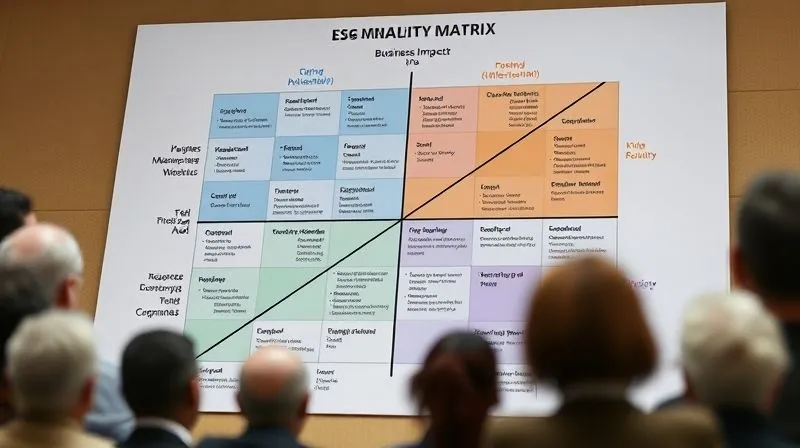
A materiality assessment identifies and prioritizes the most significant environmental, social, and governance (ESG) topics for your business and its stakeholders. It’s a dual lens: what impacts your business financially, and what impacts your stakeholders and the planet.
- Identify Potential ESG Topics: Brainstorm a comprehensive list of environmental, social, and governance issues relevant to your industry (e.g., carbon emissions, water usage, labor practices, data privacy, diversity & inclusion).
- Engage Stakeholders: Conduct surveys, interviews, and workshops with internal (employees, management) and external (customers, investors, suppliers, regulators, communities) stakeholders. Ask them what ESG issues they care about most regarding your company.
- Assess Business Impact: Internally evaluate how each identified topic impacts your company's financial performance, reputation, and operational risks.
- Prioritize and Map: Plot the topics on a materiality matrix, with stakeholder importance on one axis and business impact on the other. Focus your reporting efforts on the top-right quadrant.
- Review and Update: Materiality is not static. Revisit your assessment every 1-2 years to ensure it remains relevant to evolving business contexts and stakeholder expectations.
"Materiality is the compass of authentic CSR. Without it, you're just adrift, picking and choosing what to highlight, which is precisely how greenwashing begins." - Industry Specialist
Setting SMART Goals: Measurable Commitments, Not Vague Promises
Vague aspirations like "we aim to be more sustainable" are red flags for greenwashing. To demonstrate genuine commitment and progress, your CSR goals must be SMART: Specific, Measurable, Achievable, Relevant, and Time-bound. This is a critical component for how to avoid greenwashing accusations in CSR reporting.
For instance, instead of "reduce carbon footprint," a SMART goal would be: "Reduce Scope 1 and 2 greenhouse gas emissions by 30% from a 2022 baseline by the end of 2027, through investments in renewable energy and fleet electrification." This provides a clear benchmark for accountability.
Case Study: How EcoTech Solutions Elevated CSR Credibility
EcoTech Solutions, a mid-sized electronics manufacturer, faced skepticism from investors regarding their sustainability claims. Their initial CSR report was filled with general statements about "environmental stewardship." By embracing SMART goal setting, they transformed their approach.
They set a goal to "achieve 90% recycled content in all product packaging by Q4 2025" and "reduce water consumption in manufacturing by 20% by 2026, relative to 2023 levels." Each goal was accompanied by quarterly progress reports, audited by a third party. This shift from vague promises to concrete, trackable objectives significantly boosted investor confidence and silenced potential greenwashing accusations, demonstrating tangible progress and commitment.
Transparent Reporting: The Pillars of Clarity and Accessibility
The way you present your CSR data is just as important as the data itself. Transparency means more than just disclosing information; it means making that information understandable, accessible, and complete, even when the news isn't all positive.
- Comprehensive Disclosure: Report on both successes and failures. Acknowledge challenges and outline plans for improvement. This builds immense credibility.
- Standardized Frameworks: Utilize recognized reporting standards like GRI (Global Reporting Initiative), SASB (Sustainability Accounting Standards Board), or TCFD (Task Force on Climate-related Financial Disclosures). These provide a structured, comparable format for your data.
- Clear Language: Avoid jargon and overly technical terms. Explain complex concepts in plain language so that a broad audience can understand your impact.
- Accessibility: Make your CSR report easily findable on your company website. Consider interactive dashboards or executive summaries to cater to different stakeholder needs.
| Reporting Standard | Focus Area | Key Benefit for CSR |
|---|---|---|
| GRI (Global Reporting Initiative) | Broadest scope; economic, environmental, social impacts | Comprehensive, globally recognized, stakeholder-inclusive |
| SASB (Sustainability Accounting Standards Board) | Financially material sustainability information by industry | Investor-focused, industry-specific, decision-useful |
| TCFD (Task Force on Climate-related Financial Disclosures) | Climate-related financial risks and opportunities | Forward-looking, risk-focused, integrates climate into financial reporting |
According to a study by Deloitte, companies that adopt internationally recognized reporting standards are perceived as more credible and trustworthy by investors and consumers alike.
Third-Party Verification and Assurance: Building External Credibility
No matter how well-intentioned your internal reporting is, external validation provides an undeniable layer of credibility. This is arguably one of the most effective ways for how to avoid greenwashing accusations in CSR reporting.
Engaging an independent third party to audit or assure your CSR data and claims significantly reduces the risk of greenwashing. These firms specialize in verifying the accuracy and completeness of your non-financial disclosures, much like financial auditors verify financial statements.
Consider the following types of external assurance:
- Limited Assurance: Provides a lower level of confidence, stating that nothing has come to the assurance provider's attention that causes them to believe the information is materially misstated.
- Reasonable Assurance: A higher level of confidence, where the assurance provider concludes that the information is materially correct and presented in accordance with the applicable reporting criteria.
- Certification: For specific claims or products (e.g., organic, fair trade, carbon neutral), obtaining recognized certifications from reputable organizations.
"In the court of public opinion, an independent stamp of approval on your CSR efforts is your strongest defense against skepticism and accusations." - Industry Specialist
Stakeholder Engagement: Listening and Responding Authentically
Authentic CSR isn't a monologue; it's a dialogue. Actively engaging your stakeholders – employees, customers, investors, communities, and NGOs – provides invaluable insights, helps identify blind spots, and builds trust. It also serves as an early warning system for potential greenwashing concerns.
- Regular Feedback Channels: Establish ongoing mechanisms for stakeholders to provide feedback on your CSR performance and initiatives. This could be through dedicated email addresses, online forums, or annual stakeholder dialogues.
- Incorporate Feedback: Demonstrate that you are listening by explicitly addressing feedback in subsequent reports or by adjusting your CSR strategy. If you can't implement a suggestion, explain why.
- Partnerships: Collaborate with NGOs or community organizations on specific projects. Their involvement can lend significant credibility to your efforts and ensure a more impactful outcome.

Continuous Improvement & Adaptive Strategies: The Evolving CSR Journey
The landscape of sustainability and social responsibility is constantly evolving. New scientific discoveries, regulatory changes, and shifting societal expectations mean that what was considered best practice five years ago might be insufficient today. To truly avoid greenwashing, your CSR strategy must be dynamic and committed to continuous improvement.
This means:
- Monitoring Trends: Stay abreast of emerging ESG issues, reporting standards, and stakeholder expectations. Subscribe to industry newsletters, attend conferences, and engage with thought leaders.
- Benchmarking: Regularly compare your performance against industry peers and leading sustainability companies. This helps identify areas for improvement and sets ambitious, yet achievable, targets.
- Innovation: Invest in research and development to find more sustainable processes, products, and services. True innovation is a powerful antidote to greenwashing.
- Transparency in Progress: Report not just on achievements, but also on lessons learned from setbacks. This demonstrates humility and a genuine commitment to the journey, rather than just the destination.
Internal Alignment & Training: Embedding CSR in Company Culture
CSR cannot be an isolated department's responsibility; it must be woven into the fabric of your entire organization. Disconnects between what the CSR report says and what employees experience or what operational practices demonstrate are prime opportunities for greenwashing accusations.
- Leadership Buy-in: Ensure top management is visibly committed to CSR. Their endorsement sets the tone for the entire company.
- Employee Training: Educate employees at all levels about your company's CSR goals, policies, and their role in achieving them. This fosters a shared sense of purpose and ensures consistent messaging.
- Cross-Functional Teams: Establish inter-departmental teams to drive CSR initiatives. This breaks down silos and integrates sustainability into core business functions.
- Incentivization: Consider incorporating CSR metrics into performance reviews and incentive structures, especially for relevant roles, to encourage genuine engagement.

Crisis Management & Proactive Communication: Addressing Accusations Head-On
Despite your best efforts, accusations of greenwashing can still arise, especially in today's hyper-connected world. How you respond can significantly impact the long-term damage. Proactive communication and a clear crisis management plan are essential.
- Monitor Social & Traditional Media: Stay vigilant for any mentions or criticisms regarding your CSR claims. Early detection allows for a quicker, more controlled response.
- Internal Review: If an accusation emerges, immediately conduct an internal review of the specific claim. Gather all relevant data and documentation.
- Transparent & Timely Response: Address the accusation directly, factually, and without defensiveness. If there's a mistake, acknowledge it, explain what happened, and outline corrective actions. If the accusation is unfounded, provide clear evidence to refute it.
- Engage with Critics: Where appropriate, engage directly with the source of the accusation in a constructive manner. This can sometimes de-escalate the situation and build understanding.
As Seth Godin often says, "People do not buy goods and services. They buy relations, stories, and magic." Greenwashing breaks that trust, but authentic engagement can rebuild it.
Frequently Asked Questions (FAQ)
What is the primary risk of greenwashing for a company? The primary risk is a severe loss of trust and reputation among consumers, investors, and other stakeholders. This can lead to decreased sales, investor divestment, regulatory fines, and difficulty attracting and retaining talent, ultimately impacting long-term financial viability.
How can small and medium-sized enterprises (SMEs) avoid greenwashing without extensive resources? SMEs can focus on authentic, local impact. Start by identifying 1-2 material issues relevant to your business and community, set clear and measurable goals, and transparently report on progress. Utilize free resources like the UN Global Compact's principles and focus on genuine action over elaborate reporting. Third-party certifications for specific products can also be a cost-effective way to build credibility.
Is it considered greenwashing if a company reports only positive sustainability impacts and omits negative ones? Yes, selectively reporting only positive impacts while omitting or downplaying negative ones is a common form of greenwashing. True transparency requires a balanced disclosure of both successes and challenges, along with plans for addressing areas needing improvement. This builds credibility and demonstrates a genuine commitment to continuous improvement.
What role do regulatory bodies play in preventing greenwashing? Regulatory bodies are increasingly active in combating greenwashing. They establish guidelines for environmental claims (e.g., FTC Green Guides in the US, Competition and Markets Authority in the UK) and can levy fines or enforce corrective advertising. Investors and consumers are also using legal avenues to hold companies accountable for misleading CSR claims.
How can employees contribute to preventing greenwashing within their organization? Employees are often the first line of defense. By understanding the company's genuine CSR commitments, questioning vague or exaggerated claims, and advocating for data-backed reporting and ethical practices, they can play a crucial role. Reporting concerns through internal channels or whistleblower protections can also be vital.
Key Takeaways and Final Thoughts
Navigating the complex world of CSR reporting requires diligence, integrity, and a steadfast commitment to transparency. Avoiding greenwashing accusations isn't just about PR; it's about building a sustainable, trustworthy business for the long term.
- Prioritize Materiality: Focus on what truly matters to your business and stakeholders.
- Set SMART Goals: Make your commitments measurable and time-bound.
- Embrace Transparency: Report comprehensively, using clear language and recognized frameworks.
- Seek External Validation: Leverage third-party assurance for credibility.
- Engage Stakeholders: Foster dialogue and incorporate feedback.
- Commit to Continuous Improvement: CSR is a journey, not a destination.
- Embed Internally: Make CSR part of your company's DNA, not just a report.
The path to authentic CSR reporting may seem challenging, but the rewards—enhanced reputation, stronger stakeholder relationships, and a genuinely positive impact—are immeasurable. By embracing these strategies, you can confidently stand behind your CSR reports, knowing you've built a foundation of trust that will endure.
Recommended Reading
- Stop Repeat Calls: 7 Proactive Service Strategies Your Business Needs Now
- Boost Your Business: How to Improve Customer Experience Ratings Now
- Hire Remote Talent Without the Headache: The Ultimate Guide
- Secrets Revealed: How to Select Data Visualization for Business Analytics
- How to Effectively Prevent Project Scope Creep & Save Timelines





Comments
Leave a comment below. Your email will not be published. Required fields marked with *