

How to Avoid Greenwashing in Corporate Responsible Investing?
For over two decades in the business and corporate social responsibility landscape, I've witnessed firsthand the profound evolution of responsible investing. What began as a nascent movement driven by ethical conviction has matured into a significant force shaping global capital markets. Yet, with this growth comes a pervasive challenge: greenwashing, a deceptive practice that promises sustainability but delivers little more than clever marketing.
The pain point for many investors, from institutions to individuals, is real. You want your capital to do good, to align with your values, and to contribute to a more sustainable future. But how do you discern genuine commitment from mere lip service? The risk of inadvertently supporting companies that mislead about their environmental, social, and governance (ESG) efforts is not just an ethical dilemma; it's a financial one, potentially exposing you to reputational damage and misallocated resources.
In this definitive guide, I will share the frameworks, insights, and actionable steps I've honed over my career to help you navigate this complex terrain. You'll learn not just what greenwashing is, but precisely how to identify its subtle manifestations and, more importantly, how to build a portfolio rooted in authentic, impactful responsible investing.
Understanding the Greenwashing Phenomenon: More Than Just Marketing
Before we can avoid greenwashing, we must first understand its nature. Greenwashing is the practice of making unsubstantiated or misleading claims about the environmental benefits of a product, service, or company practice. It's a strategic misdirection, designed to capitalize on the growing consumer and investor demand for sustainability without genuinely earning it.
Why is it so prevalent? The reasons are multifaceted. Firstly, there's immense pressure on corporations to appear 'green' or 'socially responsible' to attract capital and customers. Secondly, the ESG landscape is still evolving, with a lack of universally standardized metrics and reporting requirements, creating fertile ground for ambiguity. Lastly, the sheer complexity of supply chains and global operations makes it easy for companies to highlight minor positive actions while obscuring significant negative impacts.
I've observed various forms of greenwashing, from the 'hidden trade-off' where a product is environmentally friendly in one aspect but detrimental in others, to 'vague claims' using buzzwords like 'eco-friendly' without concrete evidence. There's also the 'worshipped false label,' where a company invents its own certification to mislead. Understanding these nuances is your first line of defense.
Step 1: Scrutinize ESG Data with a Skeptical Eye
Beyond the Headlines: Digging into Raw Metrics
The first and arguably most critical step in avoiding greenwashing is to develop a deeply skeptical approach to corporate ESG data. Companies often present data in a way that highlights positives while downplaying negatives. As an experienced industry specialist, I can tell you that the real story is rarely in the glossy executive summary; it's buried in the details.
You need to move beyond marketing materials and dive into primary sources. Look for quantitative data over qualitative statements. Where are the hard numbers? What are the baselines? Are there clear, measurable targets, and is there evidence of progress against those targets? Transparency is key here.
- Demand Specifics: Instead of 'reduced emissions,' ask 'reduced by how much?' and 'from what baseline?'
- Look for Trends: A single year's improvement might be an anomaly. Seek consistent progress over multiple years.
- Understand the Scope: Is the reported data comprehensive (Scope 1, 2, and 3 emissions, for example) or does it conveniently omit significant parts of their environmental footprint?
- Contextualize: Compare the company's performance not just against itself, but against industry peers and best-in-class standards.
"Data without context is just noise. True insight comes from understanding the methodology, scope, and comparative performance of ESG metrics."
When a company proclaims a 'net-zero' target, for instance, it's imperative to understand the pathway to achieving that goal. Is it through genuine operational decarbonization, or heavily reliant on questionable carbon offsets? The devil is truly in these details.

The Pitfalls of Self-Reported Data
Most ESG data is self-reported, which inherently carries a risk of bias. While many companies strive for accuracy, the temptation to present a favorable image is strong. This is where third-party verification becomes invaluable. Look for companies that subject their ESG reports to independent audits or assurance statements.
A report by Deloitte on ESG Assurance highlights the growing importance of external verification in building trust and credibility. While not yet mandatory for all ESG disclosures, companies voluntarily seeking assurance demonstrate a higher level of commitment to accuracy and accountability. Without this, you're relying solely on the company's word, which in the context of avoiding greenwashing, is often not enough.
Step 2: Evaluate Corporate Intent and Business Model Alignment
Is Sustainability Core or Peripheral?
True responsible investing goes beyond mere reporting; it's about identifying companies where sustainability is intrinsically woven into their core business strategy, not just an add-on CSR initiative. I've often seen companies launch impressive-looking 'green' products or campaigns while their primary operations remain environmentally destructive or socially irresponsible. This is a classic greenwashing tactic.
To assess genuine intent, look for evidence that sustainability objectives are integrated into:
- Leadership & Governance: Are ESG metrics tied to executive compensation? Are there dedicated sustainability committees at the board level?
- Budget Allocation: Is there significant investment in R&D for sustainable solutions, renewable energy, or ethical supply chains?
- Operational Changes: Are they fundamentally transforming their production processes, resource consumption, or waste management?
- Core Product/Service: Is their main offering inherently sustainable, or are they simply making a 'less bad' version of a harmful product?
Case Study: EcoInnovate vs. GreenFacade Inc.
Let me illustrate this with a fictional but realistic example. Consider two tech companies: EcoInnovate and GreenFacade Inc.
Case Study: Authenticity vs. Artifice in Tech
EcoInnovate, a mid-sized software developer, publicly committed to carbon neutrality by 2028. Their approach wasn't just buying offsets. They invested heavily in optimizing their data centers for energy efficiency, transitioning to 100% renewable energy providers for all offices, and even developed algorithms to help clients reduce their own digital carbon footprint. Their CEO's compensation was directly linked to achieving these environmental milestones, and sustainability was a standing item on every board meeting agenda. This deeply embedded strategy signaled authentic intent.
In contrast, GreenFacade Inc., a competitor, launched a highly publicized 'Green Gadget' line, emphasizing its use of recycled plastics and energy-efficient components. While laudable, this initiative represented less than 5% of their total product sales. Meanwhile, their core manufacturing processes for their primary product lines remained highly polluting, reliant on non-renewable resources, and their supply chain was riddled with labor concerns. Their 'Green Gadget' was a peripheral marketing play, designed to distract from their broader, less sustainable business model. Investors who looked beyond the 'Green Gadget' PR quickly identified the incongruence, recognizing GreenFacade Inc. as a prime example of greenwashing.
This case highlights the importance of looking at the holistic business model and assessing whether sustainability is a fundamental driver or a convenient marketing veneer.
Step 3: Demand Transparency and Granularity in Reporting
What to Look for in Sustainability Reports
A genuinely responsible company embraces transparency, providing detailed, granular data in its sustainability reports. Greenwashers, conversely, tend to be vague, selective, and superficial. When reviewing these reports, I always advise focusing on several critical elements:
- Specific Metrics & Targets: Are there clear, quantifiable targets (e.g., 'reduce water consumption by 20% by 2025 from a 2020 baseline')?
- Progress Against Targets: Do they report on their actual performance against these targets, including any shortfalls and explanations?
- Scope and Boundaries: Does the report clearly define what's included and excluded (e.g., all global operations, specific business units)?
- Materiality Assessment: Do they identify the most significant ESG issues for their business and industry, and focus their reporting on these?
- Forward-Looking Statements: Beyond past performance, do they articulate clear future strategies and commitments?
"Vague commitments are the hallmark of greenwashing. Genuine sustainability is built on specific, measurable, achievable, relevant, and time-bound (SMART) goals."
For guidance on what robust reporting looks like, familiarizing yourself with frameworks from organizations like the Global Reporting Initiative (GRI) or the Sustainability Accounting Standards Board (SASB) is incredibly useful. These frameworks provide a structured approach to ESG disclosure, making it easier to compare and scrutinize reports. You can explore the GRI Standards here, which are widely used globally.
The Power of Independent Audits and Certifications
Beyond self-reporting, look for external validation. Independent audits of sustainability reports by reputable third-party firms add a layer of credibility. Similarly, certifications from recognized bodies can provide assurance, though it's crucial to understand what each certification truly signifies.
For instance, B Corp certification is a rigorous standard for social and environmental performance, accountability, and transparency. ISO 14001 relates to environmental management systems. Understanding the scope and rigor of these certifications is paramount. Not all 'green labels' are created equal.
| Certification/Standard | Focus Area | Rigor Level |
|---|---|---|
| B Corp | Holistic social & environmental performance, accountability, transparency | High (verified by B Lab) |
| ISO 14001 | Environmental Management Systems (processes) | Medium-High (audited by accredited body) |
| GRI Standards | Sustainability Reporting Framework (guidance for disclosure) | Varies (self-declared application) |
| SASB Standards | Material ESG issues for financial performance (industry-specific) | Varies (self-declared application) |
When you see a certification, ask: Who issued it? What are the criteria? Is it regularly renewed and audited? A company touting an internal, unverified 'green seal' is a red flag.
Step 4: Assess the Materiality of ESG Factors
Focusing on What Truly Matters for the Business
One common greenwashing tactic is to highlight an ESG factor that is largely irrelevant to the company's core business or industry, while ignoring more material issues. For instance, a heavy industrial manufacturer boasting about its paperless office while its main operations contribute significantly to air pollution is engaging in 'misdirection.'
Materiality in ESG refers to the environmental, social, and governance issues that are most significant to a company's financial performance and value creation, as well as its impact on stakeholders. A responsible investor needs to understand what constitutes material ESG factors for a given industry. For an energy company, carbon emissions and climate risk are highly material; for a software company, data privacy and labor practices might be more so.
- Identify Industry-Specific Risks: Research the key environmental and social impacts typically associated with the company's sector.
- Review Materiality Assessments: Many companies now publish a materiality matrix in their sustainability reports, showing what issues they deem most important based on stakeholder input and business impact.
- Cross-Reference with External Data: Consult industry reports, academic studies, and NGO assessments to form your own view on what's material.
- Look for Strategic Alignment: Are the company's sustainability initiatives genuinely addressing its most material ESG risks and opportunities, or are they focusing on low-hanging fruit for PR purposes?
By assessing materiality, you can discern if a company is genuinely addressing its most significant impacts and risks, or merely cherry-picking convenient, less impactful issues to showcase its 'green' credentials.
Step 5: Compare Against Industry Peers and Best Practices
Benchmarking for Authenticity
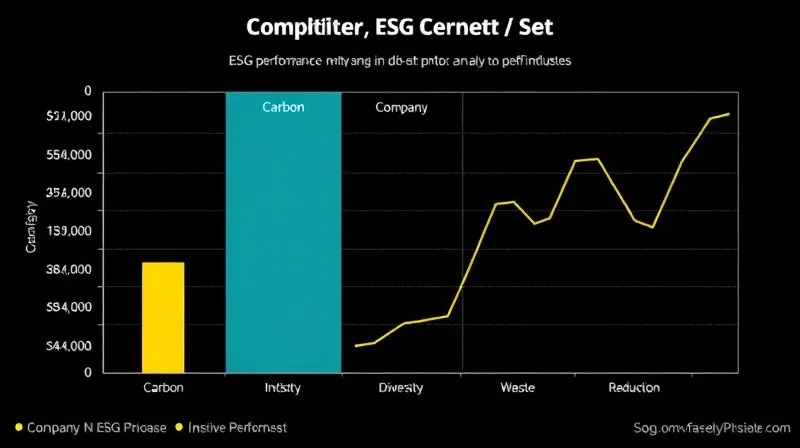
No company operates in a vacuum. To truly understand a company's ESG performance and detect potential greenwashing, you must benchmark it against its industry peers and recognized best practices. A company might appear to be making progress in isolation, but when compared to its competitors, its efforts might be subpar or even misleading.
I've seen many instances where a company proudly announces a minor environmental improvement that is, in fact, standard practice or even lagging behind its peers. This is a subtle form of greenwashing – presenting minimum compliance as leadership.
Here's how to benchmark effectively:
- Peer Group Analysis: Identify direct competitors and analyze their ESG reports, ratings, and commitments. Are they setting more ambitious targets? Implementing more innovative solutions?
- Industry Standards: Research common sustainability challenges and best practices within the specific industry. Is the company meeting or exceeding these?
- ESG Ratings & Indices: Utilize reputable ESG ratings agencies (e.g., MSCI, Sustainalytics, S&P Global ESG Scores). While not perfect, these provide a comparative snapshot and highlight areas of strength and weakness.
- Engagement with Industry Associations: Many industry associations publish benchmarks or guidelines for responsible practices. For example, the UN Global Compact offers principles for businesses to operate responsibly.
Step 6: Understand the Spectrum of Responsible Investing Strategies
Exclusion, Integration, Impact: Knowing the Nuances
Responsible investing isn't a monolithic concept; it encompasses a spectrum of strategies, each with its own approach and potential pitfalls for greenwashing. As an investor, understanding these nuances is crucial for aligning your strategy with genuine corporate action.
- Exclusionary Screening: This involves avoiding investments in certain industries or companies based on ethical criteria (e.g., tobacco, fossil fuels, controversial weapons). While straightforward, a company's overall ESG profile could still be poor even if it avoids these sectors.
- ESG Integration: This is the most common approach, incorporating ESG factors into traditional financial analysis to identify risks and opportunities. Greenwashing often arises here when ESG factors are considered superficially or without robust data.
- Impact Investing: This strategy aims to generate measurable social and environmental impact alongside a financial return. It requires the highest level of scrutiny, as 'impact washing' (claiming impact without delivering it) is a significant risk.
- Thematic Investing: Investing in themes like renewable energy or sustainable agriculture. Here, greenwashing can occur if the underlying companies' entire operations aren't genuinely sustainable.
Each strategy demands a different level of due diligence. For impact investing, for example, you must scrutinize not just the company's intentions but also its measurement and reporting of actual, attributable impact. As Harvard Business Review frequently emphasizes, genuine impact requires rigorous measurement and verification.
Step 7: Engage and Advocate for Greater Accountability
The Investor's Role in Driving Change
Avoiding greenwashing isn't just about passive screening; it's also about active engagement. As an investor, you wield significant power to drive corporate accountability and demand genuine sustainability. This is where your voice, whether individual or collective, can make a substantial difference.
"The most powerful antidote to greenwashing is an informed and engaged investor base demanding real action, not just rhetoric."
Here are ways to engage:
- Shareholder Engagement: Participate in shareholder meetings, ask tough questions about ESG performance, and support shareholder resolutions that push for greater sustainability.
- Proxy Voting: If you own shares, exercise your right to vote on board appointments and company policies, often through proxy statements. Pay attention to how board members are addressing ESG issues.
- Divestment (as a last resort): While often debated, divesting from companies that consistently fail to meet genuine sustainability standards can send a strong signal, especially when coupled with public statements.
- Support Advocacy Groups: Align with investor networks and non-profits that champion responsible investing and hold corporations accountable. Organizations like the Ceres Investor Network are powerful forces in this space.
Your engagement reinforces the message to companies that investors are serious about genuine ESG performance and will not tolerate greenwashing. This collective pressure is a vital mechanism for systemic change.

Frequently Asked Questions (FAQ)
Q: Is all 'green' marketing greenwashing? No, not at all. Many companies genuinely strive for sustainability and communicate their efforts transparently. The distinction lies in authenticity, evidence, and the breadth of their commitment. If claims are specific, verifiable, and backed by systemic change, they are likely legitimate. The problem arises when claims are vague, misleading, or designed to obscure negative impacts.
Q: How can retail investors spot greenwashing without access to institutional resources? Retail investors have powerful tools at their disposal. Focus on publicly available information: sustainability reports (look for GRI/SASB alignment), company websites (check their 'About Us' and 'Sustainability' sections for concrete actions, not just mission statements), news articles, and reputable ESG ratings from sources like MSCI or Sustainalytics. Pay attention to third-party certifications and independent audits. If information is hard to find or vague, that's often a red flag.
Q: What role do regulators play in preventing greenwashing? Regulators are increasingly active. Bodies like the SEC in the US, the European Union (with its SFDR), and national financial authorities are developing and enforcing rules around ESG disclosures and investment product labeling. Their role is to ensure that sustainability claims are accurate and not misleading, protecting investors and promoting market integrity. However, regulation is still catching up with the rapid growth of ESG, so investor vigilance remains crucial.
Q: Can a company genuinely improve after being accused of greenwashing? Absolutely. An accusation of greenwashing can be a powerful catalyst for change. Many companies, when faced with public scrutiny or investor pressure, will re-evaluate their practices and commitments. Look for concrete actions: transparent investigations, revised sustainability strategies, investment in new technologies, and engagement with critics. A willingness to admit shortcomings and implement measurable improvements is a strong indicator of genuine intent to change.
Q: What are the biggest red flags for greenwashing? Based on my experience, the biggest red flags include: vague language ('eco-friendly,' 'sustainable choice' without specifics), hidden trade-offs (solving one problem while creating another), irrelevant claims (highlighting a minor positive while ignoring major negatives), inventing fake labels or certifications, and a lack of verifiable, third-party audited data. If a company's marketing is overwhelmingly green while its core business seems unchanged, proceed with extreme caution.
Key Takeaways and Final Thoughts
Navigating the landscape of responsible investing requires diligence, skepticism, and a commitment to digging beneath the surface. Greenwashing is a persistent challenge, but it's one that informed and engaged investors can overcome. My career has taught me that authentic sustainability is never easy; it's a journey of continuous improvement, transparency, and genuine impact.
- Be a Data Detective: Always scrutinize ESG data, prioritizing quantitative, verified metrics over qualitative claims.
- Assess Intent: Look for sustainability integrated into the core business model, not just peripheral marketing.
- Demand Transparency: Insist on granular reporting, clear targets, and progress against those targets, ideally with third-party assurance.
- Understand Materiality: Focus on ESG issues that are genuinely significant to the company's industry and operations.
- Benchmark Relentlessly: Compare performance against peers and industry best practices to identify true leaders.
- Know Your Strategy: Understand the nuances of different responsible investing approaches and their greenwashing risks.
- Engage Actively: Use your voice as an investor to drive accountability and demand genuine change.
By adopting these seven expert steps, you empower yourself to make investment decisions that truly align with your values and contribute to a more sustainable and equitable world. The future of responsible investing depends on a discerning investor base that champions authenticity and holds corporations accountable. Be that investor, and together, we can ensure that 'green' truly means green.
Recommended Reading
- BI Tools for Small Business Analysis: Unlock Your Data's Secrets
- 7 Critical Legal Steps: Preventing Founder Equity & Control Disputes
- Unlock Resilience: How to Develop Your Comprehensive Risk Response Plan
- Unlock Franchise Success: What Due Diligence is Needed Before Buying?
- The Ultimate Guide: Mastering Best Practices for Workplace Investigations





Comments
Leave a comment below. Your email will not be published. Required fields marked with *