


How to avoid misinterpreting sales data for accurate business forecasts?
For over two decades in the trenches of business analytics, I’ve witnessed countless companies stumble, not from a lack of data, but from a profound misunderstanding of it. The allure of raw numbers can be deceptive, often leading even the sharpest minds down paths paved with misinterpretation.
This misinterpretation of sales data isn't just a minor oversight; it's a silent saboteur that can derail strategic planning, inflate expectations, and ultimately, undermine a company's financial health. It manifests as missed revenue targets, inefficient resource allocation, and a fundamental disconnect between perceived market reality and actual performance.
In this definitive guide, I will share the frameworks, strategies, and hard-won insights necessary to navigate the complexities of sales data. You'll learn how to identify common pitfalls, build robust interpretation models, and foster a data-literate culture that ensures your business forecasts are not just hopeful projections, but accurate, actionable predictions.
The Silent Saboteur: Understanding Data Bias and Its Forms
One of the most insidious threats to accurate data interpretation is bias. It’s often unintentional, deeply embedded in how we collect, process, and even perceive information. Recognizing these biases is the first critical step in learning how to avoid misinterpreting sales data for accurate business forecasts.
Confirmation Bias in Sales Reporting
Confirmation bias is the tendency to search for, interpret, favor, and recall information in a way that confirms one's pre-existing beliefs or hypotheses. In sales, this might mean a sales manager only highlights data points that support their belief about a new product's success, while downplaying or ignoring contradictory evidence.
I've seen sales teams inadvertently skew their reporting to emphasize positive trends, overlooking the underlying stagnation in specific customer segments. This leads to an inflated sense of success and dangerously optimistic forecasts.
Selection Bias and Incomplete Data Sets
Selection bias occurs when the data used for analysis is not representative of the larger population. If you're analyzing sales data only from your top-performing region, you're getting an incomplete and potentially misleading picture of your overall sales health.
Similarly, incomplete data sets, perhaps missing information on customer churn or product returns, can create gaps that lead to flawed conclusions. According to a Deloitte study, organizations that prioritize data quality and completeness achieve significantly better business outcomes.
- Conduct Regular Data Audits: Systematically review your data collection processes and databases. Look for inconsistencies, missing values, and potential sources of skewed information.
- Diversify Data Sources: Don't rely solely on internal sales reports. Incorporate market research, competitor analysis, customer feedback, and economic indicators to provide a more holistic view.
- Standardize Reporting Metrics: Ensure everyone uses the same definitions and methodologies for key performance indicators (KPIs) to prevent subjective interpretation.
Beyond the Surface: Distinguishing Correlation from Causation
A classic analytical pitfall, and one I've frequently helped clients navigate, is confusing correlation with causation. Just because two variables move together doesn't mean one causes the other. This is paramount when you're trying to understand how to avoid misinterpreting sales data for accurate business forecasts.
For instance, an increase in social media engagement might correlate with a rise in sales. However, it doesn't automatically mean the engagement *caused* the sales increase. Both might be independently driven by a successful offline marketing campaign or a seasonal trend.
The danger here is allocating resources based on a false causal link. You might invest heavily in social media, only to find sales stagnate because the real driver was something else entirely.
- Implement A/B Testing: Design controlled experiments to isolate variables. For example, test different pricing strategies or marketing messages on segmented customer groups to see their direct impact on sales.
- Look for Lagging Indicators: Sometimes, a causal relationship reveals itself over time. Analyze if one event consistently precedes another, rather than just co-occurring.
- Consult Domain Experts: Leverage the knowledge of your sales team, product managers, and market analysts. Their qualitative insights can often help confirm or refute potential causal links.

Context is King: Why Raw Numbers Alone Lie
Sales figures, taken in isolation, are often meaningless. To truly understand how to avoid misinterpreting sales data for accurate business forecasts, you must embed those numbers within their broader context. This involves understanding the 'when,' 'where,' and 'why' behind the 'what.'
Seasonality and Cyclical Trends
Many industries experience predictable fluctuations throughout the year. Retail sales peak during holidays, tourism surges in specific seasons, and B2B software often sees a rush at quarter-ends. Failing to account for these cyclical patterns can lead to wildly inaccurate forecasts.
A 20% sales increase in December compared to November might look fantastic in isolation. But if your historical data shows a typical 40% holiday surge, then your 'increase' actually represents a significant underperformance.
External Market Factors and Black Swans
Beyond predictable cycles, external forces can dramatically impact sales. Economic downturns, new competitor entries, regulatory changes, or even global events (like a pandemic) can shift market dynamics overnight. These 'black swan' events, while unpredictable, highlight the need for flexible forecasting models that can adapt to sudden changes.
As Harvard Business Review often emphasizes, market intelligence and external scanning are as crucial as internal data analysis for robust strategic planning.
Case Study: Apex Retail's Holiday Spike
Apex Retail, a mid-sized online fashion retailer, celebrated a record-breaking Q4, with sales up 35% year-over-year. The executive team, buoyed by these numbers, projected aggressive growth for the following year, assuming a continued upward trajectory. However, I advised them to dig deeper.
Upon closer examination, we found that while overall sales were up, their growth during the holiday season was actually *less* than the industry average for that year, and their customer acquisition cost had spiked significantly. The 'record-breaking' quarter was largely a function of overall market buoyancy and heavy promotional spending, not organic growth. By contextualizing their Q4 data against industry benchmarks and marketing spend, Apex avoided setting unrealistic Q1 targets and instead refocused on improving their customer acquisition efficiency.
| Month | Sales (Units) | Seasonal Index | Adjusted Sales |
|---|---|---|---|
| Jan | 1500 | 0.8 | 1875 |
| Feb | 1400 | 0.75 | 1867 |
| Mar | 1700 | 0.9 | 1889 |
| Apr | 1800 | 0.95 | 1895 |
| May | 2000 | 1.05 | 1905 |
| Jun | 2200 | 1.1 | 2000 |
| Jul | 2100 | 1.05 | 2000 |
| Aug | 2300 | 1.15 | 2000 |
| Sep | 2000 | 1.0 | 2000 |
| Oct | 2400 | 1.2 | 2000 |
| Nov | 2800 | 1.4 | 2000 |
| Dec | 3000 | 1.5 | 2000 |
The Peril of Averages: Diving into Data Granularity
Averages are a powerful tool for simplifying complex data, but they can also be incredibly misleading. They smooth over critical variations and mask the true story hidden within your sales figures. When learning how to avoid misinterpreting sales data for accurate business forecasts, you must resist the urge to rely solely on high-level averages.
Imagine a company with an 'average' sales growth of 10%. While seemingly positive, this average could be hiding that 80% of sales are flat, while a small, niche product line is experiencing explosive 200% growth. Focusing only on the average would prevent you from understanding the underlying dynamics and making informed decisions about where to invest.
Segmenting Your Sales Data Effectively
Effective segmentation is key to unlocking deeper insights. Instead of just looking at total sales, break down your data by:
- Customer Segments: High-value clients vs. new customers, B2B vs. B2C.
- Product Lines/SKUs: Identifying top performers, laggards, and emerging stars.
- Geographic Regions: Performance variations across different markets.
- Sales Channels: Online, direct sales, partners, retail.
- Sales Rep Performance: Identifying best practices and areas for coaching.
Each segment will tell a different story, allowing for more targeted strategies and more precise forecasts.
Identifying Outliers and Anomalies
Outliers are data points that significantly deviate from the norm. They can represent extraordinary successes, critical failures, or simply data entry errors. Ignoring them, or worse, including them without careful consideration, can dramatically skew your averages and forecasts.
A single massive deal in a quarter, for example, could make overall sales look fantastic. But if that deal isn't repeatable, future forecasts based on that 'average' will be wildly optimistic.
"Data is not just numbers; it's a narrative waiting to be uncovered. And a good storyteller doesn't just read the headline; they delve into every paragraph, every character, every nuance."
Forecasting Fallacies: Common Mistakes in Prediction Models
Even with clean, contextualized, and granular data, the way you build your forecasting models can introduce significant errors. Understanding these common fallacies is crucial for anyone striving to truly learn how to avoid misinterpreting sales data for accurate business forecasts.
Over-reliance on Historical Data (Without Context)
While historical data is the bedrock of forecasting, it's not a crystal ball. Solely extrapolating past trends into the future, without accounting for market changes, product life cycles, or strategic shifts, is a recipe for disaster. The world is dynamic, and your models must be too.
I've seen companies forecast flat growth for a product based on its past five years, only to be blindsided by a new competitor or a sudden technological shift that renders their product obsolete. Past performance is not always indicative of future results.
Ignoring Leading vs. Lagging Indicators
Lagging indicators tell you what has already happened (e.g., last quarter's sales, customer churn rate). Leading indicators, on the other hand, predict future performance (e.g., website traffic, lead generation, sales pipeline velocity, customer sentiment).
Effective forecasting balances both. An over-reliance on lagging indicators means you're always looking in the rearview mirror, reacting to events instead of anticipating them. Integrating leading indicators allows you to adjust your strategy proactively.
- Develop Dynamic Forecasting Models: Instead of static spreadsheets, utilize models that can incorporate new data points and adjust weights based on changing market conditions. Consider statistical models like ARIMA or exponential smoothing, but always with human oversight.
- Implement Scenario Planning: Create multiple forecasts based on different 'what if' scenarios (e.g., best-case, worst-case, most likely). This prepares your business for various outcomes and highlights potential risks and opportunities.
- Regularly Validate Your Models: Don't just build a model and forget it. Compare its predictions against actual results regularly and fine-tune its parameters to improve accuracy over time.

The Human Element: Cultivating a Data-Literate Sales Culture
Even the most sophisticated tools and methodologies are useless without a human element that understands and trusts the data. Cultivating a data-literate culture is fundamental to learning how to avoid misinterpreting sales data for accurate business forecasts.
I often tell my clients that data interpretation isn't just an analyst's job; it's a company-wide responsibility. When sales teams, marketing, and leadership all speak the same data language, decisions become more cohesive and effective.
Bridging the Gap Between Sales and Analytics
Historically, there's often a chasm between the analytical team (who generate the reports) and the sales team (who live the numbers daily). Analysts might produce intricate dashboards that sales reps find overwhelming or irrelevant, while sales reps might dismiss data that doesn't align with their gut feeling.
Bridging this gap requires mutual understanding and empathy. Analysts need to understand the sales process and the types of insights that are truly valuable on the front lines. Sales reps need to understand the 'why' behind the metrics and the power of data-driven decisions.
Encouraging Critical Thinking
True data literacy isn't just about reading charts; it's about asking the right questions. It's about empowering every team member to look beyond the obvious, challenge assumptions, and seek deeper explanations for observed trends.
This critical thinking fosters a culture of continuous improvement, where everyone contributes to refining data interpretation and forecasting accuracy. As marketing guru Seth Godin often says, true progress comes from curiosity and a willingness to question the status quo.
| Training Module | Key Topics |
|---|---|
| Data Fundamentals for Sales Professionals | Basic statistics, KPI definitions, data visualization interpretation |
| Understanding Sales Pipeline Metrics | Conversion rates, velocity, lead scoring, forecast accuracy calculation |
| Contextualizing Sales Performance | Market trends, competitive analysis, seasonality, economic indicators |
| Identifying and Mitigating Bias | Confirmation bias, selection bias, anchoring effect, data sampling |
| Using CRM & BI Tools for Insights | Dashboard navigation, report generation, self-service analytics |
Leveraging Technology: Tools for Smarter Data Interpretation
In today's fast-paced business environment, manually sifting through mountains of sales data is simply not feasible. Technology plays a pivotal role in enabling businesses to learn how to avoid misinterpreting sales data for accurate business forecasts, offering powerful tools for aggregation, analysis, and visualization.
From robust Customer Relationship Management (CRM) systems to sophisticated Business Intelligence (BI) platforms and predictive analytics solutions, these tools can transform raw data into actionable intelligence, provided they are used correctly.
The Role of AI and Machine Learning
Artificial Intelligence (AI) and Machine Learning (ML) are revolutionizing sales forecasting. These technologies can process vast amounts of data, identify complex patterns that humans might miss, and generate highly accurate predictions. They can account for numerous variables simultaneously, from historical sales and marketing spend to website traffic, weather patterns, and even social media sentiment.
However, it's crucial to remember that AI is a tool, not a replacement for human insight. Its output still needs to be interpreted, validated, and refined by experienced professionals to prevent over-reliance on black-box predictions.
Data Visualization Best Practices
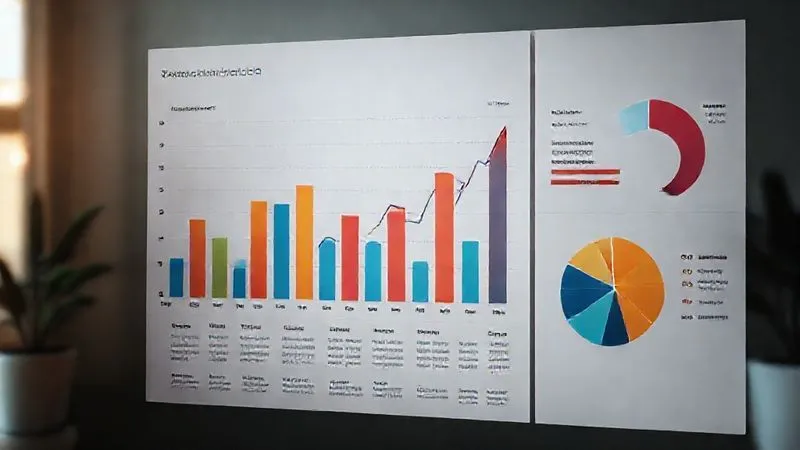
Effective data visualization is paramount for clear interpretation. A poorly designed chart can be just as misleading as no chart at all. Good visualizations make complex data accessible, highlight key trends, and enable quick, informed decision-making.
When creating dashboards or reports, always prioritize clarity, simplicity, and relevance. Use appropriate chart types for the data you're presenting (e.g., line graphs for trends, bar charts for comparisons, scatter plots for correlations). Ensure labels are clear, and avoid visual clutter that can distract from the message.
Building a Robust Data Interpretation Framework
To consistently avoid misinterpreting sales data for accurate business forecasts, you need a systematic, repeatable framework. This isn't a one-time fix but an ongoing process of refinement and critical evaluation.
Such a framework ensures that every decision, from sales strategy to inventory management, is grounded in a deep and accurate understanding of your market reality.
- Define Clear KPIs and Metrics: Before you even look at data, establish what success looks like. What are the key performance indicators that truly drive your business? Ensure these are clearly defined and consistently measured.
- Establish a Regular Data Review Cadence: Don't wait for problems to emerge. Schedule weekly, monthly, and quarterly reviews of your sales data, forecasts, and interpretation methods. This allows for early detection of issues and course corrections.
- Foster Cross-Functional Collaboration: Data interpretation is rarely a solo act. Bring together sales, marketing, finance, and operations teams to review data from different perspectives. This collective intelligence often uncovers insights that individual departments might miss.
- Document Assumptions and Hypotheses: For every forecast and major data-driven decision, clearly document the underlying assumptions. This makes it easier to track why a forecast was accurate or inaccurate and to learn from past experiences.
- Invest in Continuous Learning: The world of data analytics is constantly evolving. Provide ongoing training for your teams on new tools, techniques, and best practices in data interpretation and forecasting.
Frequently Asked Questions (FAQ)
Q: How often should I review my sales data interpretation methods? I recommend a quarterly deep dive into your interpretation methods and models, alongside a more frequent weekly or monthly review of the actual data and forecasts. This balance allows for both agile adjustments and strategic refinement.
Q: What's the biggest mistake companies make in sales forecasting? In my experience, the single biggest mistake is over-optimism, often fueled by an emotional attachment to targets rather than a data-driven reality check. This manifests as ignoring negative indicators, failing to account for external risks, and extrapolating past successes indefinitely.
Q: Can small businesses apply these complex analytics strategies? Absolutely. While small businesses might not have the budget for enterprise-level AI tools, the principles remain the same. Focus on clean data, clear KPIs, understanding context, and fostering a data-curious culture. Many affordable CRM and BI tools now offer powerful analytics capabilities that are accessible to smaller teams.
Q: How do I identify and correct bias in my historical sales data? Start by scrutinizing data collection processes for any inherent biases. Look for patterns where certain segments are over or under-represented. Use statistical techniques to identify outliers and anomalies. Sometimes, external benchmarking against industry averages can highlight where your data might be skewed. For example, if your churn rate is significantly lower than competitors but your revenue isn't growing proportionally, there might be a reporting issue.
Q: What's the role of qualitative data in quantitative sales forecasting? Qualitative data is invaluable. While quantitative data tells you 'what' happened, qualitative data (e.g., customer feedback, sales team insights, market research interviews) tells you 'why.' It provides the context and nuance necessary to interpret quantitative trends accurately, especially when forecasting for new product launches or entering new markets where historical quantitative data is scarce.
Key Takeaways and Final Thoughts
Mastering sales data interpretation is not just about crunching numbers; it's about cultivating a mindset of critical inquiry, strategic thinking, and continuous learning. It's how to avoid misinterpreting sales data for accurate business forecasts, transforming raw figures into a powerful engine for growth.
- Beware of Bias: Actively seek out and mitigate confirmation and selection biases in your data and analysis.
- Distinguish Correlation from Causation: Investigate the true drivers behind trends, rather than assuming simple relationships.
- Embrace Context: Always view sales data through the lens of seasonality, market conditions, and external factors.
- Dive into Granularity: Avoid the peril of averages by segmenting your data for deeper, more actionable insights.
- Challenge Forecasting Fallacies: Build dynamic models, utilize leading indicators, and practice scenario planning.
- Empower Your People: Foster a data-literate culture where critical thinking and collaboration are prized.
- Leverage Technology Wisely: Utilize tools and AI to enhance, not replace, human intelligence in interpretation.
The journey to accurate sales forecasting is an ongoing one, demanding vigilance, curiosity, and a commitment to truth over assumption. By implementing these strategies, you empower your organization to make smarter decisions, navigate market shifts with confidence, and build a future grounded in genuine insight, not just hopeful speculation. The data holds the answers; it's up to us to ask the right questions and listen carefully.
Recommended Reading
- Q3 Profits at Risk? 7 Urgent Strategies to Hedge Currency Volatility Now
- 7 Proven Steps: Reviving Team Performance After Cultural Clashes
- 7 Steps: Reduce Customer Churn from Inconsistent Service Delivery
- Fix Your Flawed Business Formation Fast: 7 Urgent Legal Steps
- 7 Non-Dilutive Strategies: Secure Rapid Growth Capital Now






Comments
Leave a comment below. Your email will not be published. Required fields marked with *