


How to Build a Predictable Revenue Growth Pipeline From Scratch?
For over 15 years in business development, I've seen countless companies struggle with one fundamental challenge: inconsistent revenue. They ride the roller coaster of feast or famine, celebrating big wins one quarter only to panic the next as the pipeline dries up. This isn't just frustrating; it's unsustainable, leading to burnout, missed targets, and ultimately, stalled growth.
Many entrepreneurs and sales leaders I've coached share this pain. They feel like they're constantly chasing leads, reacting to market shifts, and guessing where their next sale will come from. The absence of a clear, repeatable system for generating and converting opportunities leaves them vulnerable and unable to make strategic, long-term decisions.
But what if you could change that? What if you could implement a system that reliably feeds your sales team with qualified leads, guides them through a clear process, and allows you to forecast revenue with confidence? In this definitive guide, I'll walk you through my proven 7-step framework on how to build a predictable revenue growth pipeline from scratch, transforming your business from reactive to proactive, and setting the stage for sustainable, exponential growth.
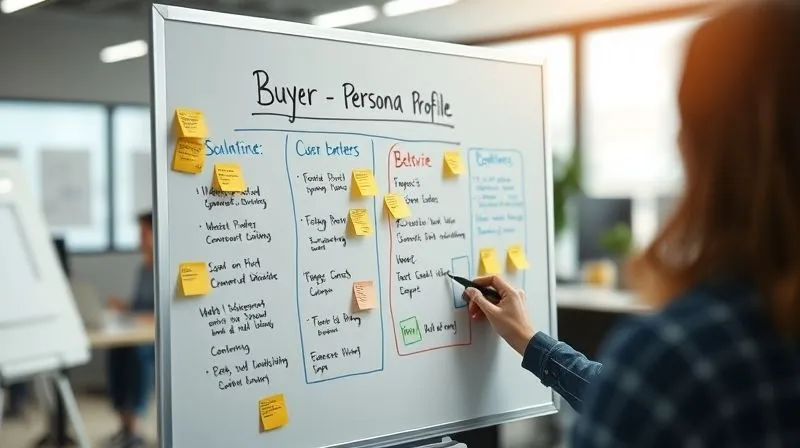
Step 1: Define Your Ideal Customer Profile (ICP) & Buyer Persona
Before you even think about generating leads or making a sale, you must understand precisely who you're trying to reach. This isn't just about identifying a target market; it's about crafting a crystal-clear Ideal Customer Profile (ICP) and detailed buyer personas. Without this foundational step, your efforts will be scattered, inefficient, and ultimately, unpredictable.
Beyond Demographics: Psychographics and Pain Points
An ICP goes beyond basic demographics like industry, company size, and revenue. It delves into the psychographics, challenges, and aspirations of the organizations and individuals you serve best. It's about understanding their strategic goals, their operational hurdles, and the specific problems your solution is uniquely positioned to solve.
- Interview Existing Customers: Your best source of insight. Talk to your happiest, most profitable clients. What problems did they have before you? Why did they choose you? What results have they seen?
- Analyze Your Data: Look at your CRM. Which customer segments have the highest lifetime value (LTV)? Which have the shortest sales cycles? Which are most profitable? This data will highlight common characteristics of your ideal customers.
- Research Your Market: Study industry reports, competitor analyses, and market trends. Identify emerging needs and underserved segments where your offering can shine.
- Create a Detailed Profile: Document your ICP with firmographics (industry, size, location), technographics (tech stack), behavioral traits (innovators vs. traditionalists), and most importantly, their core pain points and business objectives.
- Develop Buyer Personas: For each key stakeholder within your ICP, create a specific persona. Give them a name, job title, responsibilities, goals, challenges, and how they prefer to consume information.
Step 2: Craft a Compelling Value Proposition & Messaging
Once you know who you're talking to, the next crucial step is to articulate *why* they should listen. Your value proposition isn't just a statement; it's the core promise of your business, explaining how you solve your ICP's problems and deliver specific benefits better than anyone else. Without a clear, concise, and compelling value proposition, your marketing and sales efforts will fall flat, and your pipeline will remain empty.
The Core Message: Solving Real Problems
A strong value proposition focuses on the customer's perspective, highlighting the transformation you offer rather than merely listing features. It should be clear, concise, and communicate the specific outcomes your ideal customer can expect. Think about what truly differentiates you in a crowded market.
- Identify Your Unique Selling Proposition (USP): What makes you different? Is it your technology, your service model, your niche expertise, or your pricing? Be honest about what truly sets you apart.
- Analyze Competitors: Understand what your rivals offer and how they position themselves. This helps you find gaps in the market and refine your differentiation.
- Focus on Benefits, Not Just Features: Instead of saying 'Our software has X feature,' say 'Our software helps you achieve Y benefit by doing X.' Connect features directly to tangible gains for the customer.
- Test Your Messaging: Don't assume your message resonates. Test different headlines, calls-to-action, and value statements with your target audience. Use A/B testing on landing pages and email campaigns to see what performs best.
- Keep it Simple and Clear: Your value proposition should be easily understood by a fifth-grader. Avoid jargon and overly complex language.
"Your value proposition isn't what you sell; it's the unique problem you solve better than anyone else, articulated in a way that resonates deeply with your ideal customer."
For more insights on developing a robust value proposition, I highly recommend exploring resources from Harvard Business Review, which often covers this topic in depth.
Step 3: Design Your End-to-End Sales Pipeline Stages
With your ideal customer defined and your value proposition sharpened, it's time to map out the journey they'll take from initial awareness to becoming a paying customer. This is the blueprint for your predictable revenue growth pipeline from scratch. A well-defined pipeline provides clarity, allows for accurate forecasting, and helps identify bottlenecks.
Common Pipeline Stages and Metrics
While the specific names might vary, most effective sales pipelines follow a logical progression. I advocate for a clear, measurable stage for every significant interaction or decision point a prospect makes. Each stage should have defined entry and exit criteria, along with key performance indicators (KPIs) to track progress.
| Stage | Description | Key Metric |
|---|---|---|
| Awareness | Prospect learns about a problem they have and your solution exists. | Leads Generated, Website Traffic |
| Interest | Prospect actively seeks more information about your offering. | Marketing Qualified Leads (MQLs), Content Downloads |
| Consideration | Prospect evaluates your solution against alternatives. | Sales Qualified Leads (SQLs), Demo Requests |
| Decision | Prospect is ready to buy and makes a final choice. | Opportunities Created, Proposal Sent |
| Closed-Won | Sale completed, contract signed, and revenue recognized. | Revenue Won, New Customers |
| Post-Purchase | Customer onboarding, retention, and potential upsell/cross-sell. | Customer Lifetime Value (CLV), Churn Rate |
Each of these stages should be clearly defined within your CRM system. This allows your sales team to understand exactly where each prospect stands and what the next logical action should be. It also gives leadership visibility into the health of the pipeline and enables more accurate forecasting. Remember, the goal is to create a seamless, logical flow that guides prospects efficiently.
For further reading on structuring effective sales pipelines, resources from industry leaders like Salesforce offer excellent insights into best practices.
Step 4: Implement Diverse Lead Generation Strategies
A predictable revenue pipeline needs a consistent, high-quality flow of leads. Relying on a single source is a recipe for unpredictability. To truly build a predictable revenue growth pipeline from scratch, you need a diversified approach to lead generation, leveraging both inbound and outbound methodologies.
Inbound vs. Outbound: A Balanced Approach
Inbound strategies attract prospects to you through valuable content and experiences, while outbound strategies involve actively reaching out to potential customers. The most successful businesses combine both, creating a robust lead engine.
- Inbound Strategies:
- Content Marketing: Create high-quality blog posts, whitepapers, e-books, webinars, and videos that address your ICP's pain points and offer solutions. Optimize this content for search engines.
- Search Engine Optimization (SEO): Ensure your website and content rank high on Google for relevant keywords. This drives organic traffic and passive lead generation.
- Social Media Marketing: Engage with your audience on platforms where your ICP spends time. Share valuable content, participate in industry discussions, and run targeted ads.
- Email Marketing: Build an email list through content offers and nurture subscribers with valuable information, leading them towards a sales conversation.
- Outbound Strategies:
- Cold Outreach (Email/LinkedIn): Craft personalized, value-driven messages to prospects who fit your ICP. Focus on solving a specific problem you've identified.
- Networking & Events: Attend industry conferences, trade shows, and local business events. These provide excellent opportunities for face-to-face interactions and relationship building.
- Partnerships & Referrals: Collaborate with complementary businesses or leverage your existing customer base for referrals. These leads often come with higher trust and conversion rates.
- Paid Advertising: Utilize platforms like Google Ads, LinkedIn Ads, or Facebook Ads to target your ICP with highly specific messages and offers.
The key is to track the performance of each channel. Which sources deliver the most qualified leads? Which have the lowest cost per lead? Continuously optimize your spend and effort based on data. For more strategies on generating high-quality leads, HubSpot's resources on lead generation are incredibly valuable.
Step 5: Nurture Leads and Qualify Opportunities Rigorously
Generating leads is only half the battle; the other half is effectively nurturing them and rigorously qualifying opportunities. A common mistake I've observed is treating all leads equally or pushing them to sales too soon. This wastes valuable sales time and leads to frustration. A predictable pipeline requires a systematic approach to moving prospects through the funnel.
Lead Scoring and Sales Enablement
Effective lead nurturing involves providing relevant information at the right time, building trust and demonstrating expertise. Lead scoring helps you prioritize who to engage with and when.
- Implement Lead Scoring: Assign points to leads based on their demographic information (e.g., job title, company size matching your ICP) and their behavioral engagement (e.g., website visits, content downloads, email opens). High-scoring leads are typically warmer and ready for sales engagement.
- Automated Nurture Sequences: Set up email automation workflows that deliver targeted content based on a lead's actions and stage in the pipeline. This keeps your brand top-of-mind and educates prospects without constant manual effort.
- Develop Qualification Criteria: Before a lead becomes a sales-qualified opportunity (SQL), define clear criteria. Frameworks like BANT (Budget, Authority, Need, Timeline), MEDDIC (Metrics, Economic Buyer, Decision Criteria, Decision Process, Implicate the Pain, Champion), or GPCTBA/C&I (Goals, Plans, Challenges, Timeline, Budget, Authority, Negative Consequences & Positive Implications) can guide your sales team in assessing fit and readiness.
- Sales Enablement Content: Equip your sales team with the right tools and content to engage prospects effectively. This includes battle cards, case studies, product sheets, and objection-handling guides tailored to specific pipeline stages.
- CRM Integration: Ensure your CRM is the central hub for all lead data, interactions, and qualification scores. This provides a unified view and prevents information silos.
Case Study: How TechSolutions Inc. Boosted Conversion Rates by 25%
TechSolutions Inc., a mid-sized B2B software company, struggled with their sales team spending too much time on unqualified leads. Their marketing team was generating a high volume of leads, but the conversion rate from MQL to SQL was low, leading to burnout and missed targets. By implementing a refined lead scoring system, they assigned scores based on explicit demographic data matching their ICP and implicit behavioral data (e.g., attending a webinar, downloading a specific whitepaper). Leads above a certain score were then entered into a segmented, automated nurture sequence, and only those showing high intent were passed to sales. This strategic shift reduced the number of unqualified leads passed to sales by 40% and, more importantly, increased their MQL to SQL conversion rate by a remarkable 25% within six months. The sales team could now focus on truly engaged prospects, leading to higher morale and significantly improved efficiency.
Understanding effective lead nurturing and qualification is paramount. For further reading, Gartner's research often provides deep dives into B2B sales and marketing strategies.
Step 6: Optimize Your Sales Process and Conversion Points
Even with qualified leads entering your pipeline, a clunky or inefficient sales process can derail your predictability. This step focuses on refining every interaction, honing your team's skills, and removing friction points to maximize conversion rates. It's about turning a series of actions into a smooth, repeatable, and highly effective system.
Continuous Improvement and A/B Testing
Your sales process isn't static; it should be a living, breathing system that you continuously analyze and optimize. Every touchpoint, from the initial outreach to the final close, presents an opportunity for improvement.
- Develop a Sales Playbook: Document your entire sales process, including scripts, discovery questions, presentation templates, and objection-handling strategies for each stage. This ensures consistency and acts as a training guide for new hires.
- Refine Discovery Calls: Train your sales team to ask probing, open-ended questions that uncover deep pain points and quantify the impact of those problems. The better you understand the problem, the more effectively you can position your solution.
- Master Presentation & Demo Skills: Focus on tailoring presentations to the specific needs and challenges of each prospect. Don't just show features; demonstrate how your solution directly addresses their pain points and delivers measurable value.
- Proactive Objection Handling: Anticipate common objections and prepare compelling responses. Train your team to view objections as opportunities to further understand and reassure the prospect, rather than roadblocks.
- Streamline Proposal & Contract Phases: Make it easy for prospects to move forward. Ensure proposals are clear, concise, and accurately reflect the discussed solution. Simplify the contracting process as much as possible.
- Analyze Lost Deals: Regularly review why deals are lost. Is it pricing? Competition? Lack of perceived value? Use this feedback to refine your process, messaging, or even product.
- A/B Test Messaging & Tactics: Experiment with different email subject lines, call scripts, and closing techniques. Track which approaches yield better results and integrate the learnings into your playbook.
"Sales is not about pushing product; it's about guiding prospects to the best solution for their needs, building trust, and demonstrating undeniable value every step of the way."
Step 7: Measure, Analyze, and Forecast for Predictability
This is where the 'predictable' in predictable revenue growth pipeline from scratch truly comes to life. Without rigorous measurement and analysis, your pipeline is just a series of activities. By consistently tracking key metrics, you gain the insights needed to forecast revenue accurately, identify trends, and make data-driven decisions to optimize your entire growth engine.
Key Metrics for Pipeline Health and Revenue Forecasting
Focus on a handful of critical metrics that provide a holistic view of your pipeline's performance. These aren't just vanity metrics; they are indicators of health and future revenue.
- Lead-to-Opportunity Conversion Rate: The percentage of leads that become qualified opportunities.
- Opportunity-to-Win Rate (Win Rate): The percentage of opportunities that close as won deals.
- Average Deal Size: The average revenue generated per closed-won deal.
- Sales Cycle Length: The average time it takes for a deal to move from opportunity creation to closed-won.
- Pipeline Coverage: The ratio of your total pipeline value to your revenue target. A healthy pipeline usually has 3-5x coverage.
- Stage-to-Stage Conversion Rates: The percentage of deals that move from one stage to the next. This highlights bottlenecks.
| Metric | Target | Observation | Action |
|---|---|---|---|
| Conversion Rate (MQL to SQL) | 20% | 15% | Refine MQL criteria, improve lead nurturing content |
| Average Deal Size | $10,000 | $8,000 | Upsell/cross-sell training, focus on higher-value ICP segments |
| Sales Cycle Length | 45 days | 60 days | Streamline proposal process, improve discovery call efficiency |
| Win Rate | 25% | 20% | Enhance objection handling, competitive positioning training |
By tracking these metrics diligently in your CRM, you can build accurate forecasting models. For instance, if your average deal size is $10k, your win rate is 25%, and your sales cycle is 60 days, you can project how many new opportunities you need to create today to hit your revenue target two months from now. This data-driven approach removes guesswork and makes your growth truly predictable.

Continuous analysis of these metrics allows you to identify trends, pinpoint areas for improvement, and allocate resources effectively. For deeper dives into sales forecasting methodologies, I recommend exploring articles on Forbes, which frequently feature expert insights on this topic.
Frequently Asked Questions (FAQ)
Q: How long does it typically take to build a predictable revenue pipeline from scratch? A: Building a truly predictable revenue pipeline is an ongoing process, but you can start seeing significant improvements in 3-6 months. The initial setup (ICP, value prop, pipeline stages) can take 4-8 weeks. Implementing lead generation, nurturing, and sales process optimization will then take another 2-4 months to gather enough data for accurate predictability. It's a marathon, not a sprint, requiring consistent effort and refinement.
Q: What's the biggest mistake companies make when trying to build a predictable pipeline? A: The single biggest mistake is inconsistency and lack of discipline. Many companies jump from one tactic to another, fail to define their ICP, or neglect to measure their results. A predictable pipeline demands a systematic, data-driven approach and a commitment to refining each stage based on performance. Another common error is mistaking activity for progress – a full pipeline of unqualified leads is worse than a smaller, well-qualified one.
Q: Can small businesses or startups realistically achieve predictable revenue? A: Absolutely. In fact, it's even more critical for them. Startups often have limited resources, so every sales and marketing dollar must be spent effectively. By focusing on a niche ICP, crafting a sharp value proposition, and meticulously building out their pipeline with measurable stages, even small businesses can establish predictability and scale efficiently. The principles apply universally, regardless of size.
Q: How do I choose the right CRM for pipeline management? A: Choosing a CRM depends on your specific needs, budget, and team size. Key considerations include ease of use, integration capabilities with your other tools (marketing automation, accounting), customization options for your unique sales process, reporting features, and scalability. Popular choices include Salesforce, HubSpot CRM, Zoho CRM, and Pipedrive. Start with your requirements, get demos, and prioritize user adoption.
Q: What role does marketing play in a predictable revenue pipeline? A: Marketing plays an absolutely crucial role. It's not just about generating leads; it's about generating *qualified* leads, nurturing them through the early stages, and providing sales with the content and insights they need to close deals. A truly predictable pipeline requires tight alignment and seamless handoffs between marketing and sales. Marketing builds awareness, educates prospects, and fuels the top of the funnel, making sales' job far more efficient.
Key Takeaways and Final Thoughts
Building a predictable revenue growth pipeline from scratch might seem daunting, but it's an achievable and essential endeavor for any business aiming for sustainable growth. It's about laying a solid foundation, implementing systematic processes, and committing to continuous improvement.
- Know Your Customer: Start with a deep understanding of your Ideal Customer Profile and buyer personas.
- Articulate Your Value: Craft a compelling value proposition that clearly solves their problems.
- Map Your Journey: Design clear, measurable sales pipeline stages.
- Diversify Your Fuel: Implement diverse lead generation strategies, both inbound and outbound.
- Nurture & Qualify: Systematically nurture leads and rigorously qualify opportunities.
- Optimize Your Process: Continuously refine your sales process and conversion points.
- Measure for Mastery: Track key metrics, analyze performance, and use data for accurate forecasting.
Remember, predictability isn't about magic; it's about method. By meticulously following these steps and fostering a culture of data-driven decision-making, you can transform your revenue generation from a chaotic guessing game into a well-oiled, predictable engine for growth. The journey requires patience and persistence, but the rewards – consistent revenue, scalable growth, and peace of mind – are immeasurable. Start building your predictable pipeline today, and watch your business thrive.
Recommended Reading
- Quiet Quitting? 5 Wellbeing Strategies to Re-Engage Your Workforce Now
- 7 Reasons Why Your Qualified Small Business Sales Leads Aren't Converting
- Unmasking Deception: How Corporate Governance Prevents Fraud Effectively
- Small Business Litigation: How to Avoid Costly Legal Battles
- 7 Steps: Confidently Reverse a Poor Strategic Business Decision





Comments
Leave a comment below. Your email will not be published. Required fields marked with *