


How to Demonstrate Clear ROI for Complex Consulting Projects?
For over 18 years in strategic business consulting, I've seen countless brilliant projects flounder not due to poor execution, but due to a fundamental failure in articulating their tangible value. The board asks, 'What was the return on this significant investment?' and far too often, the answer is a vague, qualitative narrative.
The inherent complexity of modern consulting engagements – often touching upon organizational change, digital transformation, cultural shifts, or long-term strategic repositioning – makes quantifying direct financial returns a formidable challenge. It’s not like buying a new machine where you can easily calculate increased output or reduced costs. These projects yield a mosaic of benefits, some immediate and others unfolding over years.
This guide isn't just about crunching numbers; it's about building a robust framework for value articulation. I'll share actionable strategies, expert insights, and real-world approaches that will empower you to not only measure but also compellingly demonstrate clear ROI for complex consulting projects, transforming perception into undeniable proof.
Beyond the Numbers: Redefining ROI in Complex Consulting
When we talk about Return on Investment, our minds often jump straight to financial metrics. While crucial, this narrow view often fails to capture the full spectrum of value generated by complex consulting engagements. These projects frequently lay groundwork for future growth, enhance organizational resilience, or foster innovation, which don't always translate directly into next quarter's P&L statement.
The Intangible Value Proposition
Many consulting projects deliver significant 'intangible' benefits: improved employee morale, enhanced brand reputation, strengthened corporate culture, or increased strategic agility. These are not easily monetized, yet they are critical drivers of long-term success and competitive advantage. Ignoring them means presenting an incomplete picture of value.
"True ROI in complex projects isn't just about what you gain immediately, but about the strategic options you create and the risks you mitigate for the future." - My observation from years in the field.
Our challenge, then, is to develop a holistic view of ROI that encompasses both the quantitative and qualitative impacts. This requires a shift in mindset, moving from a purely transactional perspective to one that values strategic enablement and foundational improvements.

Phase 1: Precision in Pre-Engagement – Setting the Stage for Measurable Success
The most critical phase for demonstrating ROI begins long before the project officially kicks off. It's in the initial scoping and proposal development where you lay the foundation for future measurement. Without clearly defined objectives and agreed-upon metrics, proving success becomes an exercise in guesswork.
- Define Clear, Measurable Objectives: Work rigorously with the client to establish S.M.A.R.T. (Specific, Measurable, Achievable, Relevant, Time-bound) objectives. These shouldn't just be project deliverables, but the *business outcomes* those deliverables are intended to achieve. For example, instead of 'Implement new CRM,' aim for 'Increase customer retention by 10% within 12 months post-CRM implementation.'
- Establish a Baseline: Before any intervention, you must accurately capture the current state. What are the key performance indicators (KPIs) relevant to your objectives *today*? This baseline will be your crucial point of comparison for measuring impact. Without it, you cannot definitively attribute changes to your consulting efforts.
- Agree on Measurement Methodology and Metrics: Jointly decide *how* success will be measured. Will it be through financial models, operational efficiency gains, customer satisfaction scores, employee engagement surveys, or a combination? Document these metrics and the data sources clearly in the project charter. According to a Harvard Business Review article on S.M.A.R.T. goals, this upfront alignment is paramount for effective project management and evaluation.
- Identify Key Stakeholders and Their Definition of Value: Different stakeholders will have different perspectives on what 'value' means. The CFO might prioritize financial returns, while the Head of HR focuses on talent retention. Understand these varied perspectives and build a comprehensive value proposition that addresses them all.
- Quantify Potential Impact (Even if Estimated): Even for complex, qualitative outcomes, try to estimate their financial implications. What is the cost of poor employee morale? What is the revenue impact of increased strategic agility? These estimates, while not exact, provide a powerful narrative for potential ROI.
By investing heavily in this pre-engagement phase, you transform the abstract concept of 'value' into concrete, measurable goals, making the task of how to demonstrate clear ROI for complex consulting projects significantly more manageable.
Phase 2: During the Engagement – Real-time Tracking and Value Articulation
The project's execution phase is not just about doing the work; it's about continuously demonstrating progress towards the agreed-upon outcomes. This proactive approach helps manage client expectations, identifies potential roadblocks early, and builds a compelling narrative for the eventual ROI calculation.
Iterative Reporting and Stakeholder Alignment
Regular, transparent communication is vital. Establish a cadence for reporting on progress against the defined metrics, not just task completion. This involves more than just status updates; it requires articulating how current activities are directly contributing to the anticipated ROI. This iterative reporting reinforces the value being created and keeps all stakeholders aligned on the ultimate goals.
"Visibility into progress is not just good project management; it's proactive ROI demonstration. Show them the engine turning, not just the finished car." - My personal philosophy on client engagement.
Consider creating a 'value dashboard' that visually tracks key indicators, even if some are leading indicators of future financial returns. This helps maintain focus on the desired business outcomes throughout the project lifecycle.
| Key Performance Indicator | Baseline (Q1) | Current (Q3) | Target (Q4) | Comment |
|---|---|---|---|---|
| Employee Engagement Score | 65% | 72% | 75% | On track for target; attributable to new communication strategy. |
| Process Cycle Time (Order-to-Delivery) | 7 days | 5 days | 4 days | Significant improvement from process re-engineering. |
| Strategic Initiative Adoption Rate | 30% | 60% | 75% | Improved through leadership workshops & internal comms. |
| Data Quality Score | 70% | 85% | 90% | Direct result of data governance framework implementation. |
This real-time tracking allows for mid-course corrections and provides concrete data points to support your final ROI presentation. It also builds trust, showing the client that you are as invested in their outcomes as they are.
Phase 3: Post-Engagement – Quantifying Impact and Sustaining Value
The moment of truth arrives after the consulting engagement concludes. This is when the true ROI needs to be rigorously quantified and clearly communicated. The groundwork laid in Phases 1 and 2 now pays off, providing the data necessary to make a compelling case.
The Power of Post-Implementation Review
A structured post-implementation review is essential. This isn't just a wrap-up meeting; it's a dedicated effort to measure the actual impact against the established baselines and objectives. It's where you gather the evidence to definitively demonstrate clear ROI for complex consulting projects.
- Collect and Analyze Data: Gather all relevant data for the agreed-upon metrics. Compare post-project performance with the pre-project baseline. Utilize statistical analysis where appropriate to show significant changes.
- Attribute Impact: While it's challenging to isolate the impact of consulting efforts entirely, use logical arguments and supporting data to attribute observed changes. Show how your recommendations and implementations directly led to the improvements.
- Quantify Financial Benefits: Convert both tangible and intangible gains into financial terms wherever possible. For instance, reduced employee churn (intangible) can be translated into savings on recruitment and training costs (tangible). Increased strategic agility might lead to faster market entry, which can be modeled for revenue impact.
- Develop a Comprehensive Value Report: This report should not just be a data dump. It needs to tell a compelling story, using visuals, executive summaries, and clear explanations to highlight the value created.
- Plan for Sustained Value: ROI isn't a one-time event. Discuss with the client how the value created will be sustained and built upon. This demonstrates a long-term partnership approach and reinforces the lasting impact of your work. As a Deloitte report on value realization emphasizes, sustained value is the ultimate measure of successful consulting.
Case Study: How Apex Innovations Boosted Market Share
Apex Innovations, a mid-sized technology firm, struggled with declining market share due to an outdated product portfolio and slow innovation cycles. Our consulting engagement focused on reorganizing their R&D department, implementing agile development methodologies, and fostering a culture of rapid prototyping. The initial objectives included a 15% increase in new product launches and a 5% market share gain within 18 months.
By establishing clear baselines for innovation velocity and market share, and tracking these metrics quarterly, we could demonstrate progress. Post-engagement, Apex Innovations reported a 20% increase in viable product concepts reaching market, leading to a 6.2% market share gain within the stipulated timeframe. This translated into an additional $12 million in revenue in the first year alone, clearly demonstrating a substantial ROI on their consulting investment.
Building a Robust ROI Framework: Tools and Methodologies
To consistently demonstrate clear ROI for complex consulting projects, you need more than just good intentions; you need structured frameworks. These methodologies provide a systematic way to identify, measure, and report value.
The Balanced Scorecard Approach
Developed by Robert Kaplan and David Norton, the Balanced Scorecard is an excellent framework for complex projects because it looks beyond purely financial metrics. It organizes objectives and measures across four perspectives:
- Financial: How do we look to shareholders? (e.g., revenue growth, cost reduction, profit margins)
- Customer: How do customers see us? (e.g., satisfaction, retention, market share)
- Internal Business Processes: What must we excel at? (e.g., operational efficiency, innovation rate, quality)
- Learning and Growth: How can we continue to improve and create value? (e.g., employee skills, culture, technology readiness)
By defining metrics within each of these perspectives, you create a holistic view of value creation that addresses both immediate financial gains and long-term strategic benefits. This is particularly effective for projects with broad organizational impact.
Economic Value Added (EVA) and Return on Investment (ROI)
While the Balanced Scorecard provides a broader view, traditional financial metrics like EVA and ROI are still vital for the financial perspective. EVA measures a company's financial performance based on the residual wealth calculated by deducting its cost of capital from its operating profit. ROI, as we know, directly compares the net profit or loss relative to the cost of an investment.
For complex projects, these might be calculated based on specific project-related costs and attributable financial benefits over a defined period. It’s crucial to clearly define the scope of costs and benefits included in these calculations to maintain credibility.
Overcoming Common Pitfalls in ROI Measurement
Even with the best intentions and frameworks, demonstrating ROI for complex consulting projects can be fraught with challenges. Recognizing these pitfalls is the first step toward mitigating them.
- Attribution Difficulty: It's hard to isolate the impact of a single consulting project amidst numerous other internal and external factors.
- Lack of Baseline Data: Often, clients don't have robust baseline data, making 'before and after' comparisons problematic.
- Long Time Horizons: The benefits of strategic or cultural transformation can take years to materialize, exceeding typical project timelines.
- Resistance to Measurement: Some stakeholders may resist rigorous measurement, viewing it as an unnecessary burden or a threat.
- Over-reliance on Qualitative Data: While important, qualitative data alone is often insufficient to convince financially-minded decision-makers.
- Poor Communication: Even if ROI is achieved, failure to communicate it effectively can lead to its undervaluation.
To counter attribution difficulty, focus on 'contribution' rather than sole 'attribution,' clearly outlining the specific mechanisms through which your work influenced outcomes. For long time horizons, establish interim milestones and leading indicators that predict future success. According to a Forbes article on data accuracy, ensuring the integrity of your data sources is fundamental to overcoming these challenges.
Leveraging Storytelling and Visualizations to Communicate Impact
Numbers alone can be dry. To truly make your ROI demonstration resonate, you need to weave a compelling narrative around the data. Storytelling, supported by powerful visualizations, transforms raw figures into an understandable and memorable account of value creation.
The Narrative of Value Creation
Start with the client's initial pain point – the 'before' state. Describe the challenges, the lost opportunities, and the costs. Then, introduce your consulting intervention as the catalyst for change. Detail the actions taken, the milestones achieved, and the specific ways your work addressed those initial problems. Conclude with the 'after' state: the tangible improvements, the strategic advantages gained, and the quantifiable ROI. This narrative makes the data come alive, connecting the dots for your audience.
Use analogies and metaphors to explain complex concepts. For instance, instead of just stating 'improved data quality,' you might say 'we transformed a murky swamp of inconsistent data into a clear, navigable river of actionable insights, fueling faster, more confident decisions.' This kind of language creates a vivid mental picture.
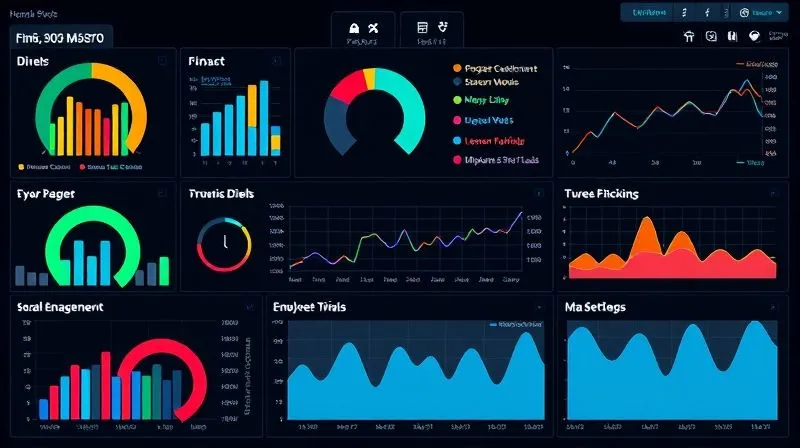
Visual aids are indispensable. Infographics, dynamic dashboards, before-and-after charts, and even short video testimonials can dramatically enhance the impact of your ROI presentation. Humans are visual creatures, and well-designed visuals can convey complex information far more effectively than dense paragraphs of text.
| Metric Category | Before Consulting | After Consulting | Quantified Value |
|---|---|---|---|
| Operational Efficiency | Avg. 14 days for new product launch cycle | Avg. 8 days for new product launch cycle | $1.2M/year in accelerated revenue & reduced overhead |
| Customer Experience | NPS Score: 35 | NPS Score: 55 | Estimated 10% reduction in churn, $750K/year in retention |
| Employee Productivity | 25% time spent on manual data entry | 5% time spent on manual data entry | Equivalent to 3 FTEs saved, $300K/year in labor costs |
By combining rigorous data analysis with compelling storytelling and powerful visuals, you not only demonstrate clear ROI for complex consulting projects but also inspire confidence and cement your role as a trusted partner.
Frequently Asked Questions (FAQ)
Question: How do you measure the ROI of purely strategic consulting, like market entry strategy, where direct financial impact is not immediate? Measuring ROI for purely strategic consulting requires a focus on leading indicators and potential value. Instead of immediate P&L impact, we establish metrics around market research validation, speed to market for initial pilots, stakeholder alignment on strategic direction, reduction in perceived risk, and the establishment of key partnerships. We then model the potential financial upside of these strategic advancements, often presenting a range of possible ROIs based on different adoption and success rates. It's about demonstrating value creation through optionality and risk mitigation.
Question: What if the client doesn't have good baseline data? How do you still prove ROI? This is a common challenge. When robust baseline data is absent, we employ several strategies. First, we might conduct a rapid diagnostic phase to establish a proxy baseline using industry benchmarks, historical averages, or qualitative assessments from key personnel. Second, we focus on 'directional ROI' – showing significant positive trends and qualitative improvements that are clearly attributable to our intervention, even if precise quantification is difficult. Third, we emphasize the cost of *not* acting, illustrating the financial implications of maintaining the status quo. In such cases, the ROI story often becomes more qualitative but still powerfully persuasive.
Question: How do you handle situations where external factors significantly impact results, making attribution difficult? Attribution in complex environments is rarely 100% clean. My approach is to acknowledge external factors transparently. We model different scenarios and isolate the 'consulting effect' as much as possible by using control groups (if feasible), statistical regression, or expert judgment to estimate the impact of external variables. We also focus on demonstrating the *organizational capability* built by the consulting project that enabled the client to better navigate or capitalize on those external factors, rather than claiming sole credit for market shifts.
Question: What's the best way to present ROI to a skeptical executive board? To a skeptical board, clarity, conciseness, and credibility are paramount. Start with an executive summary that clearly states the investment, the measured ROI, and the key benefits. Use data visualizations that are easy to digest and highlight the most impactful numbers. Focus on financial metrics, but quickly follow with strategic and operational benefits that support the long-term value. Be prepared to defend your attribution and methodology, but avoid getting bogged down in excessive detail. Ultimately, it’s about answering their core question: 'Was this a good investment, and why?'
Question: Should qualitative benefits always be quantified, or is there a place for non-monetized value? While I always advocate for quantifying benefits where possible, there absolutely is a place for non-monetized value. Not everything can or should be forced into a dollar figure. Improved employee morale, enhanced brand equity, or increased organizational learning are real, significant benefits. The key is to articulate them clearly and explain *why* they are valuable, even if they don't have a direct financial tag. These qualitative benefits often serve as leading indicators for future financial performance and contribute to the overall resilience and strategic advantage of the organization.
Key Takeaways and Final Thoughts
- Start Early and Be Precise: ROI demonstration begins in the pre-engagement phase with clear objectives, baselines, and agreed-upon metrics.
- Adopt a Holistic View: Embrace both quantitative and qualitative measures, using frameworks like the Balanced Scorecard to capture the full spectrum of value.
- Track and Communicate Continuously: Provide real-time updates on progress against ROI metrics throughout the engagement to manage expectations and build confidence.
- Rigorously Quantify Post-Engagement: Conduct thorough post-implementation reviews, attributing impact and converting benefits into financial terms wherever possible.
- Master the Art of Storytelling: Use narrative and powerful visualizations to make your ROI data compelling and easily understandable for all stakeholders.
- Address Pitfalls Proactively: Be prepared for challenges like attribution difficulty and lack of baseline data, and have strategies to address them.
Demonstrating clear ROI for complex consulting projects is not an optional extra; it is fundamental to proving your value, securing future engagements, and building lasting client relationships. It requires discipline, strategic thinking, and a commitment to transparency. By embracing the frameworks and strategies I've outlined, you're not just reporting on past performance; you're actively shaping the perception of your impact and solidifying your position as an indispensable strategic partner. Go forth and prove your worth – the data, and your narrative, are your most powerful allies.
Recommended Reading
- Decoding Franchise Profit: 7 Expert Steps Beyond Franchisor Claims
- The Secret to Lasting Change: How to Sustain Continuous Improvement Culture
- 5 Proven Strategies: Maintain Ethics Under Extreme Business Pressure
- 7 Steps to Win C-Suite Buy-In for Radical Strategic Shifts
- 7 Reasons New Franchise Owners Fail (And How to Avoid Them)





Comments
Leave a comment below. Your email will not be published. Required fields marked with *