


How to Demonstrate Measurable Impact of Community Programs?
For over 15 years in the trenches of Corporate Social Responsibility (CSR) and community involvement, I've seen countless well-intentioned programs falter not because they lacked heart, but because they lacked a clear voice to articulate their value. Many organizations pour significant resources into community initiatives, only to struggle when asked to quantify the difference they're truly making.
The problem isn't a lack of impact; it's often a lack of a robust, systematic approach to measuring and communicating that impact. In an era where stakeholders – from investors and employees to consumers and regulators – demand transparency and accountability, simply 'doing good' is no longer enough. You must be able to prove it, to show the tangible, measurable outcomes of your efforts.
This article isn't just another theoretical discussion. Drawing on my extensive experience, I'm going to provide you with a definitive, actionable framework on how to demonstrate measurable impact of community programs. We'll delve into strategic planning, data collection, analysis, and compelling reporting, equipping you with the tools to not only measure your impact but to truly amplify your organization's commitment to social good.
Why Measuring Impact is Non-Negotiable for CSR Success
In today’s corporate landscape, CSR is no longer a peripheral activity; it's a strategic imperative. But for CSR to be truly impactful and sustainable, its value must be clearly understood and articulated across the organization. This is where robust impact measurement becomes absolutely critical.
Firstly, it justifies investment. When you can demonstrate a clear return – be it social, environmental, or even financial – you secure continued funding and leadership buy-in. Secondly, it drives strategic alignment. Knowing what works (and what doesn't) allows you to refine your programs, allocate resources more effectively, and ensure your community efforts genuinely support your overall business objectives and values.
Finally, and perhaps most importantly, measurable impact builds trust and credibility. It shows stakeholders that your commitment is genuine, transparent, and results-oriented, moving beyond mere 'feel-good' initiatives to 'do-good-and-prove-it' endeavors.
“In my experience, the moment you articulate the 'why' and 'how much' of your social investment, your community programs transform from discretionary spending into strategic assets. Measurement is the language of value.”
Defining Your Impact: Goals, Objectives, and Baseline Metrics
Before you can measure anything, you must know what you intend to achieve. This foundational step is often overlooked, leading to vague data collection and inconclusive results. A clear understanding of your program's intended impact is the bedrock of effective measurement.
The Power of a Theory of Change
A Theory of Change (ToC) is a comprehensive description and illustration of how and why a desired change is expected to happen in a particular context. It maps out the causal pathways linking your program's activities to its ultimate long-term goals. It forces you to think critically about your assumptions and the logical steps required for impact.
- Identify Your Long-Term Goal: What is the ultimate societal change you wish to contribute to? (e.g., 'Reduced youth unemployment in Region X').
- Work Backwards: What preconditions must be met for that long-term goal to occur? (e.g., 'Youth have relevant skills', 'Local businesses are hiring').
- Map Your Interventions: How do your specific program activities contribute to these preconditions? (e.g., 'Offer vocational training workshops', 'Facilitate job fairs').
- Articulate Assumptions: What external factors or beliefs must hold true for your pathways to succeed? (e.g., 'Local economy is stable', 'Youth are motivated to learn').
- Define Indicators: For each step, identify what you will measure to know if progress is being made.
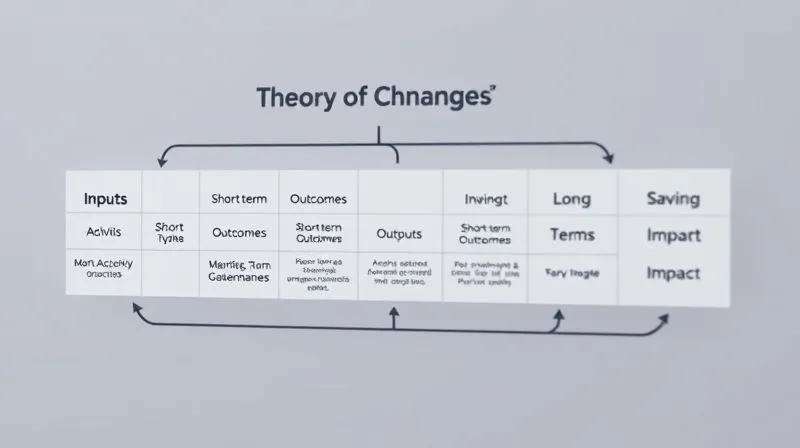
Establishing Clear KPIs and Baseline Data
Once your ToC is clear, you can define specific Key Performance Indicators (KPIs) for each stage. KPIs should be SMART: Specific, Measurable, Achievable, Relevant, and Time-bound. It's crucial to differentiate between different types of metrics:
- Inputs: Resources invested (e.g., volunteer hours, financial donations, materials).
- Outputs: Direct products of your activities (e.g., number of workshops held, meals served, trees planted).
- Outcomes: Changes in knowledge, attitudes, skills, behaviors, or conditions experienced by participants (e.g., 'X% of participants gained new skills', 'Y% reported improved well-being'). Outcomes are often short to medium-term.
- Impact: The long-term, significant, and sustainable changes in people's lives or the environment to which your program contributed (e.g., 'Z% reduction in local unemployment rate', 'Improved air quality in target area').
Equally important is collecting baseline data – measurements taken *before* your program begins. Without a baseline, you have no reference point to truly assess change. For instance, if you aim to improve literacy rates, you need to know the initial literacy rate of your target group.
| Metric Type | Examples | Why it matters |
|---|---|---|
| Inputs | Volunteer hours, budget allocated, materials donated | Shows resource commitment |
| Outputs | Number of participants, workshops delivered, trees planted | Direct results of activities |
| Outcomes | Improved skills, increased awareness, behavioral changes | Short-to-medium term changes experienced by beneficiaries |
| Impact | Reduced poverty, improved health, environmental restoration | Long-term, systemic societal change |
Choosing the Right Measurement Frameworks and Tools
With your goals and KPIs defined, the next step is selecting the appropriate methods and tools for data collection. There's no one-size-fits-all solution, as the best approach depends on your program's nature, scale, and resources.
Quantitative vs. Qualitative Data Collection
A balanced approach often yields the richest insights:
- Quantitative Data: Focuses on numbers and statistics. It answers 'how many,' 'how much,' 'how often.' Methods include surveys (pre/post-program), administrative data (e.g., attendance records, service usage), statistical analysis, and tracking objective metrics like graduation rates or pollution levels. This data is essential for showing scale and statistical significance.
- Qualitative Data: Focuses on understanding experiences, perceptions, and motivations. It answers 'why' and 'how.' Methods include interviews, focus groups, case studies, storytelling, and observational notes. Qualitative data provides context, depth, and the human story behind the numbers, which is crucial for truly understanding impact.
Leveraging Technology for Data Management
Manual data collection and analysis can be prone to errors and incredibly time-consuming. Modern technology offers powerful solutions:
- CRM Systems: Many customer relationship management (CRM) platforms can be adapted to track beneficiary interactions and program participation.
- Specialized Impact Measurement Software: Platforms like Salesforce.org's Nonprofit Cloud, Impact Reporting & Investment Standards (IRIS+), or dedicated social impact measurement tools are designed specifically for tracking social outcomes. These can streamline data collection, analysis, and reporting.
- Survey Tools: Online platforms like SurveyMonkey or Qualtrics facilitate easy distribution and analysis of surveys.
As highlighted by the Stanford Social Innovation Review, effective impact measurement often requires a blend of rigor and adaptability, leveraging both established frameworks and innovative technological solutions to capture the full picture of change.
Gathering Data: Best Practices for Accuracy and Ethics
The quality of your insights directly depends on the quality of your data. Sloppy data collection can lead to misleading conclusions and undermine your entire impact assessment. Adhering to best practices ensures both accuracy and ethical conduct.
Sampling Strategies and Data Integrity
When collecting data from a large community, you often can't reach everyone. Sampling involves selecting a representative subset of the population. Various methods exist, such as random sampling, stratified sampling, or convenience sampling, each with its own strengths and limitations. The key is to choose a method that minimizes bias and allows for generalizable findings.
Data integrity is paramount. This means ensuring your data is accurate, consistent, and reliable. Implement strict protocols for data entry, storage, and cleaning. Train your data collectors thoroughly to ensure consistency in how information is gathered. Regular checks and audits can help identify and rectify errors early.
Ensuring Participant Privacy and Informed Consent
Community programs often involve sensitive personal information. Ethical data collection requires:
- Informed Consent: Participants must fully understand the purpose of the data collection, how their data will be used, who will have access to it, and that their participation is voluntary. This should be obtained clearly and documented.
- Anonymity and Confidentiality: Where possible, collect data anonymously. If not, ensure confidentiality by protecting personal identifiers and aggregating data for reporting.
- Data Security: Implement robust security measures to protect collected data from unauthorized access, breaches, or loss. Comply with relevant data protection regulations (e.g., GDPR, HIPAA).

Analyzing Your Data: From Raw Numbers to Actionable Insights
Once you've collected your data, the real work of uncovering impact begins. This stage involves transforming raw data into meaningful insights that tell your program's story.
Statistical Analysis and Trend Identification
For quantitative data, statistical analysis is key. This might involve:
- Descriptive Statistics: Summarizing your data (e.g., averages, percentages, frequencies).
- Inferential Statistics: Drawing conclusions about a population based on a sample (e.g., t-tests to compare pre/post-program scores, regression analysis to identify relationships between variables).
- Trend Analysis: Looking for patterns over time, which can reveal the sustainability or evolution of your program's effects.
Don't be intimidated by complex statistics; even basic analysis can yield powerful insights. The goal is to identify significant changes, correlations, and deviations from your baseline data.
Attribution vs. Contribution: Understanding Your Program's Role
A common challenge in impact measurement is distinguishing between attribution and contribution. Attribution means unequivocally proving that your program *alone* caused a specific outcome. This is incredibly difficult, as community changes are almost always influenced by multiple factors (e.g., other organizations, government policies, economic shifts).
More realistically, CSR programs demonstrate contribution – showing that your efforts played a significant role alongside other factors. Your goal is to provide compelling evidence that your program was a necessary and important ingredient in achieving the observed positive changes. This nuanced understanding is critical for accurate reporting and setting realistic expectations.
A recent report by PwC on CSR trends emphasizes the shift towards integrated reporting that acknowledges the complex web of influences on social outcomes, encouraging companies to focus on their unique contribution rather than sole attribution.
Crafting a Compelling Impact Report: Storytelling with Data
Collecting and analyzing data is only half the battle. The other half is effectively communicating your findings. An impact report isn't just a collection of numbers; it's a narrative that brings your community involvement to life, demonstrating its true value.
Structuring Your Report for Different Audiences
Consider who will read your report: employees, investors, community partners, customers, regulators? Each audience has different interests and levels of detail they require. A well-structured report might include:
- Executive Summary: High-level overview of key achievements and impacts.
- Program Overview: What the program is, its goals, and target beneficiaries.
- Methodology: How impact was measured (briefly).
- Key Findings: Detailed quantitative and qualitative results, linked back to your goals.
- Case Studies/Stories: Humanizing the data with real-life examples.
- Challenges and Learnings: Transparency about what didn't work and how you adapted.
- Future Plans: How the findings will inform future strategy.
Visualizing Data for Maximum Engagement
Visuals are incredibly powerful. They can simplify complex data, highlight key trends, and make your report far more engaging:
- Infographics: For presenting complex data in an easily digestible format.
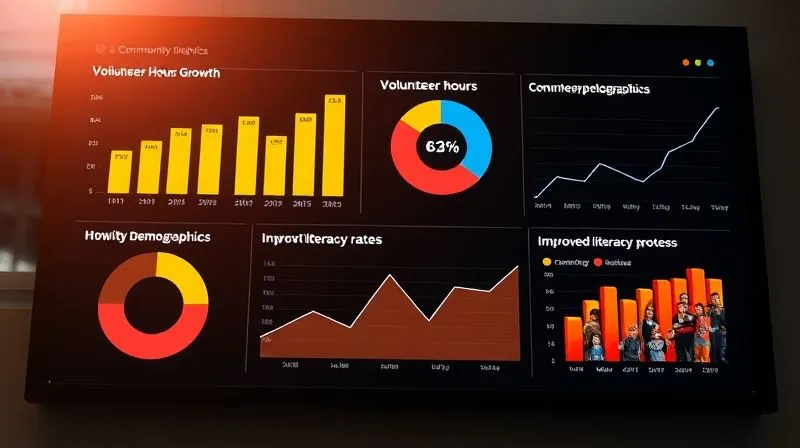
- Charts and Graphs: Bar charts for comparisons, line graphs for trends, pie charts for proportions.
- Maps: To show geographical reach and impact.
- Before & After Photos: For tangible visual proof of change (e.g., renovated community spaces).
- Videos: Short testimonials or program highlights can add a dynamic element.
Case Study: How GreenSolutions Transformed Local Communities
Case Study: GreenSolutions' Measurable Impact on Urban Greening
GreenSolutions, a mid-sized landscaping and environmental services firm, initiated a 'Greener Neighborhoods' program aimed at revitalizing neglected urban parks and increasing community engagement in environmental stewardship. Their initial challenge was to move beyond simply reporting 'number of trees planted' to demonstrating a broader, measurable impact.
The Approach: They developed a robust Theory of Change. Their long-term goal was 'Improved urban environmental health and community well-being.' They identified key outcomes like 'Increased local biodiversity,' 'Reduced localized air pollution,' and 'Enhanced community cohesion.' Baselines were established by measuring initial air quality, conducting biodiversity surveys, and surveying residents on their sense of community before any intervention.
Measurement & Results: Over three years, GreenSolutions meticulously tracked inputs (volunteer hours, saplings planted), outputs (number of park clean-ups, educational workshops), and, crucially, outcomes. They partnered with local universities for air quality monitoring, used citizen science apps for biodiversity tracking, and conducted annual resident surveys. The data showed:
- A 15% increase in local bird species diversity in targeted parks.
- A measurable reduction in particulate matter (PM2.5) by 8% in adjacent areas.
- A 25% increase in residents reporting a 'strong sense of community belonging' and a 30% increase in park usage for recreational activities.
The Impact: By demonstrating these tangible outcomes beyond just planting trees, GreenSolutions secured additional funding from municipal grants, saw a 10% increase in employee volunteer participation, and significantly boosted their brand reputation as a true environmental leader. Their impact report, rich with both scientific data and compelling resident testimonials, became a cornerstone of their external communications.
Beyond Reporting: Integrating Impact Measurement into Strategy
Impact measurement isn't a one-off event; it's an ongoing cycle of learning and improvement. The true power of measurement lies in its ability to inform and refine your future CSR strategy.
Using Insights for Program Refinement and Expansion
The data you collect should be a mirror reflecting your program's effectiveness. Are you achieving your desired outcomes? Are there unintended consequences? Where are the gaps? Use these insights to:
- Refine Program Design: Tweak activities, target beneficiaries more precisely, or adjust delivery methods.
- Allocate Resources: Shift resources from less effective areas to those showing strong impact.
- Identify New Opportunities: Discover unmet needs or areas where your organization can create even greater value.
- Scale Up: Confidently expand successful programs to new communities or larger scales.
Communicating Your Impact Internally and Externally
Don't let your meticulously collected data gather dust. Share your findings broadly:
- Internal Communication: Share impact reports with employees, leadership, and board members. This fosters pride, engagement, and continued support for CSR initiatives.
- External Communication: Integrate impact stories into your annual reports, sustainability reports, marketing materials, social media, and press releases. This enhances brand reputation, attracts talent, and builds trust with consumers and investors.
As explored in Harvard Business Review's discussions on CSR, strategic integration of social impact into core business functions is what truly elevates CSR from a cost center to a value driver. Measurable impact is the evidence that fuels this integration.
Common Pitfalls and How to Avoid Them
Even with the best intentions, organizations can stumble when trying to demonstrate measurable impact of community programs. Here are some common traps and how to navigate them:
- Starting Without Clear Goals: Don't begin a program without a clear Theory of Change and defined KPIs. Without knowing what success looks like, you can't measure it.
- Neglecting Baselines: Without 'before' data, you can't truly prove 'after' changes. Invest time in establishing your starting point.
- Focusing Only on Outputs: While outputs are easy to measure, they don't tell the full story. Prioritize outcomes and long-term impact to show true value.
- Data Paralysis: Don't aim for perfection to the point where you never start. Begin with what's feasible and refine your approach over time. Incremental measurement is better than none.
- Ignoring Qualitative Data: Numbers alone can be sterile. The human stories behind the statistics provide essential context and emotional resonance.
- Lack of Resources: Impact measurement requires dedicated time, budget, and expertise. Integrate these needs into your program planning from the outset.
“The journey to demonstrating measurable impact is less about finding a perfect formula and more about cultivating a culture of curiosity, learning, and continuous improvement. Embrace the iterative process.”
Frequently Asked Questions (FAQ)
Q: What if our program's impact is long-term and hard to see immediately? A: Many significant community impacts, like improved educational attainment or environmental restoration, take years to materialize fully. In these cases, focus on measuring short and medium-term outcomes that logically lead to the long-term impact, as outlined in your Theory of Change. For example, measure improved literacy scores now, knowing that this contributes to higher educational attainment later. Also, clearly communicate the expected timeline for ultimate impact to stakeholders.
Q: How do small non-profits measure impact without large budgets? A: Resource constraints are real. Small organizations can start by focusing on a few key, high-leverage indicators. Leverage existing data (e.g., administrative records), conduct simple surveys, use free online tools, and engage volunteers for data collection. Partnering with local universities or pro bono consultants can also provide expertise without significant cost. The key is to be strategic and realistic about what you can measure effectively.
Q: What's the fundamental difference between outputs, outcomes, and impact? A: This is a crucial distinction. Outputs are the direct, quantifiable results of your activities (e.g., '100 people attended a workshop'). Outcomes are the changes experienced by individuals or groups due to those outputs (e.g., '80% of attendees reported increased knowledge of financial literacy'). Impact refers to the broader, long-term, systemic changes in society or the environment to which your program contributed (e.g., 'A 5% reduction in local household debt over five years'). Outcomes are often stepping stones to impact.
Q: How do I engage stakeholders in the measurement process? A: Engaging stakeholders is vital for both buy-in and richer data. Involve them from the outset in defining what success looks like and what should be measured. This could include community members, beneficiaries, employees, and partners. Their perspectives can help shape relevant indicators and provide valuable qualitative data through interviews or focus groups. Regularly share progress and findings to maintain their involvement and demonstrate transparency.
Q: Can you recommend a universal impact measurement tool? A: Unfortunately, there isn't a single 'universal' tool because programs and contexts vary so widely. However, frameworks like the Impact Reporting and Investment Standards (IRIS+) or the UN Sustainable Development Goals (SDGs) provide common language and indicators that can be adapted. For software, platforms like Salesforce.org's Nonprofit Cloud, Social Solutions' Apricot, or even advanced features in Excel/Google Sheets can be powerful depending on your scale and needs. The best 'tool' is often a customized approach built on sound methodology.
Key Takeaways and Final Thoughts
Demonstrating the measurable impact of community programs is no longer a 'nice-to-have' but a fundamental pillar of credible CSR. It’s about more than just reporting; it’s about strategic clarity, continuous improvement, and authentic storytelling.
- Start with a clear Theory of Change: Define your goals, objectives, and baseline from the outset.
- Embrace both quantitative and qualitative data: Numbers tell you 'what,' stories tell you 'why.'
- Leverage technology wisely: Streamline data collection and analysis to save time and improve accuracy.
- Communicate with purpose: Tailor your impact reports to different audiences, using compelling visuals and narratives.
- Integrate learning: Use your findings to refine, adapt, and scale your programs for even greater good.
As an industry specialist, I can assure you that investing in robust impact measurement is one of the most strategic decisions you can make for your community programs. It transforms your efforts from acts of goodwill into powerful drivers of positive change, securing their future and amplifying their reach. Go forth, measure, and tell your incredible story of impact with confidence and clarity.
Recommended Reading
- 9 Ways to Slash AfCFTA Customs Delays & Boost Your Trade
- Unlock Success: 7 Strategies to Overcome Succession Planning Resistance in HR
- 5 Steps to Combat Greenwashing & Rebuild Your Company's Reputation
- R&D Priority Clash: 7 Steps to Align Projects with Diverse Goals
- 7 Steps: How to Build Team Resilience After Project Failure?





Comments
Leave a comment below. Your email will not be published. Required fields marked with *