


How to Demonstrate Tangible ROI from SDG-Aligned CSR Programs?
For over 15 years in the corporate social responsibility and sustainability sphere, I've seen countless companies invest significant resources into admirable initiatives, only to falter when it comes to articulating their true business value. It's a common, frustrating cycle: a passionate team launches an impactful program, perhaps aligned with one or more Sustainable Development Goals (SDGs), but struggles to translate the 'good' into 'tangible financial returns' for the board or investors.
This isn't for lack of effort or impact; often, the problem lies in a disconnect between the noble intentions of CSR and the rigorous, data-driven language of business finance. Companies genuinely want to contribute to a better world, but if they cannot demonstrate a clear return on investment (ROI), these programs risk being seen as discretionary expenses rather than strategic assets, especially during economic downturns.
In this definitive guide, I will share the frameworks, metrics, and communication strategies I've honed over years of experience. You'll learn not just how to measure impact, but specifically how to demonstrate tangible ROI from SDG-aligned CSR programs, transforming them from 'nice-to-haves' into indispensable drivers of long-term business success and stakeholder value.
Understanding the Evolving Landscape: Beyond Philanthropy
The notion of Corporate Social Responsibility has undergone a profound transformation. What once might have been confined to philanthropic donations or ad-hoc community projects has evolved into a strategic imperative, deeply interwoven with a company's core business model and long-term viability. Today, CSR is increasingly framed within the Environmental, Social, and Governance (ESG) paradigm, and the United Nations' Sustainable Development Goals (SDGs) provide a universal language and framework for global challenges that businesses can address.
This shift isn't just about 'doing good'; it's about smart business. Investors are increasingly screening companies based on their ESG performance, consumers are demanding ethical and sustainable products, and top talent seeks employers whose values align with their own. In this environment, the question is no longer *if* you should engage in CSR, but *how* you can strategically align it with business objectives to create shared value, and critically, how to demonstrate tangible ROI from SDG-aligned CSR programs.
Without a clear understanding of the financial and strategic returns, even the most impactful SDG initiatives can be vulnerable. My experience shows that companies that master this linkage gain a significant competitive advantage, attracting capital, retaining talent, enhancing brand loyalty, and mitigating risks. It's about moving beyond the 'feel-good' factor to a robust 'prove-the-value' mindset.
Phase 1: Strategic Alignment – Connecting SDGs to Core Business Value
The first critical step in demonstrating ROI is ensuring your SDG-aligned CSR programs are not just impactful, but strategically relevant to your business. This isn't about cherry-picking popular SDGs; it's about deep introspection into where your company's operations, products, and services intersect with global challenges and opportunities.
Identifying Material SDGs for Your Business
A scattergun approach to SDGs rarely yields measurable ROI. Instead, you must identify the SDGs that are 'material' to your business – those that significantly impact your operations, your value chain, your stakeholders, and where your company can have the most meaningful positive (or negative) influence. I always advise clients to conduct a materiality assessment. This involves:
- Mapping Your Value Chain: Identify where your company's activities touch upon social and environmental issues, from raw material sourcing to product end-of-life.
- Engaging Stakeholders: Talk to employees, customers, suppliers, investors, and community representatives. What sustainability issues matter most to them in relation to your business?
- Assessing Risks & Opportunities: Where do global challenges (like climate change, inequality, resource scarcity) pose risks to your business continuity or present opportunities for innovation and new markets?
- Aligning with Business Strategy: Which SDGs can genuinely enhance your competitive advantage, drive innovation, reduce costs, or improve brand reputation?
By focusing on material SDGs, you ensure that your CSR efforts are not tangential but integral to your core business strategy, laying the groundwork for demonstrating a clear ROI.
Defining Clear Objectives and KPIs
Once you've identified your material SDGs, the next step is to define clear, measurable objectives for each program. This is where the 'SMART' goal framework (Specific, Measurable, Achievable, Relevant, Time-bound) becomes invaluable. Each objective should directly link to both the SDG target and a tangible business outcome. For instance, if you're aligning with SDG 7 (Affordable and Clean Energy), a CSR program might aim to reduce energy consumption by X% within Y years, which directly translates to cost savings.
Key Performance Indicators (KPIs) are your compass. They must be quantifiable and directly attributable to your program's activities. For example:
- For SDG 8 (Decent Work and Economic Growth), KPIs could include employee retention rates, training hours, or diversity metrics, all of which impact talent acquisition and productivity costs.
- For SDG 12 (Responsible Consumption and Production), KPIs might involve waste reduction percentages, recycled material content, or supply chain audit scores, directly affecting operational efficiency and brand perception.
Without well-defined objectives and KPIs from the outset, proving ROI becomes an exercise in guesswork. I've often seen companies struggle because they started programs with good intentions but without a clear, measurable target in mind. This foresight is crucial.

Phase 2: Robust Measurement – Quantifying Impact and Financial Proxies
This is where the rubber meets the road. Measuring the impact of SDG-aligned CSR programs requires a systematic approach that bridges social and environmental outcomes with financial metrics. It's about translating the 'good' into the language of the balance sheet.
Developing a Comprehensive Measurement Framework
A robust measurement framework is essential. I often guide organizations through a 'Theory of Change' or 'Logic Model' approach. This involves:
- Inputs: What resources (financial, human, material) are you investing?
- Activities: What actions are you taking within the program?
- Outputs: What are the direct, tangible results of your activities (e.g., number of trees planted, employees trained)?
- Outcomes: What are the short-to-medium term changes resulting from your outputs (e.g., improved air quality, enhanced employee skills)?
- Impact: What are the long-term, significant changes (e.g., reduced healthcare costs in a community, increased company innovation)?
Each stage needs corresponding metrics. The challenge, and where my expertise often comes in, is linking these outcomes and impacts to financial proxies. For example, improved air quality (an outcome of reduced emissions, SDG 13) can lead to reduced healthcare costs (societal impact) and potentially fewer sick days for employees in nearby facilities (business ROI).
Direct Financial Returns: Cost Savings & Revenue Generation
Some SDG-aligned CSR programs offer relatively straightforward financial returns. These are your 'low-hanging fruit' for demonstrating ROI:
- Resource Efficiency (SDG 7, 12): Investments in energy-efficient machinery, water conservation, or waste reduction directly translate into lower utility bills and reduced operational costs. Tracking these savings against the initial investment provides a clear ROI.
- Sustainable Sourcing (SDG 12): Optimizing supply chains for efficiency, reducing waste, and collaborating with local suppliers can cut procurement costs, logistics expenses, and inventory holding costs.
- New Market Opportunities (SDG 9, 11): Developing sustainable products or services can open new revenue streams, tap into growing 'green' consumer segments, or enable entry into emerging markets focused on sustainable development. For example, a company developing affordable, clean energy solutions for rural areas (SDG 7) is not just doing good, but potentially building a new, lucrative market.
It's crucial to establish baseline data before program implementation to accurately measure the financial benefits. Without a 'before' picture, the 'after' picture lacks context and credibility.
Indirect Financial Returns: Brand Value, Employee Engagement, Risk Mitigation
This is where demonstrating ROI becomes more nuanced, but no less critical. Indirect returns often have a profound, long-term impact on financial performance:
- Enhanced Brand Reputation & Customer Loyalty (SDG 12, 13): Consumers are increasingly willing to pay more for sustainable brands. Strong SDG alignment can boost brand perception, leading to increased sales, customer retention, and positive word-of-mouth. Measuring this involves tracking brand sentiment, customer acquisition costs, and customer lifetime value.
- Improved Employee Engagement & Retention (SDG 8): Companies with strong CSR commitments often report higher employee morale, lower turnover rates, and greater ability to attract top talent. The financial ROI here comes from reduced recruitment costs, lower training expenses, and increased productivity. A highly engaged workforce is a more productive workforce.
- Risk Mitigation & Regulatory Compliance (SDG 16): Proactive engagement with SDGs can help companies anticipate and mitigate regulatory, reputational, and operational risks. For instance, reducing emissions (SDG 13) can pre-empt carbon taxes or compliance fines. Ethical supply chains (SDG 8, 12) reduce the risk of forced labor scandals. This translates into avoided costs and greater investor confidence.
- Access to Capital: Investors are increasingly looking at ESG performance. Strong SDG alignment can lead to better access to capital, lower borrowing costs, and increased shareholder value.
While these benefits aren't always a direct line item on a profit and loss statement, their financial impact is undeniable and can be quantified through proxy metrics and robust analysis.
| Impact Area | SDG Alignment Example | Key Metrics for ROI |
|---|---|---|
| Employee Engagement | SDG 8: Decent Work & Economic Growth (Fair Wages, L&D) | Employee Turnover Rate, Absenteeism, Productivity per Employee, Talent Acquisition Costs |
| Brand Reputation & Customer Loyalty | SDG 12: Responsible Consumption & Production (Sustainable Sourcing) | Brand Sentiment (Social Listening), Customer Acquisition Cost, Customer Lifetime Value, Market Share, New Customer Growth |
| Operational Efficiency & Cost Savings | SDG 7: Affordable & Clean Energy (Renewable Energy Adoption) | Energy Consumption, Waste Management Costs, Resource Efficiency, Supply Chain Resilience |
| Risk Mitigation & Compliance | SDG 16: Peace, Justice & Strong Institutions (Anti-Corruption) | Regulatory Fines Avoided, Insurance Premiums, Investor Confidence Index, Litigation Costs |
| Innovation & Market Opportunities | SDG 9: Industry, Innovation & Infrastructure (Sustainable R&D) | New Product/Service Launches, Revenue from Sustainable Products, R&D Investment Returns, Market Penetration in Green Sectors |

Phase 3: Data Collection & Analysis – From Raw Data to Actionable Insights
Collecting the right data and analyzing it effectively is paramount to demonstrating ROI. This phase separates aspirational CSR from strategically impactful programs.
Leveraging Technology for Data Aggregation
Manual data collection for comprehensive SDG alignment and ROI measurement is often inefficient and prone to errors. I've seen companies drown in spreadsheets. Modern ESG software platforms, sustainability reporting tools, and even advanced CRM/ERP systems can be invaluable in aggregating data across various departments and geographies. These tools can track everything from energy consumption and waste generation to employee engagement scores and supply chain compliance. The key is integration: ensuring data flows seamlessly from operational systems to your CSR impact measurement framework.
Applying Advanced Analytics: From Correlation to Causation
Once data is collected, the real work begins. It's not enough to show correlation; you need to strive for causation. This means employing analytical techniques to demonstrate that your SDG-aligned CSR programs are directly responsible for the observed financial benefits. This can involve:
- Regression Analysis: To statistically determine the relationship between your CSR investments and financial outcomes, controlling for other variables.
- Benchmarking: Comparing your company's performance against industry peers or your own historical data to highlight improvements.
- Cost-Benefit Analysis: A direct comparison of program costs versus the financial benefits generated.
- Social Return on Investment (SROI): A framework that attempts to quantify social, environmental, and economic value in monetary terms. While complex, it offers a holistic view.
As marketing guru Seth Godin often says, "People don't buy what you do; they buy why you do it." When you can show *why* your sustainable practices lead to financial gains, you build an unassailable business case. Harvard Business Review has consistently highlighted the strategic importance of this linkage.
| Challenge | Expert Strategy | Expected Outcome |
|---|---|---|
| Attribution Complexity | Implement A/B testing or control groups where feasible; use statistical regression analysis to isolate impact variables. | Clearer understanding of direct program influence. |
| Lack of Baseline Data | Conduct thorough pre-program assessments; leverage industry benchmarks and historical company data where direct baselines are unavailable. | Robust comparative analysis for demonstrating change. |
| Measuring Intangibles (e.g., morale) | Utilize proxy metrics like employee surveys, retention rates, and Glassdoor ratings; link these to productivity and talent costs. | Quantifiable indicators for qualitative benefits. |
| Long Time Horizons for Impact | Establish short-term, intermediate, and long-term KPIs; communicate progress on early indicators while managing expectations for full ROI realization. | Maintain stakeholder engagement and demonstrate ongoing value. |
Case Study: How EcoSolutions Boosted Brand Equity & Sales
EcoSolutions, a mid-sized consumer electronics manufacturer, initially launched an initiative to align with SDG 12 (Responsible Consumption and Production) by redesigning their product packaging to be 100% recyclable and significantly reducing plastic use. Their initial goal was purely environmental. However, by meticulously tracking customer feedback, brand sentiment via social listening, and sales data, they uncovered a powerful ROI.
Within 18 months of launching their new packaging, EcoSolutions observed a 15% increase in positive brand mentions related to sustainability. Their customer surveys showed a 10% increase in purchase intent among environmentally conscious consumers. Crucially, this translated into a 7% growth in market share in a highly competitive segment, and a 3% increase in overall sales revenue directly attributable to their sustainable packaging line, which they marketed heavily. Furthermore, internal data revealed a 5% reduction in packaging material costs due to optimization and a 2% increase in employee retention, as employees felt greater pride in the company's environmental efforts. This demonstrated a clear, multi-faceted ROI from their SDG-aligned program.
Phase 4: Compelling Reporting & Communication – Telling Your Story with Data
Even the most meticulously measured ROI is useless if it's not communicated effectively. This is where your role as a storyteller, backed by irrefutable data, becomes critical.
Crafting Impact Reports for Diverse Stakeholders
Different stakeholders require different narratives and levels of detail. Your board needs concise, financially-focused summaries. Investors require comprehensive ESG reports that highlight risk mitigation and long-term value creation. Employees need to see how their efforts contribute to both social good and business success. Customers respond to transparent, digestible information about product sustainability.
I always recommend creating a core impact report that can be adapted for various audiences. This report should clearly link your SDG alignment to specific programs, measurable outcomes, and the resulting financial and strategic benefits. Be honest about challenges and areas for improvement; transparency builds trust. The UN Global Compact provides excellent guidance on reporting frameworks for SDGs. Their SDG reporting guide is an invaluable resource.
Visualizing Data for Maximum Impact
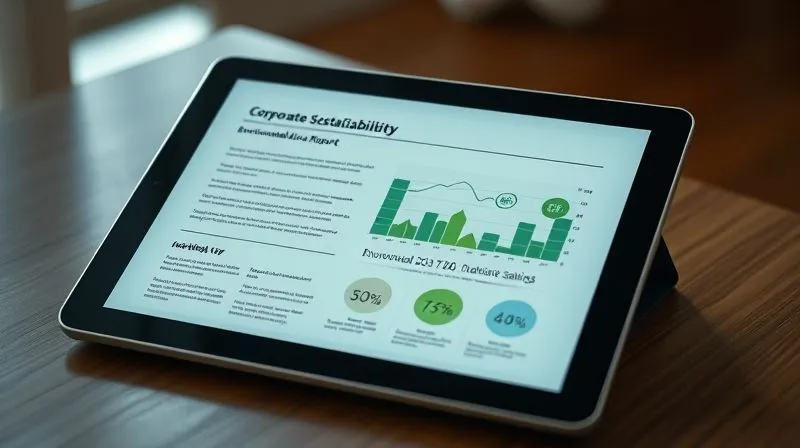
Numbers alone can be dry. Visualizations transform data into compelling insights. Use infographics, charts, and dashboards to illustrate your ROI story. Show trends, comparisons, and the direct line between your CSR investment and financial gains. For example, a dual-axis chart showing declining energy consumption alongside increasing profit margins can be incredibly powerful. A visual representation of increased brand sentiment correlated with marketing spend on sustainable initiatives can sway even the most skeptical executive.
"The greatest value in demonstrating ROI from SDG-aligned CSR isn't just proving past success, but in informing future strategy. It allows you to invest smarter, iterate faster, and embed sustainability as a core driver of competitive advantage."
A well-designed visualization can convey a complex message in seconds, making your ROI clear and memorable. This is crucial for internal buy-in and external reputation building.
Overcoming Common Challenges in ROI Measurement
Even with the best intentions and frameworks, measuring ROI from SDG-aligned CSR programs presents unique challenges. In my experience, these are the most common hurdles, and how to navigate them:
- Attribution Complexity: It's often hard to definitively say that a specific financial gain is *solely* due to a CSR program. Many factors influence business outcomes.
- Long Time Horizons: The full financial benefits of some sustainable initiatives (e.g., building a resilient supply chain, enhancing brand loyalty) may take years to materialize.
- Measuring Intangibles: How do you put a monetary value on improved employee morale or enhanced community relations?
- Lack of Baseline Data: Often, companies start programs without adequately capturing 'before' metrics, making it difficult to demonstrate 'after' improvements.
- Data Silos: Relevant data might be scattered across different departments (HR, operations, marketing, finance), making aggregation difficult.
To overcome these, I always advocate for a pragmatic approach: use proxy metrics where direct financial measures are unavailable, establish clear baselines early, communicate interim successes, and invest in integrated data systems. Partner with your finance department; they are invaluable allies in quantifying the unquantifiable and lending credibility to your calculations. Deloitte's research consistently shows that integrated reporting leads to better decision-making and stakeholder trust. Their insights on integrated reporting are highly relevant here.
The Future of CSR: Integrated Value Creation
The trajectory of CSR is clear: it's moving from an add-on activity to an embedded business strategy. The future belongs to companies that seamlessly integrate SDG alignment into their core operations, viewing sustainability not as a cost center, but as a powerful engine for innovation, growth, and resilience. This isn't just about avoiding negative impacts; it's about actively creating positive value for society and shareholders simultaneously.
As investor pressure for ESG performance intensifies and regulatory landscapes evolve (e.g., the EU's Corporate Sustainability Reporting Directive), the ability to demonstrate tangible ROI from SDG-aligned CSR programs will no longer be a competitive advantage – it will be a prerequisite for doing business. Companies that master this will be the leaders of tomorrow, driving sustainable growth and contributing meaningfully to global goals. The World Economic Forum frequently emphasizes this integrated approach.

Frequently Asked Questions (FAQ)
Is SROI the only way to measure ROI for CSR? No, Social Return on Investment (SROI) is one comprehensive framework, but not the only one. Many companies successfully demonstrate ROI through a combination of direct financial metrics (cost savings, revenue growth), proxy metrics (employee retention, brand value), and qualitative data, using simpler cost-benefit analyses or detailed impact assessments. The best approach depends on your program's nature, available data, and stakeholder requirements.
How do small businesses approach SDG-aligned CSR ROI? Small businesses often have fewer resources but greater agility. They should focus on 2-3 material SDGs most relevant to their core operations and local community. Start with simple metrics like energy bill reductions, waste volume decreases, or local hiring impact. Leverage storytelling with customer and employee testimonials, and use free tools for basic data tracking. The principles of strategic alignment and clear objectives remain the same, just scaled appropriately.
What if our SDG programs don't show immediate financial returns? Many SDG-aligned initiatives, especially those focused on long-term systemic change (e.g., community development, climate resilience), won't yield immediate financial ROI. In these cases, focus on demonstrating intermediate outcomes and strategic value. Highlight improved stakeholder relations, enhanced brand reputation, risk mitigation, and future market positioning. Communicate these long-term benefits clearly and manage expectations regarding the timeline for financial returns.
How can we convince skeptical stakeholders of CSR's financial value? The key is to speak their language: data and finance. Don't just present impact numbers; translate them into financial terms. Use case studies (internal and external), industry benchmarks, and third-party verified data. Emphasize risk mitigation, cost savings, talent attraction/retention, and new market opportunities. Frame CSR not as an expense, but as a strategic investment in the company's long-term resilience and profitability. Engaging finance professionals in the measurement process adds significant credibility.
What are common pitfalls to avoid when trying to demonstrate ROI? Avoid vague objectives, failing to establish baseline data, relying solely on qualitative feedback without quantitative backing, ignoring indirect financial benefits, and failing to tailor your reporting to different audiences. Another major pitfall is not integrating CSR measurement into existing business reporting systems, which can make it seem like an isolated, non-essential activity.
Key Takeaways and Final Thoughts
Demonstrating tangible ROI from SDG-aligned CSR programs is no longer an optional extra; it's a strategic imperative for any forward-thinking business. Here are the critical takeaways:
- Strategic Alignment is Paramount: Focus on material SDGs that genuinely intersect with your business operations and value creation.
- Define SMART Objectives & KPIs: If you can't measure it, you can't manage it, nor can you prove its value.
- Measure Both Direct & Indirect Returns: Look beyond immediate cost savings to encompass brand value, employee engagement, and risk mitigation.
- Leverage Data & Analytics: Invest in systems and skills to move from correlation to causation, proving your impact.
- Communicate Compellingly: Tailor your reports and visualizations to resonate with diverse stakeholders, using the language of business finance.
I've seen firsthand how companies that master this linkage not only contribute meaningfully to global sustainability but also unlock significant competitive advantages and drive superior long-term financial performance. Embrace this challenge, equip your team with these strategies, and transform your SDG-aligned CSR programs into powerful drivers of integrated value creation. The future of business depends on it, and your stakeholders are waiting to see the proof.
Recommended Reading
- 7 Reasons Your Video Marketing Budget Fails & How to Fix It Now
- 7 Critical Reasons Why Your Automated Sales Follow-Ups Aren't Closing Deals
- 5 Proven Steps to Defuse Angry E-commerce Support Escalations
- Unmasking the Hidden Dangers: Navigating Foreign Direct Investment Political Risks
- How AI Will Reshape Future Leadership Skills: A Definitive Guide





Comments
Leave a comment below. Your email will not be published. Required fields marked with *