


How to Draft Indemnification Clauses to Avoid Post-Deal Disputes?
For over two decades in the intricate world of M&A, I've witnessed firsthand the exhilaration of a successful deal closing, but also the agonizing aftermath when poorly drafted agreements unravel into costly disputes. It's a scenario that keeps many dealmakers awake at night: the post-closing surprise, the unforeseen liability, the breach of a representation that suddenly threatens to erode all the hard-won value. I've seen deals, once celebrated, descend into bitter litigation simply because the foundational protections were inadequate.
The primary culprit, more often than not, lies in the indemnification clauses – or rather, the lack of foresight and precision in their drafting. These clauses, intended to allocate and mitigate risk, frequently become battlegrounds, turning what should be a clear path forward into a protracted legal skirmish. Buyers feel exposed, sellers feel unfairly burdened, and the synergy envisioned during negotiations evaporates amidst legal fees and strained relationships, impacting not just finances but reputations.
This article isn't just about theory; it's a deep dive into practical, battle-tested strategies to ensure your indemnification clauses are not merely boilerplate, but robust, enforceable shields designed to prevent post-deal disputes. I'll share frameworks, mini case studies, and actionable insights gleaned from years in the trenches, empowering you to draft indemnification clauses to avoid post-deal disputes effectively and confidently.
Understanding the Core Purpose of Indemnification in M&A
At its heart, indemnification in M&A is about risk allocation. It's the contractual mechanism by which one party (the indemnitor) agrees to compensate the other party (the indemnitee) for specified losses or damages arising from certain events or circumstances. Think of it as an insurance policy embedded within your acquisition agreement, designed to protect the buyer from risks that materialize post-closing but relate to pre-closing facts or breaches.
In my experience, many parties view indemnification as a mere formality, a standard section to be included without deep consideration. This is a critical error. A well-crafted indemnification provision is the bedrock of post-deal certainty, ensuring that the economic bargain struck at closing remains intact. It addresses the fundamental question: who bears the financial burden if something goes wrong after the deal is done?
Without clear indemnification, a buyer might find themselves shouldering unexpected liabilities that significantly diminish the acquired company's value, while a seller might face endless claims long after they've moved on. It’s about establishing clear boundaries and expectations, reducing ambiguity that fuels disagreements. As Harvard Business Review often highlights, clarity in post-merger integration is paramount, and that begins with foundational legal documents.
The Anatomy of an Effective Indemnification Clause: Key Components
To draft indemnification clauses to avoid post-deal disputes, you must understand their constituent parts. These aren't just legal terms; they are the levers that control risk and dictate future recourse. Each component must be meticulously defined and tailored to the specific deal.
1. Parties and Scope: Who Indemnifies Whom, and for What?
The first step is to clearly identify the indemnifying party (usually the seller) and the indemnified party (usually the buyer, but sometimes vice-versa for certain seller-specific matters). The scope then defines what types of losses or actions trigger the indemnification obligation. This includes breaches of representations and warranties (R&Ws), breaches of covenants, and specific indemnities for known risks.
Expert Tip: Be granular. Don't just say "breach of R&W." Specify if it covers indirect damages, consequential damages, or only direct losses. The clearer the language, the less room for interpretive disputes later.
2. Indemnifiable Losses: What Can Be Recovered?
This section defines the types of damages that the indemnified party can recover. Common examples include direct damages, costs, expenses (including legal fees), judgments, and settlements. Crucially, parties often negotiate whether "losses" include indirect, consequential, punitive, or special damages, and whether lost profits are recoverable.
My Insight: I always advise clients to explicitly list what constitutes "losses" and what is specifically excluded. If you intend to exclude lost profits, state it unequivocally. Silence on this point is an invitation for a lengthy legal debate.
3. Triggers for Indemnification: When Does It Kick In?
The triggers are the specific events or circumstances that activate the indemnitor's obligation. The most common triggers are:
- Breach of Representations and Warranties: If an R&W made by the seller proves to be untrue or inaccurate at closing.
- Breach of Covenants: If a promise or obligation made by either party in the agreement is not fulfilled.
- Specific Indemnities: These are tailored for known, identifiable risks that due diligence uncovered (e.g., specific litigation, environmental contamination, unfunded pension liabilities). These often stand outside the general R&W framework.
Ensuring these triggers are unambiguous is paramount. Ambiguity here is a direct path to post-deal litigation.
Navigating Representations, Warranties, and Covenants
Indemnification clauses are inextricably linked to the representations, warranties, and covenants made in the acquisition agreement. These are the factual statements and promises upon which the deal is based. A breach of any of these often forms the basis for an indemnification claim.
The true strength of an indemnification claim often hinges on the clarity and scope of the underlying representations and warranties. Ambiguity here is an open invitation to dispute, as parties will inevitably interpret vague language in their favor.
Representations are statements of past or existing fact (e.g., "The company owns all its assets free and clear"). Warranties are assurances that certain facts are true (e.g., "The financial statements are prepared in accordance with GAAP"). Covenants are promises to do or not do something in the future (e.g., "The seller will operate the business in the ordinary course prior to closing").
When drafting, I emphasize the importance of precision in R&Ws. Every word matters. For example, a representation that "the company is in compliance with all applicable laws" is far broader and riskier than "the company is in compliance with all material applicable environmental laws." The scope of the R&Ws directly dictates the potential exposure under the indemnification clause. Thorough due diligence informs what R&Ws are necessary and what specific indemnities might be needed.
Structuring Financial Limitations: Baskets, Caps, and Thresholds
To provide some predictability and limit the seller's exposure, indemnification clauses almost always include financial limitations. These mechanisms are crucial for managing post-closing risk and setting realistic expectations for both parties.
Defining the Basket (or Deductible)
A "basket" functions like an insurance deductible. The indemnified party cannot make a claim until the aggregate amount of all losses exceeds a specified threshold. Once that threshold is met, two main types of baskets apply:
- Tipping Basket: If the aggregate losses exceed the basket amount, the indemnitor is liable for all losses from the first dollar. This is more buyer-friendly.
- Non-Tipping Basket (or Deductible): If the aggregate losses exceed the basket, the indemnitor is only liable for the amount above the basket. This is more seller-friendly.
The negotiation around tipping vs. non-tipping baskets is often intense. Buyers prefer tipping to recover all losses once the threshold is met, while sellers prefer non-tipping to limit their exposure to only the excess.
Setting the Cap (or Ceiling)
The "cap" is the maximum amount that the indemnitor will be required to pay under the indemnification provisions. This is a hard limit on liability. Caps are usually expressed as a percentage of the purchase price, often ranging from 10% to 50% for general R&Ws. However, caps for "fundamental" R&Ws (e.g., title to shares, corporate authority, taxes) or specific indemnities are often higher, sometimes equal to the full purchase price or unlimited.
Understanding De Minimis Thresholds
A "de minimis" threshold specifies that individual claims below a certain dollar amount will not count towards the basket and cannot be claimed. This prevents the buyer from bringing numerous small, nuisance claims that are administratively burdensome. For instance, losses under $10,000 might be excluded from both the basket calculation and any claim.
Here's a quick comparison of these financial limitation mechanisms:
| Mechanism | Function | Impact |
|---|---|---|
| Basket (Deductible) | Aggregate losses must exceed this threshold before claims can be made. | Reduces administrative burden for small claims; Tipping vs. Non-Tipping is key. |
| Cap (Ceiling) | Maximum total liability for the indemnitor. | Provides certainty of maximum exposure for seller; often varies by type of R&W. |
| De Minimis | Individual claims below this amount are not recoverable and don't count towards the basket. | Prevents nuisance claims; streamlines the claims process. |
Negotiating these financial limits requires a deep understanding of the target company's risk profile and the overall deal economics. It’s a delicate balance between protecting the buyer and providing the seller with a reasonable limit on post-closing exposure.
Survival Periods: When Do Obligations Expire?
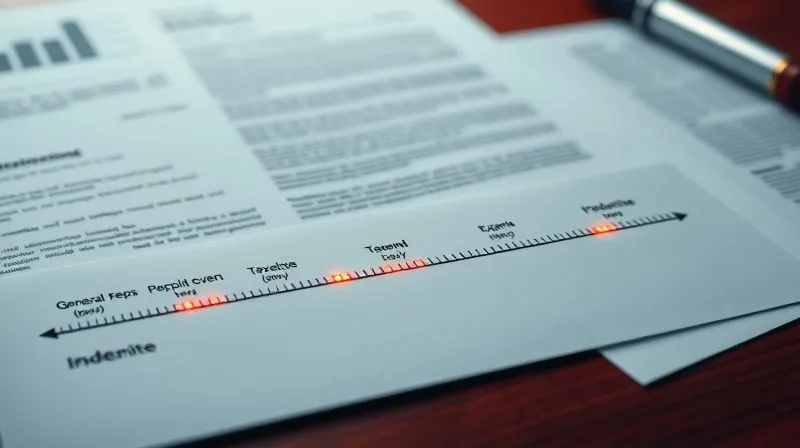
Another critical element to draft indemnification clauses to avoid post-deal disputes is the "survival period." This specifies how long the representations, warranties, and covenants remain in effect, and thus, how long the indemnified party has to bring a claim for a breach. Without a clearly defined survival period, claims could theoretically be brought indefinitely, creating perpetual uncertainty.
Survival periods vary significantly depending on the nature of the representation or warranty:
- General R&Ws: Typically survive for 12 to 24 months post-closing. This aligns with the normal cycle for financial audits and operational reviews.
- Fundamental R&Ws: These include representations regarding the seller's authority, title to shares, corporate organization, and broker's fees. They are often deemed to survive indefinitely or for the applicable statute of limitations (e.g., 5-7 years), as these are core assumptions of the deal.
- Tax R&Ws: Often survive until the expiration of the applicable statute of limitations for tax assessments, plus any extensions (which can be many years).
- Environmental R&Ws: Can also have extended survival periods due to the long-tail nature of environmental liabilities.
- Covenants: Survival depends on the nature of the covenant. Those performed pre-closing (e.g., "interim operating covenants") might expire at closing, while post-closing covenants (e.g., non-compete) survive for their stated term.
I cannot overstate the importance of clarity here. A common source of dispute is when a buyer believes a claim is still valid, but the seller argues the underlying R&W has expired. Precision in defining the start and end dates for each category is essential.
Exclusivity and Specificity: Crafting Exclusive Remedy Provisions
One of the most critical aspects of drafting indemnification clauses to avoid post-deal disputes is determining whether indemnification will be the exclusive remedy for breaches of the agreement. Without an explicit "exclusive remedy" provision, the indemnified party might be able to pursue other legal avenues (e.g., common law claims for breach of contract, fraud, or misrepresentation) outside the negotiated indemnification framework. This can undermine all the carefully negotiated baskets, caps, and survival periods.
An exclusive remedy provision states that, except for certain carved-out exceptions (e.g., fraud, specific performance), the indemnification provisions are the sole and exclusive means by which the parties can recover losses for breaches of the agreement. This provides the seller with significant comfort by limiting their exposure to the agreed-upon terms.
- Drafting Tip 1: Be Explicit. Clearly state that the indemnification provisions are the exclusive remedy for all claims arising out of the agreement, other than specified exceptions.
- Drafting Tip 2: Define Carve-Outs Narrowly. If you allow exceptions (like fraud), define them precisely. What constitutes "fraud" for this purpose? Is it common law fraud, or something narrower?
- Drafting Tip 3: Consider Equitable Remedies. Ensure that specific performance or injunctive relief (equitable remedies) are preserved for breaches of covenants that require specific actions, as monetary damages alone may not be sufficient.
- Drafting Tip 4: Address Knowledge Qualifiers. Be clear on whether the seller's "knowledge" of a breach impacts the buyer's ability to claim indemnity, especially if the buyer also had knowledge during due diligence. This is a frequent point of contention.
As legal scholars often discuss, the interplay between contractual indemnities and other legal remedies is complex. An exclusive remedy clause brings much-needed clarity and predictability, which is paramount for avoiding disputes.
The Claims Process: Notice, Defense, and Settlement
Even the most perfectly drafted indemnification clause can fall apart if the process for making and resolving claims is unclear. A well-defined claims procedure is essential for efficient resolution and preventing procedural disputes from overshadowing the substantive issues.
1. Prompt Notice Requirements
The indemnified party must typically provide prompt written notice of any claim for indemnification. This notice should describe the claim in reasonable detail, including the basis for the claim and an estimate of the losses. "Prompt" is often defined with a specific timeframe (e.g., "within 30 days of discovery").
My Advice: Ensure the notice provision specifies who receives the notice, how it should be delivered (e.g., certified mail, email with read receipt), and what information it must contain. Vague notice provisions are a fertile ground for arguments about whether a claim was properly made.
2. Control of Defense
If a third-party claim (e.g., a lawsuit from a customer, an environmental agency fine) triggers indemnification, the agreement typically specifies which party has the right to control the defense of that claim. Usually, the indemnitor (the seller) will want to control the defense if they are ultimately responsible for the costs, to manage expenses and potential settlement amounts.
However, the indemnitee (the buyer) often insists on certain rights, such as the right to participate in the defense, approve settlements, or even take over the defense if the indemnitor fails to vigorously defend or if there's a conflict of interest. This balance of control is a critical negotiation point.
3. Settlement Authority
Closely related to control of defense is settlement authority. Typically, the party controlling the defense has the primary authority to settle. However, the agreement often requires the settling party to obtain the other party's consent if the settlement impacts them (e.g., if it involves an admission of wrongdoing by the indemnitee or restricts their future business operations). Without these clear rules, a simple third-party claim can devolve into a dispute between buyer and seller.
Case Study: Horizon Tech's Data Breach Indemnity Claim
Horizon Tech, a software acquisition, discovered a pre-acquisition data breach shortly after closing. The acquisition agreement included a robust indemnification clause for breaches of data security representations. Crucially, it specified a clear 30-day notice period for claims and granted Horizon Tech (the buyer) the right to control the defense of third-party claims, subject to the seller’s reasonable approval, provided the claim didn't involve injunctive relief against Horizon or a material reputational impact. When a class-action lawsuit emerged, Horizon Tech promptly notified the seller, invoked the indemnity, and took charge of the legal defense, consulting with the seller at key junctures. Because the clause was meticulously drafted, outlining the process, the seller, while unhappy about the liability, had little ground for dispute regarding the claim's validity or the procedural handling. This resulted in a swift resolution where the seller bore the costs, avoiding protracted litigation between buyer and seller, and preserving the business relationship.
Special Indemnities and Environmental, Social, and Governance (ESG) Considerations
Beyond general R&Ws, specific indemnities are crucial for known, high-risk areas identified during due diligence. These are tailored to address particular liabilities that might not fit neatly into general R&W categories or require more robust protection. Examples include specific litigation, environmental contamination, product liability issues, or unfunded pension liabilities.
In recent years, I've seen a significant rise in the importance of Environmental, Social, and Governance (ESG) factors in M&A. Buyers are increasingly scrutinizing targets for ESG risks, which can translate into complex indemnification provisions. These can include:
- Environmental: Indemnities for historical pollution, non-compliance with environmental regulations, or remediation costs.
- Social: Liabilities related to labor practices, human rights issues in the supply chain, or data privacy breaches.
- Governance: Risks associated with anti-bribery and corruption compliance, ethical sourcing, or cybersecurity vulnerabilities.
Drafting these special indemnities requires deep subject matter expertise and a forward-looking perspective. It's not enough to cover what you know; you must anticipate potential future liabilities stemming from current practices. PWC's insights on ESG in M&A underscore the growing complexity of these considerations.

When dealing with ESG risks, consider not just financial losses but also reputational damage, which can be far more costly in the long run. Specific indemnities can be structured to cover these broader impacts, ensuring comprehensive protection.
Frequently Asked Questions (FAQ)
What is the single biggest mistake I see companies make when drafting indemnification clauses? The biggest mistake is treating indemnification clauses as boilerplate. Each deal has unique risks, and failing to tailor the clauses specifically to those risks – particularly in defining "losses," setting appropriate baskets/caps, and clarifying survival periods – is a recipe for post-deal disputes. General language invites interpretation battles.
How do Representations & Warranties (R&W) insurance policies affect the drafting and negotiation of indemnification clauses? R&W insurance has become a game-changer. It shifts much of the risk of R&W breaches from the seller to an insurer, often reducing the seller's indemnity cap to a very small "retention" amount (e.g., 0.5% of transaction value). This typically streamlines negotiations, but it doesn't eliminate the need for careful drafting of the underlying R&Ws and the indemnification clause itself, as the policy will reference and rely on those foundational provisions. You still need to draft indemnification clauses to avoid post-deal disputes, even with insurance, as the policy itself is triggered by a breach of those clauses.
Can indemnification clauses effectively cover future, unknown liabilities, or are they primarily for pre-existing issues? Generally, indemnification clauses are designed to cover liabilities arising from pre-closing facts or breaches of pre-closing representations and covenants. While "forward-looking" representations (e.g., compliance with future laws) exist, they are less common and more difficult to enforce. For truly unknown future liabilities, specific indemnities for clearly defined potential future events (e.g., a known contingent litigation outcome) are more effective than broad, general R&Ws about the future.
What role do 'materiality scrapes' play in indemnification, and how should they be approached? "Materiality scrapes" remove any materiality qualifications (e.g., "material adverse effect," "material contracts") from the representations and warranties when calculating damages for an indemnification claim. This means that a breach, no matter how small, can theoretically trigger a claim and be counted towards the basket. Buyers typically favor full scrapes to ensure they can recover for any breach, while sellers often resist them, arguing that they bargained for materiality qualifiers. It's a key negotiation point impacting the seller's exposure.
How does the chosen governing law and jurisdiction impact the enforceability and interpretation of indemnification provisions? The chosen governing law is paramount. Indemnification clauses, like any contract provisions, are interpreted according to the laws of the specified jurisdiction. Different jurisdictions have varying interpretations of contractual language, limitations on liability, and even public policy considerations that can affect enforceability. For instance, some jurisdictions may be more hostile to broad waivers of consequential damages. Always ensure your legal counsel is expert in the chosen governing law.
Key Takeaways and Final Thoughts
Navigating the complexities of M&A transactions demands more than just financial acumen; it requires meticulous legal foresight, especially when it comes to indemnification. The goal is not merely to include these clauses, but to craft them with such precision and foresight that they effectively mitigate risk and prevent the costly, relationship-damaging disputes that can erode deal value.
- Specificity is Your Shield: Avoid vague language. Define parties, losses, triggers, and procedures with absolute clarity.
- Align with Due Diligence: Let your due diligence findings drive the tailoring of R&Ws and specific indemnities.
- Balance Financial Protections: Skillfully negotiate baskets, caps, and de minimis thresholds to strike a fair balance between buyer protection and seller exposure.
- Master the Timeline: Clearly delineate survival periods for different categories of R&Ws and covenants.
- Embrace Exclusivity (with exceptions): Make indemnification the exclusive remedy for contractual breaches, while carefully carving out fraud and equitable relief.
- Detail the Claims Process: Establish clear procedures for notice, defense, and settlement to avoid procedural disputes.
- Anticipate Emerging Risks: Integrate specific indemnities for known risks and evolving areas like ESG.
In my career, I've seen that the effort invested upfront to draft indemnification clauses to avoid post-deal disputes pays dividends many times over. It’s an investment in certainty, stability, and the long-term success of the acquired business. Approach these clauses not as an afterthought, but as a strategic pillar of your M&A agreement, and you’ll lay the groundwork for a truly successful and dispute-free integration.
Recommended Reading
- SEO Optimization for Small Business Website: The Ultimate Guide
- Unlock Growth: Low Budget Brand Awareness Strategies for Startups Revealed
- Zero Budget? How Small Businesses Can Land Their First 20 Customers
- 7 Steps to Uncover & Eradicate Chronic Process Bottlenecks
- 7 Proven Strategies: Slash Franchisee Staff Turnover, Uphold Brand Standards

![Breach of Contract: Fixing Vendor Agreements FAST [Expert Guide]](/uploads/businessspur/posts/breach-of-contract-fixing-vendor-agreements-fast-expert-guide-jw5hy.webp)



Comments
Leave a comment below. Your email will not be published. Required fields marked with *