


How to Execute Innovative Ideas Effectively From Concept?
For over two decades in the dynamic world of business leadership, I've had the privilege of witnessing countless brilliant ideas emerge – sparks of genius capable of reshaping industries and solving complex problems. Yet, I've also seen a disheartening number of these groundbreaking concepts wither and die, not because they lacked potential, but because they stumbled at the critical juncture of execution. The journey from a compelling vision sketched on a whiteboard to a tangible, market-ready solution is fraught with challenges, and it's a path many organizations fail to navigate successfully.
The pain point is palpable: leaders and teams invest immense energy in ideation, nurturing what they believe are the next big breakthroughs, only to find themselves paralyzed by the complexities of implementation. Misaligned priorities, resource bottlenecks, unclear roles, and a pervasive fear of failure often conspire to transform innovative fervor into organizational inertia. It's a frustrating cycle that drains morale, wastes resources, and ultimately stifles the very growth and competitive advantage innovation promises.
This article is designed to be your definitive guide, drawing from my extensive experience and the best practices I've observed across diverse sectors. We'll move beyond the theoretical to provide you with a robust, actionable framework on how to execute innovative ideas effectively from concept. You'll gain insights into strategic alignment, team building, agile methodologies, risk management, and fostering a resilient culture – equipping you with the practical tools and expert perspectives needed to transform your most ambitious ideas into impactful realities.
The Strategic Foundation: Aligning Vision with Viability
Before any tangible action can begin, the most critical step is to solidify your idea's strategic foundation. This isn't just about having a great concept; it's about ensuring that concept is aligned with your organization's overarching vision and possesses genuine market viability. I've often seen teams rush into development, only to discover later that their brilliant idea doesn't fit the company's long-term goals or, worse, that no one actually wants it.
Clarifying the 'Why' and 'What'
Every successful innovation begins with a crystal-clear understanding of its purpose. Ask yourselves: Why are we pursuing this idea? What problem does it solve for our customers or our business? What specific value will it create? This 'why' must resonate deeply with your company's mission and strategic objectives. Without this foundational clarity, even the most innovative ideas can drift aimlessly, lacking direction and a compelling reason for existence.
Once the 'why' is established, defining the 'what' becomes clearer. What exactly are we building? What are its core features? What is the desired outcome? This initial definition should be high-level, avoiding premature detailed design, but precise enough to create a shared understanding across all stakeholders. It's about sketching the destination before charting the exact route.
Market Validation & Feasibility
An innovative idea, no matter how brilliant, is only truly viable if it meets a genuine market need or solves a significant market pain point. This requires rigorous market validation, not just internal enthusiasm. I advocate for early, lean experimentation and direct engagement with potential users. According to a Harvard Business Review article on innovation culture, companies that prioritize customer-centricity and rapid feedback loops are significantly more successful in innovation.
"Innovation without market validation is merely invention. To execute effectively, you must prove not just that you *can* build it, but that someone *wants* it, and will pay for it."
Feasibility also extends to technical and operational aspects. Can we actually build this with our current resources and capabilities? What new technologies or partnerships might be required? A thorough feasibility study prevents costly dead ends and ensures that your execution plan is grounded in reality. This is where you identify potential roadblocks before they become insurmountable barriers.
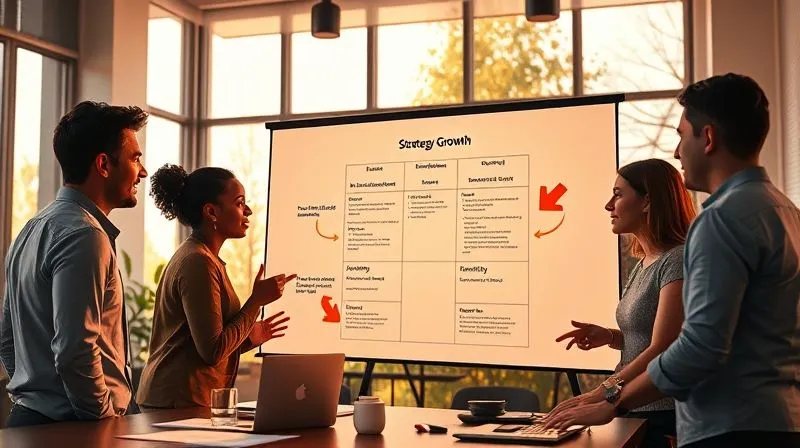
Building Your Execution Dream Team
No truly innovative idea is brought to life by a single person. Execution is a team sport, and the quality of your team directly impacts your success. In my experience, even the most well-conceived strategies falter if the wrong people are in the wrong roles, or if collaboration is lacking. Building a high-performing execution team is paramount to how to execute innovative ideas effectively from concept.
Cross-Functional Collaboration
Innovation thrives at the intersection of diverse perspectives. Your execution team should ideally be cross-functional, bringing together individuals from engineering, marketing, sales, finance, legal, and operations. This multidisciplinarity ensures that all angles of the idea – from technical implementation to market acceptance and financial viability – are considered from the outset. It breaks down silos and fosters a holistic approach to problem-solving.
I've often advised leaders to think beyond traditional departmental structures when forming these teams. Sometimes, the most valuable insights come from unexpected places within the organization. Empower these teams with autonomy and a clear mandate, fostering an environment where every voice is heard and valued.
Defining Roles and Responsibilities
Ambiguity is the enemy of effective execution. Once your cross-functional team is assembled, it's crucial to clearly define each member's role, responsibilities, and accountability. This doesn't mean micro-managing; it means establishing clear boundaries and expectations, so everyone understands their contribution to the larger goal. Use frameworks like RACI (Responsible, Accountable, Consulted, Informed) to delineate ownership for key tasks and decisions.
- Identify Key Functions: List all essential functions required for the innovation's execution (e.g., product development, marketing strategy, financial modeling, legal compliance).
- Assign Owners: For each function, designate a primary owner who is ultimately accountable.
- Define Contributions: Detail what each team member is responsible for delivering.
- Establish Communication Channels: Determine how information will flow between team members and to stakeholders.
- Set Performance Metrics: Define individual and team-level metrics for success.
Case Study: How InnovateCo Transformed Its R&D Pipeline
InnovateCo, a mid-sized electronics manufacturer, struggled with a perennial problem: brilliant prototypes from R&D rarely made it to market. Their R&D team worked in isolation, handing off concepts to production and marketing teams who had little input during the early stages. The result was products that were either too expensive to manufacture, difficult to market, or failed to meet actual customer needs. After implementing the cross-functional team approach I outlined, they formed dedicated "Venture Teams" for each major innovation project, comprising engineers, designers, marketers, and supply chain specialists. These teams were empowered with full ownership from concept to launch. Within 18 months, InnovateCo reduced time-to-market by 30% and saw a 25% increase in the success rate of new product launches, directly attributing this to enhanced collaboration and clear responsibilities.
Agile Planning & Iterative Development
The days of rigid, waterfall-style project management for innovative ideas are largely over. The inherent uncertainty and rapid evolution of new concepts demand an agile approach. This methodology is crucial for how to execute innovative ideas effectively from concept, allowing for flexibility, rapid learning, and continuous adaptation. As the Agile Manifesto itself states, "Responding to change over following a plan."
Breaking Down the Big Idea
A common mistake is trying to tackle the entire innovative idea at once. This often leads to overwhelm, delays, and a loss of momentum. Instead, break your grand vision into smaller, manageable chunks or "sprints." Each sprint should have a clear objective, deliverable, and a short timeframe (typically 1-4 weeks). This approach allows your team to focus on immediate goals, achieve quick wins, and maintain a sense of progress.
Think of it as climbing a mountain: you don't scale the entire peak in one go. You conquer it one base camp at a time, celebrating each milestone and reassessing your route as you go. This iterative process is fundamental to managing complexity and reducing risk in innovation.
Embracing MVP (Minimum Viable Product)
The concept of a Minimum Viable Product (MVP) is perhaps the most powerful tool in the agile innovator's arsenal. An MVP is the version of a new product which allows a team to collect the maximum amount of validated learning about customers with the least amount of effort. It's not about building a half-finished product; it's about building the smallest possible solution that delivers core value and allows you to test your riskiest assumptions.
By launching an MVP, you get real user feedback early, which is invaluable. It helps you pivot if necessary, refine features, and avoid investing heavily in something that the market doesn't truly need. This approach drastically reduces the cost of failure and accelerates learning cycles, making your execution far more efficient. As I've always emphasized, fail fast, learn faster.
| Feature Focus | MVP Approach | Full Product Approach |
|---|---|---|
| Core Problem Solved | Essential features only, minimal design | Comprehensive features, polished design |
| Weeks to a few months | Short, iterative cycles | Longer, sequential phases |
| Immediate and continuous | Direct user interaction, rapid iteration | Delayed, often after significant investment |
| Low, allows for pivots | High adaptability | Higher, more commitment required |
Resource Allocation & Risk Management
Even with a brilliant idea and a stellar team, execution can derail if resources are mismanaged or risks are ignored. Effective leadership in innovation means being a shrewd allocator of resources and a proactive manager of potential pitfalls. This dual focus is non-negotiable for how to execute innovative ideas effectively from concept.
Securing Necessary Resources (Budget, Talent, Tech)
Innovation often requires dedicated resources that might not be immediately available within existing departmental budgets. This means making a compelling case for investment. Clearly articulate the potential ROI, strategic importance, and the consequences of inaction. Be realistic about your needs – under-resourcing is a common trap that dooms projects from the start. This includes not just financial capital, but also access to specialized talent and appropriate technological infrastructure.
I've seen projects with immense potential flounder because they lacked a critical engineer or access to a specific software platform. Proactively identify these needs early in the planning phase and secure commitments. This might involve internal reallocations, external hiring, or strategic partnerships.
Proactive Risk Identification and Mitigation
Every innovative endeavor carries inherent risks – technical, market, financial, operational, and even reputational. The key isn't to avoid risk entirely (that would mean avoiding innovation), but to identify, assess, and mitigate it proactively. Conduct regular risk assessments throughout the execution lifecycle. What are the potential failure points? What could go wrong? What is our contingency plan?
"The innovative leader doesn't just embrace risk; they understand it, quantify it, and build robust strategies to navigate its inevitable challenges."
Create a risk register, assign ownership for each risk, and develop mitigation strategies. This might involve building prototypes to de-risk technical challenges, conducting small-scale market tests, or securing alternative funding sources. For instance, a Deloitte study on innovation strategies highlights the importance of managing uncertainty through structured experimentation and scenario planning. Being prepared for potential setbacks allows your team to react swiftly and keep the project on track.

Cultivating a Culture of Experimentation & Learning
Execution of innovative ideas is rarely a linear path. It's often messy, involving unexpected obstacles and learning moments. Therefore, fostering a culture that embraces experimentation, views "failure" as learning, and encourages continuous improvement is absolutely vital. This cultural bedrock is what truly distinguishes organizations that successfully how to execute innovative ideas effectively from concept.
Fostering Psychological Safety
Teams cannot innovate or execute effectively if individuals are afraid to speak up, challenge assumptions, or admit mistakes. Psychological safety – the belief that one will not be punished or humiliated for speaking up with ideas, questions, concerns, or mistakes – is the foundation of a healthy innovation culture. As a leader, it's your responsibility to model this behavior: admit your own uncertainties, encourage diverse viewpoints, and celebrate honest attempts, even if they don't yield the expected results.
When team members feel safe, they are more likely to share critical feedback, identify problems early, and propose novel solutions. This openness accelerates learning and problem-solving, which are indispensable for navigating the unpredictable journey of innovation.
The Power of Post-Mortems and Feedback Loops
Learning doesn't happen automatically; it requires intentional processes. Regular post-mortems (or "pre-mortems" to anticipate issues) are incredibly valuable. After each sprint, milestone, or even a perceived setback, gather your team to discuss: What went well? What could have gone better? What did we learn? How will we apply this learning going forward? This isn't about assigning blame; it's about collective growth.
Establishing robust feedback loops – both internal (team to team, leader to team) and external (customer feedback) – ensures that insights are captured and acted upon. Continuous feedback fuels iteration and refinement, allowing your innovative idea to evolve based on real-world data and experience. As marketing guru Seth Godin often says, "The only way to fail is to not ship." Shipping, and then learning, is the core of effective execution.

Communication & Stakeholder Engagement
Even the most perfectly executed innovative idea can fail if it's not communicated effectively or if key stakeholders aren't brought along on the journey. In my years, I've seen leaders underestimate the power of clear, consistent communication and the importance of continuous stakeholder engagement. These are not soft skills; they are fundamental pillars of successful execution.
Transparent Progress Reporting
Keep everyone in the loop – especially senior leadership, investors, and other departments that will be impacted by the innovation. Regular, transparent progress reports build trust and manage expectations. Be honest about challenges, celebrate successes, and clearly articulate any pivots or changes in direction. Use dashboards, brief updates, and regular review meetings to ensure information flows freely.
Transparency helps avoid surprises and allows stakeholders to offer support or resources when needed. It also ensures that the project remains aligned with broader organizational goals. A lack of communication can breed suspicion, resistance, and ultimately, a lack of support for your innovative initiative.
Managing Expectations and Buy-in
Innovation is inherently uncertain, and it's vital to manage expectations from the outset. Don't overpromise or create unrealistic timelines. Be clear about the potential benefits but also the risks and challenges. Continuously seek buy-in from key stakeholders by involving them in critical decision points, listening to their concerns, and demonstrating how the innovation aligns with their interests. As a Harvard Business Review article emphasizes, effective communication is the cornerstone of leadership, especially when navigating change.
Remember, buy-in isn't a one-time event; it's an ongoing process. As your innovative idea evolves, so too must your communication strategy to maintain stakeholder support and enthusiasm. This continuous engagement is crucial for how to execute innovative ideas effectively from concept and ensure long-term adoption.
Scaling & Sustaining Innovation Momentum
Successfully launching an innovative idea is a monumental achievement, but the journey doesn't end there. True success lies in scaling that innovation and embedding the capacity for continuous innovation within the organization. This final stage is about ensuring your hard-won breakthrough delivers sustained value and paves the way for future advancements.
Measuring Success Beyond Launch
What does "success" look like for your innovative idea? It's rarely just about the initial launch. Define clear, measurable key performance indicators (KPIs) that track the innovation's impact over time. These might include customer adoption rates, revenue generated, cost savings, market share growth, or even intangible benefits like enhanced brand reputation or employee engagement. Continuously monitor these metrics and be prepared to iterate and optimize even after launch.
Understanding the long-term impact allows you to justify continued investment, refine your product or service, and demonstrate the tangible value of your innovation efforts. This data-driven approach is essential for strategic decision-making and for proving how to execute innovative ideas effectively from concept translates into real business outcomes.
| Metric Category | Example KPIs |
|---|---|
| Customer Impact | Customer Satisfaction (CSAT), Net Promoter Score (NPS), User Adoption Rate, Churn Reduction |
| Financial Performance | Revenue Growth, Cost Savings, Profit Margin, ROI of Innovation |
| Operational Efficiency | Process Improvement, Time-to-Market Reduction, Resource Utilization |
| Strategic Alignment | Market Share Gain, Brand Perception Improvement, Employee Engagement related to Innovation |
Institutionalizing Innovation Processes
The ultimate goal isn't just to execute one innovative idea, but to build an organization that is inherently innovative. This means institutionalizing the processes, culture, and structures that enabled your success. Document your learnings, create playbooks for future innovation projects, and embed agile methodologies into your operational DNA. Establish dedicated innovation labs, cross-functional teams, or internal incubators to foster a continuous flow of new ideas and ensure they are given the same rigorous execution framework.
By making innovation a core competency, rather than a one-off project, you ensure that your organization remains agile, competitive, and capable of adapting to future challenges and opportunities. This requires ongoing leadership commitment and a willingness to continuously evolve your own processes. Remember, innovation is a journey, not a destination.

Frequently Asked Questions (FAQ)
How do I get buy-in for a radical idea from skeptical leadership? The key is to speak their language: demonstrate the idea's alignment with strategic goals, quantify potential ROI (even if estimated initially), and present a phased, de-risked approach (e.g., starting with an MVP). Emphasize the cost of inaction or falling behind competitors. Frame it as a strategic imperative rather than just a novel concept. Pilot programs with clear success metrics can also be incredibly effective in building confidence.
What if my team lacks the specific skills needed for execution? This is a common challenge. First, conduct a skills gap analysis. Then, consider a multi-pronged approach: upskilling existing team members through training and mentorship, strategic external hires for critical roles, or forming partnerships with external specialists or agencies. Don't be afraid to augment your core team with temporary expertise. Sometimes, the right consultant for a short period can accelerate your project significantly.
How do I balance speed of execution with quality and thoroughness? This is a constant tension, especially in innovation. The answer lies in the agile principle: iterative development with continuous feedback. Focus on delivering a "minimum viable quality" for each iteration, not perfection. Thoroughness comes from repeated cycles of build-measure-learn, not from trying to get everything perfect upfront. Prioritize the most critical quality aspects that directly impact core value or user safety, and iterate on others.
When should I pivot or kill an innovative project? This is one of the toughest leadership decisions. Establish clear "kill criteria" or pivot triggers at the outset – metrics or milestones that, if not met, signal a need for re-evaluation. Regularly review these criteria with your team and stakeholders. Look for consistent negative market feedback, insurmountable technical challenges, or a fundamental shift in market conditions. Pivoting means adapting to new information; killing means acknowledging that the current path is no longer viable and reallocating resources to more promising ventures. Data and objective criteria, rather than emotional attachment, should drive these decisions.
How can I measure the ROI of truly groundbreaking innovation, where traditional metrics might not apply? For truly disruptive innovations, traditional ROI can be elusive initially. Consider a broader set of metrics: strategic impact (e.g., new market entry, competitive advantage), learning velocity (how quickly you're gaining insights), brand perception shifts, talent attraction, or even option value (the future opportunities the innovation opens up). Over time, as the innovation matures, more traditional financial metrics will become applicable, but early on, focus on leading indicators of success and strategic alignment.
Key Takeaways and Final Thoughts
- Strategic Alignment is Non-Negotiable: Ensure your innovative idea solves a real problem and aligns with your organizational vision before committing significant resources.
- Build Diverse, Empowered Teams: Cross-functional collaboration and clear roles are vital for effective execution.
- Embrace Agility and Iteration: Break down complex ideas into manageable sprints and leverage MVPs for rapid learning and adaptation.
- Proactive Resource and Risk Management: Secure necessary resources and systematically identify and mitigate risks to keep your project on track.
- Cultivate a Learning Culture: Foster psychological safety and robust feedback loops to turn challenges into growth opportunities.
- Communicate Relentlessly: Transparent reporting and continuous stakeholder engagement are critical for maintaining buy-in and support.
- Plan for Scale and Sustainability: Measure long-term impact and institutionalize innovation processes to ensure lasting value.
Bringing an innovative idea to life is one of the most challenging yet rewarding endeavors a leader can undertake. It demands not just creativity, but also discipline, resilience, and a deep understanding of the execution journey. By adopting the principles and frameworks I've outlined, you're not just launching a new product or service; you're cultivating an organizational capability to continuously innovate and thrive. Remember, the world is full of brilliant ideas; the true differentiator lies in the ability to execute them effectively. Go forth, lead with confidence, and transform your concepts into tangible successes.
Recommended Reading
- Mastering Scope Creep: Your Ultimate Guide to Project Consulting Success
- Unlock Talent: The Ultimate Employee Benefits Package for Small Business
- The Ultimate Guide: Navigating Cross-Border E-commerce Tax Implications
- 7 Steps to Flawless Year-End Financial Reports: Prevent Inaccuracies Now
- 7 Expert Steps: How to Revive a Failing Strategic Alliance Now





Comments
Leave a comment below. Your email will not be published. Required fields marked with *