


How to Fix Critical Supply Chain Delays from Inefficient Processes?
For over two decades in operations management, I've witnessed firsthand how even the most robust businesses can falter due to a single, insidious problem: critical supply chain delays stemming from inefficient processes. It’s a common trap, one that often goes unnoticed until it’s causing significant damage.
The ripple effect of these delays is devastating. We're talking about lost revenue, damaged customer trust, eroded brand reputation, and even strained vendor relationships. The challenge isn't just about moving goods; it's about orchestrating a complex symphony of interconnected activities, and a single missed note can throw the entire performance into disarray.
In this definitive guide, I will share the distilled wisdom of my experience, providing you with a structured, seven-step framework to diagnose, address, and ultimately fix critical supply chain delays. You’ll gain actionable strategies, real-world insights, and practical tools to transform your operations from a source of frustration into a competitive advantage.
Understanding the Root Causes of Supply Chain Inefficiency
Before we can fix a problem, we must truly understand its origins. In my extensive career, I've observed that critical supply chain delays are rarely caused by a single factor, but rather a confluence of interconnected inefficiencies that compound over time.
Common Culprits: Lack of Visibility, Poor Communication, Manual Processes, Inaccurate Data
Lack of visibility is often the primary culprit. If you can’t see what’s happening at every stage of your supply chain, from raw material sourcing to last-mile delivery, you're operating blind. This absence of real-time data prevents proactive decision-making and makes it impossible to anticipate or react swiftly to disruptions.
Poor communication, both internal and external, exacerbates this problem. Siloed departments, misaligned objectives between procurement and sales, or a lack of clear protocols with suppliers and logistics partners can lead to costly misunderstandings and delays. Information needs to flow freely and accurately across the entire ecosystem.
Many organizations still rely heavily on manual processes. Whether it's order entry, inventory tracking, or invoice processing, manual tasks are prone to human error, slow down operations significantly, and are notoriously difficult to scale. They introduce bottlenecks that digital systems are designed to eliminate.
Finally, inaccurate or outdated data is a silent killer of efficiency. Relying on bad data for demand forecasting, inventory planning, or production scheduling is like trying to navigate with a faulty compass. It leads to stockouts, overstocking, missed deadlines, and ultimately, frustrated customers.
Step 1: Map Your Current Supply Chain Processes
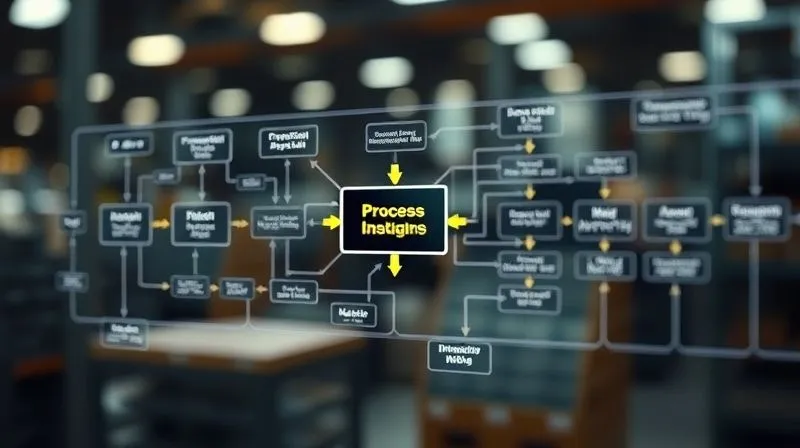
You cannot optimize what you do not understand. The very first, and arguably most crucial, step in addressing supply chain delays is to meticulously map out your existing processes. This isn't just about drawing a flowchart; it's about gaining a deep, granular understanding of every single touchpoint, decision, and hand-off.
“Process mapping is the x-ray of your operations. It reveals the hidden fractures and misalignments that cause pain, allowing you to treat the root cause, not just the symptoms.”
I always advise my clients to start with a high-level overview and then drill down into specific areas that are known to be problematic. Involve cross-functional teams – procurement, production, sales, logistics, finance – as each department holds a piece of the puzzle. Their collective insights are invaluable for creating an accurate representation of reality.
- Define Scope: Clearly delineate which processes you will map (e.g., 'Order-to-Cash' or 'Procure-to-Pay').
- Identify Key Activities: List all major steps involved from start to finish.
- Document Inputs and Outputs: For each activity, note what initiates it and what it produces.
- Assign Roles and Responsibilities: Identify who is responsible for each step and who approves decisions.
- Map Decision Points: Use diamonds to represent points where a decision is made, leading to different paths.
- Note Bottlenecks and Delays: As you map, actively identify where waits occur, where information breaks down, or where errors are frequent.
- Visualize the Flow: Use tools like swimlane diagrams or value stream maps to clearly illustrate the sequence and hand-offs.
This visual representation will immediately highlight areas of redundancy, unnecessary steps, and critical points of failure. It provides a common language for your team to discuss inefficiencies.
Step 2: Identify Bottlenecks and Pain Points
With your processes mapped, the next critical step is to pinpoint the exact locations and causes of delays. This goes beyond anecdotal evidence; it requires a data-driven approach to truly understand where your supply chain is faltering. I’ve found that what people *think* is the problem is often merely a symptom of a deeper, less obvious inefficiency.
Data-Driven Analysis: Lead Time, Inventory Turns, On-Time Delivery
Start by collecting and analyzing key performance indicators (KPIs). Metrics such as lead time (time from order placement to delivery), inventory turns (how many times inventory is sold and replaced over a period), on-time delivery (OTD) rates, and order fulfillment cycle time are invaluable. These numbers tell an objective story about your operational health.
Look for discrepancies and trends. Is a particular supplier consistently late? Are certain product lines experiencing longer production times? Is there a specific stage in your warehouse operations where packages sit idle for too long? Data analytics tools, even basic spreadsheet analysis, can reveal patterns that are invisible to the naked eye.
| Metric | Before Optimization (Days) | After Optimization (Days) |
|---|---|---|
| Order Fulfillment Cycle Time | 12 | 7 |
| On-Time Delivery Rate | 75% | 95% |
| Inventory Holding Costs | 8% | 5% |
| Supplier Lead Time (Avg) | 20 | 14 |
Consider conducting a bottleneck analysis. This involves identifying the constraint in a process that limits the overall throughput. It could be a specific machine, a department with insufficient staff, or a manual approval step. Once identified, focus your improvement efforts on alleviating this bottleneck first, as it will yield the most significant impact on overall flow.
Step 3: Implement Digital Transformation and Automation
In today’s fast-paced global economy, manual processes are simply unsustainable. Digital transformation isn't just a buzzword; it's a fundamental necessity for building a resilient and efficient supply chain. Leveraging technology is how you move from reactive problem-solving to proactive optimization.
ERP, WMS, TMS Integration: The Digital Backbone
Integrating robust systems like an Enterprise Resource Planning (ERP) system, a Warehouse Management System (WMS), and a Transportation Management System (TMS) creates a powerful digital backbone for your supply chain. An ERP system centralizes data from across your organization, providing a single source of truth for inventory, orders, and financials. A WMS optimizes warehouse operations, from receiving to picking and packing, while a TMS streamlines logistics and transportation planning.
The true power comes from their seamless integration. When these systems communicate effectively, data flows automatically, reducing manual data entry, minimizing errors, and providing real-time visibility across the entire supply chain. For instance, a sales order entered into the ERP can automatically trigger a pick request in the WMS and a shipping order in the TMS.
Beyond these core systems, consider automation in areas like robotic process automation (RPA) for repetitive tasks, IoT sensors for real-time asset tracking, and AI-driven analytics for predictive maintenance or demand forecasting. Automation frees up human capital to focus on strategic tasks rather than mundane, error-prone ones. According to a Deloitte report, digital supply networks can reduce operational costs by up to 20%.

Step 4: Optimize Inventory Management Strategies
Inventory is a double-edged sword. Too much ties up capital and incurs holding costs; too little leads to stockouts and lost sales. Striking the right balance is crucial for efficient supply chain operations and directly impacts lead times and customer satisfaction.
Just-in-Time (JIT) vs. Just-in-Case (JIC) & Demand Forecasting Accuracy
There's no one-size-fits-all inventory strategy. The choice between Just-in-Time (JIT) and Just-in-Case (JIC) depends heavily on your industry, product characteristics, and risk tolerance. JIT aims to minimize inventory by receiving goods only as they are needed for production or sale, reducing holding costs. This requires incredibly precise demand forecasting and reliable suppliers.
Conversely, JIC involves holding larger buffer stocks to mitigate risks from supply disruptions or unexpected demand spikes. While it provides a safety net, it comes with higher carrying costs. Many companies now employ a hybrid approach, using JIT for stable, predictable items and JIC for critical components or volatile products.
The cornerstone of effective inventory management is demand forecasting accuracy. Leveraging historical sales data, market trends, seasonality, and even external factors like economic indicators can significantly improve your forecasts. Advanced analytics and machine learning algorithms can analyze vast datasets to predict future demand with greater precision, reducing both overstocking and stockouts. This proactive approach minimizes the need for costly rush orders and prevents production delays.
Step 5: Enhance Supplier Relationship Management (SRM)
Your supply chain is only as strong as its weakest link, and often, that link can be a strained or underdeveloped relationship with a key supplier. In my experience, treating suppliers as mere vendors is a missed opportunity; they should be viewed as strategic partners.
Collaborative Planning and Communication
Effective Supplier Relationship Management (SRM) moves beyond transactional interactions to foster deep, collaborative partnerships. This involves transparent communication, shared objectives, and joint problem-solving. When you work closely with your suppliers, you can anticipate potential issues, co-create solutions, and even innovate together.
Implement formal processes for supplier evaluation, performance monitoring, and regular feedback sessions. Discuss their capabilities, capacity, and potential vulnerabilities. Consider sharing your demand forecasts with key suppliers, allowing them to better plan their own production and avoid bottlenecks that could impact your operations. This level of collaboration builds trust and resilience.
Case Study: How OmniTech Transformed Supplier Delays
OmniTech, a mid-sized electronics manufacturer, struggled with chronic delays in receiving critical components, leading to production stoppages and missed delivery dates for customers. Their approach was purely transactional, focusing only on price.
By implementing a new SRM framework, they began holding quarterly strategic meetings with their top five suppliers. They shared their 12-month demand forecasts, discussed upcoming product launches, and even invested in joint R&D for custom components. They also established a collaborative digital portal for real-time order tracking and issue reporting.
Within 18 months, OmniTech saw a 25% reduction in component lead times, a 15% improvement in on-time delivery from suppliers, and a significant decrease in production line downtime. This resulted in a more predictable production schedule, happier customers, and a stronger competitive position.
Step 6: Foster a Culture of Continuous Improvement (Kaizen)
Process optimization isn't a one-time project; it's an ongoing journey. The most successful organizations embed a culture of continuous improvement, or Kaizen, into their DNA. This means empowering every employee to identify inefficiencies and contribute to solutions, no matter how small.
“Kaizen isn't about grand, sweeping changes. It's about a relentless pursuit of small, incremental improvements that, over time, lead to monumental gains in efficiency and quality.”
Encourage your teams to regularly review processes, question the status quo, and suggest better ways of working. Implement feedback mechanisms, such as suggestion boxes, regular team huddles, or dedicated process improvement committees. Provide training on lean methodologies, Six Sigma principles, or other relevant tools that equip your employees to analyze problems and devise effective solutions.
Celebrate successes, no matter how minor, to reinforce the value of this mindset. When employees feel ownership over their processes and are given the tools and encouragement to improve them, they become powerful agents of change. This bottom-up approach to optimization often uncovers insights that leadership might miss.
Step 7: Building Supply Chain Resilience and Agility
The past few years have brutally exposed the vulnerabilities of global supply chains. Fixing inefficient processes is crucial, but equally important is building resilience – the ability to withstand and recover from disruptions – and agility – the capacity to adapt quickly to changing conditions. These aren't luxuries; they are necessities.
Risk Assessment and Contingency Planning & Diversification and Regionalization
Start with a comprehensive risk assessment. Identify potential points of failure across your entire supply chain, from natural disasters and geopolitical events to cyberattacks and labor shortages. For each identified risk, develop a detailed contingency plan. What will you do if a key supplier goes out of business? What's your backup logistics provider in case of port congestion?
Diversification of your supplier base is a powerful strategy. Relying on a single source for critical components can be highly risky. Explore alternative suppliers, even if they are slightly more expensive, to ensure you have options when disruptions occur. This also applies to your transportation routes and warehousing locations.
The trend towards regionalization or 'nearshoring' is also gaining traction. While global supply chains offer cost advantages, sourcing closer to home can reduce lead times, simplify logistics, and mitigate risks associated with long-distance transportation and international trade policies. It's a strategic decision that balances cost efficiency with reliability and responsiveness.
Investing in supply chain visibility tools that provide real-time tracking and predictive analytics can also significantly enhance your resilience. The ability to foresee potential disruptions and react swiftly is paramount in today's volatile environment. As Harvard Business Review suggests, the future belongs to agile and adaptive supply chains.

Frequently Asked Questions (FAQ)
How long does supply chain optimization typically take? The timeline for supply chain optimization varies significantly based on the complexity of your operations, the scope of the project, and the resources you commit. Minor process tweaks might show results in weeks, while a full digital transformation and cultural shift could take 12-24 months or more. The key is to start small, achieve quick wins, and build momentum.
What's the most critical first step for a small business? For a small business, the most critical first step is often to meticulously map your current processes (Step 1). Without a clear understanding of your 'as-is' state, any optimization efforts will be haphazard. Focus on identifying your single biggest bottleneck and addressing that first to gain immediate improvements and free up resources for further optimization.
How can AI and Machine Learning impact process optimization? AI and Machine Learning are transformative. They can enhance demand forecasting accuracy, optimize inventory levels in real-time, predict equipment failures for proactive maintenance, automate complex routing in logistics, and even identify subtle inefficiencies in data that humans might miss. They provide predictive power and automation that dramatically improve speed and decision-making.
Is it better to optimize in-house or hire consultants? Both approaches have merits. In-house teams have deep institutional knowledge, but may lack specialized expertise or an objective perspective. Consultants bring external best practices, specialized tools, and a fresh pair of eyes. Often, a hybrid approach works best: consultants guide the strategy and provide training, while internal teams drive implementation and sustain the changes.
How do I measure the ROI of process improvements? Measuring ROI involves comparing the costs of implementing improvements (e.g., software, training, consultant fees) against the benefits realized. Benefits can include reduced operational costs (less waste, lower labor), increased revenue (fewer stockouts, faster delivery), improved customer satisfaction, and better cash flow. Define clear KPIs (e.g., lead time reduction, inventory cost savings, OTD improvement) before you start and track them rigorously.
Key Takeaways and Final Thoughts
Addressing critical supply chain delays from inefficient processes is not merely about patching up problems; it's about fundamentally rethinking and rebuilding your operational backbone for sustainable growth. In my journey through the complex world of operations, I've seen that success hinges on a combination of strategic foresight, technological adoption, and a relentless commitment to continuous improvement.
- Map and Analyze: Understand your current state before attempting any fixes.
- Embrace Digital: Leverage technology for visibility, automation, and data-driven decisions.
- Optimize Inventory: Balance stock levels to meet demand without excessive costs.
- Partner with Suppliers: Foster collaborative relationships for mutual benefit and resilience.
- Cultivate Improvement: Empower your team to constantly seek better ways of working.
- Build Resilience: Prepare for disruptions through risk assessment and diversification.
The path to an optimized supply chain is an ongoing journey, not a destination. By systematically applying these seven steps, you're not just fixing delays; you're building a more agile, resilient, and ultimately, more profitable business. The investment in process optimization today will pay dividends in competitive advantage and customer loyalty for years to come. Start small, stay persistent, and watch your operations transform.
Recommended Reading
- 7 Crisis Steps: What to Do When Waterfall Requirements Shift Late?
- 7 Steps to Identify & Validate a Truly Scalable Business Model
- 5 Proven Steps to Defuse Angry E-commerce Support Escalations
- 9 Ways to Slash AfCFTA Customs Delays & Boost Your Trade
- 7 Proven Strategies: Overcoming Cultural Deadlocks in Global Business Deals



Comments
Leave a comment below. Your email will not be published. Required fields marked with *