


How to fix negative cash flow despite increasing business revenue?
For over 15 years in the trenches of financial management, I've witnessed a perplexing and frankly, heartbreaking paradox: businesses experiencing robust revenue growth, yet simultaneously struggling with a severe cash flow crunch. It's like watching a well-fueled race car that's constantly running on fumes – the engine is powerful, but it can't sustain the race.
This isn't just a minor hiccup; it's a critical threat to a company's survival, often leading to missed opportunities, inability to pay suppliers, and ultimately, insolvency, despite a seemingly healthy top line. The disconnect between profit and cash is a fundamental concept many entrepreneurs overlook, assuming that increased sales automatically translate into more money in the bank.
In this definitive guide, I will dissect this common but devastating problem. We'll move beyond surface-level observations to uncover the root causes and, more importantly, equip you with actionable frameworks, real-world case studies, and expert insights to not only diagnose but decisively fix negative cash flow, transforming your revenue growth into sustainable financial strength.
The Revenue-Cash Flow Paradox Explained: Why Growth Can Be a Trap
The first step in fixing a problem is understanding its core. The perplexing situation of increasing revenue alongside negative cash flow stems primarily from the fundamental difference between accrual accounting and cash accounting. Revenue is recognized when earned, regardless of when cash is received, while cash flow tracks the actual movement of money in and out of your business.
In my experience, this disconnect often intensifies during periods of rapid growth. As you scale, you might be extending more credit to customers (increasing accounts receivable), building up inventory to meet demand, or investing heavily in new equipment or personnel (capital expenditures). All these activities consume cash, even if they're laying the groundwork for future revenue.
"Profit is an opinion, but cash is a fact." - Attributed to Alfred Rappaport. This quote succinctly captures the essence of why cash flow reigns supreme for business survival.
Another common culprit is the timing mismatch. You might be paying suppliers and employees on a 30-day cycle, but your customers are taking 60 or even 90 days to pay you. This creates a significant cash gap that can quickly drain your reserves, even with a strong order book. Understanding these underlying dynamics is crucial for any business owner asking, how to fix negative cash flow despite increasing business revenue?
Mastering Your Working Capital Cycle: The Engine of Liquidity
Working capital management is the bedrock of healthy cash flow. It's about efficiently managing your current assets and liabilities to ensure you have enough liquidity to meet short-term obligations. A tight working capital cycle means cash moves through your business swiftly, minimizing the need for external financing.
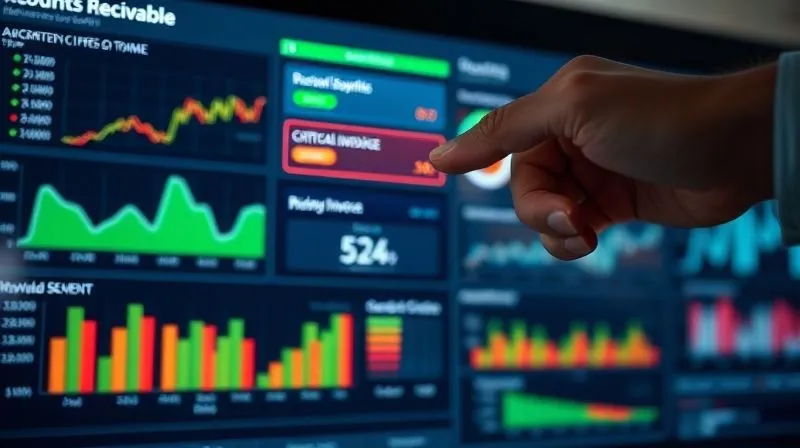
Optimizing Accounts Receivable: Get Paid Faster
Delayed payments are arguably the biggest cash flow killer for growing businesses. You've earned the revenue, now you need the cash. Here's how:
- Clear Payment Terms: Clearly state payment due dates (e.g., net 30, net 15) on all invoices. Consider offering early payment discounts (e.g., 2/10 net 30) to incentivize prompt payment.
- Proactive Invoicing & Follow-up: Send invoices immediately upon service completion or product delivery. Implement a systematic follow-up process for overdue invoices, starting with polite reminders and escalating as needed.
- Diversify Payment Options: Offer multiple payment methods, including credit cards, ACH transfers, and online payment gateways, to make it easier for customers to pay.
- Credit Checks & Limits: For new or large clients, conduct thorough credit checks. Establish credit limits and stick to them to mitigate risk.
- Invoice Factoring/Financing: For immediate cash needs, consider invoice factoring or financing. While it comes with a cost, it can bridge significant cash gaps.
Strategic Accounts Payable Management: Optimize Outflows
Just as you want to get paid quickly, you should aim to pay strategically. This isn't about delaying payments indefinitely, but about optimizing your payment terms without damaging supplier relationships.
- Negotiate Longer Payment Terms: Leverage your purchasing power to negotiate 45, 60, or even 90-day payment terms with suppliers where possible.
- Take Advantage of Discounts: If a supplier offers a discount for early payment (e.g., 2/10 net 30), evaluate if the cash saving outweighs the benefit of holding onto cash longer.
- Centralize Purchases: Consolidate orders with fewer suppliers to gain leverage for better terms and pricing.
- Automate & Streamline AP: Use accounting software to automate invoice processing and payment scheduling, reducing errors and ensuring payments are made on time, but not too early.
Inventory Control and Forecasting: Free Up Trapped Cash
Excess inventory is cash sitting on a shelf, not generating returns. It's a significant drain on working capital, especially for businesses with physical products.
- Accurate Demand Forecasting: Invest in robust forecasting tools and methodologies to predict customer demand more accurately, reducing overstocking and stockouts.
- Just-In-Time (JIT) Inventory: Explore JIT strategies where inventory is received only as it's needed, minimizing holding costs.
- Supplier Relationships: Work closely with suppliers for faster lead times and flexible delivery schedules.
- Slow-Moving Inventory Analysis: Regularly identify and liquidate slow-moving or obsolete inventory through sales or discounts to convert it back into cash.
Unmasking Hidden Cash Drains: Beyond the Obvious
Sometimes, the cash flow problem isn't just about timing, but about fundamental inefficiencies or overlooked expenses. I've seen businesses bleed cash through channels they weren't even monitoring effectively.
One common hidden drain is **uncontrolled operating expenses**. As revenue grows, there's often a temptation to loosen the reins on spending. New software subscriptions, increased marketing spend, additional personnel – while some are necessary for growth, many can be redundant or inefficient if not managed rigorously. Regularly audit all your recurring expenses.
Another significant factor can be **excessive capital expenditures (CAPEX)**. While investing in growth is vital, over-investing in fixed assets (new machinery, office space, vehicles) without a clear, immediate return on investment can severely deplete cash reserves. Always conduct a thorough ROI analysis before major CAPEX decisions.
"What gets measured gets managed." - Peter Drucker. This applies profoundly to every dollar flowing out of your business. If you're not tracking it, you can't control it.
The Power of Cash Flow Forecasting: Your Financial GPS
You can't steer a ship without a compass, and you can't manage cash flow effectively without a robust forecast. A cash flow forecast is a projection of your future cash inflows and outflows over a specific period (e.g., 13 weeks, 12 months).
This isn't just an accounting exercise; it's a critical strategic tool. It allows you to anticipate shortfalls before they occur, giving you time to take corrective action, such as adjusting payment terms, delaying non-essential expenditures, or arranging short-term financing. Without it, you're constantly reacting to crises, rather than proactively managing your financial future.
According to a report by Deloitte, companies that utilize sophisticated cash flow forecasting techniques often achieve greater financial stability and are better positioned to capitalize on growth opportunities. It helps answer the perennial question: how to fix negative cash flow despite increasing business revenue? by providing foresight.
| Category | Week 1 | Week 2 | Week 3 |
|---|---|---|---|
| Beginning Cash Balance | $50,000 | $45,000 | $30,000 |
| Cash Inflows (Sales) | $20,000 | $25,000 | $30,000 |
| Cash Outflows (Expenses) | $25,000 | $40,000 | $35,000 |
| Net Cash Flow | -$5,000 | -$15,000 | -$5,000 |
| Ending Cash Balance | $45,000 | $30,000 | $25,000 |
Strategic Financing & Debt Management: A Double-Edged Sword
When faced with negative cash flow, especially during growth, the temptation to take on debt is strong. However, it's a double-edged sword that needs to be wielded with extreme care. Smart financing can bridge gaps and fuel expansion, but excessive or poorly structured debt can exacerbate cash flow problems.
Consider lines of credit for short-term working capital needs rather than long-term loans for operational expenses. A line of credit offers flexibility, allowing you to draw funds only when needed and repay them as cash comes in, minimizing interest costs. For larger, strategic investments, explore options like venture debt or equity financing if appropriate for your business model.
Always understand the true cost of debt, including interest rates, fees, and repayment schedules. A common mistake I've observed is using short-term debt to finance long-term assets, leading to continuous refinancing and interest payments that further strain cash flow. As Harvard Business Review often highlights, managing debt effectively is a core competency for sustainable growth. Harvard Business Review provides excellent resources on this topic.
Pricing Strategies & Profit Margins: Ensuring Profitable Growth
It sounds obvious, but many businesses with increasing revenue and negative cash flow are simply not charging enough, or their pricing strategy doesn't account for the true cost of doing business. Revenue growth is meaningless if it's not profitable growth.
Regularly review your pricing strategy. Are you accurately calculating your cost of goods sold (COGS) and all associated overheads? Are you leaving money on the table by underpricing? Sometimes, a slight increase in price can significantly boost your gross margins and, consequently, your cash flow, without deterring customers.
Case Study: Elevate Innovations' Pricing Turnaround
Elevate Innovations, a fast-growing SaaS startup, was experiencing rapid user acquisition and increasing subscription revenue, yet their bank balance was consistently low. Their CEO, Maya, couldn't understand why, given their impressive sales figures. Upon analysis, we discovered their aggressive introductory pricing, while great for acquisition, wasn't covering their rising customer support and infrastructure costs.
We implemented a tiered pricing model, introduced premium features for higher-paying customers, and slightly adjusted the base price for new clients. We also introduced an annual billing option with a discount, converting monthly recurring revenue into upfront cash. Within six months, Elevate Innovations saw a 15% increase in average revenue per user (ARPU) and a remarkable 40% improvement in their operating cash flow, proving that smart pricing is a potent answer to how to fix negative cash flow despite increasing business revenue?
Operational Efficiency & Expense Control: Leaner Means More Cash
Beyond the big-ticket items, a multitude of smaller operational inefficiencies can collectively drain your cash. Think about every process in your business: sales, marketing, production, administration. Are there bottlenecks? Are you using resources optimally?
Implement a culture of continuous improvement. Regularly review vendor contracts, look for opportunities to automate tasks, and empower employees to identify cost-saving measures. For instance, optimizing your supply chain can reduce shipping costs and lead times, freeing up cash tied in transit or in warehouses. Even small savings, compounded over time, can significantly impact your cash position.

Consider investing in technology that improves efficiency, such as CRM systems for sales pipeline management, or project management software to ensure projects stay on budget and on schedule. The upfront cost can quickly be recouped through reduced waste and increased productivity.
Leveraging Technology for Financial Visibility: Your Real-Time Dashboard
In today's fast-paced business environment, relying on outdated spreadsheets or monthly financial reports is a recipe for disaster when it comes to cash flow. Modern accounting and enterprise resource planning (ERP) software offer real-time financial visibility, which is indispensable for proactive cash flow management.
Tools like QuickBooks, Xero, NetSuite, or specialized cash flow management platforms can integrate with your bank accounts, CRM, and other operational systems to provide a consolidated, up-to-the-minute view of your cash position. They can automate invoicing, expense tracking, and even generate cash flow forecasts, reducing manual effort and human error.
This level of financial clarity allows you to make informed decisions rapidly. You can identify trends, spot potential issues before they escalate, and understand the immediate impact of your operational choices on your cash reserves. As business strategist Seth Godin often emphasizes, you can't improve what you don't measure. Technologies like these make measuring and understanding your cash flow not just possible, but practically effortless. Seth Godin's blog is a great source for business insights.
Frequently Asked Questions (FAQ)
Question? Is negative cash flow always a bad sign, especially for a growing company?
Answer: Not necessarily. In the early stages of rapid growth or during significant strategic investments (e.g., R&D, major capital expenditures), a company might intentionally run a negative cash flow to fuel future expansion. However, this must be a conscious, planned decision with clear funding sources and a solid return on investment strategy. Unplanned or sustained negative cash flow, especially when revenue is increasing, is almost always a red flag indicating operational or financial inefficiencies that need immediate attention.
Question? How often should I be monitoring my cash flow to catch issues early?
Answer: For most growing businesses, daily or at least weekly cash flow monitoring is crucial. This doesn't mean a full financial report every day, but rather a quick check of your bank balances, upcoming receivables, and immediate payables. A detailed cash flow forecast should be reviewed and updated monthly, and a comprehensive cash flow statement analyzed quarterly. The more dynamic your business and the tighter your cash position, the more frequently you should monitor.
Question? What's the difference between profit and cash flow, and why is it important for this problem?
Answer: Profit (or net income) is a measure of your business's financial performance over a period, calculated by subtracting expenses from revenues using accrual accounting. It indicates if your business is financially viable. Cash flow, on the other hand, measures the actual cash moving in and out of your business. A profitable company can still have negative cash flow if, for example, it has large amounts of unpaid invoices (receivables), holds too much inventory, or makes significant capital investments. Understanding this distinction is vital because a business can be profitable on paper but still run out of cash and fail.
Question? Can cutting expenses too aggressively harm my revenue growth?
Answer: Absolutely. While expense control is critical, indiscriminate cuts can be detrimental. Reducing essential marketing spend, cutting back on customer service, or under-investing in product development can directly impair your ability to generate future revenue and alienate customers. The key is strategic cost management: identifying inefficiencies, eliminating waste, and optimizing spending, rather than simply slashing budgets. Focus on getting more value for every dollar spent, not just spending less.
Question? What role does customer relationship management play in improving cash flow?
Answer: A significant one. Strong customer relationships can lead to more consistent sales, faster payment of invoices, and reduced churn. Loyal customers are more likely to adhere to payment terms and less likely to dispute invoices. Furthermore, a good CRM system can help identify your most profitable customers, allowing you to focus resources where they generate the best cash returns. It's a holistic approach where good business practices directly translate to better financial health. Forbes Business often covers the intersection of customer relations and financial performance.
Key Takeaways and Final Thoughts
The challenge of negative cash flow despite increasing business revenue is a common but solvable one. It requires a shift in perspective from solely focusing on the top line to a holistic, disciplined approach to financial management.
- Prioritize Cash Over Profit: Understand that cash is the lifeblood of your business.
- Optimize Working Capital: Aggressively manage accounts receivable, accounts payable, and inventory.
- Forecast Religiously: Use cash flow forecasting as your primary strategic tool.
- Control Expenses Strategically: Eliminate waste without stifling growth.
- Price for Profitability: Ensure your revenue growth is genuinely contributing to your bottom line.
- Leverage Technology: Utilize modern tools for real-time financial visibility.
Don't let the illusion of revenue growth mask underlying cash flow issues. By implementing these expert strategies, you're not just fixing a problem; you're building a more resilient, profitable, and sustainable business. Take control of your cash flow today, and watch your business truly thrive. For further in-depth analysis on financial health, I recommend exploring resources from reputable institutions like the Federal Reserve or academic studies on corporate finance.
Recommended Reading
- 9 Proactive Strategies: Preventing Union Organizing Drives in Your Non-Union Workplace
- Navigating VC Term Sheets: 7 Strategies to Protect Founder Control & Equity
- 7 Proven Steps: Boost Remote Staff Mental Health Measurably
- Why B2B Customers Exit: Unmasking CRM's Hidden Blind Spots
- Unlock the Secret: How to Reduce Customer Churn Through Exceptional Service




Comments
Leave a comment below. Your email will not be published. Required fields marked with *