


How to Fix Persistent Budget Overruns with Variance Analysis?
For over two decades in financial management, I've witnessed the silent killer of promising projects and ambitious companies: persistent budget overruns. It's not just a minor hiccup; it's a systemic drain that erodes profitability, stifles growth, and ultimately undermines trust within an organization.
The gnawing frustration of budget overruns is a common pain point. You set a budget with the best intentions, only to find actual expenditures consistently exceeding projections. This isn't merely about 'spending too much'; it's about a lack of control, foresight, and understanding of underlying financial dynamics. It leaves leaders scrambling, projects delayed, and resources misallocated.
But what if I told you there's a powerful, analytical framework that can not only identify *where* you're overspending but, more importantly, *why*? This guide will walk you through my proven framework for leveraging variance analysis—a critical tool in any financial manager's arsenal—to diagnose, address, and permanently fix those stubborn budget overruns. You'll gain actionable steps, expert insights, and the confidence to regain robust financial control.
The Unseen Costs of Budget Overruns: More Than Just Money
When budgets consistently go awry, the immediate thought is often about the monetary loss. While that's significant, the true cost of persistent budget overruns extends far beyond the bottom line. I've seen them ripple through organizations, causing damage that's harder to quantify but just as destructive.
- Erosion of Trust: Internally, repeated overruns diminish confidence in financial planning and management. Externally, they can harm investor relations and stakeholder perception.
- Resource Misallocation: Funds diverted to cover deficits mean less capital for strategic investments, innovation, or employee development.
- Reduced Morale: Teams working on projects constantly battling budget issues can become demotivated, feeling their efforts are undermined by financial instability.
- Strategic Paralysis: When financial forecasting is unreliable, leadership becomes hesitant to commit to new initiatives, fearing further fiscal challenges.
- Increased Stress & Turnover: Finance teams under constant pressure to explain and justify overruns often experience burnout, leading to higher turnover rates.
In my experience, budget overruns are rarely just an accounting problem; they are a symptom of deeper operational or strategic disconnects that require a holistic approach to solve. Ignoring them is akin to ignoring a chronic illness—it only gets worse.
What Exactly is Variance Analysis, and Why Does It Matter?
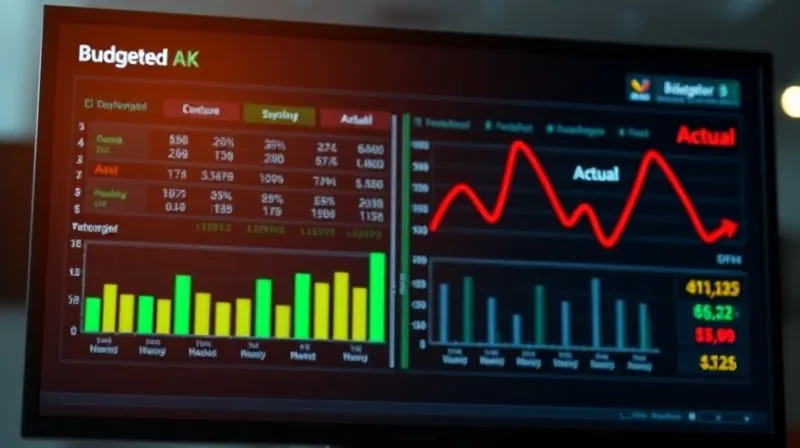
At its core, variance analysis is a systematic process of comparing actual financial results with budgeted or planned results, and then investigating the differences (variances). It's not just about noting a discrepancy; it's about understanding the *reason* for that discrepancy.
Why does it matter for fixing budget overruns? Because without understanding the 'why,' any corrective action is merely a shot in the dark. Variance analysis transforms raw data into actionable intelligence, allowing you to move beyond simply knowing you're over budget to understanding *what* caused it, *who* was responsible, and *how* to prevent it from happening again.
Think of it like a doctor diagnosing a patient. They don't just note a fever; they investigate the cause—is it bacterial, viral, or something else? Similarly, variance analysis helps you pinpoint whether an overrun is due to higher material costs, inefficient labor, unexpected volume changes, or poor initial planning. For a deeper dive into the fundamentals, consider exploring resources like Investopedia's explanation of variance analysis.
Step 1: Laying the Foundation – Accurate Budgeting & Baseline Setting
You can't effectively analyze variances if your baseline—your budget—is flawed from the start. I've seen many companies fall into the trap of creating budgets based on historical inertia or overly optimistic projections, setting themselves up for guaranteed overruns.
The goal here is realism and precision.
- Engage Stakeholders: Don't create budgets in a vacuum. Involve department heads, project managers, and even frontline staff who have direct knowledge of operational costs and revenue drivers. Their input is invaluable for accuracy.
- Break Down Costs Granularly: Instead of broad categories, drill down into specific cost centers and line items. The more detailed your budget, the easier it is to pinpoint exactly where variances occur.
- Justify Every Line Item: Implement a 'zero-based budgeting' mindset where every expense must be justified from scratch, rather than simply rolling over last year's figures. This forces a critical review of necessity and efficiency.
- Factor in Contingencies: Always include a reasonable contingency fund (e.g., 5-10% of total budget) for unforeseen circumstances. This isn't an excuse for poor planning but a buffer against genuine surprises. For more on this, research Harvard Business Review's perspective on zero-based budgeting.
- Establish Clear Metrics: Define what success looks like for each budget line item. What are the expected outputs or outcomes for the allocated funds?
The Power of a Realistic Baseline
A well-constructed budget serves as your reliable benchmark. If your budget itself is unrealistic, then every subsequent variance analysis will be skewed, leading to misinterpretations and ineffective corrective actions. Invest time upfront to ensure your budget is robust, defensible, and reflective of operational realities.
Step 2: Unpacking the Numbers – Identifying Key Variances
Once you have a solid budget, the next step is the actual calculation and identification of variances. This involves a direct comparison of your actual expenditures and revenues against your budgeted figures.
There are several types of variances, but for persistent budget overruns, we primarily focus on:
- Spending/Cost Variances: When actual costs for a resource (e.g., materials, labor) differ from budgeted costs.
- Volume Variances: When the actual quantity of resources used or output produced differs from the budgeted quantity.
- Revenue Variances: When actual sales revenue differs from budgeted sales revenue.
The calculation is straightforward: Variance = Actual Result - Budgeted Result.
A favorable variance occurs when actual results are better than budgeted (e.g., actual costs are lower, actual revenue is higher). An unfavorable variance occurs when actual results are worse than budgeted (e.g., actual costs are higher, actual revenue is lower).
| Metric | Budgeted | Actual | Variance |
|---|---|---|---|
| Marketing Spend | $10,000 | $12,500 | -$2,500 (Unfavorable) |
| Project Labor Costs | $25,000 | $23,000 | +$2,000 (Favorable) |
| Materials Cost | $5,000 | $6,200 | -$1,200 (Unfavorable) |
| Sales Revenue | $50,000 | $48,000 | -$2,000 (Unfavorable) |
Materiality Thresholds: What to Focus On
Not every variance warrants a deep dive. Small, insignificant deviations can consume valuable time. Establish materiality thresholds – a percentage or absolute dollar amount – above which variances *must* be investigated. For example, you might decide to investigate any variance exceeding 5% or $1,000, whichever is greater. This helps focus your efforts on the most impactful discrepancies.
Step 3: The 'Why' Behind the 'What' – Root Cause Analysis
Identifying a variance is only the first step. The real power of variance analysis lies in uncovering the *root cause*. This is where your expertise and investigative skills come into play. Without understanding the 'why,' you're merely treating symptoms, not the disease.
- Gather Data & Context: Don't just look at the numbers. Talk to the department heads, project managers, and anyone involved in the activity that generated the variance. What changed? Were there unexpected events?
- Apply the '5 Whys' Technique: For each significant unfavorable variance, repeatedly ask 'Why?' until you get to the fundamental cause.
- Overrun: Marketing spend was $2,500 over budget.
- Why? We ran more ads than planned.
- Why? Our initial ad campaign wasn't generating enough leads.
- Why? The targeting was too broad, and the ad copy wasn't resonating.
- Why? We rushed the campaign launch without adequate market research or A/B testing.
- Why? A new marketing manager was under pressure to show quick results.
- Consider External Factors: Were there changes in market conditions, supplier prices, regulatory requirements, or economic shifts that impacted your costs or revenues?
- Review Internal Processes: Were there operational inefficiencies, equipment breakdowns, scope creep in a project, or poor communication that led to the variance?
Case Study: How TechSolutions Overcame Software Project Overruns
TechSolutions, a mid-sized software development firm, consistently faced 15-20% budget overruns on their client projects. Their initial analysis only showed 'higher labor costs.' By applying a deeper root cause analysis:
- They found that scope creep was rampant, with clients requesting changes mid-project without formal change orders or budget adjustments.
- Developers were spending excessive time on bug fixes due to inadequate initial testing and unclear requirement documentation.
- There was a lack of clear communication between sales (who promised features) and development (who built them).
By identifying these root causes, TechSolutions implemented a strict change management process, invested in better QA tools, and initiated weekly cross-departmental syncs. Within six months, project overruns dropped to under 5%, significantly improving profitability and client satisfaction.

Step 4: Strategic Corrective Actions – From Insight to Impact
Once you've identified the root causes, the next critical step is to devise and implement effective corrective actions. This isn't a one-size-fits-all solution; the actions must be tailored to the specific cause and context of the variance.
- Operational Adjustments: These are immediate, tactical changes. If labor costs are high due to overtime, can you reallocate tasks, improve scheduling, or cross-train staff? If material costs are up, can you negotiate with suppliers, find alternative vendors, or optimize usage?
- Process Improvements: If the root cause points to inefficient workflows or poor communication, implement new procedures. This might involve new software, clearer documentation, or revised approval processes.
- Strategic Re-evaluation: Sometimes, a persistent variance indicates a flaw in your overall strategy or business model. Is a product line unprofitable? Is a service priced too low? These require higher-level decisions.
- Policy Changes: Introduce or modify internal policies to prevent recurrence. This could include stricter purchasing policies, mandatory project management training, or enhanced budget review protocols.
- Training & Development: If a variance stems from a lack of skills or knowledge (e.g., poor forecasting by a manager), invest in targeted training.
The most effective corrective actions are those that address the root cause directly, rather than merely patching over the symptoms. This often requires a willingness to challenge existing norms and processes. As management expert Peter Drucker famously said, 'What gets measured gets managed.' I'd add: 'What gets analyzed deeply gets fixed permanently fixed.'
It's also crucial to assign ownership for each corrective action and set clear deadlines. Without accountability, even the best plans remain just plans. Consider exploring resources on strategic financial management for broader insights into linking financial insights to business strategy.
Step 5: Monitoring & Reporting – Keeping a Finger on the Pulse
Implementing corrective actions isn't the end of the journey; it's the beginning of a new cycle of monitoring and adjustment. You need a robust system to track the impact of your actions and ensure that budget overruns don't resurface.
- Regular Variance Reporting: Establish a consistent schedule for reviewing actuals against budget (weekly, bi-weekly, monthly, quarterly, depending on the project or department).
- Focus on Key Performance Indicators (KPIs): Beyond just total budget vs. actual, track specific KPIs related to your corrective actions. If you addressed labor efficiency, monitor hours per unit of output. If it was material waste, track waste percentages.
- Visual Dashboards: Present financial performance and variances using clear, concise dashboards. Visualizations make it easier for stakeholders to grasp complex data quickly and identify trends.
- Narrative Explanations: Reports should not just be numbers. Provide a brief narrative explaining significant variances, the root causes identified, and the corrective actions being taken. This adds crucial context.
- Forecast Revisions: Based on new insights and ongoing performance, update your forecasts. This isn't changing the budget (which is your baseline for variance analysis) but refining your future expectations.
Example KPIs for Budget Control
| KPI | Description | Target Variance |
|---|---|---|
| Cost Per Unit | Tracks efficiency of production or service delivery. | < 2% |
| Projected vs. Actual Cash Flow | Highlights liquidity management issues. | < 5% |
| Overtime Hours as % of Total Labor | Indicates labor scheduling or staffing issues. | < 10% |
| Supplier Price Variance | Measures changes in procurement costs. | < 3% |

Step 6: The Iterative Loop – Learning and Adapting
Budgeting and financial control are not static processes; they are dynamic and iterative. Every budget cycle, every variance analysis, and every corrective action provides valuable learning. This step is about embedding that learning into your organizational DNA.
- Post-Mortem Reviews: After major projects or at the end of a fiscal period, conduct thorough post-mortem reviews. What went well? What didn't? How accurate were our initial budgets and forecasts?
- Refine Budgeting Processes: Use the insights gained from variance analysis to improve your future budgeting methodologies. If certain costs are consistently underestimated, adjust your forecasting models.
- Update Assumptions: Business environments change. Regularly review the underlying assumptions in your budget (e.g., inflation rates, market growth, exchange rates) and update them as needed.
- Knowledge Sharing: Create a culture where lessons learned from budget overruns and successful cost controls are shared across departments. This prevents others from making the same mistakes.
- Embrace Rolling Forecasts: Instead of fixed annual budgets, consider implementing rolling forecasts that are updated regularly (e.g., quarterly) for the next 12-18 months. This allows for greater agility and responsiveness to changing conditions. For more on this, check out insights on Deloitte's perspective on rolling forecasts.
By continuously learning and adapting, you transform budget control from a reactive firefighting exercise into a proactive strategic advantage.
Step 7: Cultivating a Culture of Fiscal Responsibility
Ultimately, fixing persistent budget overruns isn't just about numbers and processes; it's about people and culture. Even the most sophisticated variance analysis tools will fail if the organizational culture doesn't support fiscal responsibility.
- Lead by Example: Leadership must demonstrate a commitment to budget adherence and responsible spending.
- Empower & Educate: Provide managers and team leaders with the knowledge, tools, and authority to manage their budgets effectively. Offer training on financial literacy and budget management.
- Foster Accountability: Clearly define who is responsible for each budget line item and hold them accountable for variances. This isn't about blame, but about ownership.
- Promote Transparency: Share financial performance data (appropriately) across the organization. When employees understand the financial health of the company, they are more likely to make fiscally responsible decisions.
- Recognize & Reward: Acknowledge and reward teams or individuals who demonstrate excellent budget management and cost control. Positive reinforcement goes a long way.
- Open Communication: Encourage open dialogue about financial challenges and opportunities. Create a safe space for managers to report potential overruns early, rather than hiding them until it's too late.

Frequently Asked Questions (FAQ)
What's the difference between a favorable and unfavorable variance? A favorable variance means your actual results are better than budgeted (e.g., actual costs are lower than budgeted, or actual revenue is higher than budgeted). An unfavorable variance means your actual results are worse than budgeted (e.g., actual costs are higher, or actual revenue is lower). It's crucial to investigate both, as a favorable variance might indicate an underestimated budget or missed opportunities.
How often should variance analysis be performed? The frequency depends on the nature of your business, the volatility of your costs/revenues, and the specific project. For highly dynamic projects or businesses, weekly or bi-weekly analysis might be necessary. For more stable operations, monthly or quarterly reviews are often sufficient. The key is consistency and timeliness—don't wait until the end of the fiscal year to discover major discrepancies.
Can small businesses effectively use variance analysis? Absolutely! Variance analysis is not just for large corporations. While the tools might be simpler (even a basic spreadsheet can work), the principles remain the same. Small businesses often have less buffer for overruns, making effective budget control even more critical. The methodology helps them understand where their money is truly going and make informed decisions.
What are some common pitfalls to avoid in variance analysis? Common pitfalls include: using an unrealistic budget as a baseline, focusing only on unfavorable variances (missing opportunities from favorable ones), failing to investigate root causes (only noting the numbers), not assigning accountability for corrective actions, and neglecting to update future plans based on lessons learned. Also, beware of 'analysis paralysis'—you need to act on the insights.
What tools are best for performing variance analysis? For smaller businesses, advanced spreadsheets (like Excel or Google Sheets) with pivot tables can be very effective. Mid-sized to larger organizations often leverage Enterprise Resource Planning (ERP) systems (e.g., SAP, Oracle, Microsoft Dynamics), Financial Planning & Analysis (FP&A) software, or business intelligence (BI) tools (e.g., Tableau, Power BI) which offer automated reporting and visualization capabilities. The best tool is one that fits your budget, complexity, and team's proficiency.
Key Takeaways and Final Thoughts
Persistent budget overruns are a significant hurdle for any organization, but they are not an insurmountable problem. By embracing the structured approach of variance analysis, you gain the clarity and control needed to transform financial challenges into strategic opportunities.
- Realistic Budgeting is Paramount: A flawed baseline guarantees flawed analysis.
- Go Beyond the Numbers: Identify the 'why' behind the 'what' through root cause analysis.
- Actionable Insights are Key: Translate variances into specific, measurable corrective actions.
- Continuous Monitoring & Adaptation: Financial control is an ongoing, iterative process, not a one-time fix.
- Cultivate a Culture of Responsibility: Empower and educate your team to be fiscally astute.
I've seen firsthand how adopting these principles can shift an organization from reactive budget firefighting to proactive financial mastery. It requires commitment, discipline, and a willingness to dig deep, but the rewards—enhanced profitability, improved decision-making, and greater strategic agility—are well worth the effort. Start implementing these steps today, and take control of your financial destiny.
Recommended Reading
- Unlock Precision: Solving Common Data Interpretation Errors in Analytics
- Why Do Customers Fume Over Support Channel Hops? 7 Fixes!
- Communicate Bad News: 5 Steps to Keep Loyal Customers Happy
- The Ultimate Guide: How to Manage Project Deliverables Effectively and Avoid Chaos
- 5 Critical Risks: Identify Them Before Small Business Expansion





Comments
Leave a comment below. Your email will not be published. Required fields marked with *