


How to Fix Sales Team's Consistent Underperformance Post-Training?
For over 15 years in the trenches of sales leadership and development, I've seen a recurring, disheartening pattern: companies invest heavily in sales training, only to watch their teams revert to old habits, leading to consistent underperformance. It's a frustrating cycle that drains budgets and morale, leaving leaders questioning the value of their investment.
This isn't just a minor hiccup; it's a systemic failure to bridge the gap between learning and application. The pain point is palpable: you've provided the knowledge, but the needle isn't moving. Your sales team knows what to do, but they're not consistently doing it, or not doing it effectively, especially after the initial training buzz wears off.
In this definitive guide, I'll share actionable frameworks and expert insights, drawn from years of real-world experience, to diagnose and decisively fix your sales team's consistent underperformance post-training. We'll move beyond the 'blame the training' narrative and uncover the true levers for sustained sales growth and operational excellence.
Beyond the Classroom: Why Training Alone Isn't Enough
The biggest misconception I encounter is the belief that training is a 'one-and-done' event. It's not. Sales training is merely the ignition, not the entire journey. Without robust follow-up, reinforcement, and a supportive ecosystem, even the most brilliant training program will yield diminishing returns.
Think of it like learning to play a musical instrument. You can take lessons, understand the theory, and practice scales, but true mastery comes from consistent, deliberate practice, ongoing coaching, and performing in real-world scenarios. Sales is no different. The classroom provides the foundation, but the field builds the skyscraper.
“The single biggest problem in communication is the illusion that it has taken place.” – George Bernard Shaw. This applies equally to training; the illusion of learning doesn't equal application.
Many organizations focus solely on content delivery, neglecting the critical stages of skill integration and behavioral change. This oversight is a primary reason for consistent underperformance post-training. We must shift our perspective from 'training event' to 'continuous development process.'

The Post-Training Support Gap: Bridging Theory to Practice
The moment a sales rep leaves the training room, they enter a 'support gap' if no structured reinforcement is in place. This gap is where newly acquired skills often wither and die. To fix sales team's consistent underperformance post-training, we must actively bridge this divide.
Implementing a Structured Reinforcement Program
This isn't optional; it's fundamental. A reinforcement program ensures that what was learned is practiced, refined, and eventually internalized. Here's how to build one:
- Scheduled Follow-up Sessions: Within 72 hours of training, schedule a brief, focused session to review key takeaways and answer immediate questions.
- Micro-Learning Modules: Break down complex topics into short, digestible modules (5-10 minutes) delivered via email, intranet, or a learning platform. These should reinforce specific skills.
- Peer-to-Peer Learning: Encourage reps to practice new techniques with each other through role-playing and feedback sessions. Create a safe environment for experimentation.
- Job Aids and Checklists: Provide quick-reference guides, scripts, and checklists that reps can use during live calls or meetings.
- Manager-Led Coaching: This is perhaps the most critical component. Managers must be equipped and incentivized to coach the new behaviors.
According to a study by Harvard Business Review, companies that invest in effective coaching see a significant improvement in employee performance and engagement. Your sales managers are the frontline coaches, and their ability to reinforce training is paramount.
Mastering the Metrics: Identifying the True Root Causes of Underperformance
You can't fix what you don't understand. Often, consistent underperformance is a symptom of underlying issues, not just a lack of effort. To effectively fix sales team's consistent underperformance post-training, we need to dive deep into the data.
Analyzing Key Performance Indicators (KPIs)
Don't just look at total sales. Break down the sales process into its fundamental components and analyze each stage. Here are some critical metrics to scrutinize:
- Activity Metrics: Number of calls, emails, meetings, demos. Are reps putting in the work?
- Conversion Rates: Prospect-to-qualified lead, qualified lead-to-opportunity, opportunity-to-close. Where are prospects dropping off?
- Average Deal Size: Are reps discounting too much or failing to upsell/cross-sell?
- Sales Cycle Length: Are deals getting stuck? If so, at what stage?
- Product Specific Performance: Are certain products being neglected or undersold?
For instance, if your reps received training on discovery questions, but your 'qualified lead-to-opportunity' conversion rate hasn't improved, it suggests they aren't effectively applying those questions to uncover true needs. The training might have been good, but the application is failing.
| Metric | Before Training | After Training (30 Days) | Target (90 Days) | Status |
|---|---|---|---|---|
| Discovery Call Conversion | 15% | 17% | 25% | Needs Improvement |
| Average Deal Size | $10,000 | $9,500 | $12,000 | Declined |
| Sales Cycle Length | 45 Days | 48 Days | 40 Days | Elongated |
| Product X Sales | 10 units/month | 8 units/month | 15 units/month | Underperforming |
This table illustrates how a granular view of metrics can pinpoint exactly where the post-training underperformance lies. It's not just 'sales are down'; it's 'average deal size has declined, suggesting a failure to apply value-based selling principles taught in training.'
Crafting a Culture of Continuous Coaching and Feedback
The most impactful intervention for fixing consistent underperformance post-training is consistent, high-quality coaching. Sales managers are the linchpin. They need to transition from being 'super-reps' to true coaches.
The Manager as a Performance Architect
Managers must be trained on how to coach, not just what to coach. This involves active listening, asking powerful questions, providing constructive feedback, and facilitating self-discovery. A simple framework I've found incredibly effective is the 'Observe-Discuss-Practice' cycle:
- Observe: Managers observe reps in action (live calls, recorded demos, meetings).
- Discuss: They then hold a specific, structured discussion focusing on 1-2 areas for improvement, using examples from the observation.
- Practice: The rep then practices the new behavior, often through role-play, with the manager providing immediate feedback.
Case Study: How Apex Solutions Reversed Post-Training Slump
Apex Solutions, a mid-sized SaaS company, struggled with their sales team's consistent underperformance post-training on a new CRM system and solution selling methodology. Despite a hefty investment, adoption was low, and sales metrics dipped. Their leadership realized the training itself wasn't the problem; the lack of post-training reinforcement was.
They implemented a mandatory weekly 30-minute 1:1 coaching session for every rep, led by their direct manager. Managers were trained on the 'Observe-Discuss-Practice' model, focusing specifically on how reps were applying the new CRM features and solution selling techniques. They used call recordings and CRM activity logs as discussion points.
Within three months, Apex Solutions saw a 20% increase in CRM feature adoption, a 15% improvement in their opportunity-to-close conversion rate, and a significant boost in sales team confidence. The key was the consistent, structured coaching that transformed theoretical knowledge into practical application.

Rethinking Your Sales Playbook for Post-Training Reinforcement
Your sales playbook isn't just a document; it's a living guide that should evolve with your training and market conditions. If your team is underperforming post-training, it might be that the playbook isn't adequately reinforcing the new skills or knowledge.
Integrating Training into Your Playbook
Ensure your playbook reflects the latest training. If you trained on a new qualification framework, that framework should be clearly outlined with examples in the playbook. If you introduced new objection handling techniques, they should be documented there.
- Update Battle Cards: Ensure these reflect new product messaging, competitive differentiators, and value propositions taught in training.
- Include Call Scripts/Templates: Provide updated templates for emails, voicemails, and discovery call guides that incorporate the new methodologies.
- Scenario-Based Learning: Add common sales scenarios and how to navigate them using the newly acquired skills.
A well-maintained, dynamic playbook acts as an 'always-on' training reinforcement tool. It's a reference point that helps reps apply what they've learned in real-time, reducing the chances of consistent underperformance post-training.
Leveraging Technology for Sustained Performance Improvement
Technology isn't just for tracking sales; it can be a powerful ally in reinforcing training and driving sustained performance. Many companies underutilize their existing tech stack for this purpose.
Sales Enablement Platforms and CRM Optimization
Modern sales enablement platforms offer features specifically designed for post-training reinforcement:
- Content Management: Centralize updated playbooks, battle cards, and training materials.
- Learning Paths: Assign specific learning modules based on performance gaps identified through metrics.
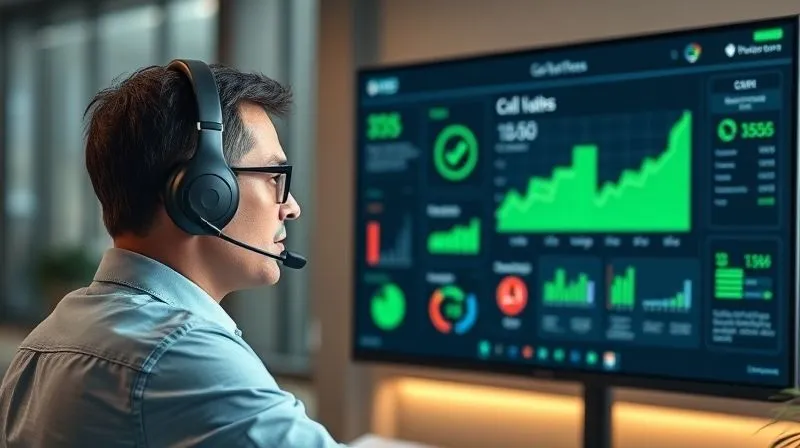
- Call Recording & Analysis: Tools that transcribe and analyze calls can pinpoint where reps are struggling to apply new techniques. This provides invaluable coaching material.
- Gamification: Introduce leaderboards and badges for successful application of new skills or achieving specific post-training KPIs.
Your CRM itself can be optimized to prompt specific actions or data entry points that reinforce training. For example, if training focused on a new qualification process, ensure the CRM fields align with that process, making it easier for reps to follow the new methodology. As Forbes suggests, leveraging technology for sales enablement is crucial for competitive advantage.
Motivation and Accountability: The Human Element
Even with the best training and support, consistent underperformance can stem from issues of motivation or accountability. It's vital to address the human side of the equation when trying to fix sales team's consistent underperformance post-training.
Fostering Intrinsic Motivation and Clear Accountability
Sales is inherently challenging. Reps need to feel valued, supported, and clear on expectations. Here’s how to cultivate that:
- Clear Expectations: Ensure reps know exactly what is expected of them post-training. What new behaviors or metrics are they accountable for?
- Performance Reviews Focused on Growth: Shift reviews from punitive to developmental. Discuss how new training can help them achieve their goals.
- Recognition and Rewards: Celebrate successes, especially when reps successfully apply new skills. This reinforces positive behavior.
- Address Skill vs. Will: Determine if underperformance is due to a lack of skill (requiring more coaching/training) or a lack of will (requiring motivational intervention or, in extreme cases, different personnel).
- Team Spirit: Foster a collaborative environment where reps feel comfortable asking for help and sharing best practices.
Seth Godin often speaks about the importance of 'shipping' – of doing the work and putting it out there. In sales, this translates to consistently applying learned skills, even when it's uncomfortable. Creating an environment where this 'shipping' is encouraged and rewarded is paramount.
Measuring ROI: Proving the Impact of Your Remedial Actions
The final, crucial step in addressing consistent underperformance post-training is to measure the impact of your interventions. This isn't just about justifying costs; it's about understanding what works and refining your approach.
Tracking Changes and Demonstrating Value
Establish baseline metrics before implementing your post-training fixes. Then, continuously monitor the KPIs we discussed earlier. Look for trends and correlations.
- Short-Term Gains: Are specific conversion rates improving within weeks of new coaching initiatives?
- Long-Term Impact: Is overall revenue growing, and are sales cycles shortening over several months?
- Qualitative Feedback: Conduct surveys or interviews with reps and managers to gauge confidence, skill application, and perceived value of the support.
This data-driven approach allows you to iterate and optimize. If one coaching method isn't working, you'll know quickly and can adjust. If another is wildly successful, you can scale it. This continuous feedback loop ensures that your efforts to fix sales team's consistent underperformance post-training are both effective and efficient. A Deloitte report highlights that companies effectively measuring and adapting their talent strategies outperform competitors.
| Intervention | Key Metric Impacted | Baseline | Post-Intervention (90 Days) | ROI Observation |
|---|---|---|---|---|
| Weekly 1:1 Coaching | Opportunity Conversion Rate | 18% | 23% | +5% conversion, directly tied to coaching focus on discovery questions. |
| CRM Optimization & Playbook Update | Average Deal Size | $9,500 | $11,200 | +$1,700 average deal, attributed to better value proposition communication and upselling guidance. |
| Micro-Learning Modules | Product X Sales | 8 units/month | 13 units/month | +5 units/month, linked to targeted product feature reinforcement. |
Frequently Asked Questions (FAQ)
Q: How long does it typically take to see results after implementing these strategies? A: While some immediate shifts in activity metrics or specific conversion rates can be observed within 4-6 weeks, significant, sustained improvements in overall sales performance and revenue generally take 3-6 months. This timeframe allows for new behaviors to solidify and for the cumulative impact of coaching and reinforcement to manifest. Consistency is key.
Q: What if our sales managers aren't equipped to be effective coaches? A: This is a common challenge. The first step is to train the trainers. Invest in dedicated 'Coaching for Sales Managers' programs. These should focus on active listening, feedback techniques, goal setting, and how to use data for coaching. Provide them with coaching frameworks and regular peer-to-peer manager coaching sessions to refine their skills. Without effective coaching from leadership, efforts to fix sales team's consistent underperformance post-training will likely fall short.
Q: How can I differentiate between a 'skill gap' and a 'will gap' in my sales team? A: A 'skill gap' means the rep doesn't know *how* to do something, despite training. This often manifests as low activity, poor conversion rates at specific stages, or inability to articulate value. A 'will gap' means they know *how* but aren't consistently applying it, often due to lack of motivation, engagement, or accountability. Observe their effort, listen to their challenges, and compare their actions to their stated understanding. Consistent coaching focused on skill development will usually close a skill gap; if underperformance persists, it points more towards a will issue.
Q: Should we retrain the entire team if underperformance is widespread? A: Not necessarily a full retraining. A targeted approach is often more effective. First, identify the specific areas of consistent underperformance post-training through metric analysis. Then, design micro-training modules or focused coaching interventions for those specific gaps. A complete retraining might be needed if the original training content was fundamentally flawed or outdated, but more often, it's about reinforcement and application.
Q: What role does compensation play in fixing post-training underperformance? A: Compensation is a powerful motivator, but it's often a lagging indicator. If a compensation plan rewards old behaviors or doesn't incentivize the application of new skills, it can inadvertently contribute to underperformance. Review your compensation structure to ensure it aligns with the desired post-training behaviors and outcomes. For example, incentivize the adoption of new CRM processes or higher quality discovery calls, not just closed deals. It's about aligning incentives with the desired sales process, not just the final result.
Key Takeaways and Final Thoughts
- Training is a Process, Not an Event: Embrace continuous reinforcement and development.
- Data is Your Compass: Dive deep into specific KPIs to diagnose the root causes of underperformance.
- Coaching is King: Empower and train your sales managers to be effective, consistent coaches.
- Align Your Ecosystem: Ensure your playbook, technology, and compensation all support post-training application.
- Focus on the Human Element: Address motivation, accountability, and team culture.
Fixing sales team's consistent underperformance post-training isn't a quick fix; it's a strategic undertaking that demands a holistic approach. By moving beyond reactive training to proactive reinforcement, data-driven insights, and a culture of continuous coaching, you can transform your sales team from underperforming to consistently exceeding targets. Remember, the investment in training is only truly realized when the knowledge is consistently applied in the field, driving tangible results. It's time to stop the cycle of frustration and build a truly high-performing sales organization.
Recommended Reading
- Unlock Your Resilience: Mastering Mental Health on Your Entrepreneurial Journey
- Struggling Franchise? 7 Steps to a Profitable Sale Revealed
- 7 Strategies to Safeguard Corporate Assets in a Severe Market Downturn
- Mastering Budget Variances: How to Effectively Control Them in Business
- Why 70% of Change Efforts Fail: 7 Core Reasons & Solutions



Comments
Leave a comment below. Your email will not be published. Required fields marked with *