


How to Increase B2B Lead Conversion Rate by 15% in 90 Days?
For over 18 years in the B2B marketing strategy trenches, I've seen countless businesses pour resources into lead generation, only to watch a significant portion of those valuable prospects slip through their fingers. It's a frustrating, often costly, cycle that can stifle even the most promising growth trajectories. I recall a client, a SaaS firm, who boasted impressive MQL numbers but whose sales team was perpetually hitting a wall – leads just weren't converting.
The core problem, as I've consistently observed, isn't always a lack of leads, but a 'leaky' conversion funnel. It's the silent killer of marketing ROI, eroding profitability and demoralizing sales teams. Businesses often focus on the top of the funnel, neglecting the critical mid and bottom-funnel optimizations that truly transform interest into revenue. This inefficiency leaves revenue on the table and creates a perpetual scramble for more leads, rather than better conversion of existing ones.
In this definitive guide, I'm going to share my battle-tested, 90-day framework designed specifically to help you increase B2B lead conversion rate by 15% in 90 days. We'll move beyond generic advice, diving deep into actionable strategies, data-driven tactics, and proven methodologies that I've personally implemented to unlock significant growth for B2B enterprises. Prepare to transform your approach and see tangible results.
The 90-Day Conversion Acceleration Framework: My Philosophy
Achieving a 15% increase in B2B lead conversion within 90 days isn't about quick fixes; it's about focused, strategic intervention. My philosophy centers on a three-phase approach: Deep Dive & Diagnostic, Strategic Optimization & Implementation, and Performance Monitoring & Iteration. Each phase builds upon the last, ensuring that every action you take is informed, purposeful, and measurable. This isn't a 'set it and forget it' plan; it's an intensive, agile sprint designed for maximum impact in a compressed timeframe. I've found that this structured urgency often forces teams to prioritize and execute with a clarity that longer-term projects sometimes lack, leading to quicker, more significant wins.
The beauty of this 90-day sprint is its emphasis on identifying high-leverage areas. We won't try to fix everything; instead, we'll pinpoint the most significant bottlenecks and apply targeted solutions that yield the greatest return on effort. This requires discipline, cross-functional collaboration between marketing and sales, and an unwavering commitment to data. Let's break down how we'll achieve this.
Phase 1: Deep Dive & Diagnostic (Days 1-30)
The first 30 days are crucial for establishing a baseline and truly understanding where your current conversion efforts are falling short. Without this foundational analysis, any optimization attempts are merely shots in the dark. As the old adage goes, 'You can't manage what you don't measure.'
1. Audit Your Current B2B Sales Funnel
Begin by meticulously mapping out your existing B2B sales funnel, from initial lead capture to closed-won. Document every touchpoint, every handoff, and every technology involved. I often find that companies have an idealized view of their funnel, which differs significantly from the messy reality. This audit isn't just about drawing boxes; it's about identifying the actual journey your leads take.
- Map the Journey: Visualize your funnel stages (Awareness, Interest, Consideration, Intent, Evaluation, Purchase) and identify the specific actions leads take at each stage (e.g., download an ebook, attend a webinar, request a demo).
- Identify Entry & Exit Points: Where do leads typically enter your funnel? Where do they drop off? Pinpoint the exact stages where leads are stagnating or churning.
- Review Content & Assets: Evaluate the relevance, quality, and placement of all content assets (e.g., landing pages, emails, case studies, sales collateral) associated with each stage. Is your content guiding leads effectively?
- Assess Technology Stack: Document all CRM, marketing automation, and sales enablement tools used. Are they integrated? Are they being utilized to their full potential?
This comprehensive mapping will illuminate critical areas for improvement, often revealing surprising inefficiencies. It's the first step in understanding the 'why' behind your current conversion rates.

2. Understand Your Ideal Customer Profile (ICP) & Buyer Persona
You cannot effectively convert leads if you don't precisely know who you're trying to reach. A fuzzy ICP or outdated buyer personas lead to misaligned messaging and wasted effort. In my experience, a significant portion of B2B conversion issues stems from attracting the wrong leads, or not understanding the right ones well enough.
- Revisit Your ICP: Define the firmographic and technographic characteristics of your most profitable customers (e.g., industry, company size, revenue, tech stack). Who benefits most from your solution?
- Update Buyer Personas: Go beyond demographics. Delve into psychographics – what are their pain points, goals, motivations, challenges, and decision-making processes? Interview existing customers and your sales team.
- Map Content to Persona Journey: Ensure that every piece of content and every touchpoint in your funnel directly addresses the specific needs and questions of your personas at each stage of their buying journey.
“The better you understand your ideal customer, the more precisely you can tailor your value proposition and messaging, making conversion feel less like a sale and more like an obvious solution.”
3. Analyze Conversion Bottlenecks with Data
This is where the rubber meets the road. Your CRM, marketing automation platform, and web analytics tools hold a treasure trove of insights. Don't just look at overall conversion rates; drill down into stage-by-stage performance.
Focus on key metrics like lead-to-MQL conversion, MQL-to-SQL conversion, SQL-to-Opportunity, and Opportunity-to-Closed Won. Identify the biggest drop-off points. Is it after a demo? After a pricing discussion? During the contract phase? According to a recent study by Deloitte, data-driven sales organizations outperform their peers by up to 50%.
| Funnel Stage | Current Rate | Target Rate (90 days) | Identified Bottleneck |
|---|---|---|---|
| Lead to MQL | 15% | 18% | Poor lead qualification criteria |
| MQL to SQL | 10% | 12% | Lack of targeted nurturing |
| SQL to Opportunity | 60% | 65% | Inconsistent sales follow-up |
| Opportunity to Closed Won | 25% | 28% | Weak proposal customization |
Utilize your CRM to understand lead source performance. Are certain channels generating leads that convert better than others? Analyze the time leads spend in each stage. Unusually long dwell times often indicate a bottleneck. Look at the content leads consume before converting or dropping off. This granular analysis is your roadmap for Phase 2.
Phase 2: Strategic Optimization & Implementation (Days 31-60)
With a clear understanding of your funnel's weaknesses and your ideal customer's needs, Phase 2 is about targeted action. This is where we implement the changes that will directly impact your B2B lead conversion rate.
1. Refine Your Messaging and Value Proposition
Based on your ICP and persona research, it's time to sharpen your message. Your value proposition needs to be crystal clear, concise, and compelling, addressing the specific pain points of your target audience. I often advise clients to think of it as solving a puzzle for their customer, not just selling a product.
- Clarify Your Core Message: Distill your solution down to its essence. What unique problem do you solve? What unique benefit do you provide?
- Localize Messaging: Tailor your website copy, email sequences, and sales scripts to speak directly to the specific persona and their industry challenges. Avoid generic jargon.
- Emphasize Outcomes, Not Features: Focus on the measurable results your clients achieve (e.g., 'reduce operational costs by 20%', 'accelerate time to market by 30%') rather than just listing product features.
- A/B Test Headlines & CTAs: Even small tweaks to headlines or calls-to-action can have a significant impact on engagement and conversion.
As marketing guru Seth Godin often says, "People don't buy what you do; they buy why you do it." Your messaging must convey that 'why' powerfully.
2. Enhance Lead Nurturing Workflows
The journey from MQL to SQL is where many B2B leads get lost. Effective lead nurturing keeps your brand top-of-mind, educates prospects, and builds trust over time. It's not about bombarding leads with sales pitches; it's about providing value.
- Segment Your Leads: Group leads based on their behavior, demographics, and funnel stage. A lead who downloaded a whitepaper needs different content than one who requested a demo.
- Develop Multi-Channel Sequences: Go beyond email. Incorporate personalized content, retargeting ads, relevant social media engagement, and even direct mail or highly targeted phone calls for high-value prospects.
- Create Value-Driven Content: Provide educational resources (webinars, case studies, industry reports, expert articles) that address their challenges and demonstrate your expertise without being overtly salesy.
- Automate Personalization: Leverage your marketing automation platform to dynamically insert lead-specific information, making communications feel bespoke.
Remember, the goal is to guide leads gently down the funnel, providing them with the information they need to make an informed decision when they are ready. For more on effective email nurturing, consult resources like MarketingProfs' best practices.
3. Optimize Your Landing Pages and Call-to-Actions (CTAs)
Your landing pages are critical conversion points. They must be clear, concise, and compelling. Any friction here will lead to immediate drop-offs.
- Clarity is King: Ensure your landing page's headline, sub-headline, and body copy clearly state the offer and its benefits. Remove any distractions.
- Strong, Singular CTA: Each landing page should have one primary call-to-action. Make it prominent, action-oriented, and benefit-driven (e.g., 'Get Your Free Demo', 'Download the 2024 Report').
- Optimize for Mobile: A significant portion of your B2B audience will access your content on mobile devices. Ensure your pages are fully responsive and load quickly.
- Reduce Form Friction: Only ask for essential information. Shorter forms generally lead to higher conversion rates. Consider multi-step forms for longer data capture.
- Social Proof: Include testimonials, client logos, or security badges to build trust and credibility.
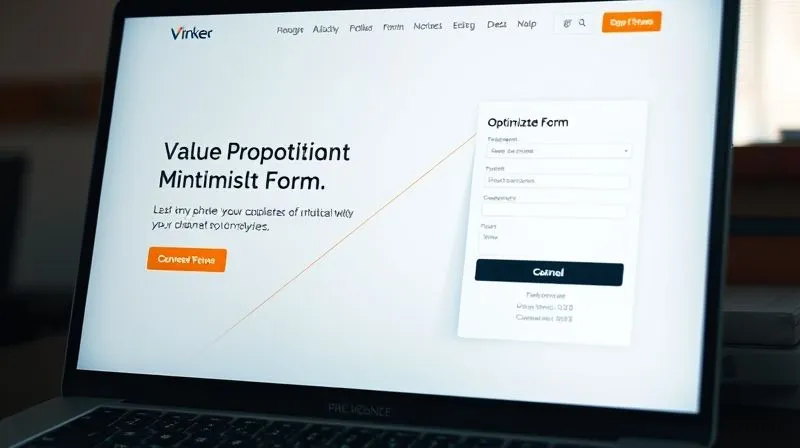
“A compelling CTA isn't just a button; it's the gateway to the next step in your customer's journey. Make it irresistible.”
Case Study: SwiftTech Solutions' 20% Conversion Leap
SwiftTech Solutions, a mid-sized IT managed services provider, was struggling with a stagnant lead-to-opportunity conversion rate of 8%. Their marketing generated a good volume of MQLs, but sales found many were unqualified or disengaged. By implementing a refined ICP, segmenting their nurturing sequences based on specific pain points (identified in Phase 1), and overhauling their demo request landing page with clearer value propositions and social proof, they saw a dramatic improvement. Within 60 days, their MQL-to-SQL conversion jumped by 12%, and their SQL-to-Opportunity rate increased by 20%. This resulted in a significant boost in their sales pipeline and a direct impact on revenue growth, demonstrating the power of targeted optimization.
Phase 3: Performance Monitoring & Iteration (Days 61-90)
The final 30 days are about solidifying your gains, continuously monitoring performance, and establishing a culture of ongoing optimization. This isn't the end; it's the beginning of sustained growth.
1. Implement Robust Lead Scoring and Prioritization
Not all leads are created equal. Lead scoring helps your sales team focus their efforts on the prospects most likely to convert, maximizing efficiency and improving their close rates. I've seen sales teams transform when they move from chasing every lead to prioritizing high-potential ones.
- Define Scoring Criteria: Assign points based on demographic data (e.g., company size, industry, job title) and behavioral data (e.g., website visits, content downloads, email opens, demo requests).
- Establish Thresholds: Set clear point thresholds for when a lead becomes an MQL, an SQL, and when it's ready for sales outreach.
- Integrate with CRM: Ensure your lead scoring model is seamlessly integrated with your CRM, providing sales with real-time insights into lead quality.
- Regularly Review & Adjust: Your scoring model isn't static. Continuously review its effectiveness and adjust criteria based on actual conversion performance.
2. Empower Your Sales Team with Enablement Tools & Training
Marketing can generate the best leads, but if sales isn't equipped to convert them, your efforts are in vain. A tight alignment between marketing and sales is non-negotiable for boosting conversion rates. As a veteran, I can tell you this is often the weakest link.
- Shared Understanding: Ensure marketing and sales teams have a unified definition of MQL, SQL, and what constitutes a 'sales-ready' lead.
- Sales Playbooks: Provide sales with comprehensive playbooks that include messaging guides, objection handling scripts, competitive analysis, and relevant content assets for each stage of the sales cycle.
- CRM Utilization: Train sales on how to effectively use the CRM to track lead interactions, update statuses, and access lead intelligence. Platforms like Salesforce or HubSpot are invaluable here.
- Ongoing Training: Conduct regular training sessions on product updates, market trends, and effective communication strategies.
- Feedback Loop: Establish a formal mechanism for sales to provide feedback to marketing on lead quality and content effectiveness.
3. A/B Test, Measure, and Iterate Continuously
The 90-day sprint is just the beginning. True conversion rate optimization is an ongoing process of hypothesis, experimentation, and analysis. You've made significant changes; now it's time to measure their impact and identify the next set of optimizations.
- Track Key Metrics: Continuously monitor the conversion rates at each stage of your funnel. Are you seeing the 15% increase? Where are the biggest gains? Where are new bottlenecks emerging?
- Run A/B Tests: Systematically test different elements of your landing pages, emails, ad copy, and CTAs. Even small changes can yield significant improvements over time.
- Analyze User Behavior: Use heatmaps, session recordings, and user surveys to understand how prospects interact with your website and content.
- Iterate Based on Data: Don't rely on gut feelings. Let the data guide your decisions. If a test fails, learn from it and try a new approach.

Embrace a culture of continuous improvement. The market, your customers, and your competitors are constantly evolving, and so must your conversion strategy. For deeper insights into CRO, sources like ConversionXL offer invaluable resources.
Frequently Asked Questions (FAQ)
How do I get buy-in from my leadership team for these changes? Focus on the ROI. Present your current conversion rates, the projected 15% increase, and the estimated revenue impact. Frame it as an investment in efficiency and profitability, not just a marketing expense. Highlight the data-driven nature of the plan and the 90-day timeline for clear accountability and quick wins.
What if my B2B sales cycle is longer than 90 days? Will this framework still work? Absolutely. While the full sales cycle might extend beyond 90 days, this framework focuses on accelerating the initial stages of conversion (Lead to MQL, MQL to SQL, SQL to Opportunity). By optimizing these early funnel stages within 90 days, you'll see a significant increase in the volume and quality of leads entering the later stages, which will inevitably shorten your overall sales cycle and improve your long-term close rates. The 90 days are about identifying and fixing the most impactful bottlenecks.
What are the most common pitfalls to avoid when implementing this plan? The biggest pitfalls I've observed are a lack of sales and marketing alignment, insufficient data analysis (relying on assumptions instead of facts), trying to optimize too many things at once, and failing to iterate. Avoid making changes without a clear hypothesis and measurement plan. Also, ensure your sales team is fully on board and understands their role in the conversion process.
How do I accurately measure a 15% increase in conversion rate? Start with a clear baseline conversion rate for your defined funnel stages (e.g., overall lead-to-customer, or MQL-to-SQL). Use your CRM and marketing automation platforms to track lead movement through these stages. Compare your conversion rates at the end of the 90-day period against the baseline. Ensure consistent tracking methodologies throughout the process to maintain data integrity. Focus on the most impactful stage-to-stage conversions for initial measurement.
Can these strategies work for small B2B businesses with limited resources? Yes, these strategies are scalable. For smaller businesses, the key is prioritization. Focus on the single biggest bottleneck in your funnel and dedicate your limited resources there first. Leverage affordable or free tools for analytics and automation. The principles of understanding your ICP, refining messaging, and optimizing critical touchpoints are universal, regardless of budget size. Start small, measure, and then expand your efforts.
Key Takeaways and Final Thoughts
- A 15% increase in B2B lead conversion within 90 days is an ambitious yet achievable goal with a structured, data-driven approach.
- Phase 1 (Days 1-30) is about deep diagnostics: auditing your funnel, understanding your ICP, and pinpointing data-backed bottlenecks.
- Phase 2 (Days 31-60) focuses on strategic implementation: refining messaging, enhancing nurturing, and optimizing conversion points like landing pages.
- Phase 3 (Days 61-90) solidifies gains through lead scoring, sales enablement, and continuous A/B testing and iteration.
- Cross-functional alignment between marketing and sales is paramount for success.
- Embrace a culture of continuous measurement, experimentation, and adaptation.
As an industry veteran, I can confidently tell you that the path to higher B2B lead conversion isn't paved with more leads, but with smarter conversion. This 90-day framework provides a robust blueprint to achieve significant, measurable growth. It requires dedication, but the return on that investment – in terms of increased revenue, improved efficiency, and a more robust sales pipeline – is substantial. Take these insights, apply them diligently, and prepare to see your B2B lead conversion rate not just improve, but truly accelerate. Your next 90 days could redefine your growth trajectory.
Recommended Reading
- Best Accounting Software for New Small Businesses: Top Choices
- Pinpoint & Solve Operational Bottlenecks: A Data-Driven Framework
- Scale Influencer Marketing Authentically: 7 Proven Strategies
- 5 Proven Strategies: Prevent Burnout in High-Performing, Stressed Teams
- How to Effectively Prevent Project Scope Creep & Save Timelines





Comments
Leave a comment below. Your email will not be published. Required fields marked with *