


How to Increase Video Marketing Conversion Rates for B2B Leads?
For over 15 years in the dynamic world of B2B marketing strategy, I've witnessed a recurring frustration: companies investing significant resources into video content, only to see their conversion rates flatline. It's a common, disheartening scenario where high production value doesn't automatically translate into qualified leads or tangible ROI. I've seen promising campaigns falter not due to lack of effort, but due to a fundamental misunderstanding of how B2B buyers engage with video.
The challenge isn't just creating video; it's creating effective video that moves a B2B prospect from passive viewer to engaged lead. Many businesses treat B2B video like B2C, focusing on broad awareness rather than precise conversion points. This often results in videos that entertain but don't educate, don't address specific pain points, or lack clear next steps, leaving potential leads adrift in the sales funnel.
This article isn't just another 'how-to' guide. Based on my extensive experience and deep dives into countless B2B campaigns, I'll provide you with a definitive, actionable framework designed to transform your video marketing efforts. We'll explore strategic approaches, tactical optimizations, and analytical insights that will show you precisely how to increase video marketing conversion rates for B2B leads, complete with real-world analogies, expert citations, and practical steps you can implement immediately.
1. Understand Your B2B Buyer Journey: The Foundation of Conversion
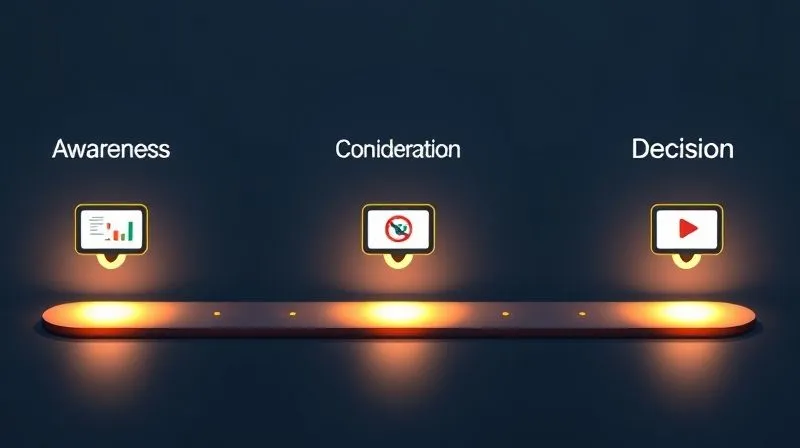
Before you even think about storyboards or production, you must deeply understand your B2B buyer's journey. Unlike B2C, B2B sales cycles are longer, involve multiple stakeholders, and are driven by logic, ROI, and problem-solving. Your video content must align perfectly with each stage: Awareness, Consideration, and Decision.
Mapping Content to Each Stage
I've often seen companies create a single, generic video hoping it will serve all purposes. This is a critical mistake. A prospect in the awareness stage needs educational, problem-focused content, not a hard sell. Conversely, a prospect in the decision stage needs detailed product comparisons or case studies, not a high-level overview.
- Awareness Stage Videos: Focus on identifying common pain points your target audience faces. These should be thought leadership pieces, educational explainers, or industry trend analyses. The goal is to establish your brand as a helpful resource, not to sell. Think 'Why is X a problem?' or 'The Future of Y'.
- Consideration Stage Videos: Once a prospect understands their problem, they start researching solutions. Your videos here should introduce your solution's capabilities, explain 'how it works,' and highlight unique differentiators. Webinars, product demos (feature-focused), and expert interviews fit well here.
- Decision Stage Videos: At this point, prospects are narrowing down their options. Provide content that builds trust and justifies their investment. Detailed case studies, client testimonials, ROI calculators (explained via video), and personalized solution walkthroughs are highly effective.
According to a study by Harvard Business Review, B2B buyers complete 57% of their purchasing decision before ever talking to a sales representative. Video plays a crucial role in shaping that journey.
2. Craft Compelling Narratives: Beyond Product Demos
In B2B, we often get caught up in features and benefits, forgetting that we're still selling to people. Even the most complex B2B solutions can be brought to life with a compelling story. I always emphasize that your video shouldn't just explain; it should resonate. Focus on the transformation your solution brings, not just the mechanics.
Storytelling for B2B Engagement
Think about the hero's journey. Your client is the hero, facing a challenge. Your product or service is the wise mentor, providing the tools or guidance for them to overcome that challenge and achieve success. This approach builds an emotional connection, which, even in B2B, is a powerful driver of engagement and conversion.
"Stories are data with a soul." - Brené Brown. In B2B video, this means connecting your solution to the very real human aspirations and challenges of your audience. Don't just present facts; present a path to a better future.
When I advise clients on video scripting, I push them to consider:
- The Problem: Clearly articulate the pain point in a way that viewers instantly recognize.
- The Agitation: Emphasize the negative consequences of *not* solving this problem.
- The Solution: Introduce your offering as the clear, effective answer.
- The Transformation: Show, don't just tell, what life looks like after implementing your solution.
Case Study: How InnovateTech Transformed Their Sales Pipeline
InnovateTech, a SaaS company specializing in supply chain optimization, faced stagnation in their lead generation despite having a robust product. Their videos were highly technical and product-centric. By shifting to a storytelling approach, focusing on the story of a logistics manager struggling with inefficiencies and then finding seamless integration and cost savings with InnovateTech's platform, they saw a dramatic change. Their new 'Day in the Life' video series, featuring relatable characters and challenges, increased video completion rates by 40% and generated 3X more qualified leads within six months, demonstrating a clear path for how to increase video marketing conversion rates for B2B leads.
3. Optimize Video for Every Platform and Device
A beautifully produced video is useless if it doesn't perform well where your audience consumes it. B2B buyers are busy and often consume content on the go, across various devices and platforms. Optimization isn't just about resolution; it's about accessibility and user experience.
Technical Best Practices for B2B Video
I've seen too many brilliant videos get abandoned because of slow loading times or poor mobile formatting. Remember, every friction point can lead to a lost conversion opportunity. Optimize for:
- Mobile-First Design: A significant portion of B2B content consumption now happens on smartphones and tablets. Ensure your videos are responsive, with clear visuals and legible text even on small screens.
- Platform-Specific Formats: LinkedIn, YouTube, your website – each has optimal aspect ratios, lengths, and autoplay behaviors. Tailor your video for each channel. For example, shorter, square videos often perform better on social feeds.
- Accessibility: Include closed captions and transcripts. This not only aids those with hearing impairments but also boosts SEO and allows viewers to consume content in sound-sensitive environments.
- Loading Speed: Compress your video files without sacrificing quality. Use content delivery networks (CDNs) to ensure fast loading times globally, especially if your target audience is international.
| Platform | Optimal Length | Aspect Ratio | Key Feature |
|---|---|---|---|
| Website/Landing Page | 2-5 min | 16:9 | Detailed explanation, clear CTA |
| 30-90 sec | 1:1, 4:5, 16:9 | Thought leadership, quick insights, native upload | |
| YouTube | 5-15 min | 16:9 | Educational series, SEO optimized, strong description |
| Email Marketing | < 60 sec (linked) | 16:9 | Teaser, compelling thumbnail, clear link |
4. Integrate Strong, Clear Calls-to-Action (CTAs)
This is where many B2B video marketing efforts fall short. A fantastic video without a clear next step is just entertainment. Your CTA is the bridge between engagement and conversion. It needs to be obvious, compelling, and strategically placed.
Strategic Placement and Design
Don't wait until the very end to present your CTA, especially in longer B2B videos. Viewers might drop off before then. Integrate soft CTAs throughout the video and a hard CTA at the optimal moment.
- Early Soft CTAs: In longer educational videos, suggest 'download our whitepaper for deeper insights' or 'visit our blog for related articles' within the first 30-60 seconds. These are low-commitment actions that keep prospects engaged.
- Mid-Video CTAs: If you're discussing a specific feature or benefit, a subtle overlay or spoken CTA prompting 'click here for a personalized demo' can be highly effective when the viewer's interest is piqued.
- End-Screen Hard CTAs: The final 5-10 seconds should feature a prominent, crystal-clear CTA. Use clickable overlays, end cards, and spoken instructions. Options include 'Request a Demo,' 'Download the Guide,' 'Contact Sales,' or 'Start Free Trial.'
- Contextual CTAs: Ensure your CTA is relevant to the video's content and the viewer's journey stage. A top-of-funnel video shouldn't ask for a demo; it should ask for an email subscription or content download.
- Urgency and Benefit: Frame your CTA around the benefit the prospect will receive or a sense of urgency. 'Unlock exclusive insights now' or 'Limited spots available for our next webinar.'
Remember, the goal is to guide the viewer toward the next logical step in their B2B buying journey. If you make it ambiguous, you lose them.
5. Leverage Advanced Analytics for Iterative Improvement
Data is your best friend when it comes to understanding how to increase video marketing conversion rates for B2B leads. Simply tracking views is a vanity metric. You need to dive deeper into viewer behavior to identify drop-off points, engagement hotspots, and conversion triggers.
Beyond Vanity Metrics: What to Track
I always tell my clients: if you can't measure it, you can't improve it. For B2B video, this means going beyond surface-level metrics:
- Watch Time and Completion Rate: Crucial for understanding engagement. Where do viewers drop off? This indicates where you might be losing their attention.
- Engagement Heatmaps: Many advanced video platforms offer heatmaps showing which parts of your video viewers rewatched or skipped. This is invaluable for content optimization.
- Click-Through Rate (CTR) on CTAs: Directly measures the effectiveness of your calls-to-action. Test different CTA designs, placements, and wording.
- Lead Generation Rate: How many leads are generated directly from video views or clicks? Integrate your video platform with your CRM to track this.
- Conversion Rate to MQL/SQL: The ultimate metric. How many video-generated leads progress through your sales funnel? This shows the true impact on your B2B pipeline.
- A/B Testing: Don't assume. Test different video intros, lengths, CTAs, and even thumbnails to see what resonates most with your audience.
As marketing guru Seth Godin often says, "The cost of being wrong is less than the cost of doing nothing." Embrace experimentation. By meticulously tracking these metrics, you gain the insights needed to iterate and optimize your video content, transforming it into a powerful lead conversion engine. A Deloitte study highlighted how data-driven insights are paramount for enhancing customer experience and driving conversions.
| Metric | Actionable Insight |
|---|---|
| Video Completion Rate | Identifies content segments causing drop-offs; indicates need for editing or re-scripting. |
| CTA Click-Through Rate | Measures CTA effectiveness; informs A/B testing for CTA design, placement, and messaging. |
| Lead-to-MQL Conversion | Evaluates video's ability to attract qualified leads; suggests refinement of target audience or content relevance. |
| Time Spent on Page with Video | Indicates overall page engagement; shows if video is holding attention on critical landing pages. |
6. Personalization at Scale: Speaking Directly to Your Prospect
In the B2B world, personalization isn't a luxury; it's an expectation. Generic content rarely cuts through the noise. Imagine receiving a video where your company name, industry, or even a specific pain point relevant to you is mentioned. That's a game-changer for engagement and, crucially, for how to increase video marketing conversion rates for B2B leads.
Dynamic Video Content and Segmentation
Leveraging video personalization tools allows you to dynamically insert text, images, or even entire video segments based on viewer data. This can be done at various stages:
- Pre-Sales Outreach: Create short, personalized videos for individual prospects, addressing their specific challenges or referencing their company website. Tools can automate this to some extent.
- Website Personalization: Display different hero videos on your website based on the visitor's industry, company size, or previous browsing behavior.
- Email Campaigns: Embed personalized video thumbnails in emails, leading to a landing page with a video tailored to the recipient's segment.
- Account-Based Marketing (ABM): Video is exceptionally powerful for ABM. Craft highly specific videos for target accounts, demonstrating how your solution directly addresses their unique needs and goals.
The impact of personalization is undeniable. A report by Forbes Agency Council highlights that personalized experiences significantly improve customer relationships and drive sales. While it requires more effort upfront, the enhanced relevance dramatically boosts engagement and conversion rates, making your prospects feel truly seen and understood.
7. Nurture Leads with Sequential Video Journeys
B2B sales rarely happen on the first touch. Effective lead nurturing is paramount, and video is an incredibly powerful tool for this. Instead of one-off videos, think about a series of interconnected videos that guide a prospect through their journey, incrementally building trust and knowledge.
Building a Video Funnel That Converts
I advocate for a 'video drip campaign' strategy, where each video serves a specific purpose in moving a lead further down the funnel. This sequential approach ensures that your message evolves with the prospect's understanding and needs.
- Welcome/Onboarding Videos: After a lead signs up for a trial or downloads a resource, a personalized welcome video can establish a warm connection and guide them on their next steps.
- Educational Series: Break down complex topics into bite-sized video lessons delivered over time. This positions you as an expert and keeps prospects engaged.
- Problem-Solution Deep Dives: As leads show interest in specific features or challenges, send them targeted videos that delve into how your solution addresses those precise pain points.
- Testimonial/Case Study Follow-ups: Reinforce trust by sending relevant client success stories as prospects approach the decision stage.
- Live Q&A/Webinar Invitations: Use video to invite prospects to interactive sessions where they can get their specific questions answered by experts, fostering a sense of community and direct engagement.
Each video in the sequence should have a clear, soft CTA that encourages the next logical step, whether it's downloading another resource, signing up for a demo, or scheduling a call. This systematic approach is key to sustained engagement and directly addresses how to increase video marketing conversion rates for B2B leads by building momentum over time.
Frequently Asked Questions (FAQ)
What's the ideal length for B2B marketing videos? There's no single 'ideal' length; it depends entirely on the video's purpose and the buyer journey stage. Awareness videos can be 60-90 seconds. Consideration stage content like product demos might be 3-5 minutes. Decision stage case studies could be 5-10 minutes. The key is to be as long as necessary to convey value, and as short as possible to respect your audience's time. Don't pad content; make every second count.
Should B2B videos always be highly professional, or can 'authentic' videos work? While high production value signals professionalism and trust, 'authentic' videos (e.g., recorded by sales reps, quick explainers) can be incredibly effective, especially for personalized outreach or specific nurturing stages. The crucial factor is clarity, good audio, and relevant content. A polished, well-scripted video is great for top-of-funnel, but a genuine, slightly less polished video addressing a specific prospect's pain point can be far more impactful in the mid-to-lower funnel.
How can I measure the ROI of my B2B video marketing efforts? Measuring ROI involves tracking direct conversions attributed to video (e.g., demo requests from a video CTA), but also considering its impact on other metrics. Look at how video influences website dwell time, lead quality, sales cycle length, and even customer retention. Integrate your video analytics with your CRM and marketing automation platforms to create a holistic view. Assign monetary value to each conversion point to calculate a true ROI.
Is live video effective for B2B lead generation? Absolutely! Live video (webinars, Q&A sessions, virtual events) is highly effective for B2B. It offers real-time engagement, allows for direct interaction, and builds a sense of community and urgency. It's particularly strong for the consideration and decision stages, enabling prospects to ask questions and get immediate expert answers, fostering trust and accelerating the sales process. Promote heavily and follow up diligently.
What's the biggest mistake B2B marketers make with video? The biggest mistake I consistently see is treating B2B video like B2C. B2B isn't about viral entertainment; it's about solving complex problems for smart, discerning buyers. Many focus too much on 'cool' visuals and not enough on clear, concise, problem-solution messaging tailored to specific buyer journey stages. They forget the critical role of strong CTAs and rigorous analytics, leading to high views but low conversions.
Key Takeaways and Final Thoughts
Increasing video marketing conversion rates for B2B leads is not a matter of luck or simply producing more videos. It's a strategic discipline that demands a deep understanding of your audience, a commitment to compelling storytelling, and a relentless focus on optimization and measurement. The strategies we've discussed today form a robust framework designed to transform your video marketing from an expense into a powerful revenue driver.
- Know Your Buyer: Align video content with every stage of the B2B buyer journey.
- Tell a Story: Connect with human aspirations, not just technical specifications.
- Optimize Everywhere: Ensure your videos perform flawlessly across all platforms and devices.
- Call to Action: Guide your viewers with clear, compelling, and contextual CTAs.
- Analyze Relentlessly: Use advanced analytics to understand behavior and iterate for improvement.
- Personalize: Speak directly to your prospects' specific needs and challenges.
- Nurture Systematically: Build sequential video journeys that incrementally build trust and knowledge.
The B2B landscape is evolving rapidly, and video is no longer optional; it's essential. By adopting these expert-level strategies, you're not just creating videos; you're crafting powerful conversion tools that will fill your pipeline with qualified leads and drive measurable growth. Embrace the journey, experiment with confidence, and watch your B2B video marketing efforts truly flourish.
Recommended Reading
- 7 Proven Steps: How to Effectively Measure Long-Term Alliance ROI
- 7 Ways E-commerce Can Slash Last-Mile Delivery Costs by 25%?
- Unlock Your Genius: How to Overcome Creative Blocks as an Entrepreneur
- 7 Steps: Bridge Big Data Insights to Business Action & Drive Growth
- 7 Reasons Your BI Reports Miss the Mark: Impacting Strategic Direction





Comments
Leave a comment below. Your email will not be published. Required fields marked with *