


How to integrate new HR tech with legacy systems effectively?
For over 15 years in the Human Resources technology space, I've seen countless organizations grapple with the modernization dilemma. The allure of cutting-edge HR platforms – with their AI-driven insights, intuitive user experiences, and robust analytics – is undeniable. Yet, the specter of their deeply embedded, mission-critical legacy systems often looms large, preventing true innovation.
This isn't just about technical hurdles; it's about the fear of disruption, data integrity nightmares, and the potential for operational chaos. Many companies postpone vital upgrades, trapped in a cycle of manual workarounds and missed opportunities, simply because they don't know how to bridge the chasm between the old and the new.
In this definitive guide, I'll share my proven frameworks and actionable strategies to help you navigate this complex landscape. You'll learn not just the 'what' but the 'how' to integrate new HR tech with legacy systems effectively, ensuring a smooth transition, preserving data integrity, and unlocking the full potential of your HR digital transformation. We’ll explore everything from strategic planning to phased implementation, robust testing, and continuous optimization, drawing on real-world insights and best practices.
The Inevitable Clash: Why Integration is Your Biggest HR Tech Hurdle
The challenge of integrating new HR tech with legacy systems is multifaceted, touching upon technical, operational, and even cultural dimensions. It's rarely a 'plug-and-play' scenario. Legacy systems, often developed decades ago, were built for a different era, with different data structures, communication protocols, and security paradigms.
Modern HR platforms, on the other hand, are designed for agility, cloud-native environments, and seamless connectivity through APIs. This fundamental difference creates a significant integration gap that, if not addressed strategically, can lead to project delays, cost overruns, and ultimately, failed implementations.
Understanding the Legacy Landscape
Legacy HR systems, whether they are on-premise ERP modules, bespoke payroll applications, or custom-built talent management tools, often represent a significant historical investment. They hold decades of critical employee data, payroll records, benefits information, and performance histories. Their stability and reliability, despite their age, are often key reasons for their continued existence. However, they typically lack modern APIs, making data extraction and real-time synchronization incredibly difficult, leading to data silos and manual data entry.
The Allure of Modern HR Tech
New HR technologies promise a revolution: enhanced employee experience, predictive analytics for workforce planning, automated compliance, and real-time reporting. These platforms are designed to be intuitive, mobile-first, and highly scalable. But without effective integration, their potential is severely limited. Imagine having cutting-edge talent acquisition software that can't seamlessly transfer new hire data to your core HRIS, or a performance management system that operates entirely disconnected from compensation data. The value proposition diminishes rapidly.
Step 1: Strategic Assessment – Know Before You Go
Before you even think about coding or configuring, a thorough strategic assessment is paramount. This isn't just a technical audit; it's a deep dive into your current state, your desired future state, and the precise gaps you need to bridge. In my experience, skipping or rushing this phase is the most common reason integration projects falter.
"Integration isn't just about connecting systems; it's about connecting business processes. Understand your processes first, then your systems." - Industry Expert Insight
Conducting a Comprehensive Discovery Phase
- Inventory Current Systems: Document every HR-related system, application, and database. Include details like vendor, version, data schema, key functionalities, and current integration points (even manual ones).
- Map Data Flows and Dependencies: Visualize how data moves (or doesn't move) across your current HR ecosystem. Identify critical data elements, their source of truth, and where they are consumed. This will highlight bottlenecks and potential data integrity risks.
- Identify Pain Points and Business Requirements: Engage with stakeholders across HR, IT, and even finance. What are their biggest frustrations with the current setup? What are their non-negotiable requirements for the new system? This helps define the scope and priorities of your integration.
- Define Future State and Integration Objectives: Clearly articulate what a successful integration looks like. Is it real-time data synchronization? Batch updates? Single sign-on? What specific business problems will it solve?
According to a Deloitte Human Capital Trends report, organizations that align their HR technology strategy with overall business objectives are significantly more likely to achieve successful digital transformations. This initial assessment ensures that alignment from the outset.
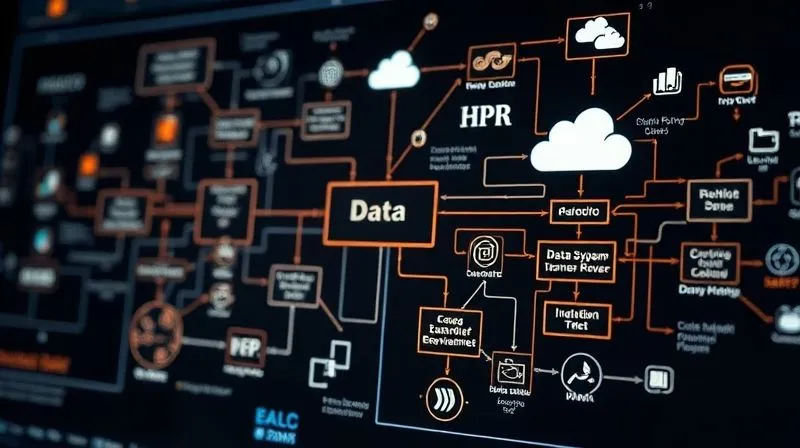
Step 2: Crafting Your Integration Blueprint – Architecture Matters
Once you understand your landscape and requirements, it's time to design the 'how'. This involves selecting the right integration architecture. There isn't a one-size-fits-all solution; the best approach depends on the complexity of your systems, the volume of data, the frequency of updates, and your budget.
Choosing the Right Integration Model
- Point-to-Point Integration: Direct connections between two systems. Simple for a few integrations, but quickly becomes unmanageable and brittle as more systems are added (the 'spaghetti' architecture).
- Hub-and-Spoke (Middleware): Uses a central integration hub (Enterprise Service Bus - ESB) to manage all connections. Systems connect only to the hub, simplifying management and scalability.
- Integration Platform as a Service (iPaaS): A cloud-based platform that provides tools and services for developing, executing, and managing integrations. Offers pre-built connectors, data mapping, and monitoring capabilities, ideal for hybrid environments.
- API-First Strategy: Building or leveraging APIs (Application Programming Interfaces) to enable systems to communicate directly and programmatically. This is the modern, flexible approach, especially when dealing with SaaS solutions.
Data Mapping and Transformation
This is where the rubber meets the road. Your legacy system might call an employee's unique identifier 'Emp_ID', while the new system uses 'EmployeeUUID'. You need a precise map that defines how each data field from the source system corresponds to a field in the target system. This also includes defining transformation rules (e.g., converting date formats, splitting concatenated fields, or aggregating data). This process is meticulous and requires close collaboration between HR and IT to ensure data integrity and semantic consistency.
| Integration Model | Pros | Cons |
|---|---|---|
| Point-to-Point | Simple for 1-2 integrations, low initial cost | Scalability issues, high maintenance, brittle |
| Hub-and-Spoke (ESB) | Centralized management, reusable components, better scalability | Higher initial setup, requires specialized skills, on-premise focus |
| iPaaS | Cloud-native, rapid deployment, pre-built connectors, managed service | Subscription costs, vendor lock-in potential, less customization for niche needs |
| API-First | Highly flexible, real-time, future-proof, encourages modularity | Requires strong development skills, potential for complex API management |
Step 3: Data Migration & Cleansing – The Unsung Hero
Data is the lifeblood of HR. Moving it from old to new systems is often the most challenging and critical part of integration. Bad data migration can cripple a new system and erode user trust. I've witnessed projects fail not because of the new tech, but because of corrupted or incomplete data.
A Methodical Approach to Data Integrity
- Data Audit and Profiling: Before moving anything, understand the quality of your existing data. Identify duplicates, inconsistencies, missing values, and outdated records. This forms the basis for your cleansing strategy.
- Data Cleansing and Standardization: This is where you fix the issues identified in the audit. Standardize formats (e.g., phone numbers, addresses), remove duplicates, correct errors, and fill in gaps. This can be a labor-intensive process, often requiring specialized tools or manual review.
- Incremental Migration Strategy: Avoid a 'big bang' approach if possible. Migrate data in phases – perhaps core employee data first, then payroll, then benefits. This allows for validation at each stage and reduces risk. For large datasets, consider an 'extract, transform, load' (ETL) process where data is pulled from the source, cleaned and transformed according to the new system's schema, and then loaded.
- Validation and Reconciliation: After migration, rigorous validation is essential. Compare record counts, run reports in both old and new systems, and perform spot checks on critical data points. Involve HR users in User Acceptance Testing (UAT) specifically for data validation.
As Forbes Tech Council often highlights, the quality of your data directly impacts the effectiveness of your new HR tech, especially for AI-driven features. Invest heavily in this step.

Step 4: API-First Approach and Middleware Solutions
The modern paradigm for effective integration, especially when you need to integrate new HR tech with legacy systems, revolves around an API-first strategy. APIs (Application Programming Interfaces) are the digital connectors that allow different software applications to talk to each other, facilitating real-time data exchange and process automation. This approach is crucial for building a flexible and future-proof HR tech stack.
Leveraging iPaaS for Scalable Integration
For many organizations, especially those with a mix of cloud and on-premise systems, an Integration Platform as a Service (iPaaS) is the ideal solution. iPaaS platforms offer a robust, cloud-based environment to build, deploy, and manage integrations without needing extensive on-premise infrastructure. They typically provide:
- Pre-built Connectors: Accelerate integration with popular HR systems (Workday, SAP SuccessFactors, Oracle HCM, etc.) and other enterprise applications.
- Visual Mapping Tools: Simplify data transformation and mapping between disparate data structures.
- Workflow Automation: Orchestrate complex business processes that span multiple systems.
- Monitoring and Management: Centralized dashboards to track integration health, identify errors, and ensure data flow.
"Don't just connect systems; orchestrate experiences. APIs and iPaaS are your conductors for a harmonious HR tech symphony." - My Personal Mantra
An iPaaS acts as a centralized brain for all your integrations, reducing the complexity of point-to-point connections and allowing you to scale your HR tech stack more easily. It helps you manage how to integrate new HR tech with legacy systems effectively by providing a standardized, secure, and scalable framework.
Step 5: Phased Rollout & User Adoption – People First
Technology is only as good as its adoption. Even the most perfectly integrated system will fail if users resist it. A phased rollout strategy, coupled with a robust change management plan, is essential for success, especially when you're dealing with the disruption of integrating new HR tech with legacy systems.
Case Study: How Zenith Innovations Achieved Seamless HR Tech Adoption
Zenith Innovations, a 5,000-employee manufacturing firm, faced significant resistance when planning to replace their decades-old on-premise HRIS with a modern cloud-based HCM suite. Their initial 'big bang' plan was met with apprehension from managers and employees alike.
Following my recommendation, they pivoted to a phased rollout. First, they implemented the core HR and employee directory modules, running them in parallel with the legacy system for a month. During this period, a dedicated 'HR Tech Champions' team, comprised of power users from different departments, provided peer-to-peer training and collected feedback. Next, they rolled out the talent acquisition module, followed by performance management, and finally, payroll integration. Each phase included:
- Clear Communication: Explaining the 'why' and 'what's in it for me' for each new module.
- Targeted Training: Hands-on workshops, online tutorials, and quick reference guides tailored to specific user groups.
- Pilot Programs: Testing new modules with a small group of enthusiastic users before wider release.
- Feedback Mechanisms: Regular surveys, open forums, and a dedicated support channel.
This iterative approach allowed employees to gradually adapt to the new system, built trust, and provided valuable feedback for continuous improvement. The result? A 90% user adoption rate within six months and a significant reduction in HR administrative tasks, demonstrating how a thoughtful rollout can turn potential resistance into enthusiastic adoption.
As highlighted in the Harvard Business Review, successful technology implementation hinges on effective change management. It's not just about the tech; it's about the people.

Step 6: Robust Testing & Continuous Monitoring – The Long Game
Integration is not a 'set it and forget it' endeavor. Once your new HR tech is integrated with legacy systems, the work shifts from implementation to ongoing optimization and maintenance. Robust testing before go-live and continuous monitoring afterward are non-negotiable for long-term success.
Establishing a Comprehensive Testing Strategy
- Unit Testing: Testing individual components or modules of the integration to ensure they function as expected.
- Integration Testing: Verifying that data flows correctly between connected systems and that processes span across them seamlessly.
- User Acceptance Testing (UAT): Critical for HR tech. Involve actual HR users to test real-world scenarios, ensuring the integrated system meets their functional and operational needs. This is where you catch discrepancies in data, workflows, and user experience.
- Performance Testing: Assess how the integrated systems perform under expected and peak load conditions, ensuring speed and reliability.
- Security Testing: Verify that data is transmitted securely and that access controls are properly enforced.
Continuous Monitoring and Optimization
Post-go-live, establish a robust monitoring framework. This includes:
- Integration Dashboards: Real-time visibility into data flows, API calls, and error logs.
- Alerting Mechanisms: Automated notifications for integration failures or performance degradation.
- Regular Audits: Periodically review data integrity, security logs, and system performance.
- Feedback Loop: Continuously collect feedback from users and stakeholders to identify areas for improvement and further optimization.
This proactive approach ensures that any issues are identified and resolved quickly, maintaining the integrity and efficiency of your integrated HR ecosystem.
| Testing Phase | Objective | Key Activity |
|---|---|---|
| Unit Testing | Verify individual components | Code review, module execution |
| Integration Testing | Ensure data flow between systems | End-to-end scenario testing, data validation |
| User Acceptance Testing (UAT) | Confirm system meets business needs | Real-world scenario testing by HR users |
| Performance Testing | Assess system speed and stability under load | Load testing, stress testing |
| Security Testing | Verify data protection and access controls | Penetration testing, vulnerability scanning |
Overcoming Common Pitfalls and Ensuring Success
Even with the best planning, integrating new HR tech with legacy systems comes with its share of potential pitfalls. Being aware of these challenges and proactively addressing them can make the difference between success and failure.
The Role of a Dedicated Integration Team
One of the most common mistakes I see is underestimating the resources required. A dedicated, cross-functional integration team – comprising HR, IT, data specialists, and potentially external consultants – is crucial. This team should have clear leadership, defined roles, and the authority to make decisions quickly. Without this, projects often get bogged down in departmental silos and conflicting priorities.
Mitigating Security and Compliance Risks
Integrating systems often means exposing data to new pathways, which can introduce security vulnerabilities. Ensure that your integration architecture adheres to the highest security standards, including encryption for data in transit and at rest, robust access controls, and regular security audits. Compliance with regulations like GDPR, CCPA, and industry-specific mandates must be a top priority throughout the entire integration process. Gartner consistently emphasizes cybersecurity as a critical component of any digital transformation.
"Security and compliance are not afterthoughts; they are the bedrock upon which successful HR tech integration is built. Integrate securely, or don't integrate at all." - A Non-Negotiable Principle
Avoiding Vendor Lock-in and Future-Proofing
While iPaaS and specific HR tech vendors offer powerful solutions, be mindful of potential vendor lock-in. Design your integrations with flexibility in mind, using open standards and APIs where possible. This allows you to swap out components of your HR tech stack in the future without having to rebuild your entire integration layer. Think about future scalability and adaptability from day one.

Frequently Asked Questions (FAQ)
What are the biggest risks when integrating new HR tech with legacy systems? The primary risks include data integrity issues (corruption, loss, or inconsistency), security vulnerabilities due to new data pathways, budget overruns, scope creep, and user resistance. Underestimating the complexity of data mapping and transformation, as well as neglecting comprehensive testing, are also significant pitfalls.
How long does it typically take to integrate new HR tech with legacy systems effectively? The timeline varies widely based on the number and complexity of systems, data volume, and internal resources. A small, straightforward integration might take 3-6 months, while a large-scale enterprise integration involving multiple legacy systems and extensive data migration could easily span 12-24 months or more. Strategic planning and phased implementation can help manage these timelines.
What if our legacy system has no APIs or limited integration capabilities? This is a common challenge. In such cases, you might need to explore alternative methods like batch file transfers (e.g., SFTP), database-level integration (direct access to the legacy database, though this carries higher risk), or even 'screen scraping' (automated extraction of data from user interfaces, typically a last resort due to its fragility). An iPaaS can often help abstract some of this complexity by providing tools to handle various data formats and protocols, even for older systems.
How do we ensure data security and compliance during the migration and integration process? Data security and compliance must be baked into every stage. This involves encrypting data both in transit and at rest, implementing strict access controls (least privilege principle), conducting regular security audits, and ensuring all processes adhere to relevant data privacy regulations (e.g., GDPR, CCPA). Partnering with vendors who have strong security certifications and practices is also crucial.
What's the role of change management in successful HR tech integration? Change management is as critical as the technical integration itself. It involves preparing, equipping, and supporting employees to successfully adopt the new system. This includes clear communication about the 'why' and 'how,' comprehensive training, addressing user concerns, and fostering a culture of acceptance. Without effective change management, even technically perfect integrations can fail due to low user adoption.
Key Takeaways and Final Thoughts
Integrating new HR tech with legacy systems effectively is a journey, not a destination. It demands meticulous planning, technical expertise, and a deep understanding of your organization's unique needs. But the rewards – enhanced efficiency, better employee experiences, and richer data insights – are well worth the effort.
- Strategic Assessment is Non-Negotiable: Understand your current state, data flows, and future needs before anything else.
- Architect for Scalability: Choose an integration model (like iPaaS or API-first) that supports your long-term vision, not just immediate needs.
- Data Integrity is Paramount: Invest heavily in data cleansing, migration, and validation. Your new system is only as good as the data it holds.
- Prioritize User Adoption: Implement a phased rollout and a robust change management strategy to bring your people along.
- Test and Monitor Continuously: Integration is ongoing; ensure robust testing and continuous monitoring for stability and optimization.
Remember, you're not just connecting systems; you're building a more agile, insightful, and employee-centric HR function for the future. Approach this challenge with a strategic mindset, a dedicated team, and a commitment to continuous improvement, and you'll unlock the full potential of your HR digital transformation. The path may be complex, but with these strategies, you're well-equipped to navigate it successfully.
Recommended Reading
- Innovation Strategy Not Delivering ROI? 7 Steps to Recalibrate
- Secrets Revealed: How to Select Data Visualization for Business Analytics
- 7 Proven Tactics: Revive Stalled B2B Sales Negotiations Urgently
- Unlock Innovation: How to Foster Dynamic Leadership in Your Hybrid Team
- Mastering Global Success: How to Develop Effective Global Leadership Strategies?





Comments
Leave a comment below. Your email will not be published. Required fields marked with *