


How to Integrate Urgent New Requirements into a Rigid Waterfall Plan?
For over two decades in enterprise-level project management, I've witnessed firsthand the challenges that arise when the highly structured, sequential nature of the waterfall methodology collides with the dynamic, ever-changing demands of business. It’s a classic scenario: a meticulously planned project suddenly faces an urgent, non-negotiable new requirement.
This isn't just a minor hiccup; it's a potential derailment. The very rigidity that makes waterfall appealing for predictability can become its greatest weakness, leading to budget overruns, missed deadlines, and frustrated stakeholders if not handled correctly. The conventional wisdom often dictates that waterfall projects are inherently inflexible, but I'm here to tell you that’s an oversimplification.
In this definitive guide, I will share battle-tested strategies and frameworks that empower you to integrate urgent new requirements into a rigid waterfall plan without sacrificing project integrity or triggering chaos. We'll explore proactive planning, robust change control, strategic communication, and even judicious hybrid approaches, ensuring your projects remain on track, even when the unexpected strikes.
1. The Inevitable Clash: Understanding Waterfall's Rigidity
Before we can adapt, we must first understand the beast. The waterfall model, with its distinct, sequential phases – requirements, design, implementation, verification, and maintenance – operates on the premise that requirements can be fully defined upfront. This 'measure twice, cut once' philosophy is excellent for projects with stable, well-understood requirements, but it falters when faced with sudden, critical shifts.
The rigidity stems from the strict adherence to phase gates; a phase must be completed and signed off before the next can begin. This makes backtracking or injecting new scope incredibly difficult and costly. I've seen countless teams struggle because they treated their initial plan as immutable scripture, rather than a living document.
“The greatest enemy of a good plan is the dream of a perfect plan.” – Carl von Clausewitz. In project management, this translates to the danger of believing your initial scope is infallible.
The core challenges of integrating urgent changes include:
- Scope Creep: Uncontrolled expansion of project scope, often leading to budget and schedule overruns.
- Re-baselining Efforts: Significant work to re-estimate timelines, resources, and costs for the entire project.
- Increased Risk: New requirements can introduce unforeseen technical or operational risks.
- Stakeholder Conflict: Disagreements over what constitutes 'urgent' or 'critical' can arise.
Recognizing these inherent challenges is the first step towards developing a pragmatic, adaptive approach within a waterfall framework.
2. Proactive Planning: Building Flexibility from Day One
While waterfall emphasizes upfront planning, it doesn't mean that plan must be brittle. My experience shows that embedding flexibility from the outset is crucial for handling unforeseen demands. This isn't about compromising the sequential nature, but about building 'give' into the structure.
Contingency Buffers and Reserve Planning
One of the most overlooked aspects of initial planning is the allocation of sufficient reserves. This includes:
- Time Buffers: Explicitly build in buffer time at the end of major phases or the overall project timeline. This isn't 'slack' for inefficiency, but a strategic reserve for unexpected issues or minor scope adjustments.
- Budget Reserves: Allocate a percentage of the total budget (e.g., 10-15%) as a management reserve. This fund is specifically for unforeseen risks or approved changes, keeping you from scrambling for new funding approvals.
- Resource Flex: Identify key personnel who could be temporarily reallocated or cross-trained. Having a 'deep bench' or understanding external resource options can provide agility.
Actionable Insight: During the initial planning phase, dedicate a specific section to 'Change Management Preparedness.' This signals to all stakeholders that while the plan is robust, the possibility of change is acknowledged and planned for.
According to the Project Management Institute (PMI), effective risk management, which includes planning for uncertainties, significantly increases project success rates. The PMI offers extensive resources on risk management that can be integrated into waterfall planning.
3. The Controlled Deviation: Implementing a Robust Change Control Process
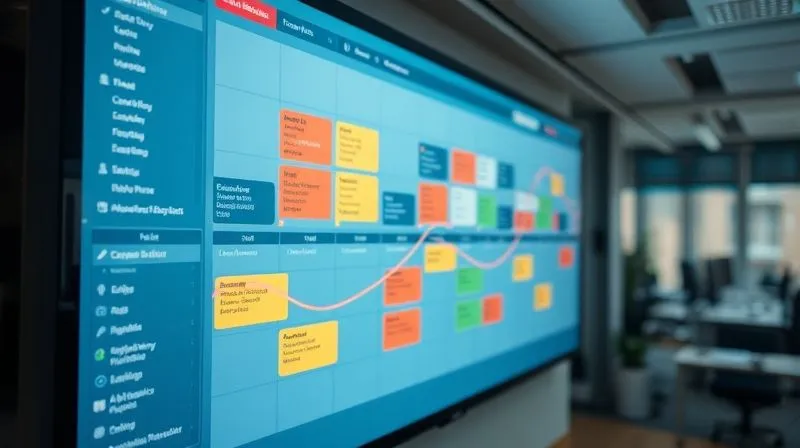
When an urgent new requirement emerges, the temptation is often to bypass process for speed. This is a critical error. In a waterfall environment, a robust, transparent change control process is not a bureaucratic hurdle; it's your primary mechanism for maintaining control and integrating changes responsibly. This is precisely how to integrate urgent new requirements into a rigid waterfall plan without chaos.
Case Study: Navigating a Critical Shift at Innovatech
Innovatech, a software development firm, was halfway through a waterfall project to build a new financial reporting system. A sudden regulatory change mandated a new data encryption standard, an urgent requirement that hadn't existed in the initial scope. Instead of panicking, the project manager, Sarah, immediately activated their pre-defined change control process. The request went through a rapid but thorough impact analysis by the core team, presented to the Change Control Board (CCB) with clear options, and approved with a revised scope and adjusted timeline. This allowed them to integrate the change effectively, minimizing disruption and maintaining stakeholder confidence.
Here’s how a robust change control process should function:
- Formal Change Request Submission: All new requirements, regardless of urgency, must be submitted via a formal change request form. This ensures documentation and clarity.
- Impact Analysis: The project team assesses the new requirement's impact on scope, schedule, budget, resources, quality, and risks. This is a critical step, often involving detailed technical analysis.
- Recommendation and Options: Based on the impact analysis, the team provides recommendations, including options like 'integrate as-is,' 'integrate with concessions,' or 'defer/reject.'
- Change Control Board (CCB) Review: A dedicated CCB (composed of key stakeholders, project manager, technical leads) reviews the request, impact analysis, and recommendations. This board has the authority to approve, reject, or defer the change.
- Communication and Re-baselining: Once approved, the change is formally communicated to all stakeholders. The project plan, schedule, and budget are officially re-baselined to reflect the integration of the new requirement.
- Implementation and Verification: The change is then integrated into the relevant phase, following the standard development and testing protocols.
This structured approach, though seemingly rigid, provides the necessary governance to absorb changes without unraveling the entire project. For deeper insights into formal change management, refer to the PMBOK Guide's section on Project Integration Management.
4. Strategic Scope Management: Differentiating 'Urgent' from 'Desired'
Not every new request is an urgent requirement. A significant part of integrating new demands into a rigid waterfall plan involves rigorous scope management and ruthless prioritization. I've learned that stakeholders often use 'urgent' interchangeably with 'important' or 'desired.' It's our role as project managers to clarify this distinction.
Prioritization Frameworks
To effectively manage new requirements, you need a clear, objective framework. One I frequently recommend is a simplified version of the MoSCoW method (Must-have, Should-have, Could-have, Won't-have) or a simple impact/effort matrix.
For urgent new requirements, the focus shifts to 'Must-have' and high-impact, low-effort changes. The CCB plays a vital role here, acting as the gatekeeper against unnecessary scope creep.
| Requirement Category | Impact on Project | Effort to Implement | Integration Strategy |
|---|---|---|---|
| Must-Have (Urgent) | Critical, regulatory, or business-stopping | Any, if truly critical | Formal change control, re-baseline immediately |
| Should-Have (Important) | Significant business value, competitive edge | Moderate to High | Evaluate for next phase or future project, if not critical |
| Could-Have (Desirable) | Enhancement, minor improvement | Low | Backlog for future releases, defer |
| Won't-Have (Non-Essential) | Minimal or negative | Any | Reject and document rationale |
By categorizing and prioritizing, you ensure that only truly urgent and high-value requirements are considered for immediate integration, protecting the project's core objectives. This strategic approach empowers you to integrate urgent new requirements into a rigid waterfall plan in a controlled manner.
5. Hybrid Approaches: Borrowing Agile Principles Judiciously
While we're discussing waterfall, it doesn't mean we can't learn from other methodologies. A 'pure' waterfall approach can be too rigid for today's fast-paced environment. I advocate for a hybrid model where specific agile principles are judiciously incorporated, particularly for handling urgent changes, without abandoning the core waterfall structure.
Iterative Sub-Phases within Waterfall
One effective hybrid strategy is to break down larger waterfall phases (especially implementation) into smaller, iterative sub-phases, similar to sprints. For example, within the 'Implementation' phase, you could have mini-cycles of development and testing. This allows for:
- Faster Feedback Loops: Catching issues or validating small changes sooner.
- Early Integration Points: Urgent requirements can be slotted into the next mini-iteration, rather than waiting for a full phase completion.
- Reduced Risk Exposure: Smaller increments mean smaller potential failures.
This isn't 'doing agile' within waterfall; it's about adopting agile *practices* where they add value, specifically for managing change. It creates controlled windows of flexibility within a larger, structured framework. For more on hybrid models, resources like Gartner's insights on enterprise project management often discuss adapting methodologies to modern needs.

6. Communication and Stakeholder Alignment: Your Bridge to Adaptability
Even the best plans and processes will fail without clear, consistent communication and strong stakeholder alignment. This is especially true when you need to integrate urgent new requirements into a rigid waterfall plan. In my experience, most project failures related to change stem from communication breakdowns, not technical challenges.
Proactive and Transparent Communication
When an urgent requirement surfaces, the project manager becomes the chief communicator. Your role is to manage expectations, articulate impacts, and secure buy-in. I've found that transparency, even when the news isn't ideal, builds immense trust.
“The single biggest problem in communication is the illusion that it has taken place.” – George Bernard Shaw. This holds particularly true in project management when changes occur.
Key communication strategies include:
- Immediate Notification: Inform all key stakeholders as soon as a potential urgent requirement is identified. Don't wait until you have all the answers.
- Impact Briefings: Clearly explain the potential impact of the new requirement on the project's scope, schedule, budget, and quality. Use data and visuals to make it tangible.
- Options and Recommendations: Present the CCB's recommendations and the rationale behind them. Be prepared to discuss alternatives.
- Regular Updates: Once a change is approved, provide consistent updates on its integration progress and any subsequent impacts.
- Dedicated Change Log: Maintain a transparent, accessible log of all change requests, their status, and their impact.
Engaging stakeholders early and often, and ensuring they understand the implications of their requests, transforms potential resistance into collaborative problem-solving. This aligns with principles discussed in Harvard Business Review articles on effective stakeholder management.
7. Post-Implementation Review: Learning and Adapting for Future Projects
Integrating an urgent new requirement isn't just about getting through the current crisis; it's a valuable learning opportunity. Once the change has been implemented and verified, a thorough post-implementation review (PIR) or retrospective is crucial. This step is often overlooked in the rush to complete the project, but it's vital for continuous improvement and enhancing your ability to handle future changes.
Refining Your Waterfall Template
Every time you successfully (or even unsuccessfully) integrate a significant change, you gain insights into your processes, team capabilities, and stakeholder dynamics. These insights should feed back into refining your project management templates and methodologies.
During the PIR, focus on questions like:
- What triggered the urgent requirement? Could it have been anticipated?
- How effective was our change control process in handling this specific change?
- Were communication channels adequate? What could be improved?
- What was the actual impact on schedule, budget, and resources versus the estimated impact?
- Did the team have the necessary skills and tools to integrate the change efficiently?
- What lessons can we apply to future waterfall projects to build in more resilience?
Document these lessons learned rigorously. Update your project management playbook, templates for risk assessment, and change request forms based on these experiences. This continuous learning cycle ensures that your 'rigid' waterfall plan becomes increasingly robust and adaptable over time. It’s how you build institutional knowledge on how to integrate urgent new requirements into a rigid waterfall plan more smoothly next time.
| Aspect Reviewed | What Went Well | What Could Improve | Action Item |
|---|---|---|---|
| Change Request Process | Rapid impact analysis by tech leads | Faster CCB meeting scheduling | Create standing CCB meeting slots for emergencies |
| Communication Strategy | Weekly email updates to all stakeholders | More detailed explanation of technical impacts to non-technical stakeholders | Develop a simplified 'Impact Summary' template for CCB briefings |
| Resource Allocation | Quick reallocation of QA resources | Lack of pre-identified backup for key roles | Implement a cross-training program for critical skill sets |
| Risk Identification | Identified regulatory risk early in design phase | Underestimated probability of specific regulatory change | Regularly review external regulatory landscape for emerging risks |
Frequently Asked Questions (FAQ)
Q: Isn't integrating urgent requirements into waterfall just making it agile? A: Not necessarily. While you might borrow agile *practices* like iterative sub-phases or frequent feedback, the core waterfall structure (sequential phases, upfront requirements for the overall project, phase gates) remains. It's about building controlled flexibility within that structure, not abandoning it entirely. The goal is controlled adaptation, not a full methodology shift.
Q: What if the urgent requirement is so massive it fundamentally changes the project's scope or goals? A: In such rare, extreme cases, the 'urgent requirement' might actually be a signal to pause, re-evaluate, and potentially terminate the current project to initiate a new one. A truly fundamental shift means the original project is no longer viable. This decision must involve top-level stakeholders and a thorough cost-benefit analysis of continuing vs. restarting.
Q: How do I prevent stakeholders from constantly labeling every new idea as 'urgent'? A: This is where your robust change control process and strategic scope management become indispensable. Educate stakeholders on the definitions of 'urgent' vs. 'important' vs. 'desirable' (e.g., using the MoSCoW method). Emphasize the impact of each change on the project's baseline. A well-functioning Change Control Board (CCB) that scrutinizes each request rigorously is key to managing this behavior.
Q: What's the biggest risk when trying to integrate changes into a waterfall plan? A: The biggest risk, in my experience, is uncontrolled scope creep due to a weak or non-existent change control process. This leads to budget overruns, schedule delays, and a diluted project outcome as the team tries to juggle too many shifting priorities without proper governance. Lack of transparent communication also ranks very high as a major risk.
Q: Can these strategies apply to smaller waterfall projects too? A: Absolutely. While the scale of implementation might differ, the principles remain the same. Proactive planning, a defined change process (even if less formal), clear communication, and post-project reviews are beneficial for projects of any size. Smaller projects might have a more streamlined CCB, but the need for structured change management persists.
Key Takeaways and Final Thoughts
Integrating urgent new requirements into a rigid waterfall plan is not just possible; it's a necessary skill for any project manager operating in today's dynamic business landscape. It demands a blend of foresight, discipline, and adaptive thinking. Here are the critical takeaways:
- Plan for Flexibility: Embed contingency buffers and reserves from the project's inception.
- Implement Robust Change Control: Establish a formal, transparent process for evaluating and approving all changes.
- Prioritize Ruthlessly: Differentiate between truly urgent and merely desired requirements.
- Adopt Hybrid Practices: Judiciously incorporate iterative elements for faster feedback and integration.
- Communicate Continuously: Maintain transparency and align stakeholders throughout the change process.
- Learn from Every Change: Use post-implementation reviews to refine your processes for future projects.
Remember, the goal isn't to turn your waterfall project into an agile one, but to build resilience and controlled adaptability into its inherent structure. By applying these expert strategies, you can navigate the inevitable currents of change, ensuring your projects remain on course to deliver their intended value, even when the waters get rough. Embrace the challenge, and lead your team to success.
Recommended Reading
- 7 Reasons Why Your B2B Leads Aren't Converting into Sales (and Fixes)
- Future Innovation Management: Trends Impacting Your Business
- Unlock the Secrets: How Digital Nomads Master International Tax Compliance
- Unlock Your IP Rights: How to Draft a Simple Intellectual Property License
- How to Effectively Prevent Project Scope Creep & Save Timelines





Comments
Leave a comment below. Your email will not be published. Required fields marked with *