

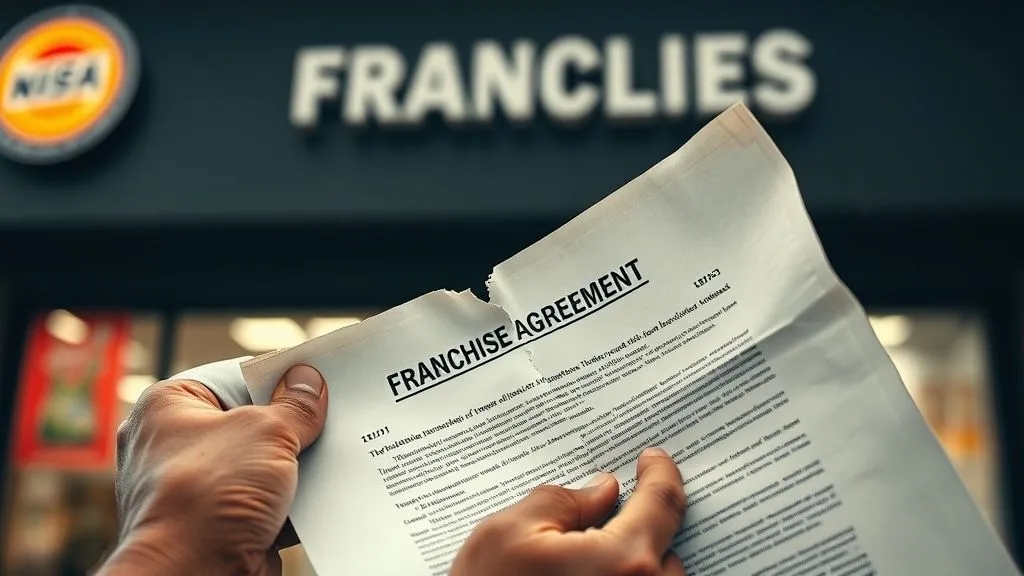
How to Legally Exit a Failing Franchise Agreement Early Without Penalties?
For over two decades in the franchising world, I've witnessed the incredible highs of successful ventures and the heartbreaking lows of those that falter. One of the most common and agonizing problems I encounter is the franchisee trapped in a failing agreement, watching their investment, time, and spirit drain away, feeling utterly powerless.
The pain of a failing franchise isn't just financial; it's a profound emotional burden. It’s the late nights, the stress of payroll, the strained relationships, and the gnawing fear that you're stuck in a legal bind with no clear way out. Many believe their only options are to bleed money until the term ends or face crippling penalties for early termination. This belief, while understandable, is often incomplete.
In this definitive guide, I will share my expert insights and provide actionable frameworks to help you understand your options, identify legitimate grounds for early exit, and navigate the complex legal landscape of terminating a failing franchise agreement early, potentially without incurring punitive penalties. We’ll explore not just the 'what,' but the 'how,' drawing from my experience and real-world scenarios to equip you with the knowledge to reclaim your future.
Understanding Your Franchise Agreement: The Foundation of Any Exit Strategy
Before any action can be taken, you must become intimately familiar with the document that governs your entire relationship: your franchise agreement. This isn't just a formality; it's your battle map, detailing every right, obligation, and potential exit route. I've seen countless franchisees overlook critical clauses, only to discover them too late.
The FDD and Franchise Agreement Deep Dive
Your Franchise Disclosure Document (FDD) and the subsequent franchise agreement are dense legal texts, but they hold the keys to your situation. Pay particular attention to the sections on Termination, Default, Transfer, Renewal, and Dispute Resolution. These clauses dictate the conditions under which either party can terminate the agreement, what constitutes a breach, and the procedures for resolving disagreements. For instance, termination clauses often specify notice periods, cure periods (time given to fix a breach), and the financial consequences of early termination, such as liquidated damages.
Expert Insight: Never assume. A thorough legal review of your franchise agreement by an attorney specializing in franchise law is not an expense; it's an indispensable investment. They can identify nuances and potential loopholes you might miss, transforming your understanding of your contractual obligations and rights.
Remember, the agreement is legally binding. Ignorance of its terms is no defense. Understanding its intricacies is the first, most crucial step in formulating a strategic exit. It's like a complex game of chess; you need to know the rules before you can plan your moves.

Identifying Genuine Grounds for Early Termination Without Penalty
Simply being unprofitable is rarely a standalone legal ground for early termination without penalty. Franchisors typically argue that business risk is inherent. However, there are specific circumstances where the franchisor's actions, or inactions, can provide you with legitimate legal leverage.
Franchisor Default and Material Breach of Contract
This is often the strongest avenue. If your franchisor has failed to uphold their end of the bargain as outlined in the franchise agreement, you may have grounds for declaring a material breach. What constitutes a material breach? It's a failure so significant that it defeats the essential purpose of the contract. Common examples I've encountered include:
- Failure to Provide Promised Support: Lack of adequate training, ongoing operational assistance, or field support as stipulated.
- Marketing Fund Mismanagement: If the franchisor is contractually obligated to spend a certain percentage of marketing funds in a specific way and fails to do so, or diverts funds inappropriately.
- Supply Chain Issues: Persistent failure to provide necessary products, materials, or approved vendors, making it impossible to operate your business effectively.
- Brand Dilution: Allowing other franchisees to operate substandard units that damage the overall brand reputation, directly impacting your business.
The key here is 'material.' A minor infraction won't suffice. You must demonstrate that the franchisor's failure has had a significant, detrimental impact on your ability to operate profitably or as intended by the agreement. Documenting these breaches is paramount, which we'll discuss next.
Misrepresentation by the Franchisor
Less common, but potentially powerful, is a claim of misrepresentation. This occurs if the franchisor made false statements of material fact during the sales process, upon which you relied when deciding to purchase the franchise. This could relate to earnings claims, market potential, or the level of support to be provided. Proving misrepresentation is challenging, as it often relies on oral statements versus the written FDD, which typically contains disclaimers.
Expert Insight: Always compare what was verbally promised against what is written in the FDD and franchise agreement. Discrepancies should have been flagged during your initial due diligence. If they weren't, proving misrepresentation after the fact becomes significantly harder, but not impossible if you have compelling evidence.
Force Majeure Clauses
Some agreements include a 'Force Majeure' clause, which excuses one or both parties from performing their contractual obligations due to unforeseen circumstances beyond their control (e.g., natural disasters, war, pandemics). While tempting to invoke during widespread crises, these clauses are often narrowly defined. You must demonstrate that the event directly and entirely prevented you from performing, not just made it difficult or unprofitable. During the COVID-19 pandemic, for example, many franchisees explored this, but its applicability varied greatly depending on the specific clause and local regulations.
The Crucial Role of Documentation and Communication
In any legal dispute, evidence is king. Without a meticulously maintained paper trail, even the most legitimate grievances can fall flat. This is where many franchisees stumble, often relying on verbal agreements or informal complaints.
Building Your Case: A Paper Trail is Your Best Ally
I cannot stress this enough: document everything. Every interaction, every problem, every failed promise. This isn't just about collecting evidence; it's about building a compelling narrative of franchisor failure. Here’s how I advise my clients to do it:
- Maintain a Detailed Log: Keep a chronological record of all issues, including dates, times, individuals involved, and a brief description of the problem.
- Preserve All Communications: Save every email, letter, memo, and text message. If a conversation happens over the phone, follow up with an email summarizing the discussion and requesting confirmation.
- Financial Impact Statements: Document the financial consequences of the franchisor's breaches. How much revenue was lost due to supply chain issues? What additional costs were incurred due to lack of support?
- Photographic/Video Evidence: If the issue is physical (e.g., damaged signage, unkempt common areas managed by the franchisor), take dated photos or videos.
- Witness Statements: If employees or customers can attest to the issues, consider obtaining written statements.
This comprehensive documentation serves as incontrovertible proof. It shifts the burden of proof and significantly strengthens your negotiating position or legal case.

Formal Notification of Default and Cure Periods
Once you've identified a material breach by the franchisor and gathered your evidence, the next step is often formal notification. Your franchise agreement will typically outline the process for notifying the franchisor of a default and will include a 'cure period' – a specific timeframe (e.g., 30 or 60 days) within which the franchisor can rectify the breach. This notification must be sent according to the agreement's specifications, usually via certified mail, return receipt requested, to specific addresses.
Failing to follow these procedural requirements can invalidate your claim. If the franchisor fails to cure the default within the specified period, you may then have grounds to terminate the agreement without penalty, as the franchisor would be the breaching party. This is a critical legal maneuver that should always be executed with the guidance of your franchise attorney.
Exploring Non-Litigious Exit Strategies
Litigation is expensive, time-consuming, and emotionally draining. My advice is always to explore every non-litigious option first. A mutually agreeable solution is almost always the preferred outcome.
Negotiation and Mutual Termination
The simplest, cleanest exit is a mutual termination agreement. This requires both parties to agree to end the franchise relationship, often with specific terms regarding outstanding fees, equipment, and non-compete clauses. Why would a franchisor agree? Because prolonged disputes are costly, generate negative publicity, and divert resources. If you present a well-documented case of their breach or demonstrate that the franchise is simply not viable in your market, they might be more amenable to an amicable separation.
Expert Insight: When negotiating, don't just focus on your pain. Frame your proposal in terms of what the franchisor stands to gain by letting you go gracefully. Avoiding bad press, freeing up resources, or even allowing them to find a more suitable franchisee for the territory can be powerful motivators. Focus on a win-win, even if it feels like you're 'losing' by exiting.
A skilled negotiator, often your attorney, can highlight the franchisor's potential legal exposure and the costs of fighting a protracted battle, making mutual termination a more attractive option than litigation.
Franchise Resale or Transfer
If your franchise is failing but still has some underlying value (e.g., a good location, existing customer base, valuable assets), selling it to a new franchisee might be an option. Your franchise agreement will have specific clauses governing transfers, including the franchisor's right of first refusal and approval process for new buyers. While this might not be a 'penalty-free' exit in terms of financial recovery, it can significantly mitigate your losses compared to outright closure.
Case Study: The Coffee Shop Conundrum
Case Study: How ‘Bean There, Done That’ Avoided a Costly Exit
Sarah, a franchisee of 'Bean There, Done That,' a coffee chain, found herself in a dire situation. After three years, her store was consistently unprofitable due to a new corporate strategy that forced her to carry slow-moving merchandise unsuitable for her demographic, coupled with a drastic reduction in corporate marketing support for her region. She had documented every instance of slow stock, customer complaints, and the decline in foot traffic directly linked to the lack of regional advertising.
Rather than simply closing, Sarah, with her attorney, presented a detailed case to the franchisor. They highlighted the documented breaches of the marketing obligations and the negative impact of the forced product line. They proposed a mutual termination, or alternatively, a transfer to a new, more suitable operator, with Sarah covering the transfer fees but being released from future royalties and liquidated damages. The franchisor, facing a clear case of their own contractual failures and wanting to avoid a public dispute, agreed to a mutual termination, allowing Sarah to sell her equipment and exit without further penalty. This approach saved Sarah hundreds of thousands in potential breach-of-contract penalties and ongoing losses.
Exploring Alternatives: Conversion or Rebranding
In some niche cases, if the failure is primarily due to the brand and not the underlying business model or location, you might explore converting your business to an independent operation or rebranding under a different, non-franchise banner. This is highly complex and usually only viable if your non-compete clause has expired or if you can legally argue that the franchisor's breaches nullified its enforceability. This path carries significant legal risk and requires meticulous planning and legal advice.
Understanding the Financial Implications of Early Exit
Even a 'penalty-free' exit isn't truly free. There are always financial considerations. Understanding these is crucial for making informed decisions.
Calculating Potential Losses and Liabilities
Before you commit to an exit strategy, you need a clear financial picture. This includes:
- Unpaid Royalties and Fees: Any outstanding amounts owed to the franchisor.
- Liquidated Damages: Many agreements stipulate a lump sum payment if you terminate early without cause. This can be substantial (e.g., two years of average royalties).
- Lease Obligations: You are likely still bound by your commercial lease. Can you assign it? Sublet it? Or will you be liable for the remainder of the term?
- Equipment & Inventory: What happens to your assets? Can you sell them? Does the franchisor have a right to repurchase?
- Legal Fees: Exiting a franchise legally is not cheap. Budget for legal counsel.
A thorough financial analysis will help you understand your best-case and worst-case scenarios, allowing you to negotiate from a position of knowledge.
| Exit Scenario | Likely Financial Outcome | Risk Level |
|---|---|---|
| Mutual Termination (Franchisor Breach) | Minimal penalties, potential recovery of some losses, legal fees. | Medium |
| Franchise Resale/Transfer | Mitigated losses, transfer fees, legal fees, dependent on buyer. | Medium |
| Unilateral Termination (No Cause) | Significant liquidated damages, ongoing royalties, legal fees, lease liabilities. | High |
| Litigation (Franchisor Breach) | Potentially full recovery, but high legal costs, lengthy process, uncertain outcome. | Very High |
Mitigating Personal Guarantees
One of the most terrifying aspects for franchisees is the personal guarantee. Many franchisors require you to personally guarantee the obligations of your business entity. This means if your business fails and can't pay its debts (including royalties or liquidated damages), *you* are personally liable. This can impact your personal assets, home, and savings.
Strategies to mitigate personal guarantee exposure include negotiating a release as part of a mutual termination or transfer, or, in rare cases, challenging the enforceability of the guarantee itself if the franchisor has materially breached the agreement. This is an area where expert legal counsel is absolutely critical, as the consequences of a personal guarantee can be life-altering. For more insights on financial protections, consider reviewing resources from institutions like Harvard Business Review, which often covers complex business liability.
The Legal Team: Your Essential Partner
I often tell franchisees that attempting to navigate a franchise exit without specialized legal counsel is like trying to perform surgery on yourself. The stakes are too high, and the legal nuances too intricate.
Why Specialized Franchise Legal Counsel is Non-Negotiable
A general business lawyer might understand contracts, but franchise law is a unique beast. It involves specific regulations (like the FTC Franchise Rule in the U.S.), disclosure requirements, and industry-specific practices. A franchise attorney understands the common tactics franchisors use, the typical termination clauses, and the most effective strategies for negotiation or litigation. They can:
- Accurately interpret your franchise agreement and FDD.
- Identify potential grounds for franchisor breach or misrepresentation.
- Guide you through the formal notification process.
- Negotiate effectively with the franchisor's legal team.
- Represent you in mediation, arbitration, or litigation if necessary.
Expert Insight: This is not a 'do it yourself' project. The cost of good legal counsel pales in comparison to the potential financial devastation of a botched exit. Think of it as an investment in your financial future and peace of mind. As a wise mentor once told me, "Don't bring a knife to a gunfight." Ensure you have the right tools and expertise.
Mediation and Arbitration
Many franchise agreements include mandatory mediation or arbitration clauses for dispute resolution. These are often preferred alternatives to court litigation because they can be less formal, quicker, and less expensive. In mediation, a neutral third party helps the parties reach a mutually agreeable settlement. In arbitration, a neutral arbitrator (or panel) hears evidence and makes a binding decision, similar to a judge. Your attorney will advise whether these avenues are beneficial in your specific situation, especially if your goal is to exit without penalties. Understanding your contract's dispute resolution mechanisms is key, as highlighted by resources like the American Bar Association on alternative dispute resolution.

Strategic Considerations Before You Act
Exiting a franchise, especially a failing one, is a significant business decision with ripple effects. It's not just about the immediate legal and financial consequences.
The Impact on Your Reputation and Future Endeavors
An acrimonious exit can damage your professional reputation within the business community. While your primary goal is to protect your assets, a scorched-earth approach might not always be the best long-term strategy. Future lenders, partners, or even landlords may conduct due diligence into your past business dealings. A well-managed, although challenging, exit is always preferable to a messy public battle.
Consider how your actions might be perceived. A franchisor might try to use your exit as a cautionary tale. Conversely, a clean break, even if it involves some concessions, allows you to move forward with your reputation intact. This strategic thinking is often discussed in business leadership forums like Forbes Business.
Due Diligence for Future Ventures: Lessons Learned
Every business failure, while painful, offers invaluable lessons. Use this experience to refine your due diligence process for any future ventures. What did you miss in the FDD? What questions should you have asked? How could you have better assessed the market or the franchisor's support? This self-reflection is critical for growth and ensuring you don't repeat the same mistakes. The process of learning from business failures is a common theme in entrepreneurial success stories and can be a powerful motivator for your next chapter.
Expert Insight: The end of one chapter is the beginning of another. While navigating how to legally exit a failing franchise agreement early without penalties is your immediate challenge, the truly successful entrepreneurs are those who transform setbacks into stepping stones for future success. Let this challenging period be a catalyst for wiser, more informed decisions.decisions going forward.
Frequently Asked Questions (FAQ)
Q: What if my franchisor refuses to negotiate a mutual termination? If negotiation fails, and you have strong evidence of franchisor breach, your next steps would typically involve formal legal action. This could mean escalating to mediation or arbitration (if stipulated in your agreement), or ultimately, litigation to compel termination and potentially seek damages. This is where your attorney's expertise in navigating dispute resolution becomes paramount.
Q: Can I just close my doors and walk away from a failing franchise? Simply abandoning your franchise is almost always the worst possible decision. It will likely trigger severe penalties outlined in your agreement, including liquidated damages, ongoing royalties, and potentially legal action by the franchisor to recover these amounts. Furthermore, you remain liable for your commercial lease and any other business debts. Always seek a legal exit strategy.
Q: How much does it cost to legally exit a franchise? The cost varies dramatically based on the complexity of your case, whether it's resolved through negotiation, mediation, or litigation, and the fees of your legal counsel. Expect legal fees to range from several thousand dollars for a straightforward negotiation to tens or even hundreds of thousands if it proceeds to arbitration or court. However, these costs must be weighed against the potential ongoing losses and penalties of staying in a failing franchise.
Q: What are "liquidated damages" and how do they apply to early franchise termination? Liquidated damages are a pre-agreed amount specified in the franchise agreement that a franchisee must pay if they terminate the agreement early without legal cause. These clauses are intended to compensate the franchisor for lost future royalties and other fees. Courts generally uphold these clauses if the amount is a reasonable estimate of actual damages and not an excessive penalty. Your attorney will assess the enforceability of such clauses in your agreement.
Q: Can I sue my franchisor for my losses if the franchise fails? You can sue your franchisor for losses if you can prove they breached the franchise agreement, engaged in fraud, or made material misrepresentations that directly led to your financial detriment. This is a high-stakes legal battle requiring substantial evidence and expert legal representation. While possible, it's a path of last resort due to its complexity, cost, and time commitment.
Key Takeaways and Final Thoughts
Navigating how to legally exit a failing franchise agreement early without penalties is undoubtedly one of the most challenging experiences a business owner can face. However, it is not an insurmountable task if approached strategically and with expert guidance. Here are the critical takeaways:
- Know Your Agreement: Your franchise agreement is your blueprint. Understand every clause related to termination, default, and dispute resolution.
- Document Everything: A meticulous paper trail of franchisor breaches, communications, and financial impact is your most powerful asset.
- Seek Legal Grounds: Identify legitimate reasons for early exit, such as material breach by the franchisor or proven misrepresentation.
- Prioritize Non-Litigious Solutions: Negotiation, mutual termination, or resale are often faster, less costly, and less damaging than litigation.
- Engage Specialized Counsel: A franchise attorney is not optional; they are your essential partner in protecting your interests and navigating complex legal waters.
- Understand Financial Realities: Calculate potential liabilities and costs associated with various exit scenarios to make informed decisions.
While the journey out of a failing franchise can feel daunting, remember that you are not powerless. With the right knowledge, thorough documentation, and the support of experienced legal counsel, you can identify legitimate pathways to legally exit a failing franchise agreement early without penalties, allowing you to close this chapter and embark on your next venture with renewed hope and wisdom. Your resilience in this challenging time will define your future successes.
Recommended Reading
- 7 Proven Ways to Uncover Hidden Project Risks Proactively
- Prevent Operational Chaos: 7 Steps for Smooth Business Expansion
- Convert Networking Contacts: 7 Steps to Consistent Client Conversion
- 7 Steps: How to Effectively Measure ROI for Inbound Marketing?
- Unlock Sales Growth: How to Qualify Leads Effectively & Boost Revenue





Comments
Leave a comment below. Your email will not be published. Required fields marked with *