


How to legally reduce year-end tax burden for growing SMEs?
For over 15 years in financial management, I've seen countless promising SMEs stumble not because of poor sales or product, but due to inefficient tax planning. The year-end tax burden can often feel like an unavoidable, heavy anchor, especially for businesses on a growth trajectory.
Many entrepreneurs mistakenly believe that higher profits automatically mean disproportionately higher taxes, leading to a reactive, rather than proactive, approach. This often results in missed opportunities, unnecessary liabilities, and a significant drain on crucial working capital that could otherwise fuel further expansion.
In this definitive guide, I will share actionable, expert-backed strategies to help you legally reduce your year-end tax burden. We’ll delve into proven frameworks, explore real-world scenarios through case studies, and uncover insights that will transform your approach to tax planning from a dreaded chore into a powerful lever for sustainable growth.
The Foundation: Proactive Planning & Financial Health Assessment
Before any specific strategies can be implemented, a robust foundation of proactive planning is essential. I always advise my clients to treat tax planning not as a year-end scramble, but as an ongoing, strategic financial discipline.
This involves a thorough review of your current financial health, understanding your business's unique tax profile, and setting clear objectives. Without this groundwork, even the best tactics can fall flat.
Key Steps for Proactive Tax Planning:
- Review Current Financials: Analyze your profit and loss statements, balance sheets, and cash flow projections quarterly, not just annually. This helps identify trends and potential tax implications early.
- Forecast Income and Expenses: Develop realistic forecasts for the remainder of the fiscal year. This allows you to anticipate your taxable income and plan deductions accordingly.
- Understand Your Tax Obligations: Be intimately familiar with federal, state, and local tax laws applicable to your specific industry and entity type. Tax laws are dynamic, so staying updated is non-negotiable.
As Seth Godin often emphasizes, "The cost of being wrong is less than the cost of doing nothing." This applies perfectly to tax planning; inaction is often the most expensive choice.
Mastering Deductions: Don't Leave Money on the Table
One of the most immediate and impactful ways to reduce your tax burden is by maximizing legitimate deductions. Many growing SMEs overlook common expenses or fail to categorize them correctly, missing out on significant savings. It’s not about finding loopholes; it’s about understanding the rules.
Commonly Overlooked Deductions for SMEs:
- Home Office Deduction: If you use a portion of your home exclusively and regularly for business, you may qualify. This can include a percentage of utilities, rent, and insurance.
- Business Travel & Entertainment: While entertainment deductions have changed, legitimate business travel expenses (flights, lodging, meals at 50%) are still deductible. Proper record-keeping is crucial.
- Professional Development: Costs associated with courses, seminars, and industry conferences that enhance your business skills are often deductible.
- Insurance Premiums: Health, liability, and property insurance premiums related to your business are typically deductible.
“Every dollar legitimately deducted is a dollar you don't pay tax on, effectively increasing your business's bottom line and available capital for reinvestment.”
According to a recent report by the IRS, accurate record-keeping is the number one challenge for small businesses claiming deductions. Digital tools and professional accounting services can be invaluable here.

Strategic Asset Management & Depreciation: Maximizing Capital Allowances
For growing SMEs, investing in assets like machinery, equipment, vehicles, and technology is common. Understanding how to properly depreciate these assets can significantly reduce your taxable income over time, and in some cases, immediately.
Depreciation Strategies to Consider:
- Section 179 Deduction: This allows businesses to deduct the full purchase price of qualifying equipment and/or software purchased or financed during the tax year. This can provide an immediate and substantial reduction in taxable income.
- Bonus Depreciation: Often used in conjunction with Section 179, bonus depreciation allows businesses to deduct an additional percentage (currently 80% for 2023, phasing down) of the cost of eligible property in the year it's placed in service. This is particularly powerful for larger capital expenditures.
- MACRS (Modified Accelerated Cost Recovery System): For assets not fully expensed under Section 179 or bonus depreciation, MACRS provides specific recovery periods and depreciation methods. Consult with your tax advisor to apply the most advantageous method.
Case Study: How ‘InnovateTech Solutions’ Optimized Asset Depreciation
Case Study: How InnovateTech Solutions Optimized Asset Depreciation
InnovateTech Solutions, a rapidly expanding software development firm, invested $500,000 in new servers and high-performance workstations in Q4. Their initial plan was standard MACRS depreciation. However, after a year-end review with their tax advisor, they leveraged Section 179 and bonus depreciation. By doing so, they were able to deduct a significant portion of the asset cost in the current tax year, reducing their taxable income by over $400,000. This immediate tax saving provided critical capital for their next software project, accelerating their growth by allowing them to hire two additional developers sooner than anticipated.
Optimizing Inventory and Accounts Receivable for Tax Advantage
Businesses dealing with inventory or significant accounts receivable have unique opportunities to manage their year-end tax burden. Proper management here isn't just about operational efficiency; it's a direct tax strategy.
Inventory Management Strategies:
- Write-Off Obsolete Inventory: If you have inventory that is unsalable, damaged, or obsolete, consider writing it off before year-end. This reduces your inventory value and, consequently, your taxable income.
- LIFO vs. FIFO: The inventory costing method you choose (Last-In, First-Out vs. First-In, First-Out) can significantly impact your cost of goods sold and, therefore, your taxable income, especially in periods of inflation. Discuss with your accountant which method is more advantageous for your specific situation.
Accounts Receivable Management:
- Bad Debt Write-Offs: For businesses using the accrual method, specific uncollectible accounts receivable can be written off as bad debt, reducing taxable income. Ensure you have clear documentation of efforts to collect the debt.
- Timing of Invoicing: If operating on a cash basis, delaying invoicing until the new year for services rendered late in the current year can defer income and thus tax liability.

Leveraging Retirement Plans and Employee Benefits for Mutual Gain
Investing in your employees' future, particularly through retirement plans, offers substantial tax benefits for your SME while simultaneously boosting morale and retention. These are not just perks; they are strategic tax-saving vehicles.
Popular Retirement Plans for SMEs:
- SEP IRA (Simplified Employee Pension): Easy to set up and administer, allowing employers to contribute a significant percentage of an employee's compensation (up to $66,000 for 2023) directly to their retirement account. These contributions are tax-deductible for the employer.
- SIMPLE IRA (Savings Incentive Match Plan for Employees): Ideal for smaller businesses (100 or fewer employees), requiring employer contributions (either a matching contribution or a non-elective contribution) but offering lower administrative costs than 401(k)s.
- Solo 401(k): Perfect for self-employed individuals or businesses with no employees other than the owner and spouse. Allows for both employee and employer contributions, often leading to very high deduction limits.
Beyond retirement plans, consider other deductible employee benefits:
- Health Insurance Premiums: If you pay for employee health insurance, these premiums are generally 100% deductible for your business.
- Educational Assistance: Providing up to $5,250 per employee per year for educational assistance is often tax-free to the employee and deductible for the business.
“Employee benefits are a win-win: they foster loyalty and well-being among your team while simultaneously providing significant tax deductions for your business.”
The Power of Timing: Income, Expenses, and Accrual vs. Cash Basis
The timing of when you recognize income and expenses can dramatically alter your year-end tax liability, especially for businesses with fluctuating revenues. Your accounting method (cash vs. accrual) plays a crucial role here.
Strategic Timing for Tax Efficiency:
- Accelerate Deductions: If you anticipate higher profits this year, consider making deductible purchases or payments before December 31st. This could include office supplies, software subscriptions, or even prepaying some expenses for the next year (e.g., insurance premiums, rent).
- Defer Income: If you expect lower profits next year, or if accelerating deductions isn't enough, you might be able to defer income. For cash-basis businesses, this means delaying invoicing or accepting payments until the next fiscal year. For accrual-basis businesses, this is more challenging but can sometimes be achieved by delaying completion of projects or delivery of goods.
- Year-End Bonuses: Consider paying employee bonuses before year-end. These are deductible for your business in the year paid.
It's important to understand the implications of your accounting method. Most small businesses use the cash method, which recognizes income when received and expenses when paid. Accrual accounting recognizes income when earned and expenses when incurred, regardless of cash flow.
| Strategy | Action | Impact |
|---|---|---|
| Accelerate Deductions | Prepay expenses, purchase equipment | Reduces current year taxable income |
| Defer Income | Delay invoicing (cash basis), delay project completion (accrual basis) | Shifts income to next tax year |
| Max out Retirement | Contribute to SEP/SIMPLE IRA | Significant deduction, benefits employees |
| Write-off Bad Debt | Document and write off uncollectible receivables | Reduces taxable income |
Exploring Advanced Tax Credits and Incentives: Beyond the Obvious
Beyond standard deductions, many growing SMEs overlook valuable tax credits and incentives designed to encourage specific activities. These credits directly reduce your tax liability dollar-for-dollar, making them incredibly powerful.
Key Tax Credits for SMEs:
- Research & Development (R&D) Tax Credit: If your business engages in activities designed to develop new or improved products, processes, or software, you might qualify for this significant credit. Many companies mistakenly believe they don't "do R&D," but the definition is broader than typically assumed.
- Work Opportunity Tax Credit (WOTC): This credit incentivizes employers to hire individuals from certain target groups who face significant barriers to employment.
- Energy-Efficient Commercial Buildings Deduction (179D): If you own or lease a commercial building and make improvements that reduce energy consumption, you could qualify for a deduction.
- Employer-Provided Child Care Credit: Businesses that provide child care facilities or assistance to their employees may be eligible for a credit.
I always recommend a detailed review with a tax specialist to identify all applicable credits. "Many businesses leave millions on the table annually by not fully exploring available tax credits," notes a Deloitte study on R&D tax credits.
Entity Structure Review: Is Your Business Set Up for Optimal Tax Efficiency?
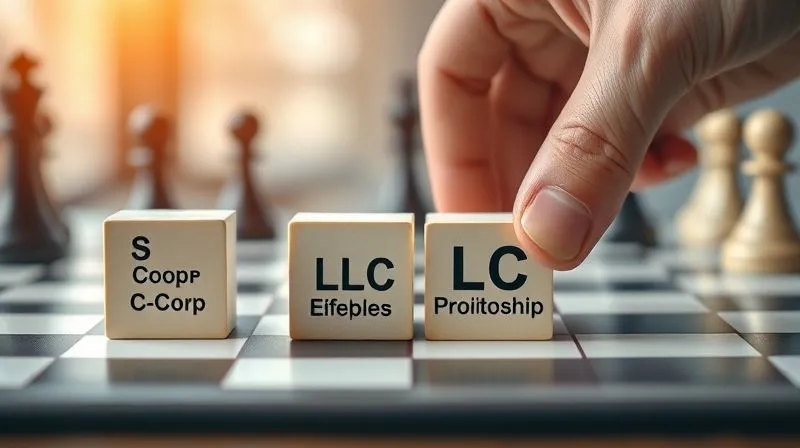
The legal structure of your business (sole proprietorship, partnership, S Corp, C Corp, LLC) has profound tax implications. As your SME grows, the initial structure you chose might no longer be the most tax-efficient. A year-end review of your entity structure is a critical strategic move.
Considerations for Entity Structure Optimization:
- S Corporation Election: Many growing businesses find significant tax savings by electing S Corp status. This allows profits and losses to be passed through directly to the owner's personal income without being subject to corporate tax rates, and, crucially, can reduce self-employment taxes on owner distributions.
- C Corporation Benefits: While C Corps face double taxation, they offer benefits like broader deduction opportunities for employee benefits and the ability to retain earnings at lower corporate tax rates for reinvestment.
- LLC Flexibility: An LLC offers liability protection and flexibility in how it's taxed (as a sole proprietorship, partnership, S Corp, or C Corp). This adaptability can be a significant advantage as your business evolves.
Changing your entity structure is a complex decision with legal and tax ramifications. It's imperative to consult with both a tax advisor and a legal professional to ensure the change aligns with your growth strategy and minimizes any potential downsides.
State and Local Tax (SALT) Considerations: A Crucial, Often Overlooked Area
While federal taxes often dominate the conversation, state and local taxes (SALT) can represent a substantial burden for growing SMEs, especially those operating across state lines or in multiple jurisdictions. Neglecting SALT can lead to costly penalties and missed opportunities.
Key SALT Areas to Review:
- Sales Tax Nexus: As your business expands its online presence or physical footprint, understanding where you establish "nexus" for sales tax purposes is vital. Each state has different rules, and failure to collect and remit sales tax can result in significant liabilities.
- Income/Franchise Tax: Many states impose their own corporate income or franchise taxes. These can vary wildly and often have different deduction rules than federal taxes.
- Property Taxes: If your SME owns real estate or significant tangible personal property, property taxes are a recurring expense. Reviewing assessments and ensuring proper classifications can lead to savings.
- Payroll Taxes: State unemployment insurance and other local payroll taxes can add up. Ensure your classifications and contributions are accurate.
“Ignoring state and local tax obligations is like leaving money on the table, only worse – it's inviting penalties and audits.”
I've seen businesses caught off guard by unexpected state tax liabilities after expanding into new markets. Proactive consultation with a SALT specialist is an investment that pays dividends. For more detailed insights, refer to resources from organizations like the Tax Foundation.
Frequently Asked Questions (FAQ)
Q: Is it really possible for a growing SME to significantly reduce its tax burden without aggressive, risky tactics? Absolutely. My entire approach is centered on legal, ethical, and sustainable tax planning. The strategies discussed here leverage existing tax codes and incentives designed to support business growth and investment. The key is proactive planning and a deep understanding of the rules, rather than seeking out grey areas.
Q: How often should I review my tax planning strategies? While year-end is a critical time, I strongly advocate for quarterly reviews. This allows you to react to changes in your business performance, market conditions, and tax laws more effectively. A mid-year check-up, in particular, can provide ample time to implement adjustments before the final rush.
Q: What's the biggest mistake SMEs make in tax planning? The most common mistake is procrastination. Waiting until November or December to think about taxes severely limits your options. Many powerful deductions and strategies require actions to be taken throughout the year, not just at the very end. Lack of proper record-keeping is a close second, as it undermines any attempt to claim legitimate deductions.
Q: When should a growing SME consider hiring a dedicated tax advisor instead of relying on general accounting services? As your business scales, its financial complexities multiply. If you're consistently generating significant profits, expanding into new markets, making substantial capital investments, or navigating complex employee benefit structures, it's time for a dedicated tax advisor. They offer specialized knowledge that can uncover opportunities a general accountant might miss, providing value far exceeding their fees.
Q: Can these strategies apply to both product and service-based SMEs? Yes, many of these strategies are universally applicable. While inventory management is specific to product-based businesses, principles like maximizing deductions, leveraging retirement plans, strategic timing of income/expenses, and entity structure review are crucial for both. Service-based businesses, for instance, can heavily benefit from R&D credits if they're innovating their service delivery or technology.
Key Takeaways and Final Thoughts
Navigating the complex landscape of year-end tax planning for a growing SME doesn't have to be a source of dread. With a proactive mindset and the right strategies, you can transform your tax obligations into opportunities for financial optimization and sustained growth.
- Proactive Planning is Paramount: Don't wait until year-end; integrate tax planning into your ongoing financial strategy.
- Maximize Legitimate Deductions: Every dollar legitimately deducted is a dollar saved. Keep meticulous records.
- Leverage Capital Allowances: Strategic depreciation and expensing of assets can provide immediate tax relief.
- Optimize for Your Structure: Ensure your business entity is the most tax-efficient for your current stage of growth.
- Explore Beyond the Obvious: Don't overlook advanced tax credits and state/local tax considerations.
- Invest in Expertise: A skilled tax advisor is an invaluable partner in unlocking significant savings.
I urge you to take these insights and apply them diligently. The goal isn't just to pay less tax; it's to strategically retain more capital within your business, empowering you to invest in innovation, expand your team, and accelerate your journey toward long-term success. Your growth doesn't have to be curtailed by tax burdens; instead, let intelligent tax planning fuel it. Start today, and secure a more prosperous financial future for your SME.
Recommended Reading
- 7 Strategies: How Businesses Mitigate Political Risks in Emerging Markets
- Unlock Success: How to Mitigate Risk in Capital Budgeting Decisions
- Project Rescue: 5 Steps to Rapid Resource Reallocation for Success
- Market Expansion Challenges: A Small Business Survival Guide
- Boost Call Center Success: Agent Performance Metrics Revealed





Comments
Leave a comment below. Your email will not be published. Required fields marked with *