


How to Legally Terminate a Protected Employee Without Risk: An Expert's Blueprint
For over 20 years in legal business and HR consulting, I've seen countless organizations grapple with one of the most delicate and high-stakes decisions: terminating an employee who possesses 'protected status.' It’s a minefield, fraught with potential for costly lawsuits, reputational damage, and significant stress for all involved. The stakes are incredibly high, and a single misstep can unravel years of hard work.
The problem is often rooted in a lack of a clear, legally sound framework. Many employers operate on assumptions or outdated information, leading to reactive decisions rather than proactive, compliant strategies. This uncertainty creates a paralyzing fear, often resulting in prolonged, unproductive employment or, worse, a wrongful termination claim.
This guide isn't just about avoiding lawsuits; it's about building a robust, ethical, and compliant system. I'll share the actionable frameworks, real-world insights, and step-by-step processes I've developed and refined over decades, so you can learn how to legally terminate a protected employee without risk, ensuring fairness and protecting your business's future.
Understanding 'Protected Status': Who Are We Talking About?
Before we delve into termination strategies, it's crucial to clarify what 'protected status' truly means. This isn't a blanket term; it refers to specific categories under federal, state, and local laws that shield employees from discrimination or retaliation based on certain characteristics or activities. Ignoring these protections is the fastest route to legal trouble.
Common protected classes include race, color, religion, sex (including pregnancy, sexual orientation, and gender identity), national origin, age (40 or older), disability, and genetic information. Beyond these, employees can also gain protection through activities like filing a worker's compensation claim, taking FMLA leave, engaging in protected concerted activity under the National Labor Relations Act, or acting as a whistleblower. Understanding the full scope of these protections is your first line of defense.
Expert Insight: A protected employee isn't immune to termination. They are simply protected from termination *because of* their protected status or activity. The key is to ensure your decision is entirely unrelated to these factors.
I've seen situations where employers mistakenly believe that an employee on FMLA leave cannot be terminated, even if their performance was abysmal before the leave. This is a dangerous misconception. The law protects the *right* to leave, not immunity from legitimate business decisions. The challenge, then, is proving the legitimacy and non-discriminatory nature of your decision.
The Bedrock Principle: Legitimate, Non-Discriminatory Reasons
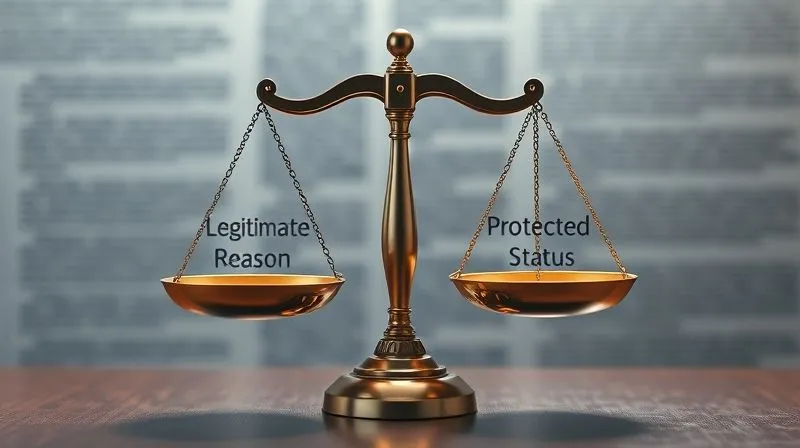
Every legally sound termination, especially for a protected employee, must be anchored in a legitimate, non-discriminatory business reason. This is the foundation upon which your entire defense will rest. Without it, even the most meticulous process can crumble.
Legitimate reasons typically fall into categories like poor performance, misconduct, violation of company policy, or legitimate business needs such as a reduction in force (RIF). The critical element is that these reasons must be consistently applied across all employees, regardless of their protected characteristics. In my practice, I always emphasize that consistency is king.
Consider these questions:
- Would you terminate a non-protected employee for the exact same reason?
- Has this reason been clearly communicated to the employee previously?
- Are there documented instances of this issue occurring?
If you can't answer these questions confidently, you likely don't have a sufficiently strong, legitimate reason. The Equal Employment Opportunity Commission (EEOC) scrutinizes termination decisions closely when protected classes are involved, looking for any hint of disparate treatment or impact. Understanding EEOC guidelines is paramount.
It's not enough to *feel* like the reason is legitimate; you must be able to *prove* it. This requires a systematic approach to performance management and disciplinary actions, ensuring every step is documented and unbiased. This proactive approach is essential for how to legally terminate a protected employee without risk.
Documentation is Your Shield: Building an Ironclad Record
If there's one piece of advice I could engrave into every HR professional's desk, it's this: document everything. In the world of employment law, if it isn't documented, it didn't happen. This is particularly true when considering how to legally terminate a protected employee without risk.
Your documentation should tell a clear, objective story of the employee's performance or conduct issues, the company's attempts to address them, and the employee's response. This isn't about creating a paper trail to fire someone; it's about maintaining accurate, consistent records of employee performance and behavior, which is a best practice for all employees.
- Performance Reviews: Conduct regular, objective performance reviews. Ensure they are specific, measurable, achievable, relevant, and time-bound (SMART). Document areas for improvement and set clear expectations.
- Disciplinary Actions: Follow a consistent progressive discipline policy. Document every warning, coaching session, performance improvement plan (PIP), and suspension. Include dates, specific incidents, company policy violations, expected improvements, and consequences of non-compliance.
- Employee Responses: Document the employee's feedback or explanations during disciplinary meetings. If they refuse to sign, note that.
- Witness Statements: For misconduct issues, gather and document statements from witnesses, ensuring they are factual and objective.
- Emails and Communications: Save all relevant communications, especially those related to performance, conduct, or any employee complaints/requests for accommodation.
A common pitfall I've observed is employers having strong verbal conversations but failing to put them in writing. When a lawsuit arises, those verbal warnings simply don't exist in the eyes of the court. A comprehensive and consistent documentation process is your most powerful tool in demonstrating a legitimate, non-discriminatory basis for termination.
| Documentation Item | Key Elements | Risk Mitigation |
|---|---|---|
| Performance Review | Specific examples, SMART goals, employee acknowledgment | Establishes pattern of issues, avoids surprise termination |
| Disciplinary Warning (Verbal/Written) | Date, incident, policy violated, expected change, consequences | Proves progressive discipline, fair warning |
| Performance Improvement Plan (PIP) | Clear objectives, support provided, timeline, check-ins | Demonstrates effort to rehabilitate, objective failure |
| Witness Statements | Factual account, date, signature | Corroborates misconduct claims, reduces 'he said/she said' |
Process Perfection: Navigating the Termination Procedure
Even with impeccable documentation and a legitimate reason, a flawed process can expose you to significant risk. The 'how' of termination is almost as important as the 'why.' A fair and consistent process underscores your commitment to legal compliance and reduces the likelihood of a successful wrongful termination claim.
- Review All Documentation: Before any final decision, a senior HR professional and/or legal counsel should meticulously review the employee's entire file. Look for inconsistencies, gaps in documentation, or any hints of discriminatory bias.
- Conduct a Final Meeting: The termination meeting should be brief, direct, and empathetic. It should typically involve at least two company representatives (e.g., HR and a manager) to serve as witnesses.
- State the Reason Clearly: Clearly articulate the legitimate, non-discriminatory reason for termination. Refer to the documented performance or conduct issues. Avoid getting into a debate.
- Discuss Logistics: Cover final pay, benefits, return of company property, and any severance package details. Provide all required legal notices (e.g., COBRA, unemployment information).
- Be Prepared for Questions: While you shouldn't debate, be prepared to answer factual questions about final pay or benefits. Avoid speculative or emotional responses.
- Avoid Retaliation: Ensure that the termination itself, and any actions immediately following, cannot be construed as retaliation for any protected activity the employee may have engaged in.
Case Study: How Apex Innovations Avoided a Costly Lawsuit
Apex Innovations, a rapidly growing tech firm, faced a challenging situation with an employee on FMLA leave who had a documented history of severe performance issues prior to their leave. Instead of waiting for their return, which might have appeared retaliatory, Apex's HR team, following my guidance, meticulously reviewed all performance documentation, which spanned 18 months and included multiple PIPs and warnings. They confirmed the performance issues were unrelated to the FMLA leave. Upon the employee's scheduled return, a termination meeting was held with HR and the department head, clearly stating the long-standing performance reasons. Because of the ironclad documentation and adherence to a fair process, Apex successfully demonstrated a legitimate, non-discriminatory reason, avoiding a potential FMLA interference claim.
Mitigating Risk: Severance, Releases, and Confidentiality
Even when you've done everything right, a termination can still be contested. This is where strategic risk mitigation comes into play, particularly through the use of severance agreements and releases. These tools can significantly reduce your exposure to future claims.
A severance agreement is a contract where an employer offers a departing employee benefits (e.g., payment, extended health coverage) in exchange for a release of claims. This release typically waives the employee's right to sue the company for any employment-related claims, including wrongful termination, discrimination, and retaliation. For employees over 40, specific requirements under the Older Workers Benefit Protection Act (OWBPA) must be met, including a 21-day review period and a 7-day revocation period.
Key considerations for severance agreements:
- Legal Review: Always have an attorney draft or review the agreement to ensure it's legally sound and enforceable in your jurisdiction.
- Fair Consideration: The severance package must offer something of value that the employee isn't already entitled to (e.g., more than just final wages).
- Confidentiality: Often, severance agreements include clauses requiring the employee to keep the terms confidential and to refrain from disparaging the company.
- Non-Compete/Non-Solicit: Depending on the role, these clauses may also be included, though their enforceability varies by state.
While severance agreements aren't a guarantee against all lawsuits, they are a powerful tool for proactively managing risk and achieving a clean break. As a recent Harvard Business Review article highlighted, a well-managed separation process, including fair severance, can even protect employer brand.
Navigating Specific Protections: ADA, FMLA, Whistleblowers, and More
Some protected statuses require an even more nuanced approach. Terminating an employee who has requested or is on leave under the Americans with Disabilities Act (ADA) or the Family and Medical Leave Act (FMLA), or who has engaged in whistleblowing, demands exceptional care.
Americans with Disabilities Act (ADA)
If an employee has a disability, you have an obligation to engage in an interactive process to determine if a reasonable accommodation would allow them to perform the essential functions of their job. Termination can occur if no reasonable accommodation is possible, or if the employee cannot perform essential functions even with accommodation, but this must be thoroughly documented. Any termination must be for a reason unrelated to their disability or their request for accommodation. The Department of Labor provides extensive FMLA guidance.
Family and Medical Leave Act (FMLA)
Employees on FMLA leave are entitled to return to the same or an equivalent position. Terminating an employee while on FMLA leave is extremely risky unless you can definitively prove that the termination would have occurred regardless of the leave (e.g., a legitimate reduction in force where their position was eliminated). The burden of proof here is high.
Whistleblower Protections
Employees who report illegal activities within the company are often protected from retaliation under various federal and state laws. Terminating a whistleblower, even for legitimate performance reasons, can be perceived as retaliatory. The timing of the termination relative to the whistleblowing activity will be heavily scrutinized. It's imperative that your documentation of performance issues predates the protected activity.
Each of these scenarios requires a heightened level of due diligence and often, direct legal counsel involvement. The complexities are such that a one-size-fits-all approach is insufficient. The goal remains the same: ensure the termination decision is for a legitimate, non-discriminatory reason, fully supported by documentation, and executed flawlessly.
The Post-Termination Landscape: Avoiding Retaliation Claims
Your responsibilities don't end the moment an employee walks out the door. The period immediately following a termination, and even months later, can be fertile ground for retaliation claims if not managed carefully. Retaliation is often easier to prove than discrimination, as it focuses on the employer's adverse action following a protected activity.
To minimize post-termination retaliation risks:
- Consistent Communication: Ensure that any internal or external communications about the former employee are factual, neutral, and consistent with company policy. Avoid disparaging remarks.
- Reference Policies: Establish and adhere to a strict 'no comment' or 'confirm employment dates only' policy for reference checks.
- Unemployment Claims: Respond truthfully and factually to unemployment claims, providing only the necessary information about the termination reason and dates of employment.
- Benefit Administration: Administer COBRA, 401(k) rollovers, and other post-employment benefits promptly and accurately.
- Security and Access: Immediately revoke all system access and collect company property to protect proprietary information, but do so professionally and without implication of malfeasance unless warranted and documented.
I recall a case where a manager, frustrated by a terminated employee's past performance, inadvertently gave a negative reference that went beyond company policy. This led to a successful retaliation claim, even though the original termination was legitimate. It underscores that every interaction, even after employment ends, must be handled with extreme care to truly learn how to legally terminate a protected employee without risk.

When to Call Legal Counsel: Knowing Your Limits
While this guide provides a robust framework, it's crucial to recognize when to bring in experienced legal counsel. Employment law is incredibly complex, constantly evolving, and highly jurisdiction-specific. Attempting to navigate certain situations without legal expertise is a recipe for disaster.
You should *always* consult legal counsel when:
- The employee is in a protected class and has recently engaged in protected activity (e.g., filed a complaint, requested accommodation, taken FMLA).
- The employee has made allegations of discrimination, harassment, or retaliation.
- The termination involves a high-level executive or a significant severance package.
- You are considering a reduction in force (RIF) that impacts multiple employees, especially those in protected age groups.
- There is any uncertainty about the legitimacy of the reason or the consistency of the process.
- The employee has threatened legal action.
Think of your legal counsel as your ultimate risk manager. They can identify subtle legal exposures, ensure your documentation is airtight, and guide you through the most sensitive conversations. While it's an investment, it's a far smaller cost than defending a wrongful termination lawsuit. According to the Society for Human Resource Management (SHRM), the average cost of an employment lawsuit can range from tens of thousands to well over six figures, not including reputational damage. This underlines the importance of expert guidance to legally terminate a protected employee without risk.
Frequently Asked Questions (FAQ)
Question: Can I terminate a protected employee if they are underperforming, even if they just filed a complaint?
Detailed answer: Yes, but with extreme caution. The termination must be solely for the documented underperformance, and you must be able to prove that the decision was made independent of the complaint. The timing will be heavily scrutinized for retaliation. Ensure your performance documentation predates the complaint and that you've followed your progressive discipline policy consistently. Legal counsel is highly recommended in such scenarios.
Question: What if an employee on FMLA leave is caught working another job?
Detailed answer: This could be grounds for termination if your company policy prohibits such activity while on leave, or if the second job contradicts the stated reason for FMLA leave. However, you must conduct a thorough investigation, gather irrefutable evidence, and ensure your policy is consistently applied to all employees, whether on FMLA or not. Terminating an employee while on FMLA is risky, so legal consultation is essential.
Question: How do I handle a termination if the employee refuses to sign any disciplinary documents?
Detailed answer: An employee's refusal to sign doesn't invalidate the documentation. Simply note on the document that the employee refused to sign and have a second manager or HR representative witness the refusal and sign as a witness. The key is that the document was presented and the employee was made aware of its contents, not necessarily that they agreed with it.
Question: Is it safer to offer a severance package even if I'm confident in my legal position?
Detailed answer: Often, yes. A severance package with a full release of claims can be a prudent business decision, even when you have a strong case. It buys peace of mind, avoids the unpredictable costs and distractions of litigation, and allows both parties to move forward. It's a risk management tool, not an admission of fault. The value of avoiding a lawsuit often outweighs the cost of a reasonable severance.
Question: Can I terminate an employee who has requested a reasonable accommodation under the ADA if the accommodation is too expensive?
Detailed answer: The ADA requires employers to provide reasonable accommodations unless doing so would cause an 'undue hardship.' 'Undue hardship' is a high bar and typically means significant difficulty or expense. Cost alone is rarely sufficient to claim undue hardship unless it's truly prohibitive for the business's size and resources. You must engage in an interactive process, explore alternatives, and document everything. Termination should only be considered if no reasonable accommodation is possible without undue hardship, and legal counsel is critical here.
Key Takeaways and Final Thoughts
Navigating the termination of a protected employee is undeniably one of the most challenging aspects of HR and business leadership. However, it doesn't have to be a source of constant dread. By adopting a proactive, principled, and meticulously documented approach, you can significantly mitigate risks and ensure your decisions are not only legally compliant but also ethically sound.
- Understand Protections: Know who is protected and why.
- Legitimate Reasons Only: Base all decisions on objective, non-discriminatory grounds.
- Document Relentlessly: Your paper trail is your strongest defense.
- Process Matters: Follow fair, consistent procedures every single time.
- Mitigate Risk: Utilize tools like severance agreements strategically.
- Know When to Ask for Help: Legal counsel is an investment, not an expense, in complex situations.
Remember, the goal isn't just to avoid a lawsuit; it's to foster a workplace built on fairness, transparency, and respect, even when difficult decisions must be made. By embracing this expert blueprint, you can confidently learn how to legally terminate a protected employee without risk, safeguarding your organization's integrity and future.
Recommended Reading
- 7 Proven Steps to Optimize Small Business Cash Flow During a Recession
- Emerging Market Supply Chain Collapse? 7 Urgent Steps to Recover
- Unlock the Power: Strategies for Effective CSR Stakeholder Engagement
- Rapid, Cost-Effective Asia Entry: 7 Proven Strategies for Swift Market Growth
- Ex-Employee Stole Trade Secrets? Your 5-Step Legal Action Plan

![Breach of Contract: Fixing Vendor Agreements FAST [Expert Guide]](/uploads/businessspur/posts/breach-of-contract-fixing-vendor-agreements-fast-expert-guide-jw5hy.webp)



Comments
Leave a comment below. Your email will not be published. Required fields marked with *