


How to make performance monitoring truly improve operations?
For over two decades in operations management, I've witnessed the evolution of performance monitoring from rudimentary spreadsheets to sophisticated, real-time dashboards. Yet, despite these technological leaps, a recurring challenge persists: many organizations still struggle to translate vast amounts of data into tangible operational improvements. They monitor, but they don't truly improve.
The common pain point? A disconnect between data collection and strategic action. Companies often invest heavily in systems that churn out impressive visualizations, only to find themselves drowning in metrics without clear direction, feeling overwhelmed by the sheer volume of information. This leads to analysis paralysis, wasted resources, and ultimately, stagnated operational growth.
This article isn't just about collecting data; it's about transforming raw numbers into strategic advantages. I'll share proven frameworks, actionable steps, and real-world insights on how to make performance monitoring truly improve operations, ensuring your efforts drive real, sustainable change and unlock true operational excellence. We'll move beyond mere observation to impactful, data-driven decision-making.
The Common Pitfalls: Why Monitoring Often Fails to Deliver
In my extensive career, I've seen countless organizations fall into similar traps when it comes to performance monitoring. It’s not a lack of effort, but often a misdirection of it. Understanding these pitfalls is the first step towards building a truly effective system.
- Data Overload, Insight Underload: Many systems generate too much data without proper filtering or context, making it impossible to identify what's truly important.
- Vanity Metrics: Focusing on easily measurable but ultimately meaningless metrics that don't reflect operational health or strategic progress.
- Lack of Actionable Insights: Even when critical data is identified, the 'so what?' question often goes unanswered. Data without clear implications for action is just noise.
- Siloed Data & Systems: Information trapped in departmental silos, preventing a holistic view of operations and hindering cross-functional improvements.
- Absence of Feedback Loops: Monitoring without a mechanism to feed insights back into processes means problems persist unaddressed.
- Resistance to Change: Teams may resist new monitoring methods or the changes suggested by data, viewing them as criticism rather than opportunities.
Monitoring without a clear, strategic purpose is merely observation, not improvement. It's like having a thermometer without knowing what a healthy temperature means, or what to do if it's too high or too low. We need to define the 'why' before the 'what' and 'how'.
Foundation First: Aligning Monitoring with Strategic Goals
The bedrock of effective performance monitoring is its direct alignment with your organization's overarching strategic goals. Without this alignment, you risk measuring things that don't matter, or worse, driving behavior that works against your strategic objectives. This is where many initiatives to make performance monitoring truly improve operations falter from the outset.
Defining Your North Star: Strategic Objectives
Before you even think about specific metrics, you must clearly articulate your strategic objectives. What is the organization trying to achieve in the next 1, 3, or 5 years? Are you aiming for market leadership, cost reduction, customer satisfaction, or innovation? These objectives serve as your 'North Star', guiding every subsequent decision about what to monitor.
For example, if a strategic objective is to 'Become the market leader in sustainable product delivery', then your operational monitoring must reflect this, focusing on metrics related to supply chain efficiency, waste reduction, and customer perception of sustainability.
Translating Strategy into Actionable KPIs
Once strategic objectives are clear, the next step is to translate them into Key Performance Indicators (KPIs). KPIs are not just any metrics; they are the critical few that directly measure progress towards your strategic goals. They should be:
- Specific: Clearly defined and unambiguous.
- Measurable: Quantifiable, allowing for objective comparison.
- Achievable: Realistic and attainable within the given context.
- Relevant: Directly linked to your strategic objectives.
- Time-bound: Associated with a specific timeframe for achievement.
This SMART framework ensures that your KPIs are not just data points, but powerful drivers of performance. For more insights on selecting impactful KPIs, I often recommend exploring resources like the Harvard Business Review on Balanced Scorecard principles.

The Right Metrics, The Right Way: Beyond Vanity Metrics
Choosing the right metrics is perhaps the most critical component in making performance monitoring truly improve operations. It's easy to get lost in a sea of data, but true improvement comes from focusing on what genuinely moves the needle. This means distinguishing between different types of indicators and understanding their operational impact.
Lagging vs. Leading Indicators
A fundamental distinction in performance monitoring is between lagging and leading indicators:
- Lagging Indicators: These measure outcomes that have already occurred. Examples include monthly revenue, customer churn rate, or project completion rates. While crucial for understanding past performance, they don't provide early warnings or opportunities to intervene.
- Leading Indicators: These predict future outcomes and allow for proactive intervention. Examples include website traffic (leading to sales), employee training hours (leading to skill improvement), or process cycle time (leading to delivery speed). Focusing on leading indicators empowers teams to take corrective action before problems manifest as lagging results.
A balanced monitoring system leverages both, but for driving improvement, leading indicators are your proactive superpower.
Operational vs. Business Metrics
It's also essential to understand the relationship between granular operational metrics and broader business metrics:
- Operational Metrics: These are specific, day-to-day measures of process efficiency and effectiveness. Think 'units produced per hour,' 'average call handling time,' or 'defect rate per batch.'
- Business Metrics: These are higher-level financial or strategic outcomes. Examples include 'profit margin,' 'market share,' or 'customer lifetime value.'
The goal is to establish a clear line of sight from operational metrics up to business metrics. For instance, reducing 'average call handling time' (operational) should contribute to improved 'customer satisfaction' (business) and potentially 'reduced operational costs' (business). Without this connection, operational teams might optimize for metrics that don't ultimately benefit the business. Here's a quick comparison:
| Metric Type | Description | Example |
|---|---|---|
| Lagging Indicator | Measures outcomes after they've happened | Quarterly Revenue, Customer Churn |
| Leading Indicator | Predicts future outcomes, allows intervention | Website Traffic, Employee Training Hours |
| Operational Metric | Measures process efficiency, day-to-day | Units Produced/Hour, Defect Rate |
| Business Metric | Measures high-level financial/strategic outcomes | Profit Margin, Customer Lifetime Value |
The true power of performance monitoring isn't in collecting data, but in selecting the data that illuminates the path to your strategic objectives and enables proactive, informed decisions. Focus on the vital few, not the trivial many.
Building a Robust Performance Monitoring Framework
Once you've aligned your strategic goals and identified the right metrics, the next step is to construct a framework that systematically collects, visualizes, analyzes, and acts upon this data. This structured approach is fundamental to making performance monitoring truly improve operations.
Step 1: Data Collection & Integration
The foundation of any monitoring system is reliable data. This involves identifying all relevant data sources and ensuring their seamless integration. Modern operations often pull data from:
- Enterprise Resource Planning (ERP) systems
- Customer Relationship Management (CRM) platforms
- Manufacturing Execution Systems (MES)
- Supply Chain Management (SCM) software
- IoT sensors and smart devices
- Financial accounting systems
The challenge lies in integrating these disparate sources into a unified data warehouse or lake, ensuring data quality, consistency, and accessibility. Without a single source of truth, different teams will operate on different information, leading to conflicting insights and fragmented efforts. For best practices in data integration, I recommend reviewing expert insights from firms like Deloitte on data-driven operations.
Step 2: Data Visualization & Reporting
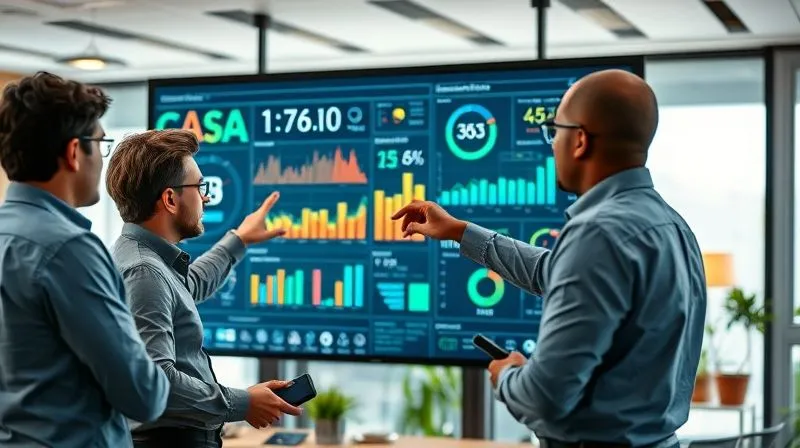
Raw data is rarely insightful. Effective visualization transforms complex datasets into understandable, actionable information. Dashboards should be:
- User-Centric: Tailored to the needs of different stakeholders (e.g., executive, departmental manager, frontline worker).
- Clear & Concise: Avoiding clutter, highlighting key trends and anomalies.
- Real-time (where appropriate): Providing up-to-date information for timely decision-making.
- Interactive: Allowing users to drill down into details or filter by specific parameters.

Effective dashboards don't just show numbers; they tell a story, immediately drawing attention to areas requiring intervention or celebration.
Step 3: Analysis & Interpretation
This is where the 'monitoring' transitions into 'improvement'. Data analysis involves going beyond surface-level observations to uncover root causes and identify opportunities. Key techniques include:
- Trend Analysis: Identifying patterns over time.
- Comparative Analysis: Benchmarking against internal targets or external industry standards.
- Root Cause Analysis: Digging deep to understand why a particular performance metric is deviating.
- Predictive Analytics: Using historical data to forecast future performance.
It's not enough to know what happened; you must understand why it happened to prevent recurrence or replicate success. This analytical rigor is how we truly make performance monitoring improve operations.
From Insight to Action: Driving Continuous Improvement
Having a sophisticated monitoring framework is only half the battle. The real magic happens when insights translate into concrete actions that drive continuous improvement. This is the crucial link in how to make performance monitoring truly improve operations.
Establishing Feedback Loops
Effective monitoring systems are not static; they are part of a dynamic feedback loop. This involves:
- Regular Review Meetings: Scheduled sessions where teams review performance data, discuss insights, and identify actions.
- Accountability Frameworks: Clearly assigning ownership for specific metrics and improvement initiatives.
- Data-Driven Decision Making: Ensuring that every significant operational decision is informed by performance data, rather than gut feeling or historical precedent.
Case Study: How Acme Corp Reduced Employee Churn
Acme Corp, a mid-sized tech company, faced a persistent 30% employee churn rate, impacting project delivery and team morale. Their existing performance monitoring tracked churn but offered no insights into why. By implementing the feedback loop principles I described above, they began monitoring leading indicators like 'manager 1:1 frequency,' 'employee survey sentiment scores,' and 'project engagement metrics.' Regular, data-driven team discussions revealed a significant correlation between low 1:1 frequency and negative sentiment, particularly among new hires. They introduced mandatory weekly 1:1s for all managers and a mentorship program for new employees. Within six months, employee survey sentiment improved by 25%, and the churn rate dropped to 15%, directly impacting project continuity and reducing recruitment costs. This demonstrated how making performance monitoring truly improve operations requires a focus on actionable insights and cultural shifts.
Empowering Teams with Data
For monitoring to be effective, the data must be accessible and understandable to those who can act on it. Empowering frontline teams with relevant performance data and the authority to make small, localized improvements can lead to significant gains. This fosters a sense of ownership and accountability, moving away from top-down directives to data-informed collaboration.
Iterative Improvement Cycles (PDCA)
The Plan-Do-Check-Act (PDCA) cycle, also known as the Deming Cycle, is a powerful framework for continuous improvement driven by performance monitoring. Here’s how it works:
- Plan: Based on performance data, identify an opportunity for improvement, define a hypothesis, and plan a change.
- Do: Implement the planned change on a small scale or pilot basis.
- Check: Monitor the results of the change using your performance metrics. Did it achieve the desired outcome? What were the unintended consequences?
- Act: If the change was successful, standardize and implement it more broadly. If not, analyze why, and iterate back to the 'Plan' stage with new insights.
This cyclical approach ensures that improvements are systematically tested, validated, and scaled. For a deeper dive into quality management and PDCA, resources from organizations like the American Society for Quality (ASQ) are invaluable.
Cultivating a Data-Driven Culture
The most sophisticated performance monitoring systems are useless without a culture that embraces data. To truly make performance monitoring improve operations, an organization must foster an environment where data is valued, understood, and used as a common language for decision-making.
Leadership Buy-in and Sponsorship
A data-driven culture starts at the top. Leaders must not only champion the use of performance data but actively demonstrate it in their own decision-making processes. They should communicate the 'why' behind monitoring, linking it directly to strategic success and individual growth. Without visible leadership commitment, any new monitoring initiative will be perceived as another passing fad.
Training and Skill Development
It's unrealistic to expect every employee to be a data scientist, but every employee should understand the metrics relevant to their role and how to interpret basic performance data. Investing in training on data literacy, dashboard navigation, and basic analytical skills empowers teams to engage meaningfully with the monitoring system. This includes understanding the difference between correlation and causation, and how to identify anomalies.
Celebrating Successes
When performance monitoring leads to tangible improvements, celebrate those successes! Acknowledging teams and individuals who use data to drive positive change reinforces the value of the system and encourages wider adoption. This positive reinforcement helps to embed data-driven thinking into the organizational DNA, making performance monitoring truly improve operations as a natural part of daily work.
A data-driven culture isn't about collecting more data; it's about embedding a mindset where curiosity, critical thinking, and continuous learning are fueled by insights derived from performance monitoring. It's a shared commitment to evidence-based improvement.
Overcoming Common Challenges in Performance Monitoring
Even with the best intentions and a robust framework, challenges will inevitably arise. Addressing these proactively is key to ensuring your efforts to make performance monitoring truly improve operations remain effective and sustainable.
Data Silos and Inconsistency
One of the most persistent challenges is fragmented data. Different departments often use different systems, leading to inconsistent data definitions, formats, and reporting. To combat this:
- Establish a Data Governance Framework: Define clear standards for data collection, storage, and usage across the organization.
- Invest in Integration Technologies: Utilize modern ETL (Extract, Transform, Load) tools or data lakes to unify disparate data sources.
- Promote Cross-Functional Collaboration: Encourage teams to work together on data definitions and reporting requirements, breaking down informational walls.
Resistance to Change
People naturally resist change, especially when it involves new tools or increased scrutiny. To mitigate resistance:
- Communicate Benefits Clearly: Explain how monitoring benefits individuals and teams, not just the organization (e.g., reduced workload, clearer priorities, recognition).
- Involve Stakeholders Early: Engage employees in the design and implementation of monitoring systems to foster ownership.
- Provide Adequate Training and Support: Ensure everyone feels comfortable and confident using the new tools and understanding the data.
Maintaining Relevance Over Time
Business environments are dynamic, and what was a critical KPI yesterday might be less relevant tomorrow. Your monitoring system must evolve:
- Regular KPI Review: Periodically assess if your KPIs still align with current strategic objectives.
- Flexibility in Tools: Choose monitoring platforms that can adapt to changing data sources and reporting needs.
- Continuous Learning: Stay abreast of industry best practices and emerging technologies in performance monitoring.
Frequently Asked Questions (FAQ)
How do I choose the right KPIs for my specific operation? Start by clearly defining your strategic objectives. Then, identify the critical factors that influence those objectives. Brainstorm potential metrics, then filter them using the SMART criteria (Specific, Measurable, Achievable, Relevant, Time-bound). Prioritize a few leading indicators that offer predictive power, and ensure they are connected to actionable levers within your operation. Avoid vanity metrics that don't drive real change.
What's the biggest mistake companies make with performance monitoring? The most common and impactful mistake is monitoring for monitoring's sake, without a clear link to action and improvement. Many organizations collect vast amounts of data but fail to analyze it effectively, disseminate insights, or establish robust feedback loops that lead to concrete changes. Data without action is just noise, and it actively wastes resources.
How often should I review my performance metrics? The frequency of review depends on the metric's nature and the operational cycle. High-frequency operational metrics (e.g., production line output) might require daily or hourly checks. Mid-level tactical metrics (e.g., project milestones) could be weekly or bi-weekly. Strategic KPIs (e.g., market share) are often reviewed monthly or quarterly. The key is to review often enough to intervene proactively but not so often that you're reacting to normal fluctuations.
Can small businesses effectively implement advanced performance monitoring? Absolutely. While enterprise-level tools can be costly, the principles of performance monitoring are scalable. Small businesses can start with simpler tools like spreadsheets or affordable cloud-based dashboards. The focus should be on identifying a few critical KPIs aligned with strategic goals and establishing clear processes for data collection, review, and action. The complexity of the tool is less important than the discipline of the process.
How do I ensure my team actually uses the monitoring data? Engagement is crucial. First, involve your team in the KPI selection and dashboard design process. Second, provide thorough training on how to interpret and act on the data. Third, integrate data reviews into regular team meetings, making it a natural part of discussions. Fourth, empower teams with autonomy to make data-driven decisions within their scope. Finally, celebrate successes that result from data-informed actions to reinforce positive behavior. For more on fostering this culture, insights from thought leaders like Forbes on building data-driven cultures can be very helpful.
Key Takeaways and Final Thoughts
Making performance monitoring truly improve operations is not a matter of simply installing new software or collecting more data. It's a strategic imperative that demands a holistic approach, blending technology with robust processes and a data-driven culture. As an industry veteran, I've seen the transformative power of a well-executed monitoring strategy, and the frustration when it's done poorly.
- Align with Strategy: Ensure every KPI directly serves your overarching business objectives.
- Choose the Right Metrics: Prioritize leading, actionable indicators over vanity metrics.
- Build a Robust Framework: Systematize data collection, visualization, and analysis.
- Drive Action: Establish clear feedback loops and empower teams to act on insights.
- Cultivate Culture: Foster leadership buy-in, provide training, and celebrate data-driven successes.
- Overcome Challenges: Proactively address data silos, resistance, and relevance.
The journey to operational excellence is continuous. By meticulously applying these principles, you can transform your performance monitoring from a passive reporting function into a dynamic engine for improvement, driving efficiency, innovation, and sustainable growth. Embrace the data, empower your teams, and watch your operations truly thrive.
Recommended Reading
- Unlock Explosive Revenue: How to Leverage CRM for Significant Sales Growth?
- 7 Critical Reasons Why Your Automated Sales Follow-Ups Aren't Closing Deals
- 7 Proven Steps: Boost Remote Staff Mental Health Measurably
- Mastering Global Remote Hiring: 7 Legal Pitfalls to Sidestep Now
- Unmasking Hidden Hurdles: How to Identify Conversion Roadblocks on a Website?



Comments
Leave a comment below. Your email will not be published. Required fields marked with *