


How to Manage Multiple Project Consulting Clients Without Burnout?
For over 15 years in the project consulting landscape, I've witnessed a recurring, tragic pattern: brilliant, driven consultants, brimming with expertise, slowly succumbing to the relentless pressure of juggling too many clients. Their passion dims, their quality of work suffers, and eventually, they face the dreaded wall of burnout, often leading to career breaks or even leaving the industry entirely.
The problem is insidious. It starts with the thrill of new engagements, the desire to help, and the fear of saying 'no'. Soon, you're buried under a mountain of deliverables, conflicting client demands, endless meetings, and the constant mental load of context switching. This isn't just about being busy; it's about the erosion of your well-being, your ability to deliver peak performance, and ultimately, your long-term sustainability in the demanding world of consulting.
But it doesn't have to be this way. In this definitive guide, I'll share the actionable frameworks, battle-tested strategies, and hard-won wisdom I've accumulated to help you not just survive, but thrive, while managing multiple project consulting clients without burnout. We'll dive deep into client selection, advanced time management, proactive communication, tech leverage, and crucial self-care, ensuring you can scale your impact without sacrificing your sanity.
The Silent Killer: Understanding Consulting Burnout
Burnout isn't merely feeling tired; it's a state of chronic physical and emotional exhaustion, often accompanied by cynicism and a sense of ineffectiveness. It's particularly prevalent in project-based consulting due to the inherent demands: tight deadlines, high client expectations, constant problem-solving, and the emotional labor of managing diverse stakeholders. I've seen it cripple even the most resilient individuals.
Recognizing the Early Warning Signs
Proactive recognition is your first line of defense. Ignoring these signals is like ignoring a check engine light in your car – eventually, something critical will break. Pay close attention to subtle shifts in your mood, energy levels, and perspective towards your work.
"Burnout doesn't happen overnight; it's a slow leak, draining your reserves until you're running on empty. Acknowledging the early signs is not a weakness, but a strategic imperative for sustainable performance."
- Chronic Fatigue: Feeling tired even after a full night's sleep.
- Increased Cynicism: A growing detachment or negative attitude towards clients or projects.
- Reduced Efficacy: Feeling less productive or accomplished despite working harder.
- Irritability: Short temper, easily frustrated by minor setbacks.
- Difficulty Concentrating: Struggling to focus on tasks or remember details.
- Physical Symptoms: Frequent headaches, stomach issues, or increased susceptibility to illness.
Strategic Client Selection: Not All Projects Are Created Equal
One of the most profound lessons I've learned is that the most effective way to prevent burnout isn't just about managing your workload, but about managing *which* workload you accept. Saying 'yes' to every opportunity is a direct path to overwhelm. Strategic client selection is about aligning projects with your expertise, your values, and your capacity.
Developing a Client Vetting Matrix
Before you even consider a proposal, apply a rigorous vetting process. This isn't just about their budget; it's about their culture, their expectations, and their potential to be a 'good fit' for your consulting practice. I've found that a structured approach saves immense headaches down the line.
- Define Your Ideal Client Profile: What industries, company sizes, and problem types do you excel at solving? What are your non-negotiables (e.g., ethical standards, communication style)?
- Assess Project Alignment: Does the project genuinely leverage your core strengths and passion? Will it contribute to your long-term strategic goals or portfolio?
- Evaluate Client Culture & Communication: Are they collaborative? Do they respect boundaries? Are their expectations realistic? (This is often a red flag if ignored).
- Budget & Profitability Analysis: Is the project adequately funded to cover your time and deliver value? Does it align with your desired profitability margins?
- Risk Assessment: Are there significant red flags? Unrealistic timelines, vague scope, or a history of difficult relationships?
This systematic approach allows you to objectively score potential clients and projects, making 'no' an informed business decision, not a missed opportunity. According to a Harvard Business Review article on burnout, misaligned work and lack of control are major contributors to professional exhaustion. Strategic selection addresses both.
| Criterion | Score (1-5) | Notes |
|---|---|---|
| Strategic Alignment | 4 | High relevance to core expertise |
| Client Communication Style | 3 | Responsive, but sometimes vague requests |
| Budget & Profitability | 5 | Excellent, clear budget |
| Project Scope Clarity | 3 | Initial scope needs refinement |
| Risk Factors | 2 | Tight deadline, potential for scope creep |
Mastering Time and Energy: The Non-Negotiable Foundations
Effective time management for consultants isn't about fitting more into your day; it's about optimizing your energy and focus. When you have multiple clients, context switching is a major energy drain. My approach integrates advanced time blocking with an understanding of personal energy cycles.
Implementing Advanced Time Blocking and Focus Sprints
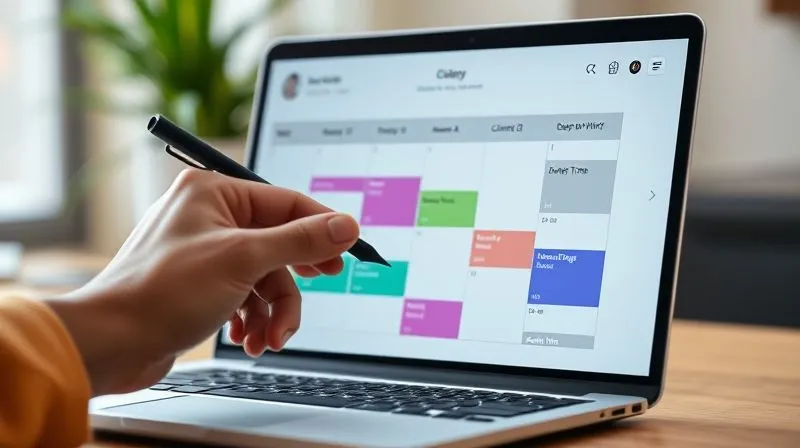
Traditional to-do lists are insufficient. You need a proactive calendar that dictates your focus. I've found that dedicating specific, uninterrupted blocks to individual clients or project types dramatically reduces mental fatigue and improves output quality.
- Deep Work Blocks: Schedule 2-3 hour blocks for your most cognitively demanding tasks for a single client, ideally during your peak energy times. Turn off notifications.
- Client-Specific Days (or Half-Days): If possible, dedicate entire days or half-days to one client. This minimizes context switching and allows for deeper immersion.
- Meeting Batching: Consolidate all client meetings into specific days or time windows. Avoid scattering them throughout your week.
- Transition Time: Always build in 15-30 minute buffers between meetings or deep work blocks. Use this for mental reset, notes, or quick admin.
- Strategic Breaks: Short, frequent breaks (e.g., Pomodoro Technique) are essential for sustained focus. Step away from your screen.
This isn't just about scheduling tasks; it's about scheduling your energy. As Forbes often highlights, managing time effectively is crucial for delivering consistent value in consulting.
Proactive Communication: Setting Boundaries and Managing Expectations
Miscommunication and unmet expectations are fertile ground for consultant burnout. Clients often don't understand the full scope of your commitments. It's your responsibility to educate them and proactively establish clear boundaries. This isn't about being rigid; it's about fostering mutual respect and ensuring sustainable collaboration.
Crafting a Communication Protocol
From the outset, define how and when you'll communicate. This clarity reduces anxiety for both parties and prevents urgent, unscheduled demands from derailing your flow.
- Define Communication Channels: Specify if primary communication is via email, project management tool, or scheduled calls. Discourage ad-hoc calls or texts for non-emergencies.
- Set Response Time Expectations: Clearly state your typical response time (e.g., "I aim to respond to all emails within 24 business hours").
- Establish Availability Hours: Communicate your working hours. "My availability for calls is generally between 9 AM and 5 PM, Monday to Friday."
- Outline Meeting Cadence & Agenda: Pre-schedule regular check-ins with clear agendas to prevent unnecessary ad-hoc meetings.
- Emergency Protocol: Define what constitutes an 'emergency' and how to handle it, ensuring you're not always on call.
Case Study: How Nexus Solutions Avoided Client Overwhelm
Nexus Solutions, a boutique marketing consultancy, faced constant client demands outside of working hours, leading to severe team burnout. By implementing a strict communication protocol, including designated 'client communication blocks' and a clear 'emergency only' contact method, they transformed their operations. They explicitly communicated their 24-hour response policy and batched all non-urgent client queries. This resulted in a 40% reduction in after-hours client contact, a significant boost in team morale, and improved project delivery times due to fewer interruptions. Their clients, initially resistant, quickly adapted and appreciated the predictable and focused communication.
Leveraging Technology and Automation: Your Digital Assistants
In today's consulting landscape, technology isn't a luxury; it's a necessity for managing multiple clients effectively. The right tools can automate repetitive tasks, streamline workflows, improve collaboration, and provide invaluable insights into your workload. I've seen consultants waste countless hours on manual processes that could easily be automated.
Essential Tools for Project Management and Collaboration
Investing in a robust tech stack is investing in your capacity and sanity. These tools act as your digital assistants, ensuring nothing falls through the cracks and you maintain a holistic view of all engagements.
- Project Management Software (PMS): Tools like Asana, Monday.com, Trello, or ClickUp centralize tasks, deadlines, and communications for each project. They provide a single source of truth for all client work.
- CRM (Client Relationship Management): HubSpot, Salesforce, or Zoho CRM help track client interactions, manage leads, and automate follow-ups, ensuring no client feels neglected.
- Time Tracking & Invoicing: Harvest, Toggl Track, or Clockify provide accurate time logging, making invoicing precise and transparent, and helping you identify time sinks.
- Communication & Collaboration Platforms: Slack, Microsoft Teams, or Google Workspace facilitate real-time communication, document sharing, and organized discussions, often reducing email clutter.
- Automation Tools: Zapier or IFTTT can connect your different apps, automating routine tasks like moving data between systems, scheduling social media, or sending reminders.
By effectively integrating these tools, you create a seamless operational backbone for your consulting practice, freeing up valuable mental bandwidth for high-value client work. A Deloitte study on consulting trends emphasizes the critical role of technology in enhancing consultant efficiency and client value.

Building a Support System: Delegation and Collaboration
You don't have to do everything yourself. This is perhaps one of the hardest lessons for many consultants to learn. As your client base grows, so does the need to strategically delegate and collaborate. Whether it's hiring a virtual assistant, subcontracting specific tasks, or building a small team, leveraging others' expertise is crucial for scaling without burning out.
Identifying Tasks for Delegation
The key is to identify tasks that are important but not necessarily requiring *your* unique expertise. Focus on what only you can do, and delegate the rest.
- Administrative Tasks: Scheduling, email management, travel arrangements, data entry.
- Research & Data Collection: Initial market research, competitor analysis, gathering background information.
- Content Creation Support: Drafting reports, formatting presentations, transcribing meeting notes.
- Technical Support: Website maintenance, software troubleshooting, graphic design.
- Specialized Expertise: Subcontracting areas where you lack deep expertise (e.g., legal, advanced data analytics, specific industry nuances).
This isn't about offloading 'grunt work'; it's about intelligently optimizing your resources. By delegating, you not only free up your time but also empower others and ensure that tasks are handled by the most appropriate person, often more efficiently. Think of it as building your own personal consulting firm, even if you're a solo practitioner.
| Task Category | Example Tasks | Delegation Potential |
|---|---|---|
| High-Value, Expert-Dependent | Strategy formulation, Client relationship management, Key proposal development | Low |
| High-Value, Support-Enabled | Market research, Data analysis, Presentation design | Medium (to skilled specialists) |
| Routine, Time-Consuming | Scheduling, Invoicing, Email filtering, Report formatting | High (to virtual assistants) |
The Art of Scope Management: Preventing Project Creep
Scope creep is the silent killer of project profitability and consultant sanity. It's the insidious expansion of project requirements beyond what was originally agreed upon, often without corresponding adjustments to time or budget. I've seen countless projects go sideways because the scope wasn't meticulously defined and fiercely protected.
Strategies for Clear Scope Definition and Change Management
Preventing scope creep requires vigilance and a robust process from day one. It starts with clarity and ends with disciplined execution.
- Define Scope with Precision: Use a detailed Statement of Work (SOW) that clearly outlines deliverables, timelines, roles, and responsibilities. Be specific about what is IN scope and, just as importantly, what is OUT of scope.
- Get Client Sign-Off: Ensure the client formally approves the SOW before work begins. This creates a shared understanding and commitment.
- Establish a Change Control Process: Any request that deviates from the approved SOW must go through a formal change request process. This includes documenting the new requirement, assessing its impact on time and cost, and obtaining client approval for the revised plan and budget.
- Regular Scope Reviews: During weekly or bi-weekly check-ins, explicitly review project progress against the agreed-upon scope. Address any potential deviations early.
- Educate Your Client: Help your clients understand that scope changes, while sometimes necessary, have implications. Frame it as ensuring the best outcome for their project.
By mastering the art of scope management, you protect your time, your profitability, and your mental health. The Project Management Institute (PMI) consistently ranks scope management as a top factor in project success, and it's doubly true for consultants managing multiple engagements.
Prioritization and Focus: The Power of 'No' and the 'Eisenhower Matrix'
When you have multiple clients, everything can feel urgent. The ability to discern what truly matters from what can wait (or be delegated, or even eliminated) is paramount. This is where strategic prioritization frameworks become invaluable, helping you make objective decisions under pressure.
Applying the Eisenhower Matrix to Client Workloads
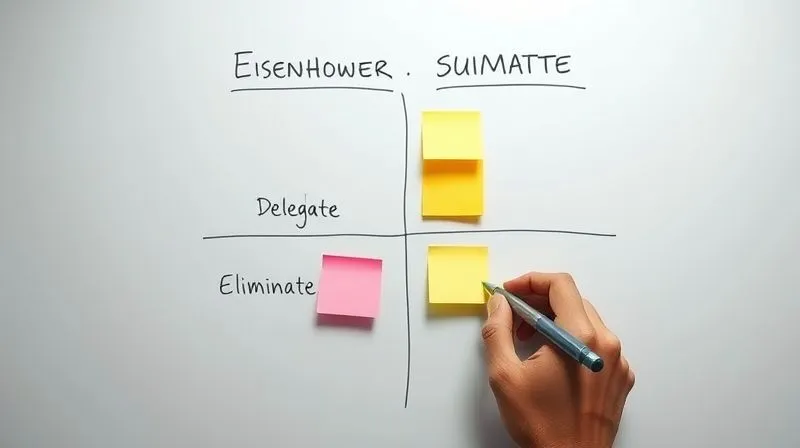
The Eisenhower Matrix categorizes tasks based on two dimensions: Urgency and Importance. This simple yet powerful tool helps you allocate your finite time and energy to the right activities.
"The difference between successful and unsuccessful consultants often boils down to one word: focus. You cannot serve multiple masters effectively if you treat every demand as equally critical."
- Do First (Important & Urgent): These are critical tasks with immediate deadlines. Address these personally and promptly. (e.g., client crisis, critical deliverable due today).
- Schedule (Important & Not Urgent): These are high-impact tasks that contribute to long-term goals but don't have immediate deadlines. These are your strategic projects. Block time for them. (e.g., strategic planning, skill development, proactive client outreach).
- Delegate (Not Important & Urgent): These tasks need to be done soon but don't require your unique skills. Pass them off to your support system. (e.g., administrative tasks, data gathering).
- Eliminate (Not Important & Not Urgent): These are distractions or low-value activities. Be ruthless in cutting them out. (e.g., excessive social media, unnecessary meetings).
Regularly applying this matrix to your entire client workload helps you maintain perspective and ensures you're always working on what truly moves the needle, both for your clients and for your own business sustainability.
Self-Care as a Strategic Imperative: Sustaining Your Peak Performance
This is not a 'nice-to-have'; it's a fundamental pillar of managing multiple project consulting clients without burnout. You are your most valuable asset. Neglecting your physical and mental health is akin to neglecting your primary tool – it will inevitably break down. I've learned that self-care isn't selfish; it's the ultimate act of professional responsibility.
Non-Negotiable Self-Care Practices
Integrate these practices into your routine with the same discipline you apply to client deliverables. They are investments in your long-term capacity.
- Scheduled Downtime: Block out non-negotiable personal time in your calendar for hobbies, family, or simply doing nothing. Treat it with the same respect as a client meeting.
- Digital Detox: Regularly disconnect from all work-related devices. This could be evenings, weekends, or during vacations.
- Physical Activity: Regular exercise is a powerful stress reducer and energy booster. Even 30 minutes of walking can make a significant difference.
- Mindfulness & Meditation: Practices like meditation or deep breathing can help manage stress, improve focus, and enhance emotional regulation.
- Adequate Sleep: Prioritize 7-9 hours of quality sleep. It's foundational for cognitive function, mood, and physical health.
- Healthy Nutrition: Fuel your body with nutritious food. Avoid relying on caffeine and sugary snacks for energy.
Remember, you cannot pour from an empty cup. Sustaining high-level performance across multiple demanding projects requires a consistent commitment to recharging your physical and mental batteries. This isn't just about avoiding burnout; it's about optimizing your capacity for innovation, problem-solving, and client satisfaction.

Frequently Asked Questions (FAQ)
How do I say no to a client without damaging the relationship? Saying 'no' effectively is an art. Frame it around your commitment to quality and ensuring you can deliver your best work. For instance, "To ensure I can dedicate the necessary focus to your project and maintain the high standards you expect, my current capacity prevents me from taking on additional engagements until [specific date]. However, I'd be happy to refer you to a trusted colleague or discuss opportunities in the future." Always offer an alternative or a timeline. It communicates respect for their business while protecting your boundaries.
What's the best way to handle urgent requests from multiple clients simultaneously? First, assess true urgency versus perceived urgency. Use the Eisenhower Matrix to prioritize. Communicate proactively with all affected clients: "I've received an urgent request from Client X that requires my immediate attention. This means I'll need to shift focus from [your project task] temporarily. I anticipate returning to your task by [new timeline]." Transparency is key. If it's a true emergency for multiple clients, you might need to delegate or bring in temporary support if available.
How can I accurately estimate project timelines to avoid overcommitment? Break down projects into the smallest possible tasks. Estimate each task individually, then add buffers for unexpected issues (I often add 20-30% buffer). Learn from past projects: track your actual time spent versus estimated time. Use historical data to refine your future estimates. Don't be afraid to push back on unrealistic client timelines; it's better to be realistic upfront than to under-deliver.
Is it ever okay to fire a client, and if so, how? Yes, absolutely. If a client consistently disrespects boundaries, causes undue stress, or is unprofitable, it's a strategic decision for your business's health. Do it professionally: provide ample notice (e.g., 30 days), offer to complete current deliverables, and assist with the transition (e.g., recommending another consultant). Focus on the 'fit' – "I've realized our working styles may not be the best long-term match to achieve your goals, and I believe you'd be better served by a consultant who specializes in X."
How often should I review my client portfolio and workload? I recommend a formal review at least quarterly. Assess each client's profitability, alignment with your strategic goals, and the energy drain they represent. Are they still a good fit? Are you over-indexed in one area? This periodic assessment allows you to make informed decisions about future client acquisition and resource allocation, ensuring your portfolio remains healthy and sustainable.
Key Takeaways and Final Thoughts
Managing multiple project consulting clients without succumbing to burnout is not about working harder; it's about working smarter, more strategically, and with an unwavering commitment to your own well-being. It's a journey of continuous refinement, but one that yields immense rewards in terms of sustained success and personal fulfillment.
- Be Selective: Not every client or project is right for you. Vet opportunities rigorously.
- Master Your Time & Energy: Proactive scheduling, deep work, and strategic breaks are non-negotiable.
- Communicate Proactively: Set clear boundaries and manage expectations from day one.
- Leverage Technology: Automate, streamline, and centralize to amplify your capacity.
- Build a Support System: Delegate tasks that don't require your unique expertise.
- Protect Your Scope: Define it clearly and manage changes rigorously.
- Prioritize Ruthlessly: Use frameworks like the Eisenhower Matrix to focus on what truly matters.
- Self-Care is Non-Negotiable: Treat your physical and mental health as a strategic asset.
Remember, the goal isn't just to keep all the balls in the air, but to do so with grace, effectiveness, and joy. By embedding these strategies into your consulting practice, you'll not only deliver exceptional value to your clients but also build a sustainable, thriving career that energizes rather than exhausts you. Your expertise is valuable; protect it, and protect yourself.
Recommended Reading
- Mastering Budget Variances: How to Effectively Control Them in Business
- Mastering Project Execution: Overcoming Common Challenges & Ensuring Success
- Unlock Global Success: Developing Cultural Intelligence for Your Teams
- Uncover Your Goldmine: 7 Steps to Profitable B2B Segments from Data
- Boost Business Liquidity: 7 Strategies for Short-Term Cash Optimization





Comments
Leave a comment below. Your email will not be published. Required fields marked with *