


How to Measure Authentic Environmental Impact of Green Initiatives?
For over two decades in the corporate social responsibility (CSR) space, I've witnessed a profound transformation. What once began as philanthropic gestures has evolved into a strategic imperative for businesses worldwide. Yet, amidst this growing commitment, a critical challenge persists: moving beyond the rhetoric to genuinely measure authentic environmental impact of green initiatives.
The ambition to 'go green' is commendable, yet often, the enthusiasm outstrips the rigor. Companies invest heavily in sustainability programs, launch impressive campaigns, but struggle to answer the fundamental question: are we truly making a difference? This isn't just about PR; it's about credibility, resource allocation, and ultimately, contributing meaningfully to a sustainable future. Superficial metrics and vague claims erode trust and undermine the very purpose of these initiatives.
This guide will cut through the noise, offering you a robust, actionable framework built on five expert pillars. You'll learn not just what to measure, but *how* to implement scientifically sound methodologies, leverage data, and report with transparency to truly understand and amplify your authentic environmental impact. We'll explore frameworks, tools, and real-world insights to ensure your green initiatives are not just 'green' in name, but impactful in reality.
The Crucial Shift: From 'Green' Claims to Verifiable Impact
In my experience, the journey towards authentic environmental impact begins with an honest self-assessment. For years, the corporate world was content with vague environmental statements. Companies would boast about recycling programs or reducing paper use without quantifying the actual tonnage diverted or the energy saved. This era, unfortunately, gave rise to 'greenwashing' – a term I've seen applied to countless well-intentioned but poorly executed campaigns.
Today, stakeholders – from investors and regulators to employees and consumers – demand more. They want proof. They want data. They want to know that a company's environmental claims are backed by verifiable, measurable change. This isn't merely a trend; it's a fundamental shift towards accountability and transparency in corporate environmental responsibility. The market is increasingly unforgiving of companies that fail to demonstrate genuine progress.
"Credibility in sustainability is not about proclaiming perfection; it's about transparently demonstrating progress, acknowledging challenges, and backing every claim with verifiable data."
The imperative to measure authentic environmental impact of green initiatives has never been stronger. According to a recent European Commission study, 40% of green claims made by companies are unsubstantiated or misleading. This highlights the urgent need for robust measurement frameworks that move beyond superficial declarations to quantifiable environmental benefits.
Pillar 1: Defining Clear Baselines and SMART Objectives
You cannot measure progress if you don't know where you started. This might sound obvious, but I've seen countless green initiatives fail to establish a clear baseline. Without a baseline, any reported 'reduction' or 'improvement' is merely anecdotal, lacking the scientific rigor required for authentic impact measurement.
Establishing a comprehensive baseline involves understanding your current environmental footprint across various parameters: energy consumption, water usage, waste generation, greenhouse gas (GHG) emissions, and resource depletion. This data forms your "before" picture, against which all future efforts will be compared. Once you have this baseline, you can set SMART (Specific, Measurable, Achievable, Relevant, Time-bound) objectives for your green initiatives.
- Identify Scope and Boundaries: Clearly define which operations, facilities, and processes your green initiative will cover. This might be a single plant, an entire supply chain, or a specific product line.
- Collect Historical Data: Gather at least 1-3 years of historical data for key environmental metrics within your defined scope. This provides context and helps identify trends.
- Establish Key Performance Indicators (KPIs): Determine the specific metrics you will track (e.g., kWh per unit produced, m³ water per employee, kg CO2e per revenue).
- Document Your Baseline: Compile all baseline data, methodologies, and assumptions into a formal document. This ensures consistency and provides a reference point for future audits.
- Set SMART Goals: Based on your baseline, set ambitious yet realistic goals. For example: "Reduce Scope 1 and 2 GHG emissions by 20% from 2023 levels by the end of 2027 through renewable energy procurement and energy efficiency upgrades."
Pillar 2: Implementing Robust Data Collection and Monitoring Systems
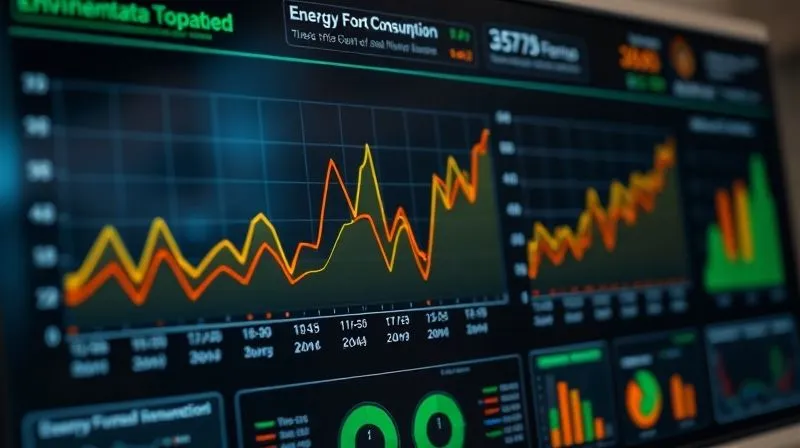
Once your baselines are set and SMART objectives defined, the next critical step is to implement robust systems for continuous data collection and monitoring. This is where the rubber meets the road. Accurate, consistent, and reliable data is the lifeblood of authentic impact measurement. Without it, even the best intentions will fall short.
I've observed that many companies struggle here due to fragmented data sources, manual entry errors, or a lack of standardized procedures. Modern technology offers powerful solutions. IoT sensors can monitor energy and water usage in real-time, smart waste bins can track waste streams, and specialized software can consolidate data from various sources, making it easier to track progress against your baselines and objectives.
Case Study: Eco-Connect's Waste Reduction Success
Eco-Connect Logistics, a mid-sized freight company, faced escalating waste disposal costs and a desire to reduce its environmental footprint. By implementing smart waste sensors in their depots and a centralized data platform, they established a baseline of 150 tons of landfill waste per quarter. Their SMART goal was to reduce this by 30% within 18 months. The real-time monitoring allowed them to identify peak waste generation times, audit waste streams more effectively, and implement targeted recycling and composting programs. Within 16 months, they achieved a 32% reduction, saving over $50,000 annually in disposal fees and significantly reducing their environmental impact. This success was entirely attributable to their robust data collection and vigilant monitoring.
| Metric | Data Source | Collection Frequency | Responsible Party |
|---|---|---|---|
| Electricity Consumption | Smart Meters | Real-time/Monthly | Facilities Management |
| Water Usage | Utility Bills/Sub-meters | Monthly/Quarterly | Operations |
| Waste Generation (by type) | Waste Audits/Smart Bins | Weekly/Monthly | Environmental Coordinator |
| Fuel Consumption (fleet) | Telematics/Fuel Cards | Daily/Weekly | Logistics Department |
| GHG Emissions (Scope 1 & 2) | Energy Bills/Fuel Purchases | Monthly/Quarterly | Sustainability Team |
To ensure data integrity, it's crucial to standardize data collection protocols, train relevant personnel, and implement internal verification processes. Consider adopting international standards like ISO 14001 for environmental management systems, which emphasizes continuous improvement and data-driven decision-making.
Pillar 3: Employing Scientifically Sound Measurement Methodologies
This pillar is where the 'authentic' in "how to measure authentic environmental impact of green initiatives" truly comes to life. It's not enough to collect data; you must analyze it using recognized, scientifically sound methodologies. Without these, your data remains raw numbers, vulnerable to misinterpretation or accusations of cherry-picking.
Two of the most powerful methodologies I advocate for are Lifecycle Assessment (LCA) and Carbon Footprinting (specifically adhering to the GHG Protocol). LCA provides a comprehensive "cradle-to-grave" analysis of a product, process, or service, quantifying its environmental impacts across its entire lifespan – from raw material extraction to manufacturing, distribution, use, and end-of-life disposal. This reveals hidden impacts and allows for truly informed decisions.
Carbon footprinting, on the other hand, focuses specifically on greenhouse gas emissions. Adhering to frameworks like the GHG Protocol ensures that your emissions calculations (Scope 1, 2, and 3, which we'll discuss next) are consistent, transparent, and comparable. This is vital for setting credible climate targets and reporting progress.
"The rigor of your methodology is directly proportional to the credibility of your environmental claims. Don't just measure; measure correctly."
Furthermore, consider engaging third-party verification for your impact assessments. An independent audit adds an invaluable layer of trust and assurance, validating your data and methodologies for external stakeholders. This step is often overlooked but is crucial for establishing true authority and trust in your environmental reporting.

Pillar 4: Quantifying Both Direct and Indirect Impacts
A common pitfall in environmental impact measurement is focusing solely on direct impacts, overlooking the significant influence of indirect activities. To measure authentic environmental impact of green initiatives comprehensively, you must expand your view to encompass both your immediate operational footprint and your broader value chain.
The GHG Protocol categorizes emissions into three scopes:
- Scope 1 Emissions: Direct emissions from sources owned or controlled by your company (e.g., fuel combustion in company vehicles, emissions from owned facilities).
- Scope 2 Emissions: Indirect emissions from the generation of purchased electricity, heat, or steam consumed by your company.
- Scope 3 Emissions: All other indirect emissions that occur in a company's value chain, both upstream and downstream. This is often the largest and most challenging scope to measure, but also where significant impact reduction opportunities lie.
Scope 3 emissions can include emissions from purchased goods and services, capital goods, fuel- and energy-related activities (not included in Scope 1 or 2), upstream transportation and distribution, waste generated in operations, business travel, employee commuting, leased assets, and the use and end-of-life treatment of sold products. For many businesses, particularly those in manufacturing or retail, Scope 3 can account for over 70-80% of their total carbon footprint.
Quantifying these indirect impacts requires collaboration with suppliers, customers, and other value chain partners. It demands transparency and often involves estimating where direct data is unavailable. Tools like the GHG Protocol Scope 3 Standard provide guidance on how to approach this complex but essential measurement.
Pillar 5: Transparent Reporting and Continuous Improvement
The final pillar is about communicating your impact effectively and using the insights gained to drive ongoing improvement. Measuring impact without reporting it transparently is a missed opportunity for building trust and accountability. Moreover, measuring without learning and adapting defeats the purpose of the exercise.
Several globally recognized frameworks exist to guide your sustainability reporting, helping you structure your disclosures and ensure comparability. These include:
- Global Reporting Initiative (GRI) Standards: The most widely used standards for sustainability reporting, covering a broad range of environmental, social, and governance topics.
- Sustainability Accounting Standards Board (SASB) Standards: Industry-specific standards focused on financially material sustainability information relevant to investors.
- Task Force on Climate-related Financial Disclosures (TCFD): A framework for companies to disclose climate-related financial risks and opportunities.
Your reporting should be clear, concise, and accessible. It should highlight your achievements, but also candidly discuss challenges, lessons learned, and future goals. Authenticity means acknowledging that sustainability is a journey, not a destination, and that continuous learning and adaptation are key.
- Select a Reporting Framework: Choose the framework(s) most relevant to your industry and stakeholders (e.g., GRI Standards).
- Gather and Verify Data: Consolidate all your collected impact data, ensuring its accuracy and completeness.
- Draft Your Report: Structure your report according to the chosen framework, detailing your environmental performance, methodologies, and progress against SMART objectives.
- Engage Stakeholders: Share preliminary findings with key internal and external stakeholders for feedback.
- Publish and Promote: Release your sustainability report through appropriate channels (website, annual reports).
- Review and Improve: Use the insights from your reporting cycle to identify areas for further improvement and refine your green initiatives for the next cycle.

Overcoming Challenges in Impact Measurement
Measuring authentic environmental impact of green initiatives isn't without its hurdles. I've guided numerous organizations through these complexities, and common challenges often include data gaps, resource constraints, the sheer complexity of supply chains, and securing internal buy-in. It's easy to feel overwhelmed, especially for smaller businesses with limited budgets and personnel.
The key is to start somewhere, even if it's small, and build incrementally. Don't aim for perfection from day one. Focus on the most material impacts first. For instance, if energy consumption is your biggest footprint, prioritize robust measurement there. Leverage existing internal expertise and consider collaborating with academic institutions or non-profits for specific projects. The cost of inaction or inaccurate claims far outweighs the investment in rigorous measurement.
"The perfect is the enemy of the good when it comes to sustainability measurement. Start with what you can, measure rigorously, and continuously improve."
Securing leadership buy-in is also paramount. Frame environmental impact measurement not just as a cost, but as a strategic advantage: risk mitigation, enhanced brand reputation, operational efficiencies, and increased investor appeal. Show them the tangible benefits, not just the abstract "good."

Leveraging Technology for Enhanced Environmental Impact Measurement
The landscape of environmental impact measurement is rapidly evolving, driven by advancements in technology. In my view, embracing these tools is no longer optional; it's essential for any company serious about how to measure authentic environmental impact of green initiatives efficiently and accurately.
Artificial intelligence (AI) and machine learning (ML) can process vast datasets from various sources, identifying patterns and predicting future impacts with greater accuracy than human analysis alone. This can help optimize resource use, detect anomalies in consumption, and even forecast the impact of proposed initiatives. Blockchain technology offers unparalleled transparency and traceability in supply chains, allowing companies to verify the origin and environmental footprint of materials and products, combating greenwashing at its source.
Geographic Information Systems (GIS) and satellite imagery provide powerful insights into land use change, deforestation, and biodiversity impacts. Big data analytics platforms consolidate all this information into intuitive dashboards, offering real-time visibility into environmental performance and facilitating informed decision-making. The future of authentic impact measurement is intrinsically linked to smart, integrated technological solutions that reduce manual effort, improve accuracy, and provide actionable intelligence.
Frequently Asked Questions (FAQ)
What's the biggest mistake companies make when trying to measure environmental impact? In my experience, the single biggest mistake is making claims without verifiable data or a clear, documented methodology. This leads to superficial reporting, erodes trust, and opens the door to accusations of greenwashing. Another common error is focusing only on direct, easy-to-measure impacts while ignoring significant indirect impacts in the supply chain.
How can small businesses measure environmental impact effectively without a huge budget? Small businesses can start by focusing on their most material impacts. Conduct a simple materiality assessment to identify 2-3 key areas (e.g., energy, waste, water). Use readily available data (utility bills, waste invoices) to establish baselines. Simple spreadsheets can track progress. Prioritize low-cost efficiency measures. Consider free online tools for carbon footprint estimation (e.g., EPA's carbon footprint calculator for businesses). Collaborate with local universities for pro-bono support or internships focused on data collection and analysis. Incremental, consistent effort is more valuable than complex, unaffordable systems.
What is the role of third-party verification in environmental impact measurement? Third-party verification is crucial for enhancing the credibility, objectivity, and trustworthiness of your environmental impact claims. An independent auditor reviews your data, methodologies, and reporting processes to ensure accuracy and adherence to recognized standards. This provides assurance to investors, regulators, customers, and other stakeholders that your claims are legitimate, significantly reducing the risk of greenwashing allegations and building brand reputation.
How often should a company measure and report its environmental impact? While continuous monitoring of key metrics (like energy consumption or waste generation) is ideal, formal reporting typically occurs annually. This allows for consistent data comparison year-over-year and aligns with financial reporting cycles. However, for specific projects or initiatives, more frequent internal reviews (quarterly or even monthly) can help track progress, make timely adjustments, and ensure you're on track to meet your SMART objectives.
How do we avoid accusations of greenwashing when communicating our green initiatives? To avoid greenwashing, prioritize transparency, specificity, and verification. Only make claims that are backed by robust, verifiable data. Be specific about the scope and boundaries of your initiatives and their actual impact. Acknowledge challenges and areas for improvement; no company is perfect. Use recognized standards and frameworks for measurement and reporting, and consider third-party assurance. Most importantly, be honest and authentic in your communications – let your data speak for itself, and be prepared to explain your methodology.
Key Takeaways and Final Thoughts
- Establish Clear Baselines: You can't measure progress without knowing your starting point. Rigorous baseline data is non-negotiable.
- Set SMART Objectives: Define specific, measurable, achievable, relevant, and time-bound goals for every green initiative.
- Implement Robust Data Systems: Invest in consistent, accurate data collection and monitoring tools, leveraging technology where possible.
- Employ Scientifically Sound Methodologies: Utilize recognized frameworks like LCA and the GHG Protocol, and consider third-party verification for credibility.
- Quantify All Impacts (Direct & Indirect): Look beyond your immediate operations to understand and address your full value chain footprint, especially Scope 3 emissions.
- Report Transparently & Continuously Improve: Use established reporting frameworks, be honest about challenges, and use insights to refine your strategies.
The journey to truly measure authentic environmental impact of green initiatives is a challenging yet profoundly rewarding one. It demands diligence, transparency, and a commitment to scientific rigor. As an industry specialist, I've seen firsthand that companies who embrace this challenge not only mitigate risks and enhance their reputation but also uncover new efficiencies, foster innovation, and ultimately contribute to a more sustainable and resilient future. This isn't just about compliance; it's about competitive advantage and genuine planetary stewardship. Begin your journey with confidence, armed with the knowledge and tools to make your green initiatives truly count.
Recommended Reading
- Quick Pivot: How to Master Innovation Strategy in Market Disruption
- Stop the Exit: Fixing High Employee Turnover After 90 Days
- Core Supplier Fails Ethical Audit? 7 Steps to Navigate Crisis & Rebuild
- Unlock the Secret: How to Effectively Manage Credit Risk in Your Small Business
- Unlock Success: How to Mitigate Risk in Capital Budgeting Decisions





Comments
Leave a comment below. Your email will not be published. Required fields marked with *