


How to measure social impact beyond basic donations accurately?
For over 15 years in the Corporate Social Responsibility (CSR) and social impact space, I’ve seen countless organizations, both large and small, fall into a common trap: equating social impact solely with the size of their charitable donations. While philanthropy is undoubtedly noble, it’s often just the tip of the iceberg, a mere input that rarely tells the full story of true societal change.
The real challenge, and where many companies stumble, is in moving beyond these surface-level metrics. They struggle to articulate the profound, lasting changes their efforts create, often relying on anecdotal evidence or simply reporting dollars spent. This not only undermines the genuine good they’re doing but also makes it impossible to optimize strategies, secure further investment, or even truly understand if their initiatives are working.
In this definitive guide, I will share my experience and expertise, providing you with actionable frameworks, methodologies, and practical steps to accurately measure social impact beyond basic donations. We’ll explore how to move from simple inputs to powerful, quantifiable outcomes and long-term impact, ensuring your CSR efforts are not just well-intentioned, but demonstrably effective.
The Illusion of Philanthropy: Why Donations Aren't Enough
Many organizations, with the best intentions, define their social impact by the size of their checks. A large donation to a local charity or a significant contribution to a disaster relief fund is often heralded as a major CSR success. While these acts of generosity are commendable and provide immediate relief or support, they offer a very limited view of actual social change.
Think of it this way: a donation is an input. It’s what you put into the system. But what comes out? What changes as a result? Without understanding the chain of events that follows, you’re left with a significant blind spot. I’ve observed companies proudly announce multi-million dollar contributions, only to later realize they had no robust mechanism to track whether those funds genuinely achieved their intended social benefits, or if they merely sustained existing operations without fostering deeper, systemic change.
“True social impact isn't measured by the volume of giving, but by the tangible, positive transformation it catalyzes in individuals, communities, and environments.”
This isn't to diminish the value of donations, but rather to emphasize that they are a starting point, not the destination. To truly understand and maximize your social footprint, you must shift your focus from simply counting dollars to meticulously tracking the ripple effects and long-term value created.
Shifting Paradigms: From Inputs to Outcomes and Impact
To accurately measure social impact, we must first understand the fundamental distinctions between inputs, outputs, outcomes, and impact. This progression forms the backbone of any robust measurement framework.
- Inputs: These are the resources you invest – money, volunteer hours, equipment, materials. (e.g., $10,000 donation to a literacy program, 100 volunteer hours teaching children).
- Outputs: These are the direct, tangible products or services delivered through your activities. They answer 'what did we do?' (e.g., 50 children attended a literacy workshop, 200 books distributed).
- Outcomes: These are the short-to-medium term changes that result from your outputs. They answer 'what changed for whom?' (e.g., 80% of children improved their reading scores, parents reported increased engagement in reading at home).
- Impact: This is the long-term, significant change in society or the environment, often attributable to a broader set of factors beyond your direct control, but to which your outcomes contribute. It answers 'what is the lasting difference?' (e.g., increased school retention rates in the community, higher rates of adult literacy over time, breaking cycles of poverty).
Logic Models: Your Foundational Blueprint
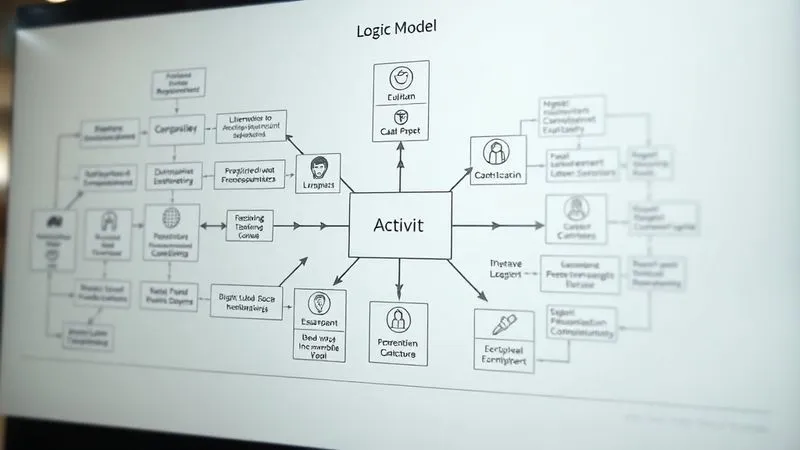
In my experience, a 'Logic Model' is the single most effective tool for visualizing this chain of events. It’s a graphical representation that shows the logical relationships between the resources you invest, the activities you undertake, and the changes you hope to achieve. Building a logic model forces you to think critically about causality and assumptions.
To construct one, you typically start with the desired long-term impact and work backward, identifying the necessary outcomes, outputs, activities, and inputs. This backward mapping ensures that every step is intentionally designed to contribute to your ultimate goal. It’s a powerful tool for planning, communication, and evaluation, making your social impact strategy clear and coherent.
Key Frameworks for Deeper Social Impact Measurement
Once you understand the basic progression, several robust frameworks can help you operationalize your measurement efforts and accurately measure social impact beyond basic donations accurately.
1. Social Return on Investment (SROI)
SROI is a principles-based framework for measuring and accounting for a much broader concept of value than is captured in conventional financial accounts. It seeks to quantify the social, environmental, and economic value created by an organization or initiative, assigning a monetary value to outcomes that typically aren't monetized.
- Establish Scope: Define who is affected and how.
- Map Outcomes: Use a logic model to identify all relevant outcomes.
- Evidence Outcomes: Gather data to prove outcomes occurred and how long they lasted.
- Value Outcomes: Assign a financial proxy to each outcome (e.g., improved health reduces healthcare costs, increased employment boosts tax revenue).
- Establish Impact: Deduct what would have happened anyway (deadweight), what other factors contributed (attribution), and negative effects (displacement).
- Calculate SROI: Divide the total value of impact by the total investment. An SROI ratio of 3:1 means £3 of social value is created for every £1 invested.
SROI provides a compelling narrative for stakeholders, demonstrating not just good intentions but quantifiable societal value. According to Social Value International, SROI helps organizations understand and manage the social, environmental, and economic value of their activities.
2. Theory of Change (ToC)
A Theory of Change is a comprehensive description and illustration of how and why a desired change is expected to happen in a particular context. It's not just about what you do, but critically, why you believe it will lead to the desired change, outlining the causal pathways from activities to long-term goals.
ToC is particularly powerful because it forces you to articulate your assumptions and the conditions required for success. It helps you identify intermediate outcomes, potential barriers, and the indicators you'll use to track progress. This framework is dynamic and can be refined as you learn more, making it an excellent tool for adaptive management and evaluation.

3. Impact Value Chain (IVC)
Developed by the Harvard Business School, the Impact Value Chain framework connects social impact activities directly to business value. It argues that social impact should not be an add-on, but rather integrated into the core business strategy, creating shared value for both society and the company.
- Social Needs: Identify critical societal needs relevant to your business.
- Company Activities: Design core business activities to address these needs.
- Social Outcomes: Measure the social changes resulting from these activities.
- Business Outcomes: Track the resulting benefits for the company (e.g., enhanced brand reputation, employee engagement, new market access, cost savings).
The IVC helps to make a clear business case for social investment, moving CSR from a cost center to a strategic driver of competitive advantage. As highlighted in articles from Harvard Business Review, integrating social value creation can lead to sustainable business success.
Data Collection and Analysis: Moving Beyond Anecdotes
Accurate measurement hinges on robust data. This means moving beyond feel-good stories to systematic collection and rigorous analysis.
Qualitative vs. Quantitative Data
A balanced approach is crucial. Quantitative data (numbers, statistics) provides measurable evidence of change, while qualitative data (stories, testimonials, observations) offers rich context and insight into the 'why' behind the numbers.
- Quantitative: Surveys (pre/post), administrative data (e.g., attendance records, job placements), financial records, health metrics, environmental data (e.g., emissions reductions).
- Qualitative: Interviews with beneficiaries and stakeholders, focus group discussions, case studies, observational notes, feedback forms.
Establishing Baselines and Benchmarks
You can't measure change if you don't know where you started. Establishing a baseline – data collected before your intervention – is non-negotiable. This allows you to track progress and attribute changes to your efforts. Additionally, benchmarking against industry standards, peer organizations, or relevant Sustainable Development Goals (SDGs) provides valuable context and helps assess relative performance.
| Data Type | Examples | Measurement Tools |
|---|---|---|
| Quantitative | Beneficiary counts, survey scores, financial savings | Surveys, databases, financial reports |
| Qualitative | Testimonials, focus group insights, case studies | Interviews, focus groups, narrative analysis software |
| Mixed-Methods | SROI, Theory of Change evaluations | Integrated frameworks, custom dashboards |
Integrating ESG Metrics and UN SDGs for Holistic Measurement
Modern social impact measurement extends beyond individual programs to encompass broader corporate responsibility. Environmental, Social, and Governance (ESG) criteria and alignment with the United Nations Sustainable Development Goals (SDGs) offer powerful frameworks for holistic assessment.
ESG Reporting: A Broader Lens
ESG metrics provide a comprehensive way to evaluate a company's performance on sustainability and ethical practices. While 'S' (Social) directly relates to social impact, 'E' (Environmental) and 'G' (Governance) indirectly influence it by shaping the context in which social initiatives operate.
- Environmental: Climate change mitigation, resource management, pollution.
- Social: Labor practices, diversity & inclusion, community relations, product safety.
- Governance: Board diversity, executive compensation, business ethics, transparency.
Companies increasingly report on ESG performance not just for compliance but to attract socially conscious investors and customers. Frameworks like those from the Global Reporting Initiative (GRI) provide standards for comprehensive ESG disclosure, making it easier to compare and benchmark performance.
Aligning with UN Sustainable Development Goals (SDGs)
The 17 UN SDGs offer a universal language and framework for addressing the world's most pressing challenges. By mapping your social impact initiatives to specific SDGs and their targets, you can:
- Communicate your contributions to global goals.
- Identify strategic partnerships and opportunities.
- Gain credibility and recognition on an international stage.
- Provide a common framework for measuring progress and impact.
This alignment allows organizations to measure social impact beyond basic donations accurately by demonstrating how their local actions contribute to global aspirations, fostering a sense of shared responsibility and collective progress.
Case Study: Quantifying Impact Beyond the Checkbook
Case Study: How 'EcoBuild Solutions' Transformed Community Engagement
EcoBuild Solutions, a mid-sized construction company, traditionally focused its CSR on donating building materials to local schools. While appreciated, they realized these donations didn't address the root causes of community challenges like high youth unemployment and dilapidated public spaces. Inspired to measure social impact beyond basic donations accurately, they partnered with a local NGO and revamped their strategy.
They developed a comprehensive program: 'Build & Grow,' which focused on vocational training for unemployed youth in sustainable construction techniques, followed by paid internships on EcoBuild's green infrastructure projects (e.g., community gardens, revitalized parks). They used a Theory of Change framework to map out their expected pathways to impact and integrated an SROI methodology.
Before (Baseline): Youth unemployment in the target area was 25%. Public green spaces were neglected, leading to low community engagement and perceived insecurity.
Intervention & Measurement:
- Inputs: EcoBuild invested $500,000 (training costs, intern wages, materials for public projects), 2,000 employee volunteer hours.
- Outputs: 150 youth completed the vocational training. 5 community parks were revitalized using sustainable methods.
- Outcomes (Measured after 1 year): 70% of trained youth secured full-time employment within 6 months. Residents reported a 40% increase in park usage and a 25% increase in feelings of community safety. Local businesses around the revitalized parks saw a 10% increase in foot traffic.
- Impact (Projected & Early Indicators): Reduced long-term youth unemployment rates, improved public health due to increased green space access, enhanced local economic vitality, and strengthened community cohesion.
SROI Calculation: By valuing outcomes like increased tax revenue from new employment, reduced crime rates (proxy for safety), and increased local business revenue, EcoBuild calculated an SROI ratio of 4.5:1. This meant that for every $1 invested, $4.50 of social value was created. This compelling data allowed EcoBuild to secure additional government grants, attract more skilled job applicants, and significantly boost its brand reputation as a true community partner, demonstrating how to measure social impact beyond basic donations accurately and effectively.
Overcoming Challenges and Ensuring Authenticity
Measuring social impact accurately is complex and comes with its own set of challenges. However, understanding and proactively addressing these can significantly enhance the credibility and utility of your findings.
Common Pitfalls in Impact Measurement
- Attribution vs. Contribution: It's often difficult to isolate your impact from other factors. Focus on demonstrating your contribution rather than claiming sole attribution.
- Lack of Resources: Impact measurement requires dedicated time, expertise, and sometimes financial investment. Don't underestimate this need.
- Data Quality & Availability: Poor data collection methods or a lack of baseline data can undermine your entire evaluation.
- "Impact Washing": The temptation to exaggerate or misrepresent impact for PR purposes. This erodes trust and is counterproductive.
Transparency and Third-Party Verification
To build trust and ensure authenticity, transparency is paramount. Be open about your methodologies, data sources, and even the limitations of your measurement. Consider:
- Publishing detailed impact reports.
- Engaging independent third-party evaluators to audit your impact claims.
- Participating in recognized certification programs (e.g., B Corp, Fair Trade).
“Credibility in social impact measurement is built on transparency, rigor, and a willingness to learn and adapt, not just to report successes.”
In my experience, external verification not only bolsters trust with stakeholders but also provides invaluable external perspective, helping you refine your measurement practices and identify areas for improvement. This commitment to authenticity is what truly distinguishes impactful organizations.

Frequently Asked Questions (FAQ)
What's the difference between an outcome and an impact? An outcome is a short-to-medium term change (e.g., participants improved their skills). Impact is the long-term, significant societal change to which outcomes contribute (e.g., reduced poverty rates in a community). Outcomes are direct results of your program, while impact is often broader, more systemic, and influenced by multiple factors over time.
How can small businesses measure social impact effectively with limited resources? Small businesses can start by focusing on a few key, measurable outcomes directly related to their core activities. Use simple logic models, leverage existing data (e.g., employee surveys, customer feedback), and engage with local community partners for qualitative insights. Prioritize one or two SDGs that align most closely with your mission, and use publicly available indicators to track progress. Don't aim for perfect, aim for progress and consistency.
Is there a universal standard for social impact measurement? While there isn't one single, universally adopted standard, several frameworks like SROI, the UN SDGs, and ESG reporting guidelines (GRI, SASB) are widely recognized and provide robust methodologies. The key is to choose a framework (or combination) that best suits your organization's context, goals, and resources, and then apply it rigorously and transparently.
How do we avoid 'impact washing' and ensure our claims are genuine? Avoid impact washing by being transparent about your methodology, clearly distinguishing between outputs, outcomes, and impact, and acknowledging limitations. Prioritize credible data over impressive-sounding but unsubstantiated claims. Engage third-party verification or audits when possible. Most importantly, align your social impact efforts with your core business values and operations, ensuring authenticity from the ground up, rather than treating it as a marketing add-on.
What role does technology play in social impact measurement? Technology is rapidly transforming impact measurement. Data analytics platforms can help process large datasets, visualize trends, and generate reports. CRM systems can track stakeholder engagement. Blockchain technology can enhance transparency and traceability of funds. AI and machine learning can analyze qualitative data for insights. Investing in appropriate tech can streamline processes, improve accuracy, and provide deeper insights, making it easier to measure social impact beyond basic donations accurately.
Key Takeaways and Final Thoughts
Moving beyond basic donations to accurately measure social impact is not just a best practice; it's a necessity for any organization serious about creating meaningful change and building long-term value. It requires a fundamental shift in mindset, from simply spending money to strategically investing in measurable outcomes and lasting impact.
- Embrace a Holistic View: Understand the journey from inputs to outputs, outcomes, and ultimately, impact.
- Leverage Proven Frameworks: Tools like Logic Models, SROI, Theory of Change, and the Impact Value Chain provide structured approaches.
- Prioritize Robust Data: Combine quantitative and qualitative data, establish baselines, and benchmark against relevant standards.
- Integrate with Strategy: Align your efforts with ESG criteria and the UN SDGs for broader relevance and credibility.
- Commit to Authenticity: Be transparent, consider third-party verification, and continuously learn and adapt.
The journey to accurate social impact measurement is ongoing, demanding continuous learning and adaptation. But by adopting these expert-backed strategies, you can transform your CSR initiatives from well-meaning gestures into powerful engines of demonstrable positive change. The world needs more than just donations; it needs measurable, lasting impact. And with these tools, you are well-equipped to deliver it.
Recommended Reading
- Future Innovation Management: Trends Impacting Your Business
- 7 Proven Steps: Rank Your Small Business Higher in Google Maps Local Pack
- The Ultimate Guide: Mastering Best Practices for Workplace Investigations
- 6 Pillars: How to Prevent New Franchise Units from Failing Within 2 Years
- 6 Urgent Steps: Navigating a Human Rights Violation Claim Effectively





Comments
Leave a comment below. Your email will not be published. Required fields marked with *