


How to measure tangible ROI for community involvement?
For over 15 years in the corporate social responsibility (CSR) landscape, I've witnessed a persistent challenge: companies pour significant resources into community involvement, yet often struggle to articulate its tangible value. The dedication is commendable, but without a robust framework for measurement, these efforts can remain isolated 'good deeds' rather than integrated strategic assets.
This lack of clear, measurable return on investment (ROI) often leads to community programs being viewed as a cost center, vulnerable to budget cuts during lean times. It's a frustrating position for dedicated CSR professionals who instinctively know the immense benefits their work brings, but lack the hard data to convince skeptical stakeholders or the finance department.
In this definitive guide, I will share my expert insights and provide you with a practical, actionable framework to measure tangible ROI for community involvement. We'll explore key metric categories, delve into real-world applications, and equip you with the tools to transform your community initiatives into undeniable drivers of business value.
The Foundational Shift: From Philanthropy to Strategic Investment
The landscape of corporate giving has evolved dramatically. What was once purely philanthropic – a company simply 'doing good' – has matured into a strategic imperative. Today, community involvement is increasingly recognized as a powerful lever for sustainable business growth, risk mitigation, and talent attraction. This shift necessitates a change in mindset: from viewing community contributions as expenses to seeing them as vital investments.
The pressure to demonstrate value is higher than ever. Stakeholders, from investors to employees, demand transparency and accountability for social impact. This isn't just about PR; it's about proving that your commitment to the community generates measurable benefits that align with broader business objectives. Without this proof, even the most well-intentioned programs can lose their footing.
"Effective community involvement is not just about giving back; it's about investing in shared value. When you solve community problems in ways that also create economic value for your business, you've found the sweet spot of strategic CSR."
This strategic perspective is echoed by thought leaders globally. As Harvard Business Review often highlights, creating 'shared value' – where business success and social progress are interdependent – is the future. Measuring ROI is the key to demonstrating this interdependence.
Defining Your 'Return': Beyond Financial Gains
When we talk about 'ROI' for community involvement, it's crucial to broaden our definition beyond immediate financial profit. While direct financial returns can occur, the 'return' often manifests in more nuanced, yet equally valuable, forms. These include enhanced brand reputation, increased employee engagement, reduced operational risks, and improved community relations.
The challenge lies in quantifying these 'softer' benefits. My approach involves translating these benefits into metrics that can be tracked, analyzed, and ultimately, linked back to the company's bottom line or strategic goals. It requires a blend of qualitative and quantitative data, carefully aggregated and presented.
Identifying Key Performance Indicators (KPIs)
The first step is to clearly identify what 'success' looks like for your specific community involvement programs. This means aligning your program objectives with both community needs and your company's strategic priorities. Generic KPIs won't cut it; you need indicators that are specific, measurable, achievable, relevant, and time-bound (SMART).
- Employee Engagement: Participation rates, satisfaction scores, retention.
- Brand Reputation: Media sentiment, customer perception, social media mentions.
- Operational Efficiency: Reduced resource consumption, improved local supply chains.
- Community Well-being: Direct impact metrics (e.g., number of beneficiaries, improved literacy rates).
- Business Growth: Market access, customer acquisition, new product adoption.
Each of these areas offers tangible metrics that, when properly collected and analyzed, can paint a compelling picture of your program's return.
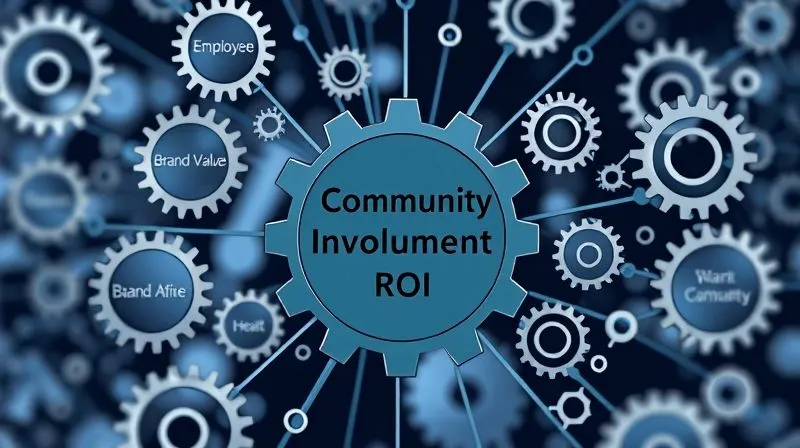
Metric Category 1: Employee Engagement & Retention
One of the most immediate and impactful returns from well-executed community involvement programs is on your own workforce. Employees, particularly younger generations, are increasingly seeking purpose-driven work. Offering meaningful opportunities to contribute to the community can significantly boost morale, foster team cohesion, and enhance loyalty.
I've seen countless companies transform their internal culture by integrating CSR into employee experience. This isn't just about feel-good stories; it translates directly into measurable business outcomes like reduced turnover and increased productivity, which have clear financial implications.
Quantifying Employee Impact
To measure the ROI in this category, consider the following actionable steps:
- Pre & Post-Program Surveys: Conduct anonymous surveys before and after community involvement initiatives. Ask specific questions about job satisfaction, sense of purpose, pride in the company, and perceived employer brand.
- Participation Rates: Track the percentage of employees participating in volunteering or giving programs. High participation signals strong internal engagement.
- Employee Turnover Rates: Compare turnover rates among employees who actively participate in CSR programs versus those who don't. A lower turnover rate for engaged employees directly translates to cost savings in recruitment and training.
- Absenteeism Rates: While harder to directly link, some studies suggest a correlation between higher engagement and lower absenteeism. Monitor these trends.
- Internal Brand Advocacy: Measure how likely employees are to recommend your company as a great place to work, often captured through eNPS (Employee Net Promoter Score) or similar metrics.
| Metric | Before Program | After 1 Year | Cost Saving Estimate |
|---|---|---|---|
| Employee Turnover (CSR participants) | 15% | 10% | $50,000 |
| Employee Satisfaction (CSR participants) | 70% | 85% | Increased morale |
| Volunteer Hours/Employee | 0.5 | 4 | Enhanced engagement |
| eNPS (CSR participants) | +20 | +45 | Stronger advocacy |
Case Study: Empowering Employees, Boosting Retention at 'Innovate Solutions'
Innovate Solutions, a mid-sized software firm, faced a growing problem of employee disengagement and a 25% annual turnover rate, particularly among their younger talent. Their existing community efforts were ad-hoc and lacked structure. Recognizing the need for a strategic shift, they launched 'Innovate Cares,' a structured program offering employees paid time off for volunteering with pre-selected local non-profits focused on STEM education.
Over 18 months, Innovate Solutions rigorously tracked employee participation, pre and post-program job satisfaction scores, and turnover rates. They found that employees participating in 'Innovate Cares' reported a 20% higher job satisfaction and were 40% less likely to leave the company compared to non-participants. This reduction in churn, combined with improved recruitment appeal, resulted in estimated annual savings of over $150,000 in recruitment and training costs, proving a direct, tangible ROI from their community involvement.
Metric Category 2: Brand Reputation & Customer Loyalty
In today's socially conscious marketplace, a company's commitment to the community is a significant differentiator. Consumers, especially millennials and Gen Z, are increasingly choosing brands that align with their values. A strong reputation for social responsibility can translate directly into increased customer loyalty, higher sales, and a premium brand perception.
I've observed that companies with genuine, transparent community programs often enjoy a halo effect, where positive sentiment spills over into perceptions of product quality and trustworthiness. This isn't about greenwashing; it's about authentic engagement that resonates with your target audience.
Measuring External Perception
Here's how to quantify the impact on your brand and customers:
- Brand Sentiment Analysis: Utilize media monitoring tools to track mentions of your company and its CSR initiatives across news, blogs, and social media. Categorize sentiment (positive, neutral, negative) and track trends.
- Customer Surveys: Integrate questions into your regular customer surveys about their awareness of your community involvement, how it influences their purchasing decisions, and their overall perception of your brand's social responsibility.
- Social Media Engagement: Monitor likes, shares, comments, and reach on posts related to your community programs. High engagement indicates resonance with your audience.
- Media Coverage Quality: Beyond mere mentions, assess the quality and prominence of media coverage. Positive stories in reputable outlets carry significant weight.
- Purchase Intent: In surveys or focus groups, measure how likely consumers are to choose your product or service over a competitor's, specifically citing your community involvement as a factor.
According to a Deloitte study, millennials are more likely to support companies with strong CSR commitments. This directly impacts your customer base and market share.
Metric Category 3: Operational Efficiency & Risk Mitigation
This category often surprises companies, as the link between community involvement and operational benefits isn't always immediately obvious. However, strategic engagement can lead to tangible improvements in operational efficiency and significantly reduce various business risks.
From gaining a 'social license to operate' to fostering more resilient supply chains, the indirect benefits can be substantial. I've seen companies navigate complex regulatory environments more smoothly and gain community support for expansion projects simply because they had a history of being a good neighbor.
Tangible Operational Benefits
Consider these avenues for measurement:
- Resource Efficiency: If your community involvement includes environmental initiatives (e.g., waste reduction, energy conservation), track the direct cost savings from reduced resource consumption within your operations.
- Reduced Regulatory & Legal Risks: A strong reputation for social responsibility can lead to fewer regulatory hurdles, fines, or legal challenges. Track the incidence of such issues pre and post-program.
- Enhanced Community Relations: Measure the speed and ease with which you receive necessary permits, zoning approvals, or community support for new projects. This can save significant time and money.
- Supply Chain Stability: If your programs support local suppliers or community development in your supply chain regions, track improvements in supplier reliability, quality, and reduced disruptions.
- Crisis Management: A strong community reputation can provide a buffer during a crisis, leading to more forgiving public sentiment and faster recovery. Monitor media sentiment and public response during challenging times.

Metric Category 4: Direct Financial & Business Growth
While not always the primary driver, community involvement can indeed lead to direct financial benefits and open doors for business growth. This is particularly true when programs are strategically aligned with market development or product innovation.
I advise clients to look beyond immediate sales and consider how community programs can create new markets, foster innovation, or even directly contribute to cost savings through shared resources or improved public infrastructure.
Revenue & Market Share
To quantify direct financial impact:
- Market Penetration in New Areas: If your community programs focus on specific underserved geographic markets, track sales growth, customer acquisition rates, and market share changes in those regions.
- Product/Service Adoption: If your community initiatives involve specific products or services (e.g., providing free internet access, offering educational software), track the adoption rates and subsequent conversion to paying customers.
- Cost Savings from Shared Resources: If your company partners with local organizations to share facilities, transportation, or expertise, quantify the direct cost savings incurred.
- Enhanced Access to Capital: Increasingly, investors and financial institutions consider ESG (Environmental, Social, and Governance) performance. Track improvements in your ESG ratings and access to 'green' or impact investment funds.
- Innovation & R&D: Community challenges can sometimes inspire new product development or service models. Track new patents, product launches, or market opportunities directly linked to insights gained from community engagement.
As Forbes has highlighted, strong ESG performance, including robust community involvement, is increasingly correlated with long-term financial outperformance.
Building Your Measurement Framework: A Step-by-Step Guide
Now that we've explored the key metric categories, let's synthesize this into a practical, step-by-step framework for measuring your community involvement ROI. Consistency and clear methodology are paramount for credible results.
Step 1: Define Clear Objectives & Baselines
Before any program begins, articulate what you aim to achieve, both for the community and for your business. Establish measurable, time-bound objectives. Crucially, collect baseline data *before* implementation. If you want to reduce employee churn by X%, you need to know the current churn rate. Without a baseline, you can't demonstrate change.
Step 2: Select Relevant Metrics & Data Collection Methods
Based on your objectives, choose 3-5 core metrics from the categories above that directly align. Don't try to measure everything. Identify reliable data sources (surveys, HR records, financial statements, media reports) and establish consistent collection methods. Automation where possible can reduce administrative burden.

Step 3: Establish Attribution & Correlation
This is where expertise comes in. It's rare that a single factor drives an outcome. Your goal is to demonstrate a strong correlation and, where possible, attribution. Use statistical analysis to show relationships between program participation and outcomes (e.g., lower turnover for volunteers). Qualitative data, like testimonials, can strengthen the narrative even if direct causation is hard to prove.
Step 4: Report & Communicate Your Impact
Regularly compile your findings into concise, compelling reports tailored for different audiences (e.g., executive summary for leadership, detailed report for CSR team). Use data visualization (charts, graphs) to make complex information digestible. Highlight both quantitative ROI and qualitative impact stories. Transparency builds trust.
| Metric Category | Key Metric | Baseline | Current | ROI Impact |
|---|---|---|---|---|
| Employee Engagement | Volunteer Participation Rate | 15% | 40% | Improved morale, reduced churn |
| Brand Reputation | Positive Media Mentions (CSR) | 5/quarter | 18/quarter | Enhanced public image |
| Operational Efficiency | Permit Approval Time | 90 days | 60 days | Cost savings from faster project initiation |
| Business Growth | Market Share in Target Community | 5% | 12% | Increased revenue, new customer acquisition |
Avoiding Common Pitfalls in ROI Measurement
Even with the best intentions, measuring community involvement ROI can be fraught with challenges. I've seen companies make common mistakes that undermine their efforts. Being aware of these pitfalls is the first step to avoiding them and ensuring your measurement strategy is robust and credible.
- Lack of Baseline Data: As mentioned, without understanding your starting point, it's impossible to quantify change. Always establish baselines before program implementation.
- Short-Term Focus: Many benefits of community involvement, especially brand building and cultural shifts, take time to materialize. Don't expect immediate, dramatic ROI in all areas; commit to long-term measurement.
- Ignoring Qualitative Data: While we're focused on 'tangible' ROI, qualitative stories, testimonials, and detailed impact narratives are crucial for context and emotional resonance. They explain the 'why' behind the numbers.
- Poor Communication: Even if you have fantastic results, they're useless if not communicated effectively to the right audiences. Tailor your message and use clear, impactful language.
- Over-Attribution: Be realistic about what your community program can achieve alone. Acknowledge other factors that might contribute to positive outcomes.
"Don't confuse activity with impact. Just because you're doing a lot of good deeds doesn't automatically mean you're creating measurable value. Focus on outcomes, not just outputs."
For a deeper dive into impact assessment methodologies, I recommend exploring academic resources such as those found through relevant scholarly journals on corporate social responsibility.

Frequently Asked Questions (FAQ)
How do I get leadership buy-in for measuring CSR ROI? The key is to speak their language. Frame community involvement not just as 'doing good,' but as a strategic investment that mitigates risk, attracts talent, enhances brand value, and can even drive new revenue. Present potential ROI in financial terms where possible, and always link initiatives back to core business objectives. Start with a pilot program, measure rigorously, and present initial successes to build momentum and trust.
Is SROI (Social Return on Investment) different from tangible ROI? Yes, SROI is a specific methodology that attempts to quantify social, environmental, and economic value in monetary terms, including elements that don't have a market price. While it provides a comprehensive picture of value, it can be complex and resource-intensive. Tangible ROI, as discussed here, focuses more on direct, measurable business benefits that can be more easily linked to financial or operational outcomes, making it more accessible for many organizations. Both aim to demonstrate value, but SROI has a broader scope.
What if our community involvement is purely philanthropic? Can we still measure ROI? Absolutely. Even purely philanthropic efforts can yield tangible, measurable benefits for your company. While direct financial returns might be less obvious, you can still measure impacts on employee engagement, brand reputation, and community relations. For instance, track employee satisfaction with giving programs, media mentions of philanthropic efforts, or local community perception through surveys. The 'return' here might be a stronger social license to operate, enhanced employer brand, or deeper community trust.
How often should we measure and report our community involvement ROI? Measurement should be ongoing, with data collected regularly (e.g., quarterly or semi-annually) to track progress against baselines. Formal reporting frequency can vary, but an annual comprehensive ROI report is a good standard. Quarterly updates to key stakeholders can keep them informed and engaged. For specific campaigns, pre and post-campaign measurement is essential.
What are the best tools for data collection in this area? For employee data, HRIS systems, internal survey platforms (e.g., Qualtrics, SurveyMonkey), and dedicated CSR platforms (e.g., Benevity, CyberGrants) are excellent. For brand and customer data, media monitoring tools (e.g., Meltwater, Cision), social listening platforms, and CRM systems can be invaluable. Community impact data often requires direct surveys, interviews with beneficiaries, and partnerships with local non-profits for their reporting. Spreadsheets and business intelligence tools (e.g., Tableau, Power BI) are crucial for analysis and visualization.
Key Takeaways and Final Thoughts
Measuring the tangible ROI for community involvement is no longer a 'nice-to-have'; it's a strategic imperative. By adopting a structured approach and focusing on the right metrics, you can transform your community programs from perceived costs into undeniable assets that drive business value and foster positive social change.
- Shift your mindset from philanthropy to strategic investment.
- Define 'return' broadly, encompassing employee, brand, operational, and financial benefits.
- Utilize a multi-faceted approach to metrics, blending quantitative and qualitative data.
- Implement a clear, step-by-step measurement framework, starting with baselines and clear objectives.
- Avoid common pitfalls by being thorough, realistic, and consistent in your approach.
- Communicate your impact effectively to all stakeholders, demonstrating the shared value created.
As an industry specialist, I've seen the profound impact that robust measurement can have. It elevates CSR from the sidelines to the boardroom, securing resources and inspiring greater innovation. Embrace this challenge, and you'll not only enhance your company's reputation and bottom line but also amplify your positive impact on the world. The journey to measurable impact begins now.
Recommended Reading
- 7 Proven Strategies: Boosting Remote Team Focus Amidst Home Chaos
- Seamless AI: 7 Steps to Integrating AI Without Business Disruption
- Unlock Breakthroughs: Why Psychological Safety is Key to Innovation Culture
- 7 Strategic Shifts: Pivoting Global Business Amid Geopolitical Crises
- 7 Reasons Why Process Improvement Initiatives Fail to Deliver ROI & How to Fix It





Comments
Leave a comment below. Your email will not be published. Required fields marked with *