

How to Move Design Thinking Workshop Concepts to Market Launch?
For over two decades in the realm of innovation management, I've witnessed a recurring, heartbreaking pattern: brilliant, user-centric ideas born from vibrant design thinking workshops often languish, never seeing the light of day. Teams pour their hearts into empathy mapping, ideation, and rapid prototyping, only to find their concepts hitting a wall when it's time to transition from the creative bubble to the harsh realities of market launch.
The enthusiasm generated in those collaborative sessions can quickly dissipate when faced with organizational inertia, funding challenges, or a lack of clear pathways for commercialization. This chasm between 'concept' and 'market' isn't just a minor hurdle; it's the graveyard for countless potentially transformative innovations. It's a problem rooted in a fundamental disconnect between creative exploration and structured execution.
In this definitive guide, I will share the battle-tested frameworks, strategic insights, and practical steps I've honed over years of bringing complex ideas to market. You’ll learn how to bridge that critical gap, transforming your design thinking workshop concepts into tangible, successful market launches. We'll explore validation, strategic development, market entry, and the often-overlooked art of sustained growth, ensuring your next big idea doesn't just inspire, but also impacts.
The Chasm of Conception: Why Design Thinking Ideas Often Fail to Launch
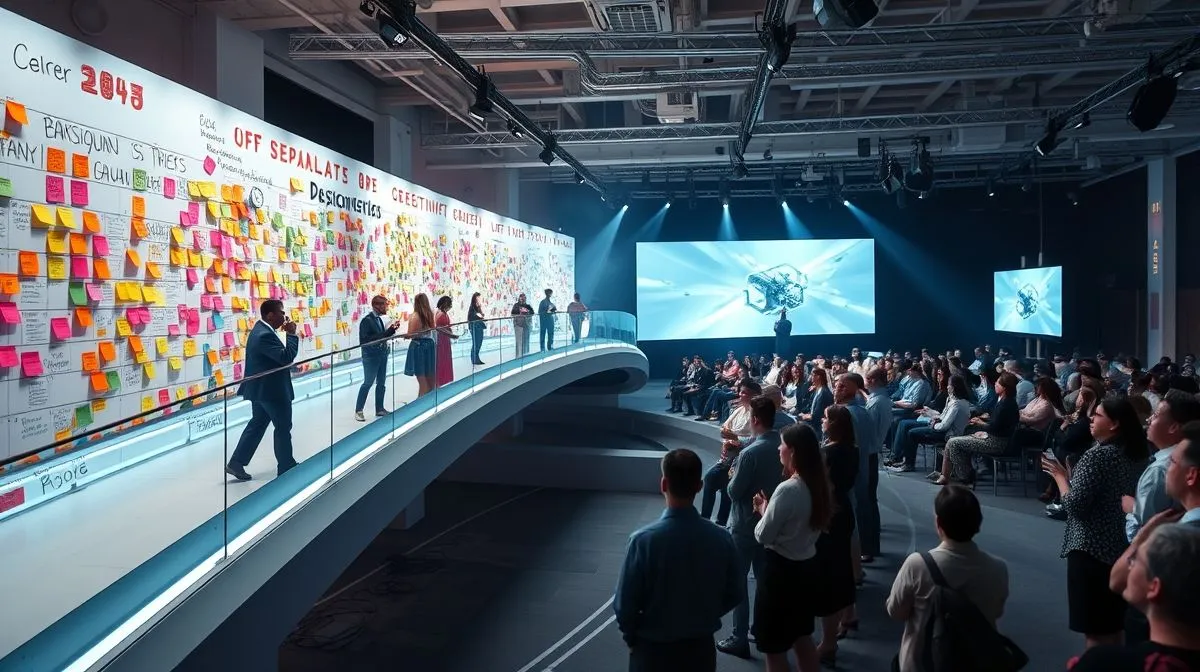
It's an uncomfortable truth: many organizations excel at the 'thinking' part of design thinking, but falter dramatically at the 'doing' part when it comes to market launch. I've seen this happen across industries, from nimble startups to Fortune 500 giants. The energy of a workshop, fueled by sticky notes and whiteboards, can create an illusion of progress.
However, without a robust, deliberate pathway, those innovative concepts remain just that: concepts. The reasons for this failure to launch are multifaceted. Sometimes it's a lack of clear ownership post-workshop. Other times, it's the absence of a structured validation process that extends beyond initial user feedback. Often, it's simply a failure to integrate the agile, iterative nature of design thinking with the more traditional, rigorous demands of product development and market entry. According to a study published by Harvard Business Review, a significant percentage of new product development efforts fail not due to poor ideas, but due to poor execution and market misalignment.
This is precisely where the seasoned expert's perspective becomes invaluable. It's not enough to be creative; you must also be strategic and relentlessly pragmatic about getting your ideas into the hands of real users.
Phase 1: Validating Your Vision – Beyond the Workshop Buzz
The initial excitement of a design thinking workshop can sometimes lead to a bias towards one's own ideas. To successfully move design thinking workshop concepts to market launch, the first critical step is to rigorously validate your vision, peeling back layers of assumptions to find true market need and viability. This isn't just about showing your prototype to a few friendly faces; it's about systematic, unbiased inquiry.
Deep Dive into User Validation
Your workshop generated insights, but are they robust enough for market investment? I always advocate for moving beyond initial empathy interviews to more structured, quantitative, and real-world validation. This includes:
- Concept Testing with Broader Audiences: Move beyond your initial workshop participants. Use surveys, online focus groups, and A/B tests with larger, representative samples of your target market. Seek feedback on core value propositions, pricing perceptions, and potential use cases.
- Problem-Solution Fit Interviews: Focus specifically on whether your proposed solution truly addresses a significant pain point. Ask open-ended questions that uncover how users currently solve the problem (or cope with it) and their willingness to adopt a new solution. This isn't about selling; it's about learning.
- Desirability, Feasibility, Viability Assessment: Revisit these pillars from a market perspective. Is the concept still highly desirable to a large enough segment? Is it technically feasible to build and maintain at scale? Crucially, is it financially viable – can it generate revenue and profit?
As innovation expert Clayton Christensen often emphasized, understanding the 'job to be done' by your customers is paramount. True validation confirms that your concept fulfills that job more effectively or efficiently than existing alternatives.
The Power of Rapid Prototyping and Iteration
Design thinking champions prototyping, but the market launch phase demands a different level of fidelity and testing. Your workshop prototypes were low-fidelity; now, you need to elevate them to a state where they can truly simulate a user experience and elicit meaningful feedback.
- Mid-Fidelity Prototypes: Create clickable wireframes or interactive mock-ups that mimic the core user flow. These should be good enough to test usability, intuitive navigation, and core feature desirability without the significant investment of full development.
- Usability Testing: Conduct structured usability tests with representative users. Observe how they interact with your prototype, identify points of confusion, frustration, or delight. Don't just ask them what they think; watch what they do.
- Iterate Based on Feedback: This is where the 'design thinking' mindset must persist. Every piece of feedback is an opportunity to refine, pivot, or enhance. Resist the urge to fall in love with your initial solution. The market is your ultimate judge.
“The fastest way to learn is by doing. Prototypes are not just for showing; they are for learning.” – Seasoned Innovation Expert
This iterative loop of prototyping and testing reduces risk significantly before you commit substantial resources to full-scale development.
Phase 2: Building the Bridge – From Concept to Tangible Product
Once you have validated your concept, the next challenge in how to move design thinking workshop concepts to market launch is translating that validated vision into a tangible product or service. This requires a shift from pure exploration to structured development, integrating the flexibility of design thinking with the rigor of product management.
Agile Development Integration
The principles of agile development – iterative cycles, cross-functional teams, continuous feedback – are natural partners for design thinking. This synergy is crucial for maintaining momentum and responsiveness post-workshop.
- Cross-Functional Teams: Ensure your development team includes not just engineers but also product managers, designers, marketing specialists, and even sales representatives. This holistic perspective prevents silos and ensures market realities inform every development sprint.
- Short Sprints and Regular Demos: Break down the development process into short, focused sprints (typically 1-4 weeks). At the end of each sprint, demonstrate working software or a tangible deliverable to stakeholders and, ideally, to a subset of target users.
- User Stories and Backlog Prioritization: Translate your validated user needs and concept features into clear, actionable user stories. Prioritize these relentlessly in your product backlog, focusing on delivering the highest value features first.
Embracing agile means acknowledging that the 'perfect' product is a moving target. It's about continuously delivering value and adapting to new information.
The Minimum Viable Product (MVP) Mindset
One of the biggest mistakes I see organizations make is trying to build everything at once. This leads to scope creep, delays, and a product that might miss the market window. The MVP approach, championed by Eric Ries in 'The Lean Startup,' is your antidote.
- Identify Core Value: What is the absolute minimum set of features that delivers the core value proposition of your concept and solves the primary user pain point? This is your MVP. It should be functional, reliable, and delightful, but not exhaustive.
- Launch and Learn: The MVP is not the final product; it's the first step in a continuous learning loop. Launch it to a small group of early adopters, gather real-world usage data, and collect qualitative feedback.
- Iterate and Expand: Based on MVP performance and user feedback, prioritize subsequent features. Your product roadmap should be informed by data, not just initial assumptions. This iterative expansion ensures you're building what users truly need and are willing to pay for.
Case Study: InnovateCo's Journey from Concept to MVP
InnovateCo, a mid-sized B2B SaaS company, developed a concept for an AI-powered insights tool during an intensive design thinking sprint. Their initial ambition was to launch a comprehensive platform with dozens of features. However, following the principles outlined here, I advised them to focus on an MVP. Their core insight from user research was that small businesses struggled to quickly identify key trends from their raw sales data.
Instead of building the full platform, InnovateCo launched an MVP that offered just one core feature: automated trend detection and simple, actionable recommendations from uploaded CSVs. They built this single feature, rigorously tested it with 50 pilot customers, and gathered extensive feedback. This resulted in rapid learning about user interaction patterns and the most valuable recommendation types. Within six months, they expanded the product based on proven demand, achieving a 70% retention rate for their MVP users and securing a new round of funding based on demonstrable market traction.
Phase 3: Strategic Market Entry – Preparing for Impact
Getting your product built is only half the battle. To truly move design thinking workshop concepts to market launch successfully, you need a meticulous market entry strategy. This phase is about ensuring your product reaches the right audience, with the right message, at the right time.
Crafting Your Go-to-Market (GTM) Strategy
A GTM strategy is your blueprint for bringing your product to market. It's a comprehensive plan that aligns sales, marketing, and product teams around a common goal. I've seen GTM plans fail because they weren't rooted in the deep user understanding gained from design thinking.
- Define Your Target Audience (Again): Refine your initial personas with validated data from your MVP phase. Who are your ideal early adopters? What are their demographics, psychographics, and most importantly, their 'jobs to be done' that your product addresses?
- Articulate Your Value Proposition: How does your product uniquely solve your target audience's problems? This should be concise, compelling, and clearly differentiate you from competitors. It's not about features; it's about benefits.
- Choose Your Channels: Where will you reach your target audience? This could include digital marketing (SEO, SEM, social media), content marketing, PR, direct sales, partnerships, or a combination. Your choice should align with your audience's habits and your product's nature.
- Develop Your Messaging and Positioning: Create consistent, compelling narratives that resonate with your target audience. Your messaging should highlight the value proposition and address key pain points uncovered in your design thinking and validation phases.
As renowned marketing guru Seth Godin often says, "People don't buy what you do; they buy why you do it." Your GTM strategy must convey that 'why.'
Pilot Programs and Early Adopter Engagement
Before a full-scale launch, I strongly recommend running controlled pilot programs. This is your final testing ground, not just for the product, but for your GTM strategy itself.
- Identify and Recruit Early Adopters: These are the users who are eager to try new solutions, are forgiving of minor imperfections, and are willing to provide candid feedback. They are your first champions.
- Establish Clear Goals: What do you want to achieve with your pilot? Is it to validate pricing? Test a specific marketing message? Gather testimonials? Define your success metrics beforehand.
- Provide Exceptional Support: Early adopters are invaluable. Treat them as partners. Offer dedicated support channels, actively solicit their feedback, and make them feel heard and valued. Their positive experiences will be critical for organic growth.
- Gather Testimonials and Case Studies: Successful pilot participants can become powerful advocates. Capture their stories and results to use in your broader marketing efforts.
“A successful launch isn't about perfection; it's about momentum and learning.” – Seasoned Innovation Expert
This phased approach minimizes risk and maximizes your chances of a strong market debut.
Phase 4: Scaling for Success – Beyond the Initial Launch
Many organizations view market launch as the finish line. From my experience, it's merely the starting gun. To truly move design thinking workshop concepts to sustained market success, you must shift your focus to continuous improvement and strategic scaling.
Feedback Loops and Continuous Improvement
The iterative nature of design thinking should extend far beyond the workshop and even the MVP launch. Establishing robust feedback loops is paramount for long-term product health and market relevance.
- Quantitative Data Analysis: Implement analytics tools to track user behavior, feature usage, conversion rates, and churn. Numbers tell a powerful story about what's working and what isn't.
- Qualitative User Feedback: Supplement data with direct conversations. Conduct regular user interviews, run usability tests on new features, monitor social media for sentiment, and analyze support tickets.
- A/B Testing: Continuously test different versions of features, messaging, or user flows to optimize for engagement, conversion, or satisfaction.
- Regular Product Reviews: Schedule recurring meetings with your cross-functional team to review performance data, analyze feedback, and plan next iterations. This keeps the product alive and evolving.
This continuous cycle of 'build-measure-learn' ensures your product remains competitive and aligned with evolving user needs. According to a McKinsey & Company report, companies that prioritize continuous improvement and customer-centricity significantly outperform their peers.
Measuring Success and Iterating for Growth
What does 'success' look like post-launch? It's more than just initial sales figures. To effectively scale, you need a holistic understanding of your product's impact.
- Key Performance Indicators (KPIs): Define clear KPIs that align with your business objectives. These might include customer acquisition cost (CAC), customer lifetime value (CLTV), monthly active users (MAU), retention rate, net promoter score (NPS), or specific feature adoption rates.
- Financial Viability: Continuously monitor your revenue streams, cost of goods sold (COGS), and operational expenses. Is your product generating sustainable profit? Are there opportunities for optimizing pricing or reducing costs?
- Market Share and Competitive Landscape: Keep a close eye on your position in the market. Are you gaining traction? How are competitors evolving? This external perspective is vital for strategic planning.
- Organizational Alignment: Ensure that your internal teams remain aligned with the product vision and market strategy. Scaling can introduce complexities, and maintaining clear communication and shared goals is essential.
The journey from design thinking concept to market launch is not linear; it's a dynamic, ongoing process of adaptation and growth. It demands a commitment to learning, a willingness to pivot, and a relentless focus on delivering value to your users.
Common Pitfalls and How to Avoid Them
Even with the best intentions and processes, the path from concept to market is fraught with potential missteps. Based on my years in the trenches, here are some of the most common pitfalls I've observed and how to sidestep them:
- Workshop Enthusiasm Blindness: The high energy of a design thinking workshop can sometimes lead to an echo chamber effect. Everyone's excited, so it must be a good idea, right?
Solution: Implement rigorous, external validation processes immediately after the workshop. Challenge assumptions with real market data and diverse user feedback. - The 'Build It All' Syndrome: Believing that every feature brainstormed in the workshop must be in the initial launch. This leads to bloated products, delayed launches, and wasted resources.
Solution: Embrace the MVP mindset. Relentlessly prioritize core value and launch the smallest viable product that solves a critical user problem. Iterate from there. - Lack of Clear Ownership Post-Workshop: Concepts often die because no one is explicitly tasked with taking them forward, securing resources, or championing them internally.
Solution: Assign a dedicated product owner or innovation lead to shepherd the concept through validation, development, and launch. This person is accountable for its progress. - Underestimating Market Entry Challenges: Focusing solely on product development and neglecting the strategic planning for how the product will actually reach and resonate with its target audience.
Solution: Develop a comprehensive Go-to-Market (GTM) strategy in parallel with product development, covering everything from target audience refinement to messaging and distribution channels. - Ignoring Post-Launch Feedback: Launching and then assuming the job is done, failing to listen to early users or analyze performance data.
Solution: Establish robust feedback loops (quantitative and qualitative) and commit to continuous iteration. Your product's evolution should be data-driven and user-centric. - Organizational Silos: Design, development, marketing, and sales teams operating independently rather than as a cohesive unit. This breaks the flow of information and execution.
Solution: Foster cross-functional collaboration from day one. Agile methodologies, shared goals, and regular inter-departmental communication are key.
Building an Innovation-Driven Culture: The Organizational Imperative
Ultimately, successfully moving design thinking workshop concepts to market launch isn't just about processes; it's about culture. An organization's ability to innovate and execute is deeply tied to its underlying values and operational philosophy. I've found that the most successful companies in this regard cultivate specific cultural traits:
- Embrace Experimentation and Learning from Failure: Innovation inherently involves risk. A culture that views 'failures' as valuable learning opportunities, rather than punishable mistakes, encourages bolder experimentation. This is where the iterative nature of design thinking truly shines.
- Foster Psychological Safety: Teams need to feel safe to voice ideas, challenge assumptions, and admit when something isn't working without fear of retribution. This openness is crucial for honest feedback and effective problem-solving.
- Champion User-Centricity: This isn't just a buzzword; it's a deep-seated belief that understanding and serving the user is at the core of all product decisions. It means everyone, from engineers to executives, is connected to the user's needs.
- Promote Cross-Functional Collaboration: Break down departmental silos. Encourage diverse teams to work together, sharing perspectives and expertise. The best innovations often emerge at the intersection of different disciplines.
- Empower Autonomy and Ownership: Give teams the freedom and responsibility to make decisions and drive their concepts forward. Micromanagement stifles creativity and slows execution.
As leaders, our role is to create the environment where design thinking concepts can not only flourish in a workshop but also thrive in the marketplace. It requires patience, persistence, and a genuine commitment to continuous improvement. For more on fostering an innovative culture, consider resources from thought leaders like IDEO or Stanford's d.school, which emphasize the importance of human-centered design principles.
Frequently Asked Questions (FAQ)
Question? How do I secure internal buy-in for a concept developed in a design thinking workshop, especially if it's a radical idea?
Answer: Securing buy-in, especially for radical ideas, requires a multi-pronged approach. First, translate the 'why' – the compelling user problem your concept solves – into a language that resonates with stakeholders (e.g., revenue potential, cost savings, competitive advantage). Second, leverage data from your early validation efforts (user interviews, prototype testing) to demonstrate desirability and market need. Third, present a clear, phased roadmap focusing on an MVP that de-risks initial investment. Finally, involve key stakeholders early and often, making them part of the journey rather than presenting a fully formed idea out of the blue. Show, don't just tell.
Question? What's the ideal team structure for transitioning from design thinking workshops to product development and launch?
Answer: The ideal structure is a lean, cross-functional team with clear roles but shared accountability. Typically, this includes a dedicated Product Owner (who champions the concept), a Lead Designer (ensuring user experience fidelity), a Technical Lead (for feasibility and development oversight), and Marketing/Sales representatives. This core team should remain consistent from validation through MVP launch to ensure continuity of vision and knowledge. They act as a mini-startup within the larger organization, empowered to make rapid decisions.
Question? How do I measure the success of a design thinking concept after it's launched, beyond just sales figures?
Answer: Beyond sales, measure metrics directly tied to the user problem your concept aimed to solve. If it's about efficiency, track time saved or tasks completed. If it's about engagement, monitor active users, session duration, or feature adoption rates. Customer satisfaction (NPS, CSAT scores), retention rates, and the number of positive user testimonials are also critical indicators. These metrics provide a holistic view of the product's value and impact, reflecting its true market fit and user desirability.
Question? Our organization struggles with 'innovation theater' – lots of workshops, but little tangible output. How can design thinking workshops be made more accountable for market results?
Answer: The key is to integrate accountability from the outset. First, ensure every workshop concept has a clear, measurable objective that aligns with strategic business goals. Second, immediately after the workshop, assign a dedicated 'concept owner' responsible for its progression. Third, build a lightweight but rigorous validation pipeline for all workshop outputs, requiring evidence of desirability, feasibility, and viability before significant investment. Finally, celebrate successful launches, but also conduct transparent post-mortems on concepts that don't progress, learning from each outcome. This shifts the focus from 'activity' to 'impact.'
Question? Should we involve external consultants or agencies in the market launch phase, or keep it all in-house?
Answer: It depends on your internal capabilities and capacity. External partners can bring specialized expertise (e.g., niche marketing, PR, specific technical development) or simply provide additional bandwidth during critical launch periods. They can also offer an unbiased, fresh perspective. However, maintaining strong internal ownership of the product vision and user understanding is paramount. If you do engage external help, ensure they fully buy into your design thinking principles and align with your user-centric approach. A hybrid model, leveraging external specialists for specific tasks while retaining core strategic control internally, often works best.
Recommended Reading
- Website Traffic, Zero Sales? 9 Fixes for Your Small Business Funnel
- Financial Planning: A Small Business Owner's Survival Guide
- Unmasking Hidden Hurdles: How to Identify Conversion Roadblocks on a Website?
- Cracking the Code: Overcoming Challenges of Managing Multiple Franchise Locations Effectively
- Slash QA Budget Overruns by 15%: Actionable Strategies for Project Success
Key Takeaways and Final Thoughts
- Validation is Continuous: Your design thinking journey doesn't end in the workshop. Rigorous, data-driven validation must extend through prototyping, MVP, and beyond.
- Bridge Design and Development: Seamlessly integrate agile development with design thinking principles to maintain momentum and user-centricity.
- Strategic Market Entry is Non-Negotiable: A well-defined Go-to-Market strategy is as crucial as the product itself. Know your audience, your value, and your channels.
- Launch is Just the Beginning: Embrace a mindset of continuous improvement and iteration post-launch, driven by user feedback and performance data.
- Cultivate an Innovation Culture: Foster an environment that champions experimentation, psychological safety, cross-functional collaboration, and user-centricity.
The journey from a nascent idea on a sticky note to a thriving product in the market is challenging, but incredibly rewarding. It demands more than just creative brilliance; it requires strategic foresight, relentless execution, and a deep, enduring commitment to your users. By applying the frameworks and insights I've shared, you can confidently navigate this complex terrain, ensuring your next design thinking concept doesn't just inspire, but truly impacts the world. Go forth and launch with purpose!





Comments
Leave a comment below. Your email will not be published. Required fields marked with *