


How to prevent customer churn when CRM data shows high risk?
For over 18 years in the marketing strategy and CRM space, I've witnessed countless businesses grapple with a silent killer: customer churn. It's a persistent leak in the revenue pipeline that, if left unaddressed, can undermine even the most robust growth strategies. I've seen promising ventures falter not because they couldn't acquire new customers, but because they couldn't keep the ones they already had.
The modern CRM is a powerful diagnostic tool, often serving as an early warning system. When your CRM data starts flashing red, indicating a high risk of customer churn, it’s a critical moment. This isn't just about losing a sale; it's about losing a relationship, a potential advocate, and crucial lifetime value. The pain point is palpable: how do you turn those red flags into green lights of renewed loyalty?
This article isn't just another theoretical guide. Based on my extensive experience and successful interventions, I'll walk you through actionable frameworks, real-world strategies, and expert insights designed to proactively address and significantly reduce customer churn when your CRM data signals danger. We'll explore how to interpret those warnings, implement targeted interventions, and foster a culture of retention that transforms at-risk customers into loyal advocates.
Decoding Your CRM: Beyond the Red Flags
When your CRM flags a customer as 'high risk,' it’s rarely a simple, one-dimensional issue. It’s a culmination of various signals that, when analyzed collectively, paint a concerning picture. My first piece of advice is always to treat these alerts not as a final verdict, but as an urgent invitation to investigate.
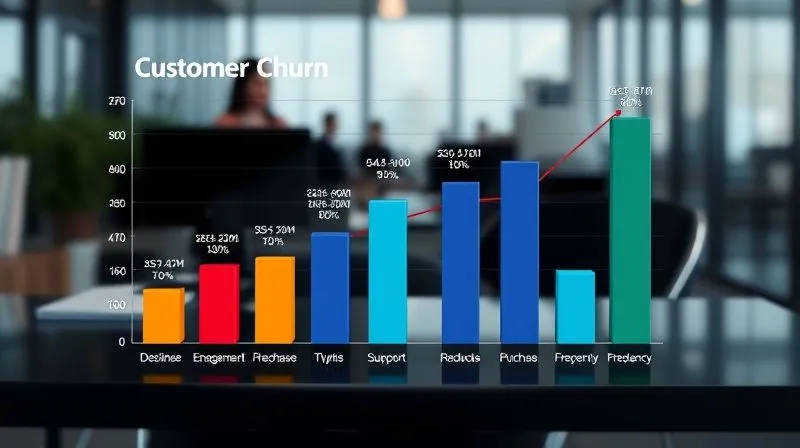
Understanding what constitutes 'high risk' in your specific context is paramount. Is it declining engagement with your product? A sudden drop in purchasing frequency or value? An increase in support ticket submissions or negative feedback? Or perhaps a lack of response to recent communications? Each indicator offers a unique clue.
"CRM data isn't just a ledger of transactions; it's a rich tapestry of customer behavior and sentiment. The true power lies in interpreting the patterns and understanding the 'why' behind the 'what.'"
Identifying the Root Causes of Churn
Without understanding the underlying reasons, any intervention is a shot in the dark. Here are common root causes I've identified:
- Poor Onboarding: Customers never fully grasp your product's value.
- Product-Market Fit Issues: The product isn't meeting their evolving needs or expectations.
- Lack of Engagement: They aren't actively using key features or deriving consistent value.
- Customer Service Failures: Negative experiences with support have eroded trust.
- Competitive Offers: A competitor is providing a perceived better value or solution.
- Price Sensitivity: They feel the cost outweighs the perceived benefit.
- Life Events/Business Changes: External factors have made your solution less relevant.
Your CRM, when properly configured, can often correlate these behaviors with specific segments. For instance, a drop in feature usage combined with an increase in support queries might point to a usability issue for a certain user cohort.
The Proactive Playbook: Segmenting and Personalizing High-Risk Engagements
Once you've identified high-risk customers and hypothesized potential root causes, the next critical step is to segment them intelligently. Not all at-risk customers are the same, and a one-size-fits-all approach to retention is often ineffective. Segmentation allows for hyper-targeted, personalized interventions that resonate more deeply.
In my experience, effective segmentation goes beyond basic demographics. Consider behavioral segmentation (e.g., users who stopped using a specific feature, customers whose last purchase was X months ago) and value-based segmentation (e.g., high-value customers vs. low-value customers). This granular view enables you to prioritize efforts and tailor your messaging.
Crafting Tailored Interventions
Personalization is not just a buzzword; it's a powerful weapon against churn. When a customer feels seen and understood, their likelihood of staying increases significantly. Here's a step-by-step approach:
- Deep Dive into Individual Profiles: Review the complete customer history in your CRM—support tickets, purchase history, website interactions, email opens, product usage data. What's their story?
- Match Risk Profile to Intervention Type:
- Engagement Drop: Send personalized content, tips, or product updates relevant to their usage patterns.
- Product Issues: Offer direct technical support, a personalized demo, or connect them with a customer success manager.
- Value Perception: Highlight specific benefits they might be missing or offer a tailored discount to reignite interest.
- Choose the Right Channel: Don't just blast emails. High-risk customers might respond better to a direct phone call, a personalized message through in-app chat, or even a LinkedIn message from their account manager.
- Timing is Everything: Intervene early. The longer a customer shows signs of disengagement, the harder it is to win them back. Your CRM's predictive analytics should guide this timing.
According to a Harvard Business Review article, increasing customer retention rates by 5% increases profits by 25% to 95%. This underscores the immense value of proactive, personalized retention efforts.
| Churn Risk Level | Segmentation Criteria | Recommended Intervention |
|---|---|---|
| High | Last login > 30 days, No new feature usage, 2+ support tickets last month | Personalized outreach from CSM, offer product training, value review call |
| Medium | Declining usage of key feature, 1 recent support ticket, low email engagement | Automated email series with relevant tips, in-app prompts, targeted content |
| Low | Consistent usage, high engagement, no recent issues | Nurturing content, loyalty rewards, feature announcements |
Re-Engagement Roadmaps: Crafting Irresistible Value Propositions
Once you've segmented your at-risk customers, the next challenge is to craft a re-engagement strategy that truly resonates. This isn't about generic discounts; it's about re-articulating and, if necessary, re-delivering value in a way that addresses their specific pain points and reasons for disengagement.
For many customers, the initial value proposition that attracted them may have faded or shifted. Your task is to reignite that spark by demonstrating how your product or service still solves their problems, perhaps in ways they haven't yet realized or utilized fully.
Case Study: Reviving 'ConnectFlow' Subscriptions
ConnectFlow, a mid-sized SaaS platform for project management, observed a concerning trend: CRM data showed a 15% increase in churn risk among users who hadn't integrated with their communication tools (Slack, Teams). These users often cited 'lack of seamless workflow' in exit surveys.
Their Intervention: Instead of a blanket discount, ConnectFlow identified these high-risk users and sent them a highly personalized email campaign. The email highlighted the specific benefits of integrating (e.g., 'reduce context switching by 30%', 'get updates directly in Slack'). It included a short, personalized video tutorial demonstrating the integration process and offered a dedicated 15-minute call with a customer success specialist to walk them through setup.
The Result: Within three months, ConnectFlow saw a 35% reduction in churn among the targeted segment, and a 20% increase in communication tool integrations. This demonstrated that understanding the specific 'why' behind the churn risk allowed them to deliver a truly irresistible value proposition, rather than just a monetary incentive.
Feedback Loops and Continuous Improvement: Turning Complaints into Loyalty
One of the most powerful—yet often overlooked—strategies for how to prevent customer churn when CRM data shows high risk is to actively solicit and act upon feedback. High-risk customers are often willing to tell you why they're unhappy, if only you create the right channels and demonstrate that you're genuinely listening.
Establishing robust feedback loops isn't just about collecting data; it's about closing the loop. This means acknowledging the feedback, communicating what actions you're taking, and showing the customer that their input directly led to an improvement. This act alone can transform a disgruntled customer into a loyal advocate, demonstrating that their voice matters.
Establishing Robust Feedback Channels
- In-App Surveys: Triggered at specific points (e.g., after a period of inactivity, after using a new feature).
- NPS (Net Promoter Score) & CSAT (Customer Satisfaction) Surveys: Regular pulse checks to gauge overall sentiment.
- Direct Outreach: Proactive calls or emails from customer success managers to high-risk segments.
- Social Listening: Monitoring mentions and sentiment on social media platforms.
- User Forums/Communities: A space for customers to share ideas and concerns.
Remember, the goal is not just to collect data, but to derive actionable insights. Integrate feedback directly into your product development and service improvement processes. As Forbes highlights, proactive customer service, often informed by feedback, is critical for retention.
Leveraging AI & Automation: Scaling Your Churn Prevention Efforts
In today's fast-paced digital landscape, manual churn prevention efforts simply cannot keep up with the volume and complexity of data generated by even a moderately sized customer base. This is where artificial intelligence and automation become indispensable tools for how to prevent customer churn when CRM data shows high risk.
AI-powered analytics can process vast amounts of CRM data, identifying subtle churn signals and predicting risk with far greater accuracy and speed than human analysts. Automation then allows you to act on these insights at scale, delivering personalized interventions precisely when and where they're most effective.
Automating Personalized Outreach
Once your CRM identifies a high-risk customer and AI suggests a potential root cause, automation can trigger a sequence of personalized actions:
- Triggered Emails: Send an email with a relevant help article, a tutorial video, or a personalized offer based on their recent activity or inactivity.
- In-App Messages: Prompt users within your product with tips, feature highlights, or offers for support when specific usage patterns indicate disengagement.
- Task Creation for CSMs: Automatically create a task for a Customer Success Manager to call a high-value, high-risk customer, providing them with a summary of the customer's recent activity and potential issues.
- Re-engagement Campaigns: Deploy multi-channel campaigns (email, SMS, social retargeting) tailored to specific churn risk segments.
The key here is 'personalization at scale.' Automation ensures that no high-risk customer falls through the cracks, and that interventions are timely and relevant. As Salesforce reports, AI in CRM is transforming customer service, enabling proactive engagement and personalized experiences that are crucial for retention.
Building a Culture of Retention: It's Everyone's Job
I often tell my clients that customer churn is not solely a marketing or sales problem; it's an organizational challenge. For true, sustainable churn prevention, every department must understand their role in the customer journey and contribute to a culture of retention. This holistic approach is fundamental to how to prevent customer churn when CRM data shows high risk.
From product development creating intuitive features, to customer service providing empathetic support, to sales setting realistic expectations, every interaction influences a customer's likelihood to stay. A unified vision, where customer success is a shared KPI, dramatically improves retention outcomes.
Aligning Teams for Customer Success
- Shared Metrics: Implement churn rate, customer lifetime value (CLTV), and Net Promoter Score (NPS) as key performance indicators across departments, not just for customer-facing teams.
- Cross-Functional Training: Educate all employees on the customer journey, common churn reasons, and how their role impacts customer satisfaction and loyalty.
- Internal Communication: Establish clear channels for sharing customer feedback and insights from the CRM across teams, ensuring product, marketing, and sales are all aware of emerging issues.
- Incentivize Retention: Incorporate retention-based incentives into compensation structures for relevant teams, reinforcing the importance of keeping customers happy.

Measuring Success: KPIs for Churn Prevention
Without clear metrics, you can't truly understand if your efforts to prevent customer churn when CRM data shows high risk are working. Measuring the impact of your churn prevention strategies is crucial for continuous improvement and demonstrating ROI. It allows you to refine your tactics and allocate resources effectively.
Beyond the obvious churn rate, several other Key Performance Indicators (KPIs) provide deeper insights into customer health and the effectiveness of your retention programs. Track these diligently, and use your CRM's reporting capabilities to visualize trends over time.
Key Performance Indicators to Monitor
- Churn Rate: The percentage of customers who stopped using your service during a specific period.
- Customer Lifetime Value (CLTV): The total revenue a business can reasonably expect from a single customer account over their relationship.
- Customer Retention Rate: The percentage of customers who continued their relationship with you over a given period.
- Net Promoter Score (NPS): Measures customer loyalty by asking how likely customers are to recommend your product/service.
- Customer Satisfaction (CSAT) Score: Measures how satisfied customers are with a specific interaction or overall experience.
- Product Usage Metrics: Track active users, feature adoption rates, and engagement frequency.
- Time to Value (TTV): How quickly customers realize the core benefit of your product. A longer TTV often correlates with higher churn risk.
Regularly review these metrics, especially for segments identified as high-risk. Look for improvements in their engagement, satisfaction, and ultimately, their retention rates. This data-driven approach is the backbone of effective churn prevention. For more on essential marketing KPIs, check out this Deloitte report on customer retention strategies.
| KPI | Baseline | Target | Q1 Result | Q2 Result | Trend |
|---|---|---|---|---|---|
| Churn Rate | 10% | 7% | 9% | 8% | Decreasing |
| Customer Lifetime Value (CLTV) | $500 | $650 | $550 | $600 | Increasing |
| NPS (Net Promoter Score) | +30 | +45 | +35 | +40 | Improving |
| Feature Adoption Rate (Key Feature X) | 40% | 60% | 48% | 55% | Increasing |
Frequently Asked Questions (FAQ)
What's the difference between reactive and proactive churn prevention? Reactive churn prevention addresses customers who have already shown clear signs of disengagement or have explicitly stated their intention to leave. Proactive churn prevention, which is what we've focused on here, uses CRM data and predictive analytics to identify customers at high risk of churning *before* they reach that critical point, allowing for early intervention. Proactive strategies are generally far more cost-effective and successful.
How often should I review my CRM data for churn risk? Ideally, churn risk should be monitored continuously, with daily or weekly automated reports alerting your team to new high-risk customers. More in-depth analysis of trends and the effectiveness of interventions should be conducted monthly or quarterly, depending on your business cycle and the volume of customer data.
Can small businesses effectively implement these strategies without a large team? Absolutely. While enterprise-level solutions might have more sophisticated AI, even smaller businesses can leverage basic CRM features for segmentation, automated email sequences, and manual personalized outreach. The principles of understanding your customer, personalizing engagement, and acting on data remain the same, regardless of scale. Focus on the highest-value, highest-risk segments first.
What if a customer still churns despite all efforts? It's important to recognize that not every customer can be saved, and sometimes churn is inevitable or even healthy for your business (e.g., if they were a poor fit). When a customer does churn, treat it as a learning opportunity. Conduct exit surveys or interviews to understand the final reason. Update your CRM with this feedback to refine your churn prediction models and prevention strategies for future customers.
Is it always about offering discounts to prevent churn? No, and in my experience, relying solely on discounts is a short-term, often detrimental strategy. While a targeted offer can sometimes re-engage a price-sensitive customer, true churn prevention focuses on delivering and demonstrating value, improving the customer experience, and building relationships. Discounts can devalue your offering if used indiscriminately.
Key Takeaways and Final Thoughts
Preventing customer churn when CRM data shows high risk is not a passive activity; it's an active, ongoing commitment that requires a blend of data intelligence, strategic thinking, and empathetic action. As an industry veteran, I've seen firsthand that the businesses that thrive are those that master the art of retention, transforming potential departures into enduring partnerships.
- Decipher Your Data: Go beyond the red flags to understand the 'why' behind churn risk.
- Segment and Personalize: Treat each at-risk customer as an individual, tailoring interventions to their specific needs.
- Re-articulate Value: Remind customers why they chose you in the first place, and show them new ways to derive benefit.
- Listen Actively: Establish feedback loops and act on insights to continuously improve.
- Leverage Technology: Use AI and automation to scale personalized, timely interventions.
- Foster a Culture of Retention: Make customer success a shared responsibility across your entire organization.
- Measure and Adapt: Continuously track KPIs and refine your strategies based on real-world results.
The journey to mastering churn prevention is continuous, but immensely rewarding. By embracing these strategies, you're not just preventing losses; you're actively building a more resilient, profitable, and customer-centric business. The power to turn those high-risk alerts into opportunities for deeper engagement is within your grasp. Start acting today, and watch your customer loyalty flourish.
Recommended Reading
- Mastering Data Silos: 7 Steps to Effective Operational Insights
- 7 Proven Strategies to Stop Affiliate Fraud Draining Your Marketing Budget
- The Ultimate Guide: How to Build Trust Through CSR Transparency That Lasts
- Unlock Global Success: Overcoming Cultural Barriers in International Leadership
- Unlock Innovation: Your Guide to Overcoming Barriers in Startups





Comments
Leave a comment below. Your email will not be published. Required fields marked with *