


How to Prevent Director Liability for ESG Governance Failures?
For over two decades in the intricate world of corporate governance, I’ve witnessed firsthand the seismic shifts that reshape boardroom priorities. From financial compliance to cybersecurity, each era brings its own challenges. But none, perhaps, has arrived with the velocity and pervasive impact of Environmental, Social, and Governance (ESG) factors. I've seen companies struggle, not from a lack of intent, but from a lack of structured, forward-thinking governance.
The landscape of corporate responsibility has shifted dramatically, transforming what was once seen as 'ethical nice-to-haves' into fundamental drivers of value and, critically, potential sources of significant legal exposure. Directors today are under unprecedented scrutiny from regulators, investors, employees, and the public regarding their oversight of ESG issues. The tangible risk of personal and corporate liability for ESG governance failures is no longer theoretical; it's a stark reality many boards are grappling with.
This article isn't just theory; it’s a distillation of proven strategies and actionable frameworks from my extensive experience. We will explore the evolving nature of director liability, delve into five critical pillars of effective ESG governance, and provide practical steps on how to prevent director liability for ESG governance failures, equipping you with the insights to navigate this complex terrain with confidence and foresight.
Understanding the Evolving Landscape of ESG Director Liability
The foundation of director liability has traditionally rested on fiduciary duties: the duty of care and the duty of loyalty. However, what constitutes 'care' and 'loyalty' is rapidly expanding to encompass ESG considerations. Regulators globally, from the SEC to various European bodies, are increasingly mandating and scrutinizing ESG disclosures, creating new avenues for potential liability.
The Shifting Fiduciary Duty
I've observed a clear trend: what was once considered 'best practice' in ESG is quickly becoming the 'expected standard.' This evolution directly impacts directors' duty of care. Boards are now expected to identify, assess, and manage material ESG risks, just as they would financial or operational risks. Failure to do so can be construed as a breach of duty, opening the door to derivative lawsuits or enforcement actions.
Shareholder activism has also intensified, with investors leveraging ESG concerns to hold boards accountable. They're not just looking at quarterly earnings; they're scrutinizing climate strategies, diversity metrics, and supply chain ethics. This pressure translates into a heightened need for robust board oversight and a clear understanding of the company's ESG footprint.
Regulatory Scrutiny and Shareholder Activism
Consider the recent regulatory movements. The SEC's proposed climate disclosure rules, for instance, aim to standardize how companies report climate-related risks and opportunities. Similarly, the EU's Corporate Sustainability Reporting Directive (CSRD) significantly expands the scope and detail of non-financial reporting. These regulations are not just compliance exercises; they establish new benchmarks for what constitutes adequate governance and disclosure, directly impacting director accountability.
Expert Insight: Proactive engagement with emerging ESG regulations is not merely about avoiding penalties; it's about embedding resilience. Boards that anticipate and integrate these standards into their core strategy are better positioned to mitigate liability and capture long-term value.
Shareholder proposals related to ESG have reached record highs, often targeting board composition, climate targets, and social policies. A director's failure to adequately respond to or prepare for such activism can be a direct challenge to their competence and, by extension, their liability. For a deeper dive into the legal implications of this trend, I highly recommend this article from Harvard Business Review on the New Business of ESG, which highlights the strategic imperative for boards.
Pillar 1: Establishing Robust ESG Governance Structures
The first line of defense against director liability for ESG failures is a well-defined, integrated governance structure. This isn't about creating an 'ESG silo' but weaving ESG considerations into the fabric of existing board and management functions. I've found that clarity of roles and strategic integration are paramount.
Defining Clear Roles and Responsibilities
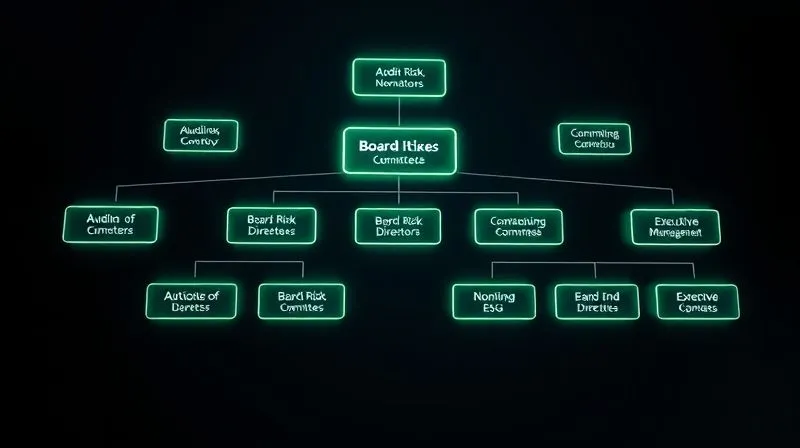
Ambiguity is the enemy of accountability. Boards must explicitly define who is responsible for what within ESG oversight. This includes the full board's ultimate responsibility, specific committee mandates, and executive management's operational duties. A clear charter for the board's ESG committee, if one exists, is non-negotiable.
This often means reviewing and updating existing committee charters – Audit, Nominating and Governance, and Compensation committees – to ensure ESG considerations are appropriately embedded. For example, the Compensation Committee might link executive incentives to ESG performance metrics, while the Audit Committee oversees the integrity of ESG data.
Integrating ESG into Board Committees
While some companies establish a dedicated ESG committee, I often advise integrating ESG oversight into existing committees. This prevents fragmentation and ensures ESG isn't treated as an 'add-on' but as an integral part of business strategy. The Nominating and Governance Committee, for instance, should consider ESG expertise when evaluating potential board candidates.
Here are actionable steps for structuring ESG governance:
- Assess Current Structure: Evaluate how ESG is currently addressed across the board and management. Identify gaps and overlaps.
- Define Board-Level Responsibilities: Clearly articulate the full board's ultimate oversight role for material ESG risks and opportunities.
- Update Committee Charters: Amend charters for relevant committees (e.g., Audit, Risk, Nominating & Governance) to explicitly include ESG-related duties and reporting lines.
- Appoint ESG Lead Director or Committee Chair: Designate a specific director or committee chair to champion ESG initiatives and facilitate board-level discussions.
- Establish Management-Level Accountability: Ensure there are clear executive roles (e.g., Chief Sustainability Officer, Head of ESG) with defined responsibilities and reporting mechanisms to the board.
Pillar 2: Comprehensive ESG Risk Identification and Management
One of the most significant areas of potential director liability stems from inadequate identification and management of material ESG risks. Directors are expected to exercise due diligence in understanding the environmental, social, and governance factors that could materially impact the company's long-term value and operations.
Materiality Assessments: Pinpointing Relevant Risks
Not all ESG issues are equally material to every company. A crucial first step is conducting a robust 'materiality assessment' to identify the specific ESG issues that are most relevant to your business and its stakeholders. This should be a dynamic process, regularly updated to reflect evolving risks and stakeholder concerns.
I often guide boards through a 'double materiality' approach, considering both the financial impact of ESG issues on the company (inside-out) and the company's impact on society and the environment (outside-in). This comprehensive view is essential for truly understanding the breadth of potential liabilities.
Developing a Dynamic Risk Register
Once material ESG risks are identified, they must be systematically integrated into the company's enterprise risk management (ERM) framework. This means creating a dynamic ESG risk register that outlines potential risks, their likelihood, potential impact, and the mitigating actions in place. This provides the board with a clear, consolidated view of key exposures.
Here's an example of how a portion of an ESG risk register might look, demonstrating a structured approach to risk identification:
| ESG Risk Category | Description | Potential Impact | Likelihood | Mitigation Strategy |
|---|---|---|---|---|
| Climate Transition Risk | Policy changes (e.g., carbon pricing), market shifts towards low-carbon economy, technological disruption | High (Financial, Reputational) | Medium | Develop net-zero roadmap, invest in green technologies, advocacy for supportive policies |
| Human Capital Management | Labor practices (e.g., unfair wages, discrimination), lack of diversity, employee well-being, talent retention | Medium-High (Operational, Reputational) | High | Implement fair pay policies, D&I initiatives, mental health support, robust employee feedback systems |
| Supply Chain Ethics | Forced labor, child labor, environmental degradation, human rights abuses in supply chain | High (Reputational, Legal, Operational) | Medium | Conduct supplier audits, implement responsible sourcing policies, enhance supply chain traceability |
| Data Privacy & Security (Social) | Breach of customer/employee data, non-compliance with privacy regulations (GDPR, CCPA) | High (Legal, Reputational, Financial) | Medium-High | Robust cybersecurity protocols, employee training, regular data privacy impact assessments |
This structured approach, regularly reviewed by the board, demonstrates due care. For more on integrating ESG risks into ERM, consider reports from leading consultancies like Deloitte on ESG in ERM, which offer valuable frameworks.
Pillar 3: Ensuring Transparent and Accurate ESG Disclosure
In the current environment, what you disclose about your ESG performance is almost as important as the performance itself. Misleading or inaccurate ESG disclosures can lead to 'greenwashing' claims, regulatory fines, and significant reputational damage – all directly impacting director liability.
Beyond Compliance: Communicating Value
Effective ESG disclosure goes beyond merely ticking boxes. It's about transparently communicating the company's strategy, progress, and challenges related to material ESG issues. This builds trust with stakeholders and demonstrates the board's commitment to responsible governance. Standards like the Task Force on Climate-related Financial Disclosures (TCFD), Sustainability Accounting Standards Board (SASB), and Global Reporting Initiative (GRI) provide robust frameworks.
The board must oversee the integrity of ESG data, ensuring that the metrics reported are reliable, verifiable, and consistent. This often requires establishing internal controls over non-financial reporting, similar to those for financial reporting, to prevent errors and misstatements.
Data Integrity and Assurance Processes
I've seen companies stumble here by treating ESG data as secondary. The reality is that ESG data, especially when integrated into financial filings or investor presentations, carries the same weight and potential liability as financial data. Boards should ask tough questions about data collection methodologies, internal controls, and independent assurance processes for key ESG metrics.
Expert Insight: Greenwashing is a significant and growing liability risk. Directors must challenge management to ensure that public ESG claims are substantiated by robust data, measurable progress, and genuine strategic commitment, not just aspirational statements.
Independent assurance of ESG reports, while not always legally mandated, is becoming a best practice. It significantly enhances credibility and reduces the risk of liability by providing an external validation of the reported information. Boards should consider engaging third-party auditors for this purpose, especially for high-impact or investor-focused disclosures.

Pillar 4: Continuous Director Education and Competency Building
You can't effectively oversee what you don't understand. In the rapidly evolving world of ESG, continuous education for directors is not a luxury; it's a fundamental requirement to prevent director liability for ESG governance failures. A lack of ESG literacy on the board can lead to oversight gaps and a failure to adequately challenge management's strategies.
Upskilling the Board on ESG Fundamentals
Directors, often experts in traditional business domains, may lack specialized knowledge in climate science, human rights due diligence, or sustainable finance. Boards must proactively assess their collective ESG competency and implement targeted training programs. This isn't a one-off event; it's an ongoing commitment to learning.
This includes regular briefings from internal experts, external consultants, and participation in executive education programs focused on ESG. The goal is to ensure that every director has a foundational understanding of the material ESG issues relevant to the company's industry and operations.
External Expertise and Advisory Support
When internal expertise is insufficient, boards should not hesitate to leverage external advisors. Engaging consultants specializing in climate risk, human rights, or sustainable supply chains can provide the board with critical insights and challenge internal assumptions. This demonstrates a commitment to informed decision-making.
Here are actionable steps for enhancing board ESG competency:
- Conduct a Board Skills Matrix Assessment: Identify current ESG knowledge gaps across the board.
- Develop a Tailored Education Program: Create an annual curriculum that covers material ESG topics, emerging regulations, and industry-specific challenges.
- Utilize Internal Experts: Schedule regular presentations from the company's Head of Sustainability, General Counsel, or Chief Risk Officer.
- Engage External Specialists: Bring in academic experts, legal counsel, or consulting firms for deep dives into complex ESG areas.
- Encourage Peer Learning: Facilitate discussions among directors to share insights from external conferences or readings.
Case Study: How Veridian Solutions Enhanced Board ESG Competency
Veridian Solutions, a mid-sized renewable energy firm, recognized a gap in its board's understanding of rapidly evolving climate policy and green finance. Despite their core business being sustainable, the board felt unprepared for the granular scrutiny from activist investors. By implementing a structured 6-month education program, which included monthly deep-dive sessions with leading climate scientists and sustainable finance experts, and appointing a new independent director with extensive experience in ESG reporting, Veridian's board significantly improved its ability to challenge management's climate strategy and scrutinize ESG disclosures. This proactive approach not only enhanced their governance but also led to securing a major green bond issuance, demonstrating improved investor confidence.
Pillar 5: Proactive Stakeholder Engagement and Communication
In today's interconnected world, stakeholder expectations are a powerful force shaping corporate governance. Ignoring or mismanaging relationships with key stakeholders – employees, customers, communities, and investors – can quickly escalate into reputational crises and, ultimately, trigger director liability.
Mapping Key Stakeholders and Their Concerns
A crucial step is to systematically identify and map all key stakeholders, understanding their specific interests, concerns, and potential influence on the company. This isn't a static exercise; stakeholder dynamics evolve, and their priorities must be regularly reassessed. For instance, employees might prioritize diversity and fair wages, while local communities focus on environmental impact.
The board should receive regular updates on stakeholder engagement activities and feedback. This ensures that their decision-making is informed by a holistic understanding of the company's broader impact and societal license to operate. A robust engagement strategy helps to anticipate and mitigate potential conflicts before they escalate.
Building Trust Through Dialogue
Effective communication is a two-way street. It's not just about disseminating information but actively listening and responding to stakeholder feedback. Establishing clear channels for dialogue, such as dedicated investor relations for ESG, community forums, or employee suggestion boxes, can build trust and provide early warning signals of emerging issues.
Here's a simplified example of a Stakeholder Engagement Matrix that a board might review:
| Stakeholder Group | Key ESG Concerns | Engagement Channels |
|---|---|---|
| Shareholders/Investors | Climate strategy, D&I, executive compensation, reporting transparency | Annual General Meeting, investor calls, ESG reports, dedicated IR |
| Employees | Fair wages, working conditions, D&I, health & safety, career development | Internal surveys, town halls, HR department, union representatives |
| Customers | Product sustainability, ethical sourcing, data privacy, brand values | Customer service, feedback surveys, social media, product reviews |
| Local Communities | Environmental impact, job creation, local economic development, community investment | Community forums, public consultations, local government relations, impact assessments |
Proactive engagement demonstrates the board's commitment to responsible business practices and can significantly reduce the likelihood of adversarial actions. For further insights on effective stakeholder engagement, I recommend exploring resources from the UN Global Compact on Stakeholder Engagement.
Implementing an ESG Whistleblower and Feedback Mechanism
Internal reporting mechanisms are a critical component of strong ESG governance. They provide an early warning system for potential issues before they escalate into crises that could trigger director liability. A robust whistleblower policy and clear feedback channels demonstrate a commitment to ethical conduct and transparency.
Encouraging Internal Reporting
Employees, contractors, and even suppliers are often the first to identify potential ESG breaches, whether it's an environmental infraction, an ethical lapse in the supply chain, or workplace misconduct. Boards must ensure that there are safe, confidential, and accessible channels for individuals to report concerns without fear of retaliation.
This includes clear policies, anonymous reporting options (e.g., a third-party hotline), and well-communicated procedures for investigating and addressing reported issues. The board should receive aggregated reports on whistleblower activity, ensuring that concerns are being taken seriously and acted upon.
Protecting Whistleblowers
The legal and reputational risks associated with retaliating against whistleblowers are immense. Directors must champion a culture of non-retaliation and ensure that the company's policies and practices explicitly protect individuals who raise legitimate concerns. This builds trust and encourages vital internal feedback, ultimately safeguarding the company and its board.

Leveraging Legal Counsel and Indemnification
Even with the most robust governance frameworks, risks remain. Boards must understand the legal protections available to directors and how to effectively leverage legal counsel to navigate complex ESG challenges. This is a crucial element in how to prevent director liability for ESG governance failures when unforeseen issues arise.
The Role of External Legal Advisors
Engaging experienced external legal counsel specializing in corporate governance and ESG law is not a sign of weakness; it's a strategic imperative. Legal advisors can provide guidance on evolving regulatory requirements, assist in materiality assessments, review disclosures for compliance, and advise on potential liability risks. Their objective perspective is invaluable, especially when dealing with sensitive or complex ESG issues.
Maintaining attorney-client privilege is also critical when seeking legal advice on potential ESG-related exposures. Boards should establish clear protocols for engaging legal counsel to ensure that sensitive discussions and analyses are protected.
D&O Insurance and Indemnification Agreements
Directors' and Officers' (D&O) insurance is a vital protection against personal liability. Boards must ensure that their D&O policies are comprehensive, adequately cover ESG-related claims, and are regularly reviewed for sufficiency. The scope of coverage for ESG issues is an evolving area, so it's essential to work with experienced insurance brokers and legal counsel to tailor policies appropriately.
Additionally, corporate indemnification agreements and charter provisions provide further protection by obligating the company to cover directors' legal expenses and judgments in certain circumstances. These protections, however, are not absolute and typically do not cover intentional misconduct or breaches of loyalty. Understanding their limits is just as important as ensuring their existence.
It's crucial to understand the nuances of these legal protections. For a detailed legal perspective on D&O coverage in the context of ESG, I suggest consulting reputable legal journals or a resource like this overview from JD Supra on D&O Insurance and ESG Risk.

Frequently Asked Questions (FAQ)
Q: What is the primary legal basis for ESG director liability? The primary legal basis for ESG director liability stems from their fiduciary duties, specifically the duty of care and the duty of loyalty. Courts are increasingly interpreting these duties to include the oversight and management of material ESG risks and opportunities. Failure to adequately identify, monitor, or address these issues can be seen as a breach of duty, leading to shareholder derivative lawsuits, regulatory enforcement actions, or even direct claims from stakeholders. The evolving regulatory landscape, like new disclosure mandates, further solidifies these expectations.
Q: How does D&O insurance typically cover ESG-related claims? D&O insurance is designed to protect directors and officers from personal liability arising from their roles. For ESG-related claims, coverage typically applies to defense costs and settlements/judgments for claims alleging breaches of fiduciary duty, misrepresentation in disclosures, or negligent oversight related to ESG matters. However, policies often have exclusions for intentional misconduct, fraud, or claims arising from regulatory fines (though defense costs might be covered). The scope of 'ESG-related claims' is still evolving, so it's crucial to review policies carefully with legal counsel to ensure adequate coverage for specific risks.
Q: Can directors be held personally liable even if they acted in good faith? While the business judgment rule generally protects directors who act in good faith and with due care, this protection is not absolute. If a director's actions (or inactions) demonstrate a sustained or egregious failure to oversee material ESG risks, or a complete lack of engagement, they could potentially face personal liability, even if they claim good faith. The key is demonstrating a process of informed decision-making and active oversight. Gross negligence or a 'failure to monitor' could pierce the shield of the business judgment rule, especially in cases where red flags were ignored.
Q: What's the role of independent directors in ESG oversight? Independent directors play a crucial role in ESG oversight by bringing an objective and unbiased perspective to the boardroom. They are less susceptible to internal pressures and can more effectively challenge management, scrutinize ESG disclosures, and ensure that the board's decisions are in the best long-term interests of the company and its stakeholders. Their independence enhances the credibility of the board's ESG governance and can be vital in preventing liability by ensuring robust debate and diligent oversight.
Q: How often should a board review its ESG strategy? A board should review its ESG strategy at least annually, and potentially more frequently if there are significant shifts in the regulatory landscape, stakeholder expectations, or the company's operating environment. Key elements, such as materiality assessments and risk registers, should be updated more frequently, perhaps quarterly or semi-annually. Regular review ensures the strategy remains relevant, responsive to emerging risks, and aligned with the company's long-term objectives, thereby demonstrating continuous due care.
Key Takeaways and Final Thoughts
The era of ESG as a peripheral concern is over. For directors, understanding and actively managing ESG risks is now central to fulfilling fiduciary duties and safeguarding against personal and corporate liability. My experience shows that proactive, integrated governance is the most effective defense.
- Establish Clear Structures: Define roles and responsibilities for ESG oversight across the board and management.
- Master Risk Management: Conduct dynamic materiality assessments and integrate ESG into your ERM framework.
- Ensure Transparent Disclosure: Prioritize data integrity and consider independent assurance for ESG reporting.
- Invest in Competency: Continuously educate directors on evolving ESG issues and leverage external expertise.
- Engage Proactively: Map stakeholders, foster open dialogue, and implement robust feedback mechanisms.
- Utilize Legal Safeguards: Understand D&O insurance and indemnification, and engage legal counsel strategically.
By embracing these five pillars and the supporting strategies, boards can move beyond mere compliance to build genuine resilience and long-term value. This proactive approach not only mitigates the risk of director liability for ESG governance failures but also positions your organization as a leader in sustainable business. The journey requires commitment and continuous adaptation, but the rewards – for your company, your stakeholders, and your own peace of mind – are immeasurable. Lead with foresight, govern with integrity, and secure your legacy.
Recommended Reading
- Unlock Growth: Low Budget Brand Awareness Strategies for Startups Revealed
- Unlock Success: Your Ultimate Guide to Preparing for a Business Consulting Engagement
- Balance Sheet Liquidity: Which Assets Reign Supreme?
- 7 Steps: Localizing Global Brand Identity Without Losing Core Values
- Boost Your Forecasts: 7 Ways to Refine Sales Performance Metrics

![Breach of Contract: Fixing Vendor Agreements FAST [Expert Guide]](/uploads/businessspur/posts/breach-of-contract-fixing-vendor-agreements-fast-expert-guide-jw5hy.webp)



Comments
Leave a comment below. Your email will not be published. Required fields marked with *