


how to prevent endless virtual meetings from wasting remote team time
For over 15 years in the business and remote work landscape, I've witnessed a silent but insidious productivity killer creep into organizations: the endless virtual meeting. What began as a necessary tool for connection and collaboration in a distributed world has, for many, devolved into a relentless treadmill of unproductive calls, draining energy and precious work hours from remote teams. I’ve seen countless highly capable teams grapple with this, their calendars choked, their morale dipping, and their actual output suffering.
The problem is pervasive. Remote teams, in an earnest attempt to replicate in-person communication, often default to scheduling meetings for every discussion, every update, and every decision. This leads to a phenomenon I call 'meeting creep' – where one meeting begets another, filling up schedules until there's little room left for deep work, strategic thinking, or even a moment to breathe. The consequence isn't just lost time; it's diminished focus, increased stress, and a tangible dip in overall team effectiveness.
But it doesn't have to be this way. In this definitive guide, I'm going to share 7 battle-tested strategies, frameworks, and expert insights that I’ve personally implemented and refined with numerous remote teams. My goal is to equip you with the actionable tools to fundamentally transform your meeting culture, reclaim your team's time, and boost productivity by learning how to prevent endless virtual meetings from wasting remote team time.
Understanding the Silent Productivity Killer: Meeting Overload
Before we can fix the problem, we must truly understand its depth. Meeting overload isn't just an inconvenience; it's a significant drain on cognitive resources and a major contributor to burnout in remote environments. When employees spend a disproportionate amount of their day in virtual calls, they experience what's known as 'Zoom fatigue' – a unique form of exhaustion brought on by the intense focus required for sustained eye contact, interpreting non-verbal cues on a screen, and the lack of physical movement.
This constant context-switching between meetings and focused work fragments attention, making it incredibly difficult for individuals to enter a state of 'flow' – that deeply productive period where meaningful work gets done. The opportunity cost is immense: hours spent discussing something that could have been an email, a chat message, or a quick recorded update, are hours not spent innovating, problem-solving, or developing. According to a study published in the Harvard Business Review, companies lose billions annually to unproductive meetings, a figure that has only escalated with the rise of remote work. Read more about meeting madness here.
"The true cost of a meeting isn't just the sum of attendees' salaries for that hour; it's the cumulative loss of creative output, strategic thinking, and individual well-being that results from constant interruption." - My Expert Insight
Strategy 1: The Pre-Meeting Protocol – Setting the Stage for Success
The battle against endless meetings is often won before the meeting even begins. A robust pre-meeting protocol is your first line of defense, ensuring that only necessary, well-prepared, and impactful discussions make it onto the calendar.
1.1 Is This Meeting Truly Necessary? The 'Default to No' Mindset
This is perhaps the most crucial mindset shift. Before scheduling any meeting, ask yourself: Can this be an email? A Slack thread? A shared document? A brief Loom video? If the answer is yes, then opt for the asynchronous method. Meetings should be reserved for scenarios requiring real-time, interactive discussion, brainstorming, complex problem-solving, or relationship building where nuances are critical. Encourage your team to adopt this 'default to no' approach, making them accountable for justifying each meeting request.
1.2 The Power of a Crystal-Clear Agenda and Defined Objectives
A meeting without a clear agenda is a ship without a rudder – it will drift aimlessly. Every meeting invitation must include a concise, bulleted agenda outlining specific topics to be covered and, crucially, the desired outcome or decision for each topic. For instance, instead of "Discuss Q3 Marketing Plan," write "Review Q3 Marketing Plan, Decide on A/B testing priorities for Campaign X, Allocate budget for influencer outreach." This sets expectations and keeps discussions focused.
1.3 Invitee List Optimization: The 'Less is More' Principle
Resist the urge to invite everyone who might have a tangential interest. The more people in a meeting, the less productive it tends to be (think of the 'two pizza rule' from Amazon). Invite only those who are essential for decision-making, direct contribution, or who possess critical information. Others can be informed via a summary or recording. Empower team members to decline meetings where their presence isn't truly vital, fostering a culture of mutual respect for time.
1.4 Pre-Reading & Asynchronous Prep: Front-Loading Information
To maximize in-meeting efficiency, all relevant documents, data, or background information should be shared well in advance – ideally 24-48 hours prior. This allows attendees to come prepared, having reviewed the material, formulated questions, and even drafted initial thoughts. The meeting time can then be dedicated to discussion, debate, and decision-making, rather than passive information consumption. Tools like Google Docs, Notion, or Confluence are invaluable for this.

Strategy 2: Mastering the Meeting Execution – Keeping It Tight and Focused
Once a meeting is deemed necessary, the next challenge is to execute it flawlessly, ensuring every minute is productive and purposeful. This requires active facilitation and adherence to strict protocols.
2.1 Timeboxing and Strict Adherence: The Art of the Hard Stop
Every agenda item should have an allocated time slot, and the facilitator must strictly enforce these limits. Use a visible timer if necessary. More importantly, commit to a 'hard stop' – ending the meeting precisely at the scheduled time, even if discussions are ongoing. This cultivates discipline and encourages participants to get to the point. If a topic requires more time, it should be tabled for a follow-up or moved to an asynchronous discussion.
2.2 Facilitation Excellence: Guiding the Conversation, Not Dominating It
A skilled facilitator is the conductor of the meeting orchestra. Their role is to keep discussions on track, ensure all voices are heard, manage strong personalities, and steer the conversation towards the stated objectives. This isn't about controlling the conversation but guiding it effectively. They should summarize key points, clarify ambiguities, and actively intervene if discussions derail. This is where true leadership shines in a virtual setting.
2.3 Parking Lot for Tangents: Deferring Non-Essential Discussions
Inevitably, discussions will sometimes veer off-topic. Instead of letting these tangents consume valuable time, create a 'parking lot' – a designated space (a shared document, a whiteboard tool) to capture these ideas or issues for later discussion. Acknowledge the point, note it down, and gently bring the conversation back to the agenda. This validates the contributor while protecting the meeting's focus.
2.4 Decision-Making Frameworks: Ensuring Clear Outcomes
Many meetings end without clear decisions, leading to follow-up meetings or stalled progress. Implement simple decision-making frameworks. For instance, for complex issues, use a DACI (Driver, Approver, Contributor, Informed) matrix. For simpler decisions, a quick poll or consensus check can suffice. The goal is that every meeting concludes with clear decisions and assigned action items, leaving no room for ambiguity.
"Effective facilitation isn't about preventing disagreement; it's about channeling it constructively towards clear, actionable outcomes." - My Expert Insight
| Role | Key Responsibilities |
|---|---|
| Facilitator | Time management, agenda adherence, guiding discussion, ensuring participation. |
| Note-Taker | Capturing key decisions, action items, and parking lot items. |
| Timekeeper | Monitoring time for each agenda item and alerting the facilitator. |
| Participant | Coming prepared, active listening, contributing constructively, respecting time limits. |
Strategy 3: Post-Meeting Accountability – Turning Talk into Action
The true value of a meeting isn't in the discussion itself, but in the actions that follow. Without proper post-meeting accountability, even the most efficient meeting can become a waste of time.
3.1 Concise Summaries and Action Item Distribution
Within a few hours of the meeting (ideally immediately), a concise summary should be distributed to all attendees. This summary must clearly outline: decisions made, action items, who is responsible for each item, and their respective deadlines. Avoid lengthy transcripts; focus on the actionable outcomes. This serves as a single source of truth and a reference point for future progress.
3.2 Follow-Up Mechanisms: Closing the Loop
Accountability isn't passive. Establish a system for following up on action items. This could be a dedicated section in your project management tool, a quick check-in at the start of the next team meeting, or automated reminders. The key is to ensure that tasks are not just assigned but actively tracked to completion. This reinforces the expectation that meeting discussions lead to tangible results.
Case Study: How Synergy Solutions Transformed Their Meeting Culture
Synergy Solutions, a mid-sized remote marketing agency, found themselves drowning in an average of 25 hours of meetings per employee per week. Morale was low, and project deadlines were consistently missed. By implementing a strict pre-meeting protocol (Strategy 1) and a robust post-meeting accountability system (Strategy 3), they achieved remarkable results. They designated a 'Meeting Czar' for each team to ensure agendas were clear and action items were tracked rigorously. Within three months, average meeting hours dropped to 10 per employee per week, project completion rates improved by 40%, and employee satisfaction surveys showed a significant uplift in perceived productivity. This demonstrated that a structured approach to how to prevent endless virtual meetings from wasting remote team time can have a profound impact.
Strategy 4: Embracing Asynchronous Communication – The Remote Team's Secret Weapon
One of the most powerful ways to reduce meeting overload is to consciously shift discussions from synchronous (real-time meetings) to asynchronous (non-real-time) communication whenever possible. This is particularly vital for distributed teams operating across different time zones.
4.1 When to Use Asynchronous vs. Synchronous Communication
- Asynchronous is best for: Information sharing, status updates, feedback on documents, simple questions, brain dumps, long-form discussions that don't require immediate back-and-forth, decision-making based on pre-shared data.
- Synchronous (meetings) is best for: Complex problem-solving, real-time brainstorming, critical decision-making with immediate implications, conflict resolution, team building, sensitive conversations, kick-offs of major projects.
Making this distinction clear to your team is fundamental. Empower them to choose the appropriate channel for communication, emphasizing asynchronous first.
4.2 Leveraging Tools: Slack, Asana, Confluence for Efficiency
Invest in and properly train your team on collaboration tools designed for asynchronous work. Platforms like Slack or Microsoft Teams for quick questions and updates, Asana or Trello for project management and task tracking, and Confluence or Notion for documentation and knowledge sharing, are indispensable. These tools allow information to be consumed and contributed to at each individual's convenience, reducing interruptions and fostering focused work blocks.
4.3 Documenting Decisions: A Single Source of Truth
Asynchronous communication thrives on clear documentation. All important discussions, decisions, and project updates should be recorded and easily accessible. This creates a 'single source of truth' that minimizes confusion, reduces the need for repetitive questions, and ensures that everyone, regardless of when they join a project or team, has access to the full context. This is a cornerstone for how to prevent endless virtual meetings from wasting remote team time by making information readily available.
Strategy 5: The Culture Shift – Fostering a 'Meeting-Lean' Mindset
Strategies and tools are only effective if they are supported by a strong organizational culture. Cultivating a 'meeting-lean' mindset requires intentional effort and leadership from the top down.
5.1 Leading by Example: Management's Role in Meeting Discipline
Leaders must model the desired behavior. If managers continue to schedule frequent, unnecessary, or poorly run meetings, the team will follow suit. Demonstrate meeting discipline by actively using asynchronous communication, sending clear agendas, respecting time limits, and empowering your team to push back on meeting requests. Your actions speak louder than any policy.
5.2 Training and Workshops: Upskilling Your Team in Meeting Best Practices
Don't assume everyone instinctively knows how to run or participate in effective virtual meetings. Offer training sessions on agenda creation, facilitation techniques, active listening in a virtual environment, and how to effectively use asynchronous tools. Investing in these skills pays dividends in productivity and team morale. Forbes offers great insights on this.
5.3 Establishing 'No-Meeting' Blocks or Days
Implement designated 'no-meeting' blocks or even full 'no-meeting' days where employees can focus on deep work without interruption. This provides guaranteed uninterrupted time for concentrated effort, reducing context-switching and boosting individual productivity. Many companies have successfully adopted 'no-meeting Wednesdays' or 'focus Fridays' with great success.
"A truly productive remote culture prioritizes focus and output, not just presence and perceived busyness. Meetings should serve work, not dictate it." - My Expert Insight
Strategy 6: Technology as an Enabler, Not a Crutch
While technology can be a huge enabler for efficient meetings, it can also become a crutch if not used judiciously. The right tools, used correctly, can significantly enhance meeting effectiveness and reduce their frequency.
6.1 Utilizing Meeting Management Features: Timers, Agendas, Recordings
Most modern video conferencing platforms (Zoom, Google Meet, Microsoft Teams) offer built-in features that can aid meeting discipline. Use integrated timers to keep track of agenda items. Leverage pre-meeting agenda features. Utilize recording functionalities for those who couldn't attend or for future reference, reducing the need for repeat meetings or lengthy summaries. Encourage active use of these features.
6.2 AI-Powered Transcriptions and Summaries
Emerging AI tools can automatically transcribe meeting conversations and even generate concise summaries and action items. Tools like Otter.ai or built-in features in platforms like Microsoft Teams can save considerable time in post-meeting follow-up, ensuring that key decisions and responsibilities are captured accurately and efficiently. This minimizes the manual effort required and speeds up the transition from discussion to action.
6.3 Integrations for Seamless Workflow
Ensure your meeting tools integrate seamlessly with your project management, communication, and documentation platforms. For example, scheduling a meeting directly from a project task in Asana, or having meeting notes automatically saved to a Notion page. These integrations reduce friction, minimize manual data entry, and create a more cohesive workflow, further optimizing how to prevent endless virtual meetings from wasting remote team time.
| Feature | Benefit | Tool Example |
|---|---|---|
| Integrated Timer | Keeps discussions on track, enforces time limits. | Zoom, Google Meet |
| Pre-set Agendas | Ensures focus, clarifies objectives for attendees. | Microsoft Teams, Calendly |
| AI Transcription/Summaries | Reduces manual note-taking, captures decisions accurately. | Otter.ai, Fireflies.ai |
| Project Management Integration | Connects discussions directly to tasks and outcomes. | Zoom/Slack with Asana/Jira |
Strategy 7: Regular Review and Adaptation – Continuous Improvement
No strategy is set in stone. The most effective remote teams continuously review and adapt their processes. Meeting effectiveness should be an ongoing conversation, not a one-time fix.
7.1 Post-Meeting Feedback Loops: What Worked, What Didn't?
Periodically, or after particularly important meetings, implement a quick feedback loop. This could be a 2-minute survey at the end of the call, or a simple 'plus/delta' (what went well, what could be improved) discussion. Ask attendees: Was this meeting necessary? Was the agenda clear? Were decisions made? Was your time well spent? This direct feedback is invaluable for identifying pain points and refining your approach.
7.2 Analyzing Meeting Metrics: Duration, Attendance, Outcomes
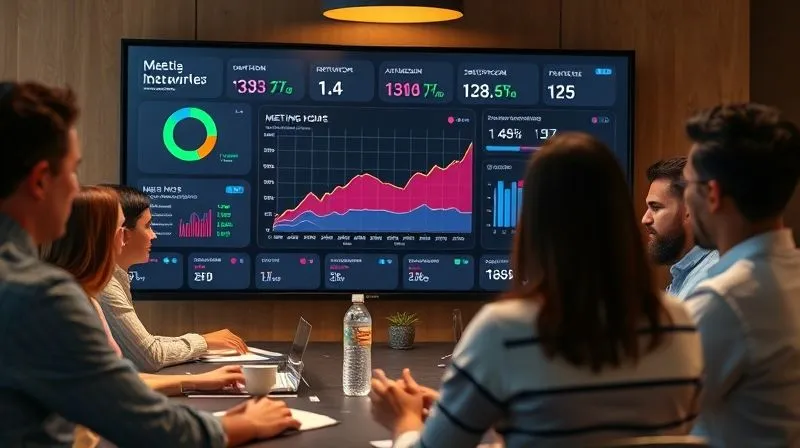
If your tools allow, track key metrics related to your meetings. Are average meeting durations decreasing? Is attendance optimized? Are the stated objectives consistently being met? By analyzing this data, you can identify patterns, pinpoint teams or individuals who might need more training, and measure the impact of your implemented strategies. This data-driven approach moves beyond anecdotal evidence to concrete improvements.
7.3 Iterating on Meeting Formats and Cadences
Don't be afraid to experiment. Try different meeting lengths (e.g., 15-minute stand-ups instead of 30-minute updates), varying frequencies (bi-weekly instead of weekly), or even entirely new formats (e.g., 'no-agenda' brainstorming sessions that are strictly time-boxed). Continuously question the status quo and iterate based on feedback and results. This agile approach ensures your meeting culture remains dynamic and responsive to your team's evolving needs.
Frequently Asked Questions (FAQ)
Question? How do I handle team members who resist asynchronous communication and always want to schedule a call?
Detailed answer: This is a common challenge that requires a combination of education and firm guidance. First, clearly articulate the 'why' behind the asynchronous-first approach – emphasize increased focus time, reduced interruptions, and greater flexibility. Provide examples of how specific tasks can be handled asynchronously. Then, gently but consistently redirect. When someone requests a meeting for an asynchronous-appropriate topic, respond with, "Could we try addressing this via a shared document/Slack thread first? If we hit a roadblock, we can schedule a quick 15-minute sync." Over time, as they experience the benefits, resistance will likely decrease.
Question? What if a meeting needs to be longer than an hour? Is that always a sign of inefficiency?
Detailed answer: Not necessarily always inefficient, but it should be the exception, not the rule. Longer meetings (e.g., strategic planning sessions, deep-dive workshops, or annual reviews) can be necessary. However, for these, it's even more critical to have a meticulously detailed agenda, built-in breaks to combat fatigue, and a clear facilitator. Consider breaking very long sessions into shorter, focused blocks over multiple days to maintain engagement and productivity. Always question if the entire duration truly requires synchronous, real-time presence.
Question? How can I empower junior team members to decline meetings without feeling disrespectful?
Detailed answer: This is a cultural issue that leaders must address directly. Explicitly state in team guidelines that it's acceptable and even encouraged to decline meetings where one's presence isn't essential for contribution or decision-making. Provide a template response they can use, such as, "Thank you for the invite! I've reviewed the agenda, and it seems my direct input might not be critical for this discussion. Please keep me informed of any decisions, and I'm happy to follow up asynchronously." This empowers them while maintaining professional courtesy.
Question? My team is global, and time zones make scheduling difficult. How can I minimize meeting time for everyone?
Detailed answer: Global teams are where asynchronous communication truly shines. Maximize written updates, recorded video messages, and shared documents. For essential synchronous meetings, try to rotate meeting times to share the burden of inconvenient hours across different regions. Keep these cross-time-zone meetings as short and focused as possible, with very clear agendas. Leverage AI transcription tools to provide immediate summaries for those who couldn't attend live. Prioritize information sharing asynchronously and reserve sync time for critical decisions and relationship building.
Question? Is it ever okay to have a meeting without an agenda?
Detailed answer: While the general rule is 'no agenda, no meeting,' there are rare exceptions. A very short, informal check-in (e.g., a 5-minute virtual 'water cooler' chat for team bonding) might not require a formal agenda. Similarly, an impromptu, urgent problem-solving session might start without one, but even then, the first few minutes should be spent quickly establishing the problem, desired outcome, and a rough plan. For any substantive discussion, an agenda is non-negotiable to ensure productivity and respect for everyone's time.
Key Takeaways and Final Thoughts
The journey to mastering virtual meetings and preventing them from draining your remote team's time is an ongoing process, not a destination. It requires intentional effort, a shift in mindset, and consistent application of best practices. As an experienced industry specialist, I've seen firsthand the transformative power these strategies hold for remote teams seeking to reclaim their productivity and foster a healthier work environment.
- Prioritize Asynchronous Communication: Default to non-real-time methods for information sharing and updates.
- Rigorous Pre-Meeting Planning: Ensure every meeting has a clear agenda, defined objectives, and an optimized invitee list.
- Masterful Meeting Execution: Enforce time limits, facilitate actively, and focus on clear decisions.
- Robust Post-Meeting Accountability: Distribute concise summaries and track action items to completion.
- Cultivate a 'Meeting-Lean' Culture: Lead by example, train your team, and implement 'no-meeting' blocks.
- Leverage Technology Wisely: Use meeting features and AI tools to enhance efficiency, not as a substitute for planning.
- Embrace Continuous Improvement: Regularly seek feedback and iterate on your meeting processes.
By integrating these principles into your remote work DNA, you're not just reducing meeting time; you're cultivating a culture of respect, efficiency, and deeper focus. Empower your team to work smarter, not just longer, and watch as their productivity, engagement, and overall well-being soar. The time to act on how to prevent endless virtual meetings from wasting remote team time is now – your team will thank you for it.
Recommended Reading
- Founder's Guide: Improve Leadership Skills & Skyrocket Your Startup
- The Ultimate Guide: Steps for Effective Change Management Consulting Success
- Unlock Sales Success: How to Structure an Effective Sales Training Program
- Beyond Transactions: How to Measure True Customer Loyalty Effectively
- 8 Steps: When Your JV Partner Fails to Perform, What to Do?





Comments
Leave a comment below. Your email will not be published. Required fields marked with *