

How to Prevent Scope Creep from Derailing Critical Project Timelines?
For over 15 years in project management, I've seen countless brilliant initiatives falter, not due to lack of talent or resources, but a far more insidious threat: scope creep. It’s the silent assassin of project timelines and budgets, often starting as a seemingly innocent 'small request' that gradually balloons into an unmanageable beast.
The pain points are universal: missed deadlines, budget overruns, exhausted teams, and ultimately, a compromised project outcome that barely resembles the initial vision. It's frustrating to watch a well-planned project slowly unravel because the boundaries weren't respected or managed effectively.
This article isn't just about identifying the problem; it's about equipping you with actionable, expert-backed frameworks and insights. We'll explore proven strategies, real-world analogies, and practical steps to not only prevent scope creep but also to build a resilient project management culture that safeguards your critical project timelines and ensures successful delivery.
Understanding the Root Causes of Scope Creep
Before we can prevent scope creep, we must understand its origins. It rarely appears out of nowhere; it's often a symptom of underlying issues within project planning, communication, or stakeholder management. Recognizing these root causes is the first step towards building robust defenses.
In my experience, the primary culprits include poorly defined requirements, a lack of clear communication channels, inadequate change control processes, and sometimes, an overly eager team or client wanting to add 'just one more feature.' Each of these, if left unchecked, can chip away at your project's integrity.
The Fuzzy Definition Dilemma
One of the most common starting points for scope creep is a vague or incomplete project scope definition. If the boundaries aren't crystal clear from day one, it becomes incredibly easy for new features or requirements to slip in under the guise of being 'part of the original plan.'
Key Insight: Ambiguity is the enemy of project success. A well-defined scope acts as your project's constitution, outlining what is in and, crucially, what is out.
Communication Breakdowns
Even with a perfectly defined scope, communication gaps can lead to misunderstandings that invite scope creep. Stakeholders might assume certain functionalities are included, or team members might interpret requirements differently, leading to additional work down the line.
My Take: Proactive and continuous communication is not just good practice; it's your early warning system against scope deviation. Regularly check in, clarify, and document everything.
Inadequate Change Control Processes
Projects are dynamic, and changes are inevitable. However, the absence of a formal, rigorous change control process is a direct invitation for scope creep to run rampant. Without a structured way to evaluate, approve, and integrate changes, 'small requests' become de facto additions.
According to a report by Deloitte, effective risk management, which includes managing scope changes, is paramount for project success, yet many organizations still struggle with its implementation.

The Unbreakable Foundation: Meticulous Project Scoping
The best defense against scope creep is a meticulously defined and documented project scope. This isn't a one-off activity; it's an ongoing commitment to clarity and precision that starts at the very inception of your project.
Developing a Robust Scope Statement
Your project scope statement is the cornerstone. It should be a clear, concise document that details the project's objectives, deliverables, features, functions, tasks, deadlines, and, most importantly, its boundaries. Think of it as the project's legal contract.
- Define Objectives: What exactly does this project aim to achieve? Be specific and measurable.
- Identify Deliverables: List all tangible outputs that will be produced.
- Specify Requirements: Detail functional and non-functional requirements. Use user stories for clarity if applicable.
- Establish Exclusions: Explicitly state what is *not* part of the project. This is crucial for managing expectations.
- Outline Acceptance Criteria: How will success be measured? What criteria must deliverables meet to be considered complete?
The Power of a Work Breakdown Structure (WBS)
A WBS is a hierarchical decomposition of the total scope of work to be carried out by the project team to accomplish the project objectives and create the required deliverables. It's not just a task list; it’s a detailed map of every piece of work required.
By breaking down the project into smaller, manageable components, you increase clarity and reduce the likelihood of overlooking critical tasks or having new ones introduced without proper vetting. Each level of the WBS should be clearly defined and assignable.
| WBS Level | Description | Deliverables |
|---|---|---|
| 1.0 Project Initiation | Define project goals & scope | Project Charter, Stakeholder Register |
| 2.0 Requirements Gathering | Collect and document all requirements | Requirements Traceability Matrix, User Stories |
| 3.0 Design & Development | Create solution architecture & build features | System Design Document, Working Software |
| 4.0 Testing & QA | Verify functionality & performance | Test Plan, Defect Log, UAT Sign-off |
| 5.0 Deployment & Go-Live | Release solution to production | Deployment Plan, Go-Live Checklist |
This structured approach provides a visual and logical framework that makes it harder for 'hidden' work to emerge unexpectedly.
Empowering Your Project Charter: A Living Document
Beyond the scope statement, the Project Charter is your foundational authorization document. It formally launches the project and grants the project manager the authority to apply organizational resources to project activities. But it's more than just a formality; it's a living guide.
Securing Stakeholder Buy-in from Day One
The Project Charter must be signed off by key stakeholders, including the project sponsor. This sign-off is not just a signature; it's a commitment. It signifies that everyone involved agrees on the project's purpose, objectives, high-level scope, and critical success factors.
I've found that when stakeholders are actively involved in the creation and approval of the charter, they develop a stronger sense of ownership and are less likely to introduce changes that deviate from the agreed-upon vision without proper process.
Utilizing the Charter for Scope Validation
Whenever a new request or idea emerges, refer back to the Project Charter. Ask: 'Does this align with our agreed-upon objectives and high-level scope as outlined in the charter?' This simple question can be a powerful filter against unwarranted additions.
"A well-defined project charter is not just a document; it's a declaration of intent and a shield against the winds of change that can blow a project off course." - My personal mantra.
Mastering Change Control: Your Shield Against Uncontrolled Expansion
Even with the best initial planning, change is inevitable. The key is to manage change, not to let it manage you. A robust change control process is your project's immune system, protecting it from harmful, uncontrolled alterations.
Establishing a Formal Change Request Process
Every single request for a change, no matter how small, must go through a formal process. This standardizes how changes are proposed, evaluated, approved, and implemented.
- Submission: Any stakeholder or team member submits a formal Change Request (CR) document, detailing the proposed change, its rationale, and perceived benefits.
- Analysis: The project manager and relevant team members analyze the CR for its impact on scope, schedule, budget, resources, and quality.
- Review & Approval: The CR is presented to a Change Control Board (CCB) or designated approvers (e.g., project sponsor, key stakeholders). They review the impact analysis and decide whether to approve, reject, or defer the change.
- Implementation: If approved, the project plan, scope statement, and other relevant documents are updated, and the change is scheduled for implementation.
- Communication: All affected stakeholders are informed of the approved change and its implications.
Case Study: How InnovateTech Salvaged Their Flagship Product Launch
InnovateTech, a fast-growing SaaS company, was developing a new AI-powered analytics platform. Mid-way through development, a key investor suggested adding a complex real-time data visualization module, which was not in the original scope. The project manager, Sarah, knew this would push timelines by months.
Instead of saying 'no' outright, Sarah initiated a formal Change Request. The impact analysis revealed that the new module would require an additional 12 weeks of development, a 20% budget increase, and would delay the critical Q3 launch by a full quarter. The Change Control Board, comprising the investor, the CEO, and the Head of Product, reviewed the data.
After seeing the clear impact on critical project timelines and market opportunity, the investor agreed to defer the real-time module to Phase 2, post-launch. InnovateTech launched on time, secured early market share, and then incorporated the module in a subsequent, planned release. This resulted in a successful initial product launch and a clear roadmap for future enhancements, all thanks to a disciplined change control process.

Stakeholder Alignment: The Cornerstone of Scope Stability
Engaging stakeholders effectively is not just about keeping them informed; it's about actively involving them in the scope definition and management process. Misaligned stakeholders are a prime source of scope creep.
Identifying and Categorizing Stakeholders
Start by identifying all individuals or groups who can affect or be affected by the project. Categorize them by their influence and interest. This helps you tailor your communication and engagement strategies.
- High Influence, High Interest: Engage closely, involve in key decisions (e.g., Project Sponsor, Key Users).
- High Influence, Low Interest: Keep satisfied, ensure their needs are met (e.g., Senior Management).
- Low Influence, High Interest: Keep informed, consult on specific issues (e.g., End Users, Team Members).
- Low Influence, Low Interest: Monitor (e.g., External Regulators).
Regular Stakeholder Workshops and Reviews
Conduct regular workshops and review meetings to ensure everyone remains aligned with the project scope. These sessions are opportunities to reiterate the project's boundaries, discuss progress, and address any potential scope deviations early.
As Harvard Business Review often emphasizes, effective communication and collaboration are critical for managing complex initiatives and preventing costly misunderstandings.
Agile Methodologies: A Flexible Approach to Scope Management
While traditional project management emphasizes fixed scope, agile methodologies offer a different approach to managing evolving requirements. They don't eliminate scope creep but provide mechanisms to incorporate changes in a controlled, iterative manner.
Defining Minimum Viable Product (MVP)
In agile, the concept of an MVP is crucial. It defines the core set of features needed to launch a product and deliver value to early users. By focusing on the MVP, teams avoid building unnecessary features and can get feedback quickly.
Any features beyond the MVP are prioritized in a backlog and considered for future iterations, preventing them from derailing the initial release. This disciplined approach ensures that the most critical components are delivered first, on time.
Iterative Development and Backlog Management
Agile projects work in short, time-boxed iterations (sprints). At the beginning of each sprint, the team commits to a specific set of features from the product backlog. This commitment defines the scope for that sprint.
The product backlog is a prioritized list of all desired features. New requests are added to the backlog, evaluated, and prioritized against existing items. If a new feature is deemed critical, an existing feature of similar effort might be de-prioritized or removed to maintain the sprint's scope. This 'fixed time, flexible scope' approach allows for adaptability without uncontrolled expansion.
Effective Communication: The Early Warning System
Communication is the lifeblood of any successful project. When it comes to preventing scope creep, it acts as your earliest warning system, allowing you to detect and address potential deviations before they become major problems.
Establishing Clear Communication Channels
Define how project information will be shared, who is responsible for what, and the frequency of communication. This includes regular status reports, team meetings, and dedicated channels for feedback and issue resolution.
- Daily Stand-ups: Quick, focused meetings to discuss progress, roadblocks, and next steps.
- Weekly Stakeholder Updates: Concise reports on project status, risks, and any scope-related discussions.
- Dedicated Communication Platforms: Tools like Slack, Microsoft Teams, or Jira provide transparent channels for discussions and documentation.
The Art of Saying 'No' (or 'Not Now')
As a project leader, you'll often face requests that fall outside the agreed scope. Learning to say 'no' effectively, or more often, 'not now, let's put it through the change control process,' is a crucial skill.
Instead of a blunt refusal, offer alternatives: 'That's an interesting idea, but it's outside our current project scope. Let's log it as a potential enhancement for Phase 2 and review its feasibility then.' This acknowledges the idea without committing to immediate implementation.
Leveraging Technology for Proactive Scope Control
Modern project management tools offer powerful features that can significantly aid in preventing and managing scope creep. Don't underestimate the power of technology to enforce discipline and provide transparency.
Project Management Software Features
Tools like Jira, Asana, Trello, Microsoft Project, or Monday.com aren't just for task tracking. They offer features essential for scope control:
- Centralized Documentation: Keep all scope-related documents (charter, scope statement, requirements) in one accessible place.
- Requirements Management: Track requirements, link them to tasks, and ensure traceability.
- Change Request Modules: Many tools have built-in or integrable modules for formal change requests and approvals.
- Version Control: Track changes to documents, ensuring you always have a record of the original scope.
- Progress Tracking: Monitor task completion against the baseline scope to quickly identify deviations.
Automated Alerts and Reporting
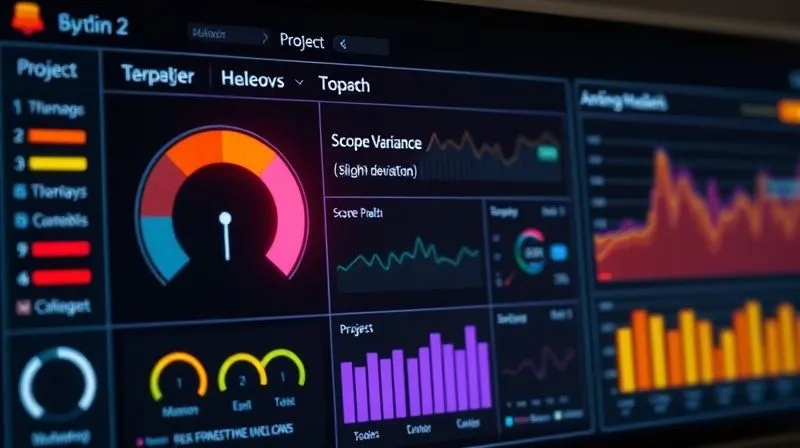
Configure your PM software to generate automated alerts when certain thresholds are met or when tasks deviate significantly from their planned scope or timeline. Regular reporting on scope adherence can highlight potential issues before they escalate.
My Advice: Invest in a tool that supports your chosen methodology and has robust reporting capabilities. The visibility it provides is invaluable for proactive scope management.
Frequently Asked Questions (FAQ)
What's the difference between scope creep and scope change? Scope creep refers to uncontrolled changes or continuous growth in a project's scope without adjustments to time, cost, or resources. It's often undocumented and can be insidious. Scope change, on the other hand, is a formal, controlled process where changes to the project's scope are explicitly requested, evaluated, approved, and documented, with corresponding adjustments made to the project plan. The key difference lies in control and documentation.
Can scope creep ever be beneficial? While generally detrimental, sometimes small, controlled additions that genuinely enhance project value and are formally approved can be seen as beneficial. However, this is rare and only happens within a highly disciplined change control framework where the impact on timeline and budget is fully understood and accepted. Without this control, even 'beneficial' creep quickly becomes a problem.
How do I handle a project sponsor who constantly asks for new features? This requires a delicate balance of stakeholder management and firm adherence to process. Acknowledge their ideas and enthusiasm. Then, gently but consistently guide them through the change control process. Explain the impact of each request on the project's critical timelines and budget using data. Frame it as protecting the project's success and ensuring the most critical features are delivered on time. Regularly refer back to the Project Charter and agreed-upon scope.
Is it possible to completely eliminate scope creep? Completely eliminating scope creep is an ambitious, perhaps unrealistic, goal because projects operate in dynamic environments. However, the objective isn't absolute elimination, but rather effective prevention and rigorous management. By implementing the strategies discussed – meticulous scoping, robust change control, strong stakeholder alignment, and clear communication – you can drastically reduce its occurrence and mitigate its impact, ensuring it doesn't derail your critical project timelines.
What role does team empowerment play in preventing scope creep? An empowered and well-informed project team is a powerful asset against scope creep. When team members understand the project's core objectives and scope, they can act as frontline guardians, questioning requests that seem to deviate from the agreed plan. Empowering them to speak up and channeling new ideas through the formal change process fosters a culture of scope awareness and accountability.
Key Takeaways and Final Thoughts
Preventing scope creep from derailing critical project timelines isn't a one-time fix; it's an ongoing discipline rooted in clear communication, meticulous planning, and robust processes. As an experienced industry specialist, I've learned that success hinges on proactive management, not reactive firefighting.
- Define Everything: Start with an iron-clad project scope statement and a comprehensive Work Breakdown Structure.
- Formalize Change: Implement a strict, yet fair, change control process for all new requests.
- Align Stakeholders: Ensure all key players are on the same page from project inception and throughout its lifecycle.
- Communicate Constantly: Keep lines of communication open and be prepared to manage expectations firmly but respectfully.
- Leverage Technology: Use project management tools to enforce discipline and provide transparency.
By embedding these practices into your project management methodology, you'll not only safeguard your project timelines and budgets but also foster a culture of predictability and trust. Take control of your scope, and you'll take control of your project's destiny. The effort you put into prevention will pay dividends in successful, on-time, and on-budget project delivery.
Recommended Reading
- 7 Proven Pathways: Equity-Free Funding for Pre-Revenue Social Enterprises
- Quantify Geopolitical Risk: 7 Steps to Measure Supply Chain Impact
- Startup Cash Crunch? How to Solve Cash Flow Problems - Fast!
- 5 Proven Steps to Skyrocket Cold Call Conversions & Book More Meetings
- Unlock Your Potential: How to Improve Delegation Skills at Work?





Comments
Leave a comment below. Your email will not be published. Required fields marked with *