


How to Prevent Scope Creep in Complex Consulting Projects: Mastering Project Boundaries
For over two decades in the demanding world of management consulting, I've witnessed firsthand the silent killer of even the most promising projects: scope creep. It begins subtly, perhaps with a 'small' additional request, a 'minor' adjustment, or a 'quick' extra analysis. Before you know it, the project's original boundaries are a distant memory, and your team is drowning in uncompensated work, missed deadlines, and evaporating profit margins.
The frustration is palpable. Clients feel their needs aren't being met, consultants feel exploited, and the project's strategic objectives become obscured by a fog of expanding requirements. This isn't just about 'extra work'; it's about the erosion of trust, the depletion of resources, and the ultimate failure to deliver on the initial promise. It's a problem that plagues consulting firms globally, turning potential successes into costly lessons.
But it doesn't have to be this way. In this definitive guide, I will share the battle-tested strategies, robust frameworks, and critical mindsets I've cultivated over years of navigating complex engagements. You'll learn not just how to identify scope creep, but how to proactively build an impenetrable defense around your projects, ensuring clarity, control, and ultimately, success for both your firm and your clients.
The Insidious Nature of Scope Creep: More Than Just 'Extra Work'
Scope creep, in its essence, is the uncontrolled expansion of a project's requirements or deliverables beyond its initially agreed-upon scope, without corresponding adjustments to time, budget, or other resources. It’s often insidious because it rarely announces itself with a grand pronouncement. Instead, it manifests as a series of small, seemingly innocuous requests that, when accumulated, completely derail the project.
I've seen it take many forms: a client's 'exploratory' conversation that turns into a new feature request, an internal team's decision to add an 'enhancement' without proper approval, or even external regulatory changes that force new requirements. The danger lies in its cumulative effect. Each small addition might seem manageable, but together, they create a mountain of uncompensated effort, pushing timelines, straining resources, and ultimately compromising the quality of the core deliverables.
"Scope creep is the silent killer of project profitability and team morale. It's not just about doing more; it's about doing more without a clear purpose, proper compensation, or adequate resources."
Understanding the different types of scope creep is the first step in prevention:
- Client-Initiated Creep: The most common form, where clients request additional features, reports, or services beyond the SOW.
- Internal Creep (Gold-Plating): The project team adds features or functionalities that were not requested by the client, often out of a desire to 'over-deliver' or because they find the work interesting.
- External Factors: Unforeseen changes in market conditions, regulatory requirements, or technological shifts that necessitate adjustments to the project scope.
- Ambiguity Creep: Poorly defined initial scope leads to misunderstandings and differing interpretations, allowing new 'requirements' to be retroactively claimed as part of the original agreement.
Recognizing these forms is crucial, but true prevention requires a proactive, multi-pronged strategy.
Pillar 1: The Ironclad Project Charter and Statement of Work (SOW)
The foundation of any successful consulting engagement, and your first line of defense against scope creep, is a meticulously crafted Project Charter and Statement of Work (SOW). These aren't mere formalities; they are your legal and operational bedrock, defining exactly what you will and will not do. In my experience, most scope creep originates from poorly defined initial agreements.
Defining Scope with Surgical Precision
The SOW must be a living document, but its initial creation demands surgical precision. Ambiguity is the enemy. Every aspect of the project needs to be clearly articulated, leaving no room for misinterpretation. Here’s how I approach it:
- Clearly Articulate Objectives: What is the ultimate business problem you are solving? What does success look like in measurable terms?
- List All Deliverables: Specify every single output. This includes reports, presentations, models, software modules, training materials, etc. Be granular. Instead of 'a report,' specify 'a 20-page strategic recommendations report, delivered as a PDF, accompanied by a 60-minute executive presentation.'
- Define Exclusions Explicitly: This is perhaps the most critical, yet often overlooked, element. List what the project will NOT include. For example, 'This project does not include implementation of recommended software,' or 'Data migration services are out of scope.' This manages client expectations upfront.
- State Assumptions: Document all assumptions made during planning (e.g., 'Client will provide access to key stakeholders within 48 hours of request,' 'All necessary data will be provided in a clean, usable format'). If an assumption proves false, it triggers a discussion about scope adjustment.
- Outline Constraints: Detail any limitations like budget caps, fixed deadlines, resource availability, or technological restrictions.
- Specify Roles and Responsibilities: Clearly delineate who is responsible for what, both on your team and the client's side.
Remember, the SOW isn't just a contract; it's a mutual understanding. Both parties must not only sign it but genuinely understand and agree to its contents. I always insist on a dedicated meeting to walk through the SOW line by line, ensuring alignment.

Pillar 2: Mastering Stakeholder Alignment and Communication
Even the most robust SOW can falter without continuous, proactive stakeholder alignment and communication. In my experience, a significant portion of scope creep stems not from malicious intent, but from miscommunication or evolving understandings among key players. It's not enough to define the scope; you must actively manage perceptions of it.
Proactive Stakeholder Identification and Engagement
Before the project truly kicks off, you need a comprehensive understanding of everyone who has a vested interest or influence. This goes beyond the primary client contact.
- Identify All Key Stakeholders: Map out everyone who will be affected by or can affect the project. This includes senior executives, department heads, end-users, IT teams, and even external vendors.
- Assess Influence and Interest: Use a power/interest grid to understand each stakeholder's level of influence and their interest in the project. This helps you tailor your communication strategy.
- Define Communication Needs: For each key stakeholder, determine what information they need, how often, and in what format.
- Establish a RACI Matrix: Clearly define who is Responsible, Accountable, Consulted, and Informed for key project activities and decisions. This prevents assumptions about who is doing what and who needs to be involved in approvals.
The Power of Regular, Structured Communication
Ad-hoc conversations are dangerous. They create pockets of information and understanding that can diverge from the agreed-upon scope. Instead, implement a rigorous communication plan:
- Weekly Status Meetings: These should be focused, time-boxed, and have a clear agenda. Always review progress against the agreed scope and highlight any potential deviations.
- Monthly Executive Briefings: Keep senior leadership informed of high-level progress, key risks, and any proposed scope changes. This ensures they are aware of the 'big picture' and can support your efforts to maintain scope.
- Detailed Meeting Minutes: Document all discussions, decisions, and action items. Distribute these promptly and ensure all attendees review and confirm their accuracy. This creates an auditable trail and prevents 'I don't remember agreeing to that' scenarios.
As Harvard Business Review often emphasizes, effective stakeholder management is not just about communication; it's about building relationships and fostering shared understanding. When stakeholders feel heard and informed, they are less likely to introduce disruptive 'new' requirements.
| Frequency | Audience | Purpose | Format |
|---|---|---|---|
| Weekly | Project Team & Core Client Team | Progress review, issue resolution, scope check | Video Conference & Minutes |
| Bi-Weekly | Key Stakeholders (Department Heads) | Updates, feedback, alignment on decisions | In-person/Video & Summary Report |
| Monthly | Executive Sponsors | High-level progress, strategic alignment, risk review | Executive Briefing & Presentation |
| As Needed | Specific Subject Matter Experts | Deep dives on technical/specific issues | Ad-hoc Meetings & Action Items |
Pillar 3: Robust Change Management Processes
Despite your best efforts, change is inevitable. Markets shift, technologies evolve, and client priorities can pivot. The key to preventing scope creep isn't to eliminate change, but to manage it. A robust change management process transforms potential scope creep into controlled, value-adding adjustments.
The Formal Change Request (CR) Mechanism
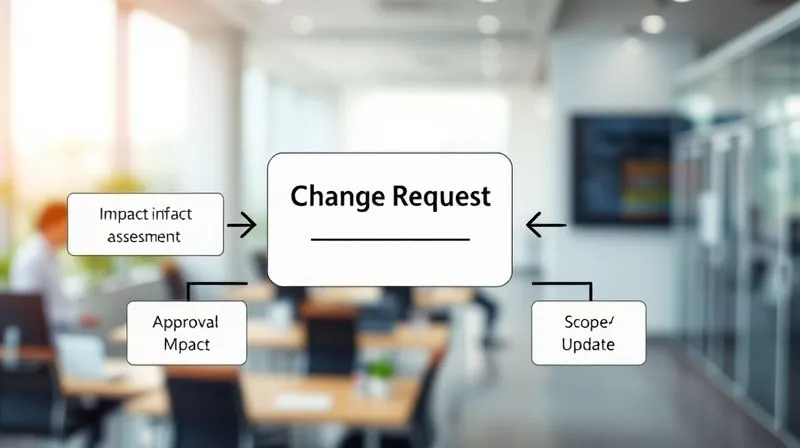
Any request that deviates from the agreed-upon SOW, no matter how small, must go through a formal Change Request (CR) process. I cannot stress this enough. This mechanism provides structure, transparency, and accountability. Here’s a typical process I implement:
- Initiation: Any party (client or consultant) identifies a need for change and formally submits a CR. This should be a standardized form detailing the proposed change, its rationale, and anticipated benefits.
- Impact Assessment: The consulting team meticulously assesses the impact of the proposed change on the project's scope, timeline, budget, resources, and quality. This requires a deep understanding of the original SOW and project plan.
- Proposal Development: Based on the impact assessment, a formal proposal is drafted, outlining the revised scope, updated timeline, adjusted budget, and any other necessary changes. This gives the client a clear understanding of the 'cost' of the change.
- Review and Approval: The CR proposal is presented to a designated Change Control Board (CCB), typically comprising key stakeholders from both the client and consulting teams. They review the proposal and either approve, reject, or request modifications.
- Documentation and Communication: Once approved, the CR is formally documented, the SOW is updated, and all affected stakeholders are informed. This updated SOW becomes the new baseline.
This process ensures that every change is deliberate, understood, and agreed upon, rather than incrementally eroding the project. It also provides a clear mechanism for clients to request changes without feeling they are being 'nickel and dimed,' as long as the value proposition of the change is clear.
Case Study: How InnovateCo Saved Their Flagship ERP Project
I recall a particularly challenging engagement where InnovateCo, a mid-sized consulting firm, was implementing a complex ERP system for a manufacturing client. The initial SOW was clear, but as the project progressed, the client's internal teams began requesting 'minor' customizations and integrations that were clearly out of scope. The project was quickly spiraling towards a 40% budget overrun and a six-month delay.
InnovateCo's project lead, drawing on experience, immediately halted all development on new requests and implemented a strict Change Request (CR) process. Every single new request, no matter how small, had to be formally documented, assessed for impact on time and budget, and approved by a joint client-consultant Change Control Board. In parallel, weekly alignment meetings were instituted, focusing on the original scope and progress.
Initially, there was resistance from the client, who felt their flexibility was being curtailed. However, by transparently showing the financial and timeline implications of each requested change, and offering clear choices, InnovateCo empowered the client to prioritize. Many 'nice-to-haves' were deferred to a later phase, and critical additions were formally scoped and budgeted. The project, though slightly delayed from the original, was brought back on track, delivering within 10% of the revised budget and establishing a clear, mutual understanding of expectations. This experience underscored that a disciplined CR process isn't about saying 'no'; it's about saying 'yes' strategically.
Pillar 4: Granular Deliverable Definition and Acceptance Criteria
Ambiguity is the fertile ground for scope creep. If a deliverable isn't defined precisely, or if the criteria for its acceptance are vague, you're inviting subjective interpretations later in the project. This is where many consultants falter, believing a high-level description is sufficient. It is not.
Defining "Done" Clearly
I advocate for defining "done" with extreme clarity for every single deliverable. This means going beyond simply naming the deliverable and specifying its characteristics, format, and content expectations. For instance:
- Poor Definition: "A marketing strategy document."
- Good Definition: "A 30-page marketing strategy document, delivered as a Google Docs link, outlining target personas, key messaging, channel strategy, and a 12-month campaign roadmap. Includes executive summary, detailed analysis, and actionable recommendations. Final version to be signed off by the VP of Marketing."
This level of detail leaves little room for a client to later say, "I thought it would include social media ad copy" if that wasn't specified. It also helps your team understand exactly what they need to produce.
Client Acceptance and Sign-off Protocols
Equally important are clear acceptance criteria and a formal sign-off process for each major deliverable or project phase. This creates defined gates, ensuring that work is reviewed, approved, and formally accepted before moving forward. This is how I structure it:
- Pre-defined Acceptance Criteria: For each deliverable, specify what conditions must be met for it to be considered complete and acceptable. These should be objective and measurable where possible.
- Formal Review Period: Allocate a specific, time-boxed period for the client to review the deliverable. E.g., "Client will have 5 business days to review and provide consolidated feedback."
- Consolidated Feedback Mechanism: Insist on receiving feedback in a single, consolidated format from a designated client representative. This prevents conflicting or piecemeal feedback that can lead to rework and scope creep.
- Iteration Limits: Define the number of iterations or revisions included in the original scope. For example, "Two rounds of revisions are included; additional revisions will be subject to a Change Request."
- Formal Sign-off: Once all criteria are met and revisions completed, obtain a formal, written sign-off from the authorized client representative. This is your proof of completion and acceptance.
This structured approach minimizes subjective disputes and ensures that both parties agree on the quality and completeness of the work at each stage. It's a critical component of project control, as highlighted by resources from the Project Management Institute.
Pillar 5: Agile Principles for Scope Flexibility (Within Limits)
While strict definition is vital, the modern consulting landscape often demands a degree of flexibility. Simply saying "no" to all changes can damage client relationships and stifle innovation. My approach integrates agile principles, allowing for controlled flexibility without succumbing to uncontrolled scope creep.
Iterative Development and Sprint Planning
For projects that lend themselves to it (e.g., technology, product development, strategy with phased implementation), I often advocate for an iterative approach. This involves breaking the project into smaller, manageable 'sprints' or phases, each with its own mini-scope and deliverables.
- Define a Minimum Viable Product (MVP) or Core Scope: Identify the absolute essential deliverables that must be completed to achieve the primary project objective. This is your non-negotiable baseline.
- Sprint Planning: At the beginning of each sprint, a specific set of tasks and deliverables is agreed upon. This acts as a 'mini-SOW' for that iteration.
- Regular Reviews: At the end of each sprint, review progress with the client. This provides frequent opportunities to demonstrate work, gather feedback, and adjust priorities for the *next* sprint, without altering the *current* one.
This allows for adaptation and learning throughout the project lifecycle. Changes can be incorporated into future sprints, but only after formal discussion and agreement, ensuring they don't disrupt ongoing work or cause unmanaged creep.
Backlog Management and Prioritization
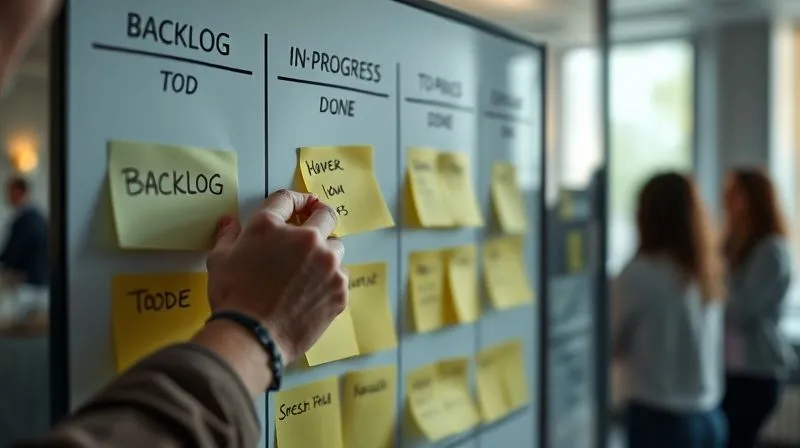
An essential counterpart to iterative development is a well-managed backlog. This is a prioritized list of all potential features, enhancements, or additional requests that are not part of the current sprint or the core MVP.
- Capture All Ideas: Encourage clients and internal teams to submit all ideas and requests to the backlog. This acknowledges their input without immediately committing to it.
- Prioritization: Regularly review and prioritize backlog items with the client based on business value, effort, and alignment with overall project goals.
- Trade-off Discussions: If a high-priority backlog item needs to be pulled into the current scope, it must trigger a trade-off discussion. What existing scope item will be removed or deferred to make room? This forces a zero-sum game, preventing uncompensated additions.
Pillar 6: Proactive Risk Management and Contingency Planning
Preventing scope creep isn't just about reacting to requests; it's about anticipating them. A robust risk management framework allows you to identify potential sources of creep before they materialize and build in contingencies to mitigate their impact.
Identifying Scope-Related Risks
During the project planning phase, I dedicate significant time to brainstorming potential risks that could lead to scope creep. Common culprits include:
- Unclear or Evolving Requirements: The client's understanding of their needs changes, or they haven't adequately engaged their internal stakeholders.
- Technology Surprises: Unexpected technical challenges or limitations discovered during implementation.
- Stakeholder Turnover: Key client contacts leave, and their replacements bring new perspectives or priorities.
- Third-Party Dependencies: Delays or changes from external vendors that impact your project's scope.
- Regulatory Changes: New laws or compliance requirements emerge during the project lifecycle.
Building Buffers and Contingencies
Once identified, risks need mitigation strategies. This often involves building in appropriate buffers and contingency plans:
- Time Buffers: While you don't want to inflate estimates, allocating a small percentage of extra time for unforeseen complexities can absorb minor scope adjustments without triggering a full CR.
- Budget Contingencies: Similarly, a contingency budget (typically 10-15% for complex projects) can cover small, unavoidable scope changes or unexpected costs related to necessary adjustments.
- Pre-defined Escalation Paths: Clearly define who needs to be involved, and at what stage, if a scope-related risk materializes. This ensures swift decision-making and prevents paralysis.
- Scenario Planning: For high-impact risks, develop 'what-if' scenarios and pre-plan your responses. If X happens, we will do Y.
| Risk Category | Potential Risk | Likelihood | Impact | Mitigation Strategy |
|---|---|---|---|---|
| Requirements | Client's needs evolve during project | High | High | Strict CR process, iterative development, regular scope reviews |
| Technology | Integration issues with legacy systems | Medium | High | Early technical deep-dives, buffer time, expert consultation |
| Stakeholder | Key client contact leaves mid-project | Medium | Medium | Broaden communication, cross-functional client team, detailed documentation |
| External | New regulatory compliance requirements | Low | High | Monitor industry changes, legal review, contingency budget |
Pillar 7: The Consultant's Mindset: Assertiveness and Value Communication
Beyond all the processes and documentation, preventing scope creep ultimately comes down to the consultant's mindset and soft skills. You can have the most perfect SOW, but if you can't communicate its boundaries effectively and assertively, it's just paper. This is where experience truly shines.
Saying "No" Gracefully, But Firmly
One of the hardest lessons I learned early in my career was how to say "no" to a client. It's not about being unhelpful; it's about protecting the project's integrity and ensuring you deliver on the *agreed* value. Here’s my approach:
- Empathize First: Acknowledge the client's request and their underlying need. "I understand why you'd want that feature; it would certainly add value."
- Relate to Scope: Gently remind them of the existing scope. "As per our SOW, that particular functionality falls outside our current deliverables."
- Propose a Solution (via CR): Offer the path forward. "We can certainly explore adding that through our Change Request process, which would allow us to assess the impact on time and budget."
- Focus on Value: Frame your refusal not as a lack of willingness, but as a commitment to delivering the *current* project successfully. "My priority is to ensure we deliver on our core objectives for Phase 1 on time and within budget. Adding this now would jeopardize that."
"Effective scope management isn't about rigid adherence; it's about disciplined flexibility. It's about ensuring every 'yes' to new work is a conscious, compensated decision, not an accidental concession."
Educating Clients on the Cost of Change
Clients often don't understand the ripple effect of seemingly small changes. It's your role to educate them, transparently, on the "cost" of scope creep. This isn't just monetary; it's also:
- Time: Every addition pushes back the completion date.
- Resources: More work means more people or more hours for existing people, stretching your team thin.
- Quality: Rushing to accommodate new scope can compromise the quality of existing deliverables.
- Focus: Diverting attention to new tasks dilutes focus from the core objectives.
By clearly articulating these impacts, you help clients make informed decisions about whether the perceived value of the new request outweighs its costs. This builds trust and positions you as a strategic partner, not just a task-doer. Mastering these 'soft skills' is paramount in consulting, as often discussed in publications like Forbes Leadership.

Frequently Asked Questions (FAQ)
What's the biggest single cause of scope creep? In my experience, the biggest cause is ambiguity in the initial project definition and a lack of a formal change control process. When the Statement of Work is vague, or when there's no clear mechanism for managing new requests, scope creep becomes almost inevitable. It's often compounded by a consultant's reluctance to push back on client requests.
Can fixed-price contracts completely prevent scope creep? While fixed-price contracts incentivize tighter scope definition and provide a strong baseline, they do not automatically prevent scope creep. They shift the risk of creep more heavily onto the consulting firm. Without rigorous change management and clear communication, a fixed-price contract can lead to significant financial losses if the scope expands without proper adjustments. They require even more diligence in defining exclusions and a robust CR process.
How do you handle a client who refuses to pay for change requests, claiming the work was 'implied'? This is a challenging situation, but it underscores the importance of a meticulously detailed SOW with explicit exclusions. If the SOW clearly states what is NOT included, you have a strong basis. If it's truly ambiguous, you may need to find a compromise. My approach is to revisit the SOW, highlight the specific clauses, and then propose a new CR with a detailed breakdown of effort and cost. If they still refuse, it becomes a strategic decision: absorb the cost (if minor) to preserve the relationship, or escalate based on contractual terms. Transparency and documentation are your best defense here.
What if the client claims the 'extra' work was implied in the original scope? This often happens when the initial scope was not precise enough. Your strongest defense is the detailed SOW, which should list deliverables and, crucially, exclusions. Refer back to the signed document. If there's genuine ambiguity, you have an opportunity to educate the client on the impact of such additions and propose a formal change request. It's a moment to reinforce project governance and the 'contract' of your engagement. It also highlights a learning opportunity for your firm to make future SOWs even more robust.
How often should I review the project scope with the client? Beyond the initial sign-off, I recommend reviewing the project scope at key milestones or at the start of each major project phase or sprint. For longer projects, a formal review every 4-6 weeks is advisable. These reviews should be part of your regular status meetings, ensuring both parties remain aligned with the original (or formally amended) scope. This proactive approach helps catch potential creep early, before it becomes a significant problem.
Key Takeaways and Final Thoughts
Preventing scope creep in complex consulting projects is not a passive activity; it's an active, continuous discipline. It demands meticulous planning, unwavering communication, and a proactive mindset from every member of your consulting team. By internalizing and implementing the seven pillars we've discussed, you'll transform your approach to project management.
- Establish an Ironclad SOW: Define everything with surgical precision, especially exclusions.
- Master Stakeholder Alignment: Proactive, structured communication is your best friend.
- Implement Robust Change Management: Make every scope change a deliberate, documented decision.
- Define Deliverables Granularly: Leave no room for ambiguity about what "done" means.
- Embrace Controlled Flexibility: Use agile principles to adapt without losing control.
- Practice Proactive Risk Management: Anticipate and plan for potential creep.
- Cultivate an Assertive Mindset: Say "no" gracefully, and educate clients on the true cost of change.
Embrace these strategies, and you'll not only protect your project's profitability and your firm's reputation but also build stronger, more transparent, and ultimately more successful relationships with your clients. The path to project success lies in mastering your boundaries.
Recommended Reading
- Global Rivals Stealing Share? 7 Urgent Steps to Reclaim Your Market
- 7 Steps to Uncover a Franchise's True Profitability Before Investing
- The Ultimate Blueprint: How to Handle Customer Complaints on Social Media
- Boost Profits: Mastering E-commerce Returns with a Clear Policy Guide
- Why Business Solutions Fail: 7 Keys to Deliver Lasting Results





Comments
Leave a comment below. Your email will not be published. Required fields marked with *