


Introduction: How to prevent top talent burnout in a future hybrid work model?
For over 15 years in the realm of business and remote work, I've witnessed firsthand the incredible potential of flexible work models, but also their inherent pitfalls. One of the most critical challenges I've observed, particularly as we've shifted towards hybrid structures, is the silent erosion of our most valuable asset: top talent. The very individuals we rely on to drive innovation and lead growth are often the first to feel the crushing weight of an 'always-on' culture, leading to burnout that can devastate teams and bottom lines.
The shift to hybrid work, while offering unprecedented flexibility, has paradoxically created new avenues for stress and exhaustion. The lines between work and personal life have blurred, digital demands have intensified, and the traditional support structures have been fragmented. This isn't just about feeling tired; it's about a deep, systemic depletion that impacts productivity, creativity, and ultimately, retention of your best people.
This article isn't just another theoretical discussion. Based on my extensive experience, research, and practical application, I'm going to provide you with actionable frameworks, real-world analogies, and expert insights designed to fortify your organization against this pervasive threat. You’ll learn precisely how to prevent top talent burnout in a future hybrid work model, ensuring your high performers thrive, not just survive.
Understanding the Unique Burnout Triggers in Hybrid Work
Before we can prevent burnout, we must understand its contemporary manifestations. The hybrid model, while lauded for its flexibility, introduces a new set of stressors that can disproportionately affect top talent, who often possess a strong sense of responsibility and drive.
The Blurring Lines: Home and Office
One of the most insidious triggers is the complete obliteration of the traditional boundaries between work and personal life. When the 'office' is also the 'home,' it becomes incredibly difficult to switch off. I've seen countless driven professionals, working from their dining tables or spare rooms, find themselves answering emails late into the evening or starting early, simply because the commute barrier no longer exists. This constant accessibility breeds a culture where disconnection feels like dereliction of duty, leading to chronic overwork.
Digital Overload and "Always On" Culture
The proliferation of communication tools – Slack, Teams, Zoom, email – means that information flows constantly, often without clear prioritization. Top talent, often leading multiple projects or responsible for critical decisions, can feel overwhelmed by the sheer volume of digital pings and notifications. This creates an 'always-on' expectation, where quick responses are implicitly, if not explicitly, demanded, severely impacting their ability to engage in deep, focused work. The cognitive load from context-switching alone is a significant energy drain.
The Equity Gap: In-Office vs. Remote Experience
Another subtle but potent trigger is the potential for an equity gap between those who primarily work from the office and those who are predominantly remote. Remote employees, even top performers, can feel excluded from spontaneous decisions, informal networking, or crucial conversations that happen face-to-face. This can lead to feelings of isolation, reduced visibility, and a perception of being 'out of the loop,' which for high achievers, can be deeply demotivating and contribute to burnout.
"Burnout isn't just about working too much; it's about feeling disconnected, undervalued, and lacking control over your work and time. In hybrid models, these factors are amplified if not proactively managed."
Fostering Psychological Safety and Trust as Foundations
At the core of preventing burnout, especially for top talent, lies psychological safety and trust. When employees feel safe to speak up, make mistakes, and be themselves, they are far less likely to experience the chronic stress that leads to burnout. This is an area I consistently emphasize with leaders.
Open Communication Channels
Leaders must actively cultivate an environment where open, honest, and frequent communication is the norm. This means not just sharing information downwards but creating robust feedback loops upwards and across teams. For hybrid teams, this often requires intentional effort to ensure remote voices are heard as clearly as in-office ones.
Empowering Autonomy and Flexibility
Top talent thrives on autonomy. They want to own their work, manage their time, and have a say in *how* they achieve their goals. The hybrid model offers an unprecedented opportunity to bake in flexibility not just in location, but in work patterns. Trusting your team to manage their schedule, while ensuring deadlines are met, is a powerful burnout preventative.
- Establish Clear Expectations: Define outcomes and metrics, not just hours logged. This provides a clear framework for autonomy.
- Regular One-on-Ones: Schedule consistent, dedicated time for managers to check in, not just on tasks, but on well-being, challenges, and career aspirations.
- Encourage Feedback: Create anonymous channels for feedback on hybrid policies and workload. Show that feedback is valued and acted upon.
- Promote Work-Life Boundaries: Actively discourage late-night emails or weekend work. Lead by example in disconnecting.
- Invest in Manager Training: Equip leaders with the skills to manage diverse hybrid teams with empathy and trust.

Redefining Productivity and Performance Metrics
The traditional measure of 'hours spent at the desk' is not only outdated but actively detrimental in a hybrid model. For top talent, who are often highly efficient, this focus can lead to feeling undervalued or pressured to perform 'theater of work' rather than actual impactful output. We need to shift our paradigm.
Focus on Outcomes, Not Hours
True productivity is about impact and results. In a hybrid environment, it's crucial to define success by tangible outcomes, project milestones, and contributions to strategic goals, rather than by how long someone is online or physically present. This empowers talent to manage their time effectively and focus on what truly matters.
Implementing "Deep Work" Blocks
To combat digital overload, encourage and protect 'deep work' periods. This means setting expectations that certain times are reserved for focused, uninterrupted work, free from meetings or instant messages. For top talent, who often require intense concentration for complex problem-solving, this is invaluable.
| Metric Category | Description | Impact on Burnout |
|---|---|---|
| Traditional Metrics | Focus on inputs and presence | High (encourages 'always on', less autonomy) |
| Hybrid-Optimized Metrics | Focus on outcomes, impact, and well-being | Low (promotes autonomy, efficiency, balance) |
| Examples | Hours logged, email response time, visible activity | Project completion rates, strategic goal attainment, quality of output, peer feedback |
Strategic Well-being Programs: Beyond the Gym Membership
While a discounted gym membership is a nice perk, it barely scratches the surface of what's needed to prevent top talent burnout in a hybrid context. Organizations must move towards holistic, integrated well-being strategies that genuinely support the mental, emotional, and physical health of their employees.
Mental Health Support & Resources
This is non-negotiable. Providing easy access to mental health resources, such as confidential counseling services, employee assistance programs (EAPs), and mental health days, is paramount. More importantly, destigmatize mental health conversations within the workplace. Leaders should openly discuss the importance of mental well-being and model healthy behaviors.
Encouraging Disconnection and Recharge
Actively promoting breaks, encouraging employees to use their vacation time, and implementing 'no-meeting' days or periods can make a significant difference. I've seen companies implement mandatory 'digital detox' weekends or even 'focus Fridays' where internal meetings are banned. These initiatives signal that the organization values rest and recharge.
Case Study: How InnovateTech Tackled Digital Fatigue
InnovateTech, a rapidly growing software company with a global hybrid workforce, noticed a concerning trend: their top engineers and product managers were consistently working beyond traditional hours, leading to declining engagement scores and increased turnover among their high performers. Their initial approach of offering more wellness apps didn't move the needle.
After consulting with my team, they implemented a multi-pronged strategy. First, they introduced 'Core Collaboration Hours' (e.g., 10 AM - 3 PM local time) where most meetings were scheduled, leaving the rest of the day for focused work or personal appointments. Second, they mandated a 'No Internal Meeting Wednesday' policy. Third, they launched a leadership training program focused on empathetic management and identifying early signs of burnout. Finally, they subsidized professional coaching for their top 20% of talent, focusing on time management and stress resilience. Within six months, they saw a 20% reduction in reported stress levels among their high performers and a 15% increase in retention rates for critical roles. This resulted in a more sustainable, high-performing culture.
"True well-being support isn't about adding more perks; it's about fundamentally redesigning the work environment to prioritize mental and physical health as integral to sustained performance."
Leadership Development for Hybrid Environments
Managers are the frontline defense against burnout. In a hybrid model, their role becomes even more complex and critical. Investing in their development is an investment in your entire workforce's well-being and productivity, especially for your top talent.
Empathy-Driven Management
Leaders need to be trained not just in managing tasks, but in managing people with genuine empathy. This means understanding individual circumstances, recognizing personal challenges, and being flexible where possible. It's about active listening and observing subtle cues that might indicate stress or overwhelm, particularly in a remote setting where non-verbal communication is limited.
Training on Proactive Burnout Detection
Managers should be equipped with the skills to identify the early warning signs of burnout in their team members. This includes changes in performance, communication patterns, mood, or engagement. They need to know how to initiate sensitive conversations and direct employees to appropriate resources without judgment. This proactive approach can prevent minor stressors from escalating into full-blown burnout.
- Workload Management Training: Teach managers how to effectively distribute workload and identify when a team member, especially a high performer, is taking on too much.
- Communication Best Practices: Train on effective asynchronous communication, setting clear expectations for response times, and facilitating inclusive virtual meetings.
- Boundary Setting: Empower managers to model and enforce healthy work-life boundaries for themselves and their teams.
- Emotional Intelligence Coaching: Provide resources for managers to develop their EQ, crucial for empathetic leadership.
- Regular Peer Support Groups: Create forums for managers to share challenges and best practices in leading hybrid teams.

Optimizing Collaboration Tools and Processes
Inefficient tools and poorly defined processes are silent killers of productivity and significant contributors to frustration and burnout. For top talent, who are often focused on efficiency and impact, these friction points are particularly grating.
Streamlining Digital Workflows
Review and optimize your digital toolkit. Are you using too many platforms? Are there redundancies? Simplify workflows, integrate tools where possible, and provide comprehensive training to ensure everyone is using them effectively. The goal is to reduce cognitive load and wasted time searching for information or switching between applications.
Intentional Meeting Design
Meetings are often cited as a major time sink. In a hybrid model, they can be even more draining if not managed well. Implement strict meeting hygiene: clear agendas, defined objectives, active facilitation, and ensuring that meetings are only held when absolutely necessary. Leverage asynchronous communication for updates and discussions that don't require real-time interaction. As Harvard Business Review suggests, intentional meeting design is crucial for hybrid work success. Read more on effective hybrid collaboration strategies from HBR.
Crafting a Culture of Recognition and Growth
Top talent are often driven by more than just financial compensation; they seek meaning, impact, and opportunities for growth. A lack of recognition or a stagnant career path can quickly lead to disillusionment and burnout, even for the most dedicated employees.
Meaningful Appreciation
Recognition needs to be timely, specific, and authentic. Move beyond generic 'good job' emails. Highlight *what* was achieved, *why* it mattered, and *who* benefited. This can be through public shout-outs, peer-to-peer recognition programs, or personal notes from leadership. For remote teams, ensure recognition is visible and equitable across all locations.
Clear Career Pathing and Development
High performers are often looking ahead. They want to know there's a future for them within the organization. Provide clear career progression paths, invest in their professional development through training, mentorship, and challenging assignments. This shows them they are valued and that their long-term growth is a priority.
"Recognition isn't just about saying thank you; it's about reinforcing desired behaviors and showing top talent that their unique contributions are seen, valued, and essential to the organization's success."
| Recognition Strategy | Benefit |
|---|---|
| Peer-to-Peer Platforms | Fosters team appreciation, increases visibility of contributions |
| Spot Bonuses/Awards | Immediate reward for exceptional effort, tangible appreciation |
| Development Opportunities | Invests in long-term growth, shows career pathing |
| Public Shout-outs (e.g., all-hands) | Highlights impact, inspires others, boosts morale |
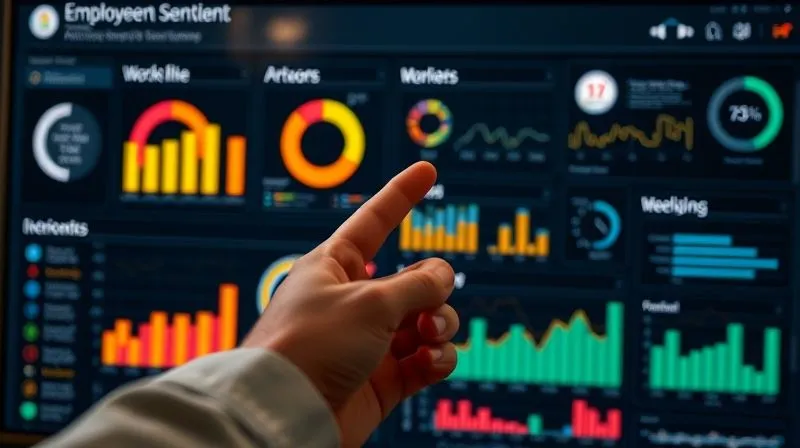
The Power of Data: Proactive Insights into Employee Sentiment
In a hybrid model, it's easier to miss the subtle signs of distress or disengagement. Relying on anecdotal evidence is insufficient. Proactive data collection and analysis are crucial for understanding employee sentiment and identifying burnout risks before they become critical.
Regular Pulse Surveys
Implement short, frequent pulse surveys to gauge employee well-being, workload, engagement, and satisfaction with hybrid policies. These surveys should be anonymous to encourage honest feedback and focus on actionable insights rather than just collecting data for data's sake. Trending these results over time can highlight emerging issues.
Analyzing Engagement Metrics
Beyond surveys, look at behavioral data (ethically and with privacy in mind). Are certain collaboration tools being overused or underused? Are meeting attendance patterns changing? While not direct indicators of burnout, shifts in these metrics, especially when correlated with survey data, can provide valuable insights. According to a study published by Gallup, highly engaged teams show 21% greater profitability, underscoring the link between well-being and performance. Explore Gallup's research on employee engagement.
- Design Targeted Questions: Focus survey questions on specific aspects of hybrid work known to impact burnout (e.g., workload, work-life balance, perceived fairness).
- Segment Data: Analyze results by team, department, or work model (e.g., mostly remote vs. mostly in-office) to identify specific hotspots.
- Close the Loop: Communicate survey results transparently and, crucially, share what actions will be taken based on the feedback.
- Utilize HR Analytics: Partner with HR to leverage existing data on turnover, sick leave, and performance reviews to identify patterns indicative of burnout risk.
- Confidentiality is Key: Ensure employees trust that their feedback is anonymous and will not be used against them.
Building Resilience: A Continuous Organizational Effort
Preventing top talent burnout in a future hybrid work model isn't a one-time fix; it's an ongoing commitment. Organizations must adopt an agile and iterative approach, constantly learning and adapting their strategies.
Iterative Approach to Hybrid Policies
The 'perfect' hybrid model doesn't exist. What works today might need adjustment tomorrow. Regularly review and refine your hybrid policies based on employee feedback, performance data, and evolving business needs. Be transparent about changes and involve employees in the decision-making process where appropriate. This iterative process builds organizational resilience.
Championing Work-Life Integration
Instead of merely talking about 'work-life balance' (which can feel like a zero-sum game), focus on 'work-life integration.' This acknowledges that work and life are intertwined and seeks ways to make them complement each other. This could mean flexible hours, compressed workweeks, or offering resources that support both professional and personal development. As a report by Deloitte emphasizes, organizations must prioritize human-centric approaches to truly thrive in the future of work. Discover more insights from Deloitte on the human experience in the future of work.

Frequently Asked Questions (FAQ)
Question: How can we convince senior leadership that investing in burnout prevention for top talent is a priority, especially when budgets are tight? Detailed answer: The key is to frame it in terms of business impact and ROI. Present data on the cost of turnover for top talent (recruitment, onboarding, lost productivity, knowledge drain), which can be 1.5-2x their annual salary. Show how burnout directly impacts innovation, client relationships, and overall company performance. Highlight competitor actions and the risk of losing market share if top talent leaves. Emphasize that proactive prevention is far more cost-effective than reactive crisis management. Use case studies (like the one above) to illustrate tangible benefits.
Question: What are the most common mistakes companies make when trying to prevent burnout in a hybrid model? Detailed answer: I've seen several recurring errors. Firstly, a 'one-size-fits-all' approach to hybrid work, ignoring individual needs and roles. Secondly, focusing solely on wellness perks (like meditation apps) without addressing systemic issues like workload or poor leadership. Thirdly, failing to train managers adequately for the complexities of managing hybrid teams. Fourthly, not actively promoting work-life boundaries and leading by example. Lastly, a lack of consistent, anonymous feedback mechanisms to understand actual employee sentiment.
Question: How can we ensure fairness and equity in hybrid work arrangements to prevent burnout, especially regarding opportunities and visibility? Detailed answer: This requires intentional design. Implement 'hybrid-first' meeting protocols where all participants, regardless of location, are on equal footing (e.g., everyone on individual video feeds). Ensure remote employees have equal access to training, mentorship, and career development opportunities. Create structured pathways for visibility, such as rotating project leads or formal mentorship programs that bridge geographical divides. Regularly audit promotion and compensation decisions to ensure no unconscious bias against remote workers. Transparency in decision-making is crucial.
Question: Is it possible to completely eliminate burnout, or is it an unavoidable part of high-performance cultures? Detailed answer: While completely eradicating stress in demanding roles is unrealistic, chronic, debilitating burnout is absolutely preventable. The goal isn't to eliminate all pressure, but to create a sustainable high-performance culture where employees have the resources, support, and autonomy to manage stress and recover effectively. It’s about building resilience into the system and the individual, ensuring challenges lead to growth, not collapse. A culture that embraces sustainable performance understands that consistent peak output comes from a well-rested, engaged, and supported workforce, not an exhausted one.
Question: How do we measure the success of our burnout prevention strategies in a hybrid environment? Detailed answer: Success metrics should be multi-faceted. Look at employee engagement survey scores (especially on workload, well-being, and work-life balance), voluntary turnover rates (particularly among top performers), absenteeism rates, and productivity metrics (output, quality, project completion). Also, track participation rates in well-being programs and feedback on leadership effectiveness. Qualitative data from stay interviews and exit interviews can also provide rich insights into what's working and what isn't. Regular reporting and analysis are vital.
Key Takeaways and Final Thoughts
- Embrace a Human-Centric Approach: Prioritize psychological safety, trust, and empathy as foundational elements for any successful hybrid model.
- Redefine Success: Shift from measuring hours to measuring outcomes and impact, empowering top talent with autonomy.
- Invest Holistically in Well-being: Go beyond superficial perks to provide robust mental health support and actively encourage disconnection.
- Empower Your Leaders: Train managers to lead with empathy, detect burnout proactively, and champion healthy boundaries.
- Leverage Data for Proactive Insights: Use pulse surveys and analytics to understand employee sentiment and address issues before they escalate.
- Commit to Continuous Improvement: View burnout prevention as an iterative process, constantly adapting policies and practices based on feedback and data.
The future of work, especially in a hybrid model, presents both immense opportunities and significant challenges. Preventing top talent burnout isn't just a moral imperative; it's a strategic business necessity. By intentionally designing your hybrid workplace with well-being, autonomy, and psychological safety at its core, you can cultivate a resilient, engaged, and high-performing workforce that thrives, rather than simply endures. It’s time to move beyond survival mode and build a sustainable future where your best and brightest can truly shine.
Recommended Reading
- Unlock Project Success: How to Interpret KPIs for Actionable Insights
- 7 Steps to Identify & Validate a Truly Scalable Business Model
- Strategic Partnership ROI Failure? 7 Steps to Revitalize or Exit Smartly
- 5 Proven Steps to Defuse Angry E-commerce Support Escalations
- Project Budget 30% Over? 7 Urgent Steps to Recalibrate & Recover





Comments
Leave a comment below. Your email will not be published. Required fields marked with *