


How to Prevent Unplanned Work from Disrupting Agile Sprints?
For over 18 years in the trenches of project and product management, I've witnessed firsthand the incredible potential of agile methodologies to transform teams and deliver value. Yet, I've also seen a recurring Achilles' heel cripple even the most enthusiastic agile adopters: the relentless barrage of unplanned work.
This insidious problem doesn't just push deadlines; it erodes team morale, compromises quality, and fundamentally undermines the predictability and focus that agile promises. It’s a silent killer of sprint goals, leaving teams feeling overwhelmed, unappreciated, and perpetually behind.
But it doesn't have to be this way. In this definitive guide, I'll share battle-tested strategies, actionable frameworks, and expert insights drawn from years of experience to help you proactively manage and, more importantly, prevent unplanned work from derailing your agile sprints. You'll learn how to fortify your team's focus, regain control, and consistently deliver on your commitments.
Understanding the Root Causes of Unplanned Work
Before we can prevent unplanned work, we must diagnose its origins. It rarely appears out of thin air; it’s often a symptom of underlying systemic issues. Identifying these roots is the first crucial step towards sustainable prevention.
Lack of Clear Scope and Prioritization
One of the most common culprits is a fuzzy or constantly shifting understanding of what "done" truly means for a sprint. When the sprint goal isn't crystal clear, or when the product backlog isn't meticulously refined and prioritized, new "urgent" requests can easily creep in. These often stem from a lack of agreement on what truly matters right now.
In my experience, teams often confuse "prioritized" with "everything is important." A truly prioritized backlog means hard decisions have been made, and less critical items are explicitly deferred. Without this clarity, every new idea feels like a priority, leading to constant disruption.
Ineffective Stakeholder Management
Stakeholders, by nature, have dynamic needs and evolving insights. However, if their expectations aren't managed proactively, or if there isn't a clear channel for their input outside of the current sprint, new requests can become disruptive demands. They might not understand the impact their "quick ask" has on the team's committed work.
I've seen situations where well-meaning executives unintentionally sabotage sprints by directly approaching developers with ad-hoc requests. This bypasses the established agile process and creates a parallel, unmanaged workflow that breeds chaos.
Insufficient Incident Management Protocols
Not all unplanned work is a "new feature." Sometimes it's a critical bug, a system outage, or an urgent security patch. While these are legitimate interruptions, a lack of a clear, pre-defined process for handling such incidents can turn a manageable issue into a sprint-destroying fire drill. Teams need a robust plan for when things inevitably break.
Without a structured approach, every critical incident feels like a unique crisis, requiring ad-hoc decision-making and pulling multiple team members away from their sprint commitments without a clear strategy. This can lead to burnout and missed sprint goals.
Poor Estimation and Capacity Planning
Over-committing is a common pitfall. If a team consistently tries to cram 120% capacity into a sprint, there's simply no room for the unexpected. When every story point is allocated, even minor unplanned tasks become significant disruptions. Realistic estimation and conservative capacity planning are vital buffers against surprises.
I often advise teams to consider their "ideal capacity" versus their "realistic capacity." The latter accounts for overhead, meetings, and the inevitable small interruptions that are part of daily work, leaving a small, intentional buffer for the truly unforeseen.
Fortifying Your Sprint with Robust Backlog Refinement
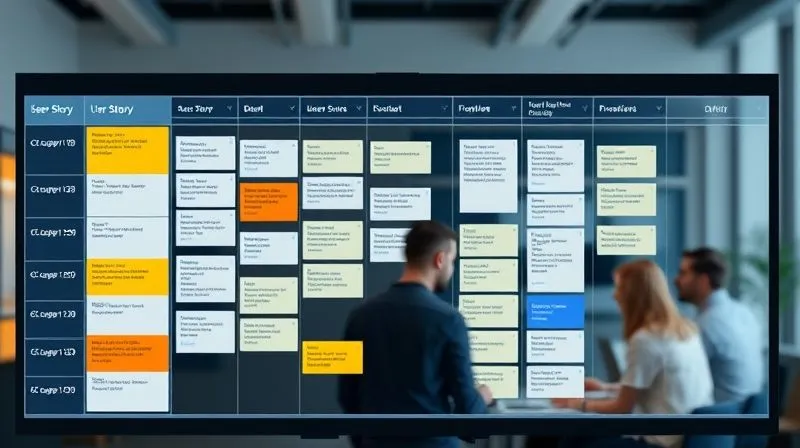
The product backlog is the lifeblood of your agile process. A well-groomed, continuously refined backlog is your primary defense against unplanned work. It ensures that only the most valuable, well-understood items enter a sprint.
Backlog refinement isn't just a meeting; it's a continuous activity. It's about bringing clarity and readiness to future work, making sure that when an item is pulled into a sprint, it's ready to be worked on without surprises.
- Dedicated Time & Cadence: Schedule regular, dedicated sessions (e.g., 2-4 hours per week for a 2-week sprint) for backlog refinement. This isn't optional; it's essential work for the Product Owner, Scrum Master, and development team.
- Define "Definition of Ready" (DoR): Establish clear criteria that a backlog item must meet before it can be considered "ready" for a sprint. This might include: user story complete, acceptance criteria defined, dependencies identified, estimated, and sized appropriately.
- Prioritize Ruthlessly: The Product Owner must continuously prioritize the backlog, ensuring the most valuable items are at the top. This means saying "no" to lower-priority items or deferring them until more critical work is complete.
- Decompose & Estimate: Break down large items into smaller, manageable user stories. Work with the development team to estimate these stories, improving accuracy and understanding.
- Identify & Mitigate Dependencies: Proactively look for external or internal dependencies that could block work. Address them during refinement, not mid-sprint.
"A well-refined backlog isn't just a list of features; it's a strategic roadmap for value delivery, meticulously prepared to minimize surprises and maximize focus."
By investing consistently in this process, you create a pipeline of well-understood, ready-to-go work, significantly reducing the likelihood of mid-sprint scope changes or clarification needs that often manifest as unplanned work.
Mastering Stakeholder Communication and Expectation Setting
One of the most effective ways to prevent unplanned work from disrupting agile sprints is through proactive and transparent stakeholder management. It's about educating, collaborating, and setting clear boundaries.
- Educate Stakeholders on Agile Principles: Help them understand how agile works, particularly the concept of a stable sprint goal and the impact of mid-sprint changes. Explain why protecting the sprint is crucial for predictable delivery.
- Establish a Single Point of Contact (SPOC): Channel all new requests and feedback through the Product Owner. This prevents stakeholders from bypassing the process and directly interrupting the development team.
- Regular Review & Feedback Cycles: Schedule regular opportunities for stakeholders to review progress (e.g., Sprint Reviews) and provide feedback. This allows their input to be incorporated into future sprints, not the current one.
- Collaborative Prioritization: Involve key stakeholders in backlog prioritization sessions where appropriate. When they understand the trade-offs, they're more likely to respect sprint boundaries.
How to Say "Not Now" Gracefully and Effectively
Saying "no" or "not now" to a stakeholder can be challenging, but it's essential for sprint integrity. Here's a framework I've found effective:
- Acknowledge & Empathize: "I understand this is important to you, and I appreciate you bringing it to our attention."
- State the Current Commitment: "The team is currently focused on delivering X, Y, and Z for the current sprint, which are critical for [project goal]."
- Explain the Impact: "Introducing this new item now would require us to pull resources from our committed work, jeopardizing our ability to deliver on our current sprint goal and potentially delaying other critical items."
- Offer an Alternative Path: "Let's add this to the product backlog immediately, prioritize it with other upcoming work, and discuss its potential inclusion in the next sprint. We can review it during our next backlog refinement session."
- Follow Through: Ensure the item is indeed added to the backlog and discussed. This builds trust and shows their input is valued, even if not acted upon immediately.
Case Study: How InnovateTech Streamlined Urgent Requests
InnovateTech, a rapidly growing SaaS company, struggled with constant "urgent" requests disrupting their development sprints. Their Product Owner, Sarah, implemented a new "Urgent Request Protocol." Any request deemed urgent by a stakeholder had to be submitted through a specific form, detailing its business impact, estimated effort, and requested delivery date. Sarah then held a daily 15-minute "Urgent Triage" meeting with key stakeholders and the Scrum Master. In this meeting, they would collectively decide if the request was truly sprint-breaking, or if it could be prioritized into the next sprint. If it was truly critical, a committed story from the current sprint would be explicitly removed to make room. This transparent process reduced mid-sprint interruptions by 60% within two months, as stakeholders gained a better understanding of the trade-offs involved.
Implementing a Dedicated 'Buffer' for Unforeseen Challenges
Even with the best planning, the unexpected will happen. That's why building a strategic 'buffer' into your sprint capacity is not a sign of weakness, but a hallmark of mature agile teams. This buffer isn't idle time; it's reserved capacity to absorb legitimate, high-priority unplanned work without derailing the entire sprint.
I typically recommend allocating 10-20% of a team's estimated capacity as a buffer. This percentage can vary based on the maturity of the team, the stability of the product, and the inherent volatility of the domain. For highly regulated or complex environments, a larger buffer might be prudent.
What does this buffer look like? It could be:
- Time-based: A certain number of hours or days per sprint.
- Story Point-based: A small number of story points set aside.
- Dedicated Team Member: In larger teams, one person might be designated as the "firefighter" for a portion of the sprint.
| Team Member | Estimated Capacity (SP) | Planned Sprint Work (SP) | Buffer (SP) |
|---|---|---|---|
| Alice | 15 | 13 | 2 |
| Bob | 15 | 12 | 3 |
| Charlie | 15 | 13 | 2 |
| 45 | 38 | 7 (approx. 15%) |
This table illustrates how a team might allocate its capacity, explicitly reserving a portion for the unforeseen. This transparency helps manage expectations and provides a safety net.

Establishing a Clear Incident Management Workflow
Not all unplanned work can be prevented, especially critical incidents like production bugs or system outages. The goal here isn't prevention, but rather effective and minimal disruption. A well-defined incident management workflow is paramount.
This workflow should be documented, communicated, and understood by everyone, from the development team to customer support and product management. It ensures that when an incident occurs, there's a clear, agreed-upon process for triage, resolution, and communication.
- Define "Critical Incident": Establish clear criteria for what constitutes a "critical" or "showstopper" incident that warrants immediate sprint interruption. Not all bugs are critical.
- Dedicated Triage Process: Implement a rapid triage process, often involving a specific individual or a small "on-call" rotation, to quickly assess the impact and urgency of an incident.
- Escalation Path: Clearly define who needs to be informed and when. This prevents multiple people from dropping their work to investigate the same issue.
- Impact Assessment & Decision: If an incident is deemed critical, the Product Owner, Scrum Master, and relevant technical leads decide on the immediate course of action. This might involve pausing existing sprint work, assigning the incident to someone utilizing the buffer, or even canceling the sprint if the impact is severe enough.
- Communication Protocol: Establish how and when stakeholders will be updated on the incident's status and resolution.
- Post-Mortem & Prevention: After resolution, conduct a blameless post-mortem to understand the root cause and identify preventative measures for future sprints. This is where unplanned work can teach valuable lessons.
"Emergencies are rare, but preparation is key. A robust incident management workflow turns chaos into a controlled response, protecting your sprint from unnecessary fallout."
This structured approach ensures that critical issues are handled efficiently and transparently, minimizing their disruptive footprint on the current sprint. For deeper insights into incident management best practices, I highly recommend exploring frameworks like ITIL (Information Technology Infrastructure Library).
The Power of 'Definition of Done' and 'Definition of Ready'
These two foundational agile concepts are often overlooked in their power to prevent unplanned work. They are explicit agreements that bring immense clarity and discipline to your sprints.
- Definition of Ready (DoR): As mentioned earlier, DoR specifies the criteria a backlog item must meet before it can be pulled into a sprint. It's a quality gate for incoming work.
- Benefits: Prevents incomplete or poorly understood work from entering the sprint, reducing mid-sprint clarifications, re-work, and scope creep. Ensures the team has everything they need to start and finish a task.
- Definition of Done (DoD): DoD specifies the criteria a product increment must meet to be considered "potentially releasable." It's a quality gate for outgoing work.
- Benefits: Ensures consistency, quality, and avoids "almost done" work that later requires unplanned fixes or additional effort. It prevents hidden work from surfacing after the sprint.
By collectively agreeing on and strictly adhering to both a DoR and a DoD, the team creates a shared understanding of quality and completeness. This dramatically reduces the likelihood of surprises and unplanned tasks emerging mid-sprint or immediately after, because the expectations for what is being delivered are crystal clear upfront.
The Scrum Guide elaborates on the importance of the Definition of Done as a commitment that enhances transparency and quality.
Cultivating a Culture of Focus and Protection
Ultimately, preventing unplanned work is not just about processes; it's about fostering a team culture that values focus, respects sprint commitments, and proactively protects itself from distractions. This cultural shift requires leadership, consistent reinforcement, and team buy-in.
- Team Agreement on Sprint Goals: Ensure every team member deeply understands and commits to the sprint goal. When everyone is aligned, they become guardians of that goal, naturally pushing back on distractions.
- Minimize Interruptions: Encourage practices that minimize external interruptions during focused work blocks. This could include "no meeting" blocks, using specific communication channels for urgent vs. non-urgent matters, or even physical cues like "do not disturb" signs.
- Empower the Scrum Master: The Scrum Master plays a crucial role in shielding the development team from external interference. They should be empowered to challenge requests that threaten the sprint goal and facilitate conversations with stakeholders.
- Celebrate Sprint Goal Achievement: Regularly celebrate the successful completion of sprint goals. This reinforces the value of focus and commitment, making it a positive cultural norm.
When a team truly believes in and actively protects its sprint commitments, the collective effort becomes a powerful barrier against unplanned work. It shifts from a reactive problem to a proactive defense mechanism.

Leveraging Data: Metrics to Track and Improve
You can't manage what you don't measure. Tracking the impact and sources of unplanned work provides invaluable data for continuous improvement. This data allows you to move beyond anecdotal evidence and make informed decisions about process adjustments.
- Unplanned Work Percentage: Track the percentage of sprint capacity consumed by unplanned work. This can be measured in story points, hours, or number of tasks. A rising percentage is a clear red flag.
- Velocity Variance: Monitor how much your team's velocity fluctuates. High variance can indicate inconsistent capacity planning or frequent disruptions from unplanned work.
- Lead Time for Unplanned Work: How quickly are critical unplanned tasks identified, triaged, and resolved? This measures the efficiency of your incident management workflow.
- Sources of Unplanned Work: Categorize unplanned work (e.g., critical bug, new feature request, technical debt, support). This helps pinpoint the most frequent origins and guides preventative actions.
By regularly reviewing these metrics, ideally during your sprint retrospectives, you can identify patterns, understand the financial and productivity costs of unplanned work, and develop targeted strategies to mitigate it. For instance, if "critical bugs" are consistently high, it points to a need for better testing or quality assurance earlier in the cycle.
| Sprint | Total Capacity (SP) | Planned Work (SP) | Unplanned Work (SP) | Unplanned Work % | Primary Source |
|---|---|---|---|---|---|
| Sprint 1 | 40 | 35 | 5 | 12.5% | Critical Bugs |
| Sprint 2 | 40 | 38 | 2 | 5% | Stakeholder Request |
| Sprint 3 | 40 | 37 | 3 | 7.5% | Technical Debt |
This tracking helps visualize trends and justify process changes. Understanding the true impact allows you to advocate for necessary adjustments with data-backed insights. For more on agile metrics, consider resources from Atlassian's Agile Coach.
Iterative Improvement: Retrospectives as Your Shield
The agile principle of continuous improvement is your most powerful tool against unplanned work. Sprint retrospectives are not just meetings; they are critical opportunities to reflect, learn, and adapt your processes to better protect future sprints.
I always emphasize that retrospectives should dedicate specific time to discuss unplanned work. Ask these critical questions:
- What unplanned work emerged during the sprint? List all instances, no matter how small.
- What was its impact on our sprint goal and velocity? Quantify the disruption.
- What was the root cause of each instance? Dig deeper than just "a bug." Was it a missed requirement? A design flaw? Poor estimation? External pressure?
- What specific actions can we take to prevent this type of unplanned work in the next sprint? Focus on concrete, measurable improvements.
- How effective was our buffer/incident management process in handling it? Refine your processes based on real-world experience.
By consistently addressing unplanned work in retrospectives, you create a feedback loop that strengthens your team's defenses over time. Each sprint becomes an opportunity to learn and implement small, incremental changes that collectively build a robust shield against disruption.

Frequently Asked Questions (FAQ)
Question: What if stakeholders insist on new work mid-sprint, even after I've explained the impact? This is a common and challenging situation. First, reiterate the impact transparently – "If we pull this in, X, Y, or Z committed items will be delayed or dropped." Present it as a clear trade-off. Second, involve the Product Owner and, if necessary, the Scrum Master to mediate. It’s their role to protect the sprint. If the stakeholder is a very senior leader, the Product Owner might need to escalate to a higher-level product or portfolio manager to discuss the strategic implications of disrupting the sprint. The key is to make the trade-off explicit and ensure the decision to disrupt is made consciously and with full awareness of the consequences, rather than by accident.
Question: How much buffer capacity is ideal for an agile sprint? The ideal buffer capacity isn't a fixed number; it depends on your team's context. For a new team or one in a highly volatile environment, 15-20% might be appropriate. For a mature, stable team with predictable work, 5-10% might suffice. The goal is to find a balance where the buffer is large enough to absorb common disruptions without encouraging slack. Use your retrospectives and metrics (like the "unplanned work percentage") to iteratively adjust this percentage over several sprints until you find what works best for your specific team and product.
Question: Can unplanned work ever be beneficial? While generally disruptive, some "unplanned" activities can indeed be beneficial, especially if they lead to significant learning or prevent a larger issue. For example, a developer discovering a critical security vulnerability and addressing it immediately, or a quick spike to validate a new technology that drastically improves future efficiency. The distinction lies in how it's handled: Was it strategically decided upon (even if quickly), or was it a reactive, unmanaged interruption? The key is to manage these situations proactively, even if they're unexpected, by using your buffer or making explicit trade-offs.
Question: How do we differentiate truly urgent unplanned work from merely important unplanned work? This is where a clear definition of "critical incident" and a robust triage process are essential. Urgent work typically has immediate, severe negative consequences if not addressed within hours or a day (e.g., production system down, data breach, legal compliance failure). Important work, while high value, might have consequences that manifest over days or weeks, allowing it to be prioritized into the next sprint. Use a simple impact/urgency matrix during your triage meetings. Empower your Product Owner to make these calls, supported by the development team's technical assessment.
Question: What tools can help manage unplanned work in agile? Most agile project management tools (like Jira, Azure DevOps, Asana, Trello) can be configured to help. You can create specific "incident" or "unplanned work" issue types, set up separate Kanban boards or swimlanes for urgent tasks, and use reporting features to track unplanned work metrics. The key isn't the tool itself, but how you configure and use it to support your defined processes for backlog refinement, incident management, and capacity planning.
Key Takeaways and Final Thoughts
Preventing unplanned work from disrupting your agile sprints is not a one-time fix; it's an ongoing commitment to discipline, communication, and continuous improvement. It requires a shift from reactive firefighting to proactive planning and protection.
- Master Backlog Refinement: Your primary defense against mid-sprint surprises.
- Communicate & Educate Stakeholders: Set clear expectations and channel requests effectively.
- Build a Strategic Buffer: Allocate capacity for the truly unforeseen.
- Establish Incident Protocols: Handle critical issues with minimal disruption.
- Leverage DoR & DoD: Ensure clarity and quality from start to finish.
- Foster a Culture of Focus: Empower your team to protect their sprint goals.
- Measure & Learn: Use data and retrospectives to continuously improve.
By implementing these strategies, you're not just safeguarding your sprints; you're empowering your team, increasing predictability, and ultimately delivering higher-quality products with less stress. It's a journey, but with consistent effort and a commitment to agile principles, you can transform your team's ability to navigate the unexpected and thrive.
Recommended Reading
- 5 Ways to Use Customer Data for Proactive Service Excellence
- Franchise Royalty Fees: Are They Negotiable? The Surprising Truth!
- 7 Reasons Your Predictive Models Aren't Boosting ROI & How to Fix Them
- The Ultimate Guide: Developing a Fair & Equitable Hybrid Work Policy
- Build a Thriving Remote Work Culture Post-2030: 7 Essential Pillars





Comments
Leave a comment below. Your email will not be published. Required fields marked with *