


How to Proactively Identify and Re-engage At-Risk Customers?
For over 15 years in the sales growth and customer retention trenches, I've seen countless businesses make one critical, yet often invisible, mistake: they wait until a customer has already left to realize there was a problem. This reactive approach is not just costly; it's a silent killer of growth, eroding your hard-won customer base one defection at a time.
The truth is, customers rarely churn without sending signals. These signals, however subtle, are your early warning system. The challenge lies in recognizing them amidst the noise and acting decisively before a 'maybe' becomes a 'gone forever.' Ignoring these precursors is like watching your sales funnel leak profusely, yet focusing all your energy on filling the top, rather than patching the holes.
In this definitive guide, I'll walk you through a robust, actionable framework – born from years of experience and countless successful turnarounds – designed to empower you. You’ll learn not just to identify the early warning signs of customer attrition, but also to implement data-driven strategies and empathetic re-engagement campaigns that transform at-risk customers back into loyal advocates. This isn't about guesswork; it's about building a resilient, proactive retention engine.
The Silent Killer: Understanding Customer Attrition
Customer attrition, or churn, is more than just a line item on a spreadsheet; it's a fundamental threat to sustainable business growth. Many companies focus almost exclusively on acquisition, often overlooking the gaping hole in their bucket. I've witnessed businesses pour millions into attracting new clients, only to see their profits stagnate because their existing customers were quietly walking out the back door.
The True Cost of Churn
The financial ramifications of customer churn are far-reaching and often underestimated. It's not just the lost revenue from that single customer; it's the ripple effect across your entire organization.
- Lost Lifetime Value (LTV): Every lost customer represents the forfeiture of all future potential purchases and interactions.
- Increased Acquisition Costs: It costs significantly more to acquire a new customer than to retain an existing one. Estimates often range from 5 to 25 times more, depending on the industry.
- Damaged Reputation: Churn can lead to negative word-of-mouth, impacting your brand's standing and making future acquisition even harder.
- Reduced Referral Opportunities: Satisfied, long-term customers are your best advocates, driving valuable referrals. Churn eliminates this powerful growth channel.
- Operational Inefficiencies: High churn often indicates underlying issues with product, service, or support, requiring constant reactive firefighting.
“The cost of acquiring a new customer is up to five times greater than the cost of retaining an existing one. Focusing on retention isn't just smart; it's essential for survival and scalable growth.”
Understanding these costs is the first step towards building a compelling business case for investing in proactive retention strategies. It shifts the mindset from a 'nice-to-have' to a 'must-have' operational imperative.
Building Your Early Warning System: Identifying At-Risk Customers
The key to proactive retention lies in recognizing the subtle shifts in customer behavior that signal impending churn. Think of it like a medical diagnosis: you look for symptoms before the disease becomes critical. In my experience, these signals fall into several categories, each offering valuable insights.
Behavioral Indicators: What to Watch For
These are the most direct and often the earliest indicators that a customer might be disengaging. They reflect a change in how a customer interacts with your product or service.
- Reduced Engagement or Usage: This is perhaps the most universal sign. For a SaaS product, it could be fewer logins, less feature utilization, or lower data consumption. For a retail business, it might be fewer website visits or decreased purchase frequency.
- Declining Purchase Frequency or Value: A customer who once bought monthly now buys quarterly, or their average order value has significantly decreased. This shows a waning commitment or a shift in needs.
- Increased Support Tickets or Complaints: While some support tickets are normal, a sudden surge in complaints, particularly concerning fundamental product issues or repeated problems, can indicate frustration. Conversely, a complete absence of interaction might also signal disengagement.
- Non-renewal of Subscriptions or Opt-outs: This is the most obvious sign, but often too late. Proactive identification aims to intervene long before this point.
- Negative Sentiment in Feedback: Lower Net Promoter Score (NPS) responses, negative comments in surveys, or poor Customer Satisfaction (CSAT) scores are direct cries for attention.
Demographic and Psychographic Signals
Beyond direct behavior, changes in a customer's external environment or internal priorities can also make them vulnerable.
- Changes in Business Size or Industry: For B2B clients, a significant downsizing, merger, or a pivot in their industry might render your solution less relevant or affordable.
- Competitive Offers or Market Shifts: Customers are constantly exposed to alternatives. If a competitor launches a compelling new feature or a more aggressive pricing model, your customers might be tempted to explore.
- Key Contact Changes: If your primary contact at a client company leaves, the institutional knowledge and relationship built around your solution might erode, making the account vulnerable.
Leveraging Data: The Power of Customer Health Scores
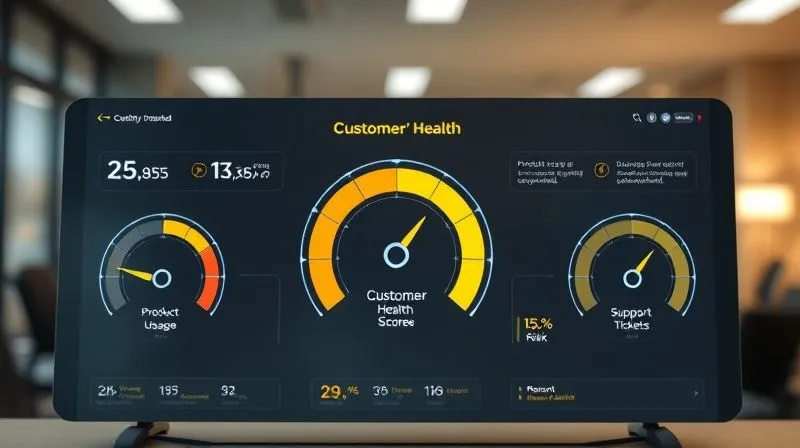
To move beyond anecdotal observation, you need a systematic way to quantify customer risk. This is where a Customer Health Score becomes indispensable. It’s a composite metric that takes various data points and assigns a single score, indicating the overall 'health' of a customer relationship.
- Define Key Metrics: Identify 3-5 critical indicators relevant to your business (e.g., product usage frequency, feature adoption, support ticket volume, recent purchases, survey scores).
- Assign Weights: Not all metrics are equally important. Assign weights based on their predictive power (e.g., product usage might be 40%, support tickets 20%, NPS 20%, purchase history 20%).
- Normalize Data: Ensure all metrics are on a comparable scale (e.g., 0-100).
- Calculate Score: Sum the weighted, normalized scores for each customer.
- Categorize Health: Define thresholds for 'healthy,' 'at-risk,' and 'churned' (e.g., 80-100 healthy, 50-79 at-risk, below 50 churned).
- Automate & Visualize: Implement a system to automatically calculate and display these scores, ideally with visual cues (green for healthy, yellow for at-risk, red for churned).
This systematic approach allows your team to quickly identify who needs attention and prioritize their efforts. It transforms raw data into actionable intelligence.
Data-Driven Diagnostics: Tools and Metrics for Detection
An effective early warning system relies on robust data collection and analysis. Without the right tools and metrics, even the most dedicated team will struggle to identify at-risk customers with precision.
Key Metrics to Monitor
Beyond the components of a health score, these overarching metrics provide a panoramic view of your customer base's stability:
- Customer Lifetime Value (LTV): This metric tells you the total revenue a customer is expected to generate over their relationship with your company. A declining average LTV can signal systemic issues.
- Churn Rate: While reactive, monitoring churn rate trends (monthly, quarterly) helps you understand the effectiveness of your retention efforts over time.
- Net Promoter Score (NPS): A strong indicator of customer loyalty and satisfaction. A falling NPS, or a significant number of 'detractors,' is a red flag.
- Customer Satisfaction (CSAT): Measures satisfaction with a specific interaction or product feature. Low scores here point to immediate pain points.
- Engagement Metrics: These are specific to your product or service, such as feature adoption rates, time spent in-app, frequency of use, or content consumption.
Predictive Analytics and AI
The modern era offers powerful tools to go beyond historical data. Predictive analytics and machine learning algorithms can analyze vast datasets to forecast which customers are most likely to churn, often with remarkable accuracy. These models can identify complex patterns that human analysts might miss.
| Predictive Model | Best Use Case | Complexity | Data Requirement |
|---|---|---|---|
| Regression Analysis | Forecasting churn probability based on numerical factors | Medium | Moderate historical data |
| Decision Trees | Identifying clear decision rules leading to churn | Medium | Moderate, handles mixed data types |
| Machine Learning (e.g., Random Forest, Gradient Boosting) | High-accuracy churn prediction with complex interactions | High | Large datasets, feature engineering |
| Survival Analysis | Estimating the 'time until churn' for specific customer segments | High | Detailed event-level data |
Companies like Salesforce and Adobe offer advanced analytics platforms that integrate with CRM systems, providing real-time churn predictions. Leveraging these technologies can transform your retention strategy from reactive to truly prophetic. For a deeper dive into how leading companies use data, I highly recommend exploring insights from the Harvard Business Review on data-driven customer strategies.
Crafting Your Re-Engagement Strategy: Tailored Approaches
Once you've identified at-risk customers, the next crucial step is to re-engage them. This isn't a one-size-fits-all endeavor. My experience has taught me that generic 'we miss you' messages often fall flat. The most effective strategies are deeply personalized and address the specific reasons a customer might be disengaging.
Segmentation is Key: No One-Size-Fits-All
Before you even think about the message, consider the messenger and the context. Segment your at-risk customers based on their specific profile and behavior:
- High-Value, Long-Term Customers: These clients warrant the most personalized, high-touch approach, often involving a direct call from an account manager or even a senior leader.
- Recently At-Risk Customers: Those who've just started showing signs of disengagement might respond well to proactive check-ins or targeted product education.
- Dormant or Lapsed Customers: These require a 'win-back' campaign focused on re-establishing value or offering incentives.
- Product-Specific At-Risk: Customers struggling with a particular feature or encountering a recurring bug need technical support or targeted training.
Personalized Communication: The Human Touch in a Digital Age
The goal of re-engagement is to rebuild trust and demonstrate value. This is best achieved through personalized communication that shows you understand their unique situation.
- Acknowledge Their History: Reference their past purchases, usage patterns, or specific interactions. This shows you're not sending a generic blast.
- Address the Potential Problem: If you have an educated guess about why they're at risk (e.g., low feature adoption), gently bring it up and offer solutions.
- Offer a Solution or Value Proposition: This could be a personalized tutorial, a dedicated support session, an exclusive offer, or an invitation to provide feedback.
- Provide a Clear Call to Action (CTA): Make it easy for them to take the next step, whether it's scheduling a call, accessing a resource, or claiming an offer.
- Use the Right Channel: Sometimes an email is fine, but for high-value clients, a phone call or even a personalized video message can make all the difference.
“True personalization isn't just using a customer's name; it's demonstrating a deep understanding of their journey, their challenges, and how your solution specifically addresses them.”
Multi-Channel Re-Engagement Campaigns That Convert
In today's interconnected world, relying on a single communication channel for re-engagement is a missed opportunity. A multi-channel approach increases visibility, reinforces your message, and caters to different customer preferences. From my extensive experience, combining several touchpoints creates a far more impactful campaign.
Email Re-engagement Sequences
Email remains a cornerstone of digital re-engagement due to its scalability and ability to deliver rich content. A well-crafted sequence can guide a customer back into the fold.
- Re-activation Email: A gentle reminder of your value, perhaps highlighting new features or successes of similar clients.
- Value Proposition Email: Focus on specific benefits they might be missing or challenges your product can solve.
- Feedback Request Email: Directly ask why they've disengaged and offer an easy way to provide input.
- Incentive Email: A carefully considered offer (e.g., discount, free consultation, extended trial) to prompt a return.
In-App/On-Site Nudges and Offers
For customers who are still occasionally logging in or visiting your site, in-app messages or targeted website pop-ups can be highly effective. These contextual nudges catch the customer at the moment they might be considering leaving or returning.
- Personalized Greetings: “Welcome back, [Customer Name]! We noticed you haven't used [Feature X] lately. Did you know it can help with [Benefit Y]?”
- Feature Re-discovery Prompts: Highlighting underutilized features relevant to their past behavior.
- Exit-Intent Offers: A small, targeted offer when a user is about to leave your site.
Direct Outreach: Phone Calls and Personalized Videos
For high-value or long-term at-risk customers, nothing beats direct human connection. A phone call or a personalized video message demonstrates a level of care that automated messages cannot replicate.
I've seen account managers turn around seemingly lost accounts with a single, empathetic phone call, simply by listening to the customer's frustrations and offering a clear path forward. Similarly, a short, personalized video (e.g., from their account manager) can cut through the digital noise and convey genuine concern.

For more strategies on integrating multi-channel approaches, explore resources from industry leaders like Forbes or Salesforce on customer engagement best practices.
The Feedback Loop: Turning At-Risk into Advocates
Re-engaging at-risk customers isn't just about bringing them back; it's about understanding *why* they considered leaving in the first place. This feedback is gold, providing invaluable insights that can prevent future churn and even transform disengaged customers into your most vocal advocates.
Soliciting Feedback: Why Did They Waver?
The act of asking for feedback, when done genuinely, can itself be a powerful re-engagement tool. It shows you care and are willing to improve.
- Targeted Surveys: Send short, focused surveys to at-risk segments, asking about their pain points, unmet needs, or reasons for decreased usage.
- One-on-One Interviews: For high-value clients, schedule a direct conversation. Ask open-ended questions and actively listen.
- Exit Surveys (for those who've already left): While late, this feedback is crucial for understanding systemic issues and preventing future churn.
- In-App Feedback Widgets: Offer a discreet way for users to provide feedback directly within your product.
Remember, the goal is not to defend your product, but to understand. Empathy is your most potent tool here.
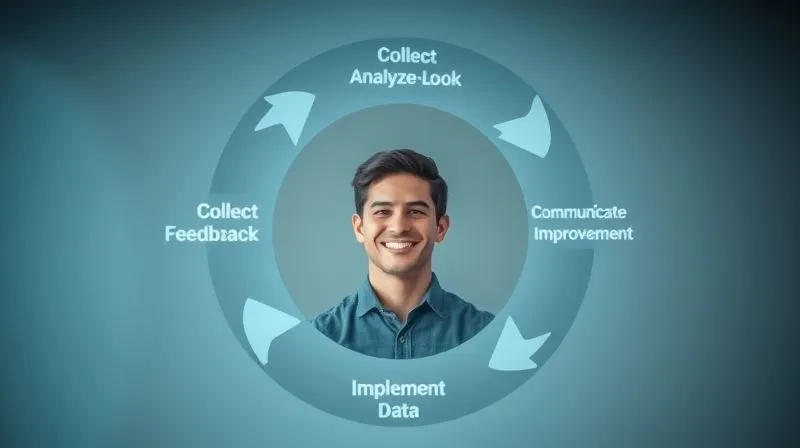
Acting on Feedback: Closing the Loop
Collecting feedback is only half the battle. The true power lies in acting upon it and, crucially, communicating those actions back to the customer. This 'closing the loop' demonstrates that their voice matters.
I've observed that many companies gather feedback but fail to implement changes or inform customers about how their input led to improvements. This breeds cynicism and makes future feedback efforts pointless.
Case Study: How ConnectFlow Re-Ignited Fading Accounts
ConnectFlow, a mid-sized B2B marketing automation platform, noticed a worrying trend: a segment of their small business clients were showing declining login rates and reduced use of advanced features. Their customer health score flagged these accounts as 'at-risk.'
Instead of generic emails, ConnectFlow implemented a three-pronged re-engagement strategy:
- Personalized Outreach: Account managers sent personalized emails referencing specific areas of low usage and offering a free 30-minute 'optimization call.'
- Feedback-Driven Solutions: During these calls, clients revealed they found advanced features overwhelming and lacked time for training. ConnectFlow then created simplified, bite-sized video tutorials and targeted 'quick-start' guides.
- Follow-up & Value Demonstration: They followed up, sharing these new resources and offering further support. For one client, after reviewing their specific struggles, ConnectFlow's team even configured a basic automation workflow for them, demonstrating immediate value.
Result: ConnectFlow not only retained 70% of the at-risk segment within two months but also saw a 45% increase in feature adoption among those re-engaged. The feedback also led to a redesign of their onboarding process, significantly reducing future churn for new small business clients. This resulted in a 15% reduction in overall churn rate within six months.
Long-Term Retention: Building Loyalty Beyond Re-engagement
Re-engaging at-risk customers is a tactical win, but true success lies in building a strategy that fosters long-term loyalty and prevents future churn. This means moving beyond reactive measures to proactive relationship nurturing.
Continuous Value Delivery
Your product or service isn't a static entity. It needs to evolve and consistently deliver increasing value to your customers. This means:
- Regular Feature Updates: Keep your offering fresh and competitive.
- Proactive Education: Ensure customers know how to use new features and maximize their investment.
- Personalized Recommendations: Suggest features or services that align with their evolving needs.
Community Building and Exclusive Benefits
Customers who feel part of a community are less likely to leave. Create opportunities for them to connect with each other and with your brand.
- User Forums or Groups: Facilitate peer-to-peer support and knowledge sharing.
- Exclusive Content or Webinars: Offer advanced insights or training that only your customers can access.
- Loyalty Programs: Reward long-term customers with special discounts, early access to features, or VIP support.
Proactive Support and Success Programs
Customer success isn't just about fixing problems; it's about helping customers achieve their goals using your product.
- Dedicated Customer Success Managers (CSMs): For high-value accounts, CSMs act as strategic partners, ensuring clients get the most out of your solution.
- Regular Check-ins: Proactively reach out to customers, not just when there's a problem, but to ensure they're happy and achieving their objectives.
- Health Checks: Periodically review customer usage patterns and proactively offer assistance or training if you spot underutilization.
For more insights on building robust customer success programs, consider exploring resources from organizations focused on Customer Success Association.
Overcoming Common Pitfalls in Customer Retention
Even with the best intentions, companies often stumble when trying to implement proactive retention strategies. Recognizing these common pitfalls can help you avoid them.
- Ignoring Early Warning Signs: The biggest mistake is dismissal. Assuming a slight dip in usage is 'normal' or that a single negative survey is an anomaly can lead to bigger problems.
- Generic Communication: Sending the same 'we miss you' email to every at-risk customer, regardless of their history or reasons for disengagement, is ineffective and can even be irritating.
- Lack of Follow-Up: Initiating a re-engagement campaign without a clear plan for follow-up and continued nurturing means your efforts will likely be wasted.
- Fear of Asking 'Why?': Some companies are hesitant to ask customers directly why they're disengaging, fearing negative feedback. This fear prevents them from getting to the root cause.
- Treating Retention as a Department, Not a Culture: Customer retention is everyone's responsibility, from sales and marketing to product development and support. It's a cultural mindset, not just a task for the customer success team.
“Consistent effort, genuine empathy, and a data-driven approach are the pillars of effective customer retention. It’s a marathon, not a sprint, and every interaction counts.”
Frequently Asked Questions (FAQ)
What's the best first step for a small business with limited resources to identify at-risk customers? For small businesses, start by focusing on simple, observable behavioral indicators. Monitor login frequency, key feature usage, and purchase patterns. Use a basic spreadsheet to track these for your top 20% of customers. Implement a simple customer feedback survey (e.g., a quick email asking for a 1-5 rating on satisfaction) after key interactions or purchases. This low-cost approach provides immediate, actionable insights.
How often should I monitor customer health scores? The frequency depends on your business model and customer lifecycle. For SaaS or subscription businesses, daily or weekly monitoring is ideal to catch early shifts. For businesses with longer sales cycles or less frequent interactions, monthly or quarterly reviews might suffice. The key is consistency and ensuring the data is fresh enough to allow for timely intervention.
Is it ever too late to re-engage a customer? While the chances decrease significantly over time, it's rarely 'too late' to attempt a re-engagement, especially for high-value customers. Even if you don't win them back, the outreach can provide valuable feedback. Focus on a 'win-back' campaign with a compelling offer or a renewed value proposition. Sometimes, a customer's circumstances change, and your solution might become relevant again.
What's the role of customer service in preventing churn? Customer service plays a critical, often underestimated, role in churn prevention. They are on the front lines, hearing customer pain points directly. Empower your customer service team to not only resolve issues but also to identify underlying dissatisfaction, gather feedback, and escalate at-risk signals. Excellent, proactive customer service can turn a frustrated customer into a loyal one.
How do I measure the ROI of re-engagement efforts? Measuring ROI involves tracking the revenue generated by re-engaged customers versus the cost of your re-engagement campaigns. Key metrics include: increased customer lifetime value (LTV) for re-engaged customers, reduced churn rate within the targeted segment, increased product usage or purchase frequency, and the direct revenue from any win-back offers. Compare these against the personnel, technology, and incentive costs of your campaigns.
Key Takeaways and Final Thoughts
Navigating the complexities of customer retention can feel daunting, but by adopting a proactive mindset and leveraging the right strategies, you can transform a leaky sales funnel into a robust engine for sustainable growth. Remember these critical pillars:
- Proactive Identification: Don't wait for customers to leave. Build an early warning system using behavioral, demographic, and psychographic signals, underpinned by a robust Customer Health Score.
- Data-Driven Diagnostics: Utilize key metrics (LTV, NPS, engagement) and explore predictive analytics to precisely pinpoint and prioritize at-risk accounts.
- Personalized Re-engagement: Craft tailored, empathetic messages and multi-channel campaigns that address specific customer pain points and demonstrate genuine value.
- Feedback-Driven Improvement: Actively solicit feedback from at-risk customers, close the loop by implementing changes, and communicate those improvements to build trust and advocacy.
- Culture of Retention: Foster an organizational culture where customer success and loyalty are everyone's responsibility, ensuring continuous value delivery and proactive support.
The journey of customer retention is continuous, requiring vigilance, adaptability, and a deep commitment to your customers' success. By implementing the strategies I've outlined, you're not just preventing churn; you're building stronger relationships, fostering loyalty, and securing the long-term prosperity of your business. Start today, and watch your customer base not just stabilize, but thrive.
Recommended Reading
- 7 Proven Strategies: Mitigating Payment Default Risk with New International Buyers
- Unlock Higher Revenue: The Ultimate Guide to Optimizing Your Pricing Strategy
- Why Is Our New Business Model Failing to Generate Revenue? 7 Key Reasons & Fixes
- Calculated Risk Fails? 5 Steps to Pivot, Recover & Grow Stronger
- Series A Pitch Deck Examples: Secure Funding Like a Pro





Comments
Leave a comment below. Your email will not be published. Required fields marked with *