


How to Prove Brand Building ROI to Skeptical Executive Teams?
For over two decades in the trenches of marketing strategy and brand development, I've witnessed a recurring, often frustrating, scenario: brilliant brand-building initiatives struggling to gain traction or secure continued investment because they couldn't speak the language of the boardroom — the language of measurable return on investment (ROI).
Executive teams, by their very nature, are driven by numbers, quarterly reports, and a clear line of sight to financial performance. When brand efforts feel intangible, abstract, or purely creative, skepticism inevitably arises. This isn't a lack of appreciation for brand; it's a demand for clarity on its financial contribution. Many marketers find themselves at a loss, struggling to bridge this critical communication gap.
But I'm here to tell you that proving brand building ROI to skeptical executive teams isn't just possible; it's essential for long-term growth and sustainable competitive advantage. In this definitive guide, I will share proven frameworks, actionable strategies, and real-world insights from my extensive experience to equip you with the tools to confidently articulate your brand's financial impact and secure the investment it truly deserves.
Understanding Executive Skepticism: Bridging the Perception Gap
Before we can prove brand building ROI, we must first understand the root of executive skepticism. In my experience, it often stems from a fundamental difference in perspective. Marketers intuitively grasp the long-term, cumulative power of brand, while executives, particularly those with a finance or operations background, are trained to look for direct, immediate causality. They see marketing as a cost center unless a clear, attributable revenue stream is evident.
Consider this: a new piece of machinery purchased for a factory has a clear cost, a defined output, and a calculable efficiency gain. Brand, however, feels less like a machine and more like the air that allows the factory to operate – essential, but hard to quantify. This perception gap is exacerbated by historical marketing practices that focused heavily on 'awareness' without clearly linking it to business outcomes.
Expert Insight: "The biggest mistake marketers make is presenting brand metrics in isolation. Executives don't care about a 10% increase in brand awareness unless you can show how that translates into a 5% increase in market share or a 3% boost in customer lifetime value."
To bridge this gap, we must shift our language from marketing jargon to business impact. We need to demonstrate how brand building isn't just about 'making people feel good' about a product, but about creating tangible assets that drive demand, command premium pricing, reduce customer acquisition costs, and attract top talent.
Establishing Measurable Brand Objectives: Beyond Awareness
The first actionable step in proving brand ROI is to define brand building objectives that are SMART: Specific, Measurable, Achievable, Relevant, and Time-bound. Vague goals like "increase brand awareness" are insufficient. We need to connect brand efforts directly to desired business outcomes from the outset.
- Identify Key Business Challenges: Start by understanding what keeps your executive team up at night. Is it market share erosion, high customer churn, difficulty attracting talent, or pricing pressure?
- Translate Challenges into Brand Opportunities: How can a stronger brand directly alleviate these challenges? For example, if churn is high, a brand focused on customer experience and loyalty could be the answer.
- Set Quantifiable Brand Goals: Instead of "increase brand awareness," aim for "increase aided brand awareness among our target demographic by 15% within 12 months, leading to a 5% increase in qualified inbound leads."
- Align with Financial Metrics: Ensure each brand goal has a clear, even if indirect, link to financial performance indicators like revenue growth, profit margins, or shareholder value.
Examples of Business-Aligned Brand Objectives:
- Market Share Growth: "Increase brand preference among non-customers in Segment X by 10% to capture an additional 2% market share within 18 months."
- Customer Loyalty & Retention: "Improve brand sentiment among existing customers by 20% to reduce churn by 15% over the next year."
- Talent Acquisition: "Enhance employer brand perception to reduce time-to-hire by 20% and decrease recruitment costs by 10% within 24 months."
- Premium Pricing Power: "Strengthen brand reputation for quality and innovation to justify a 5% price premium on new product lines within 12 months, without impacting sales volume."
By establishing these clear, measurable objectives, you lay the groundwork for a robust ROI argument. You're no longer just doing marketing; you're solving business problems with brand strategy.
Connecting Brand Metrics to Business Outcomes: The Data Narrative
Once you have measurable objectives, the next crucial step is to connect your brand health metrics to tangible business outcomes. This is where the data narrative truly comes alive. It's not enough to show a graph of rising brand awareness; you must explain how that rise directly impacts the bottom line. According to a Deloitte study on brand valuation, strong brands consistently outperform weaker ones in key financial metrics.
Here’s how to build that narrative:
| Brand Metric | Business Outcome Link | Executive Language |
|---|---|---|
| Brand Awareness | Increased inbound leads, higher CTR on ads | Reduced CAC, improved sales funnel efficiency |
| Brand Preference/Consideration | Higher conversion rates, stronger pipeline | Accelerated sales cycle, increased revenue per lead |
| Brand Loyalty/Advocacy | Repeat purchases, reduced churn, positive referrals | Increased CLV, lower customer acquisition costs, organic growth |
To illustrate this effectively, visualize the data. Show trends over time, correlations between brand perception and sales figures, and the financial impact of improved brand health. For instance, if brand sentiment improves, track how that correlates with a reduction in customer service inquiries or an increase in positive online reviews, both of which have measurable cost savings or revenue generation potential.

Presenting data in this integrated fashion helps executives see the cause-and-effect relationship, moving brand from an abstract concept to a strategic asset with quantifiable returns.
The Power of Attribution Modeling in Brand Performance
Skeptical executive teams often demand direct attribution: "Show me exactly which brand ad led to which sale." While brand building isn't always a last-click conversion driver, its influence on the customer journey is undeniable. This is where sophisticated attribution modeling becomes invaluable to prove brand building ROI.
Traditional last-click attribution models heavily favor direct response channels and often undervalue brand's role in the earlier stages of the funnel. Modern multi-touch attribution (MTA) models, however, distribute credit across all touchpoints a customer interacts with before conversion. This includes brand awareness campaigns, content marketing, and PR efforts that might not directly lead to a sale but are critical in building trust and familiarity.
By implementing MTA, you can demonstrate how brand touchpoints (e.g., a viral video, a thought leadership article, a positive news mention) contribute to moving prospects down the funnel, even if they don't click a direct ad. For example, you might find that customers exposed to your brand's content marketing convert at a 2x higher rate than those who aren't, or that brand search queries increase significantly after a major brand campaign.
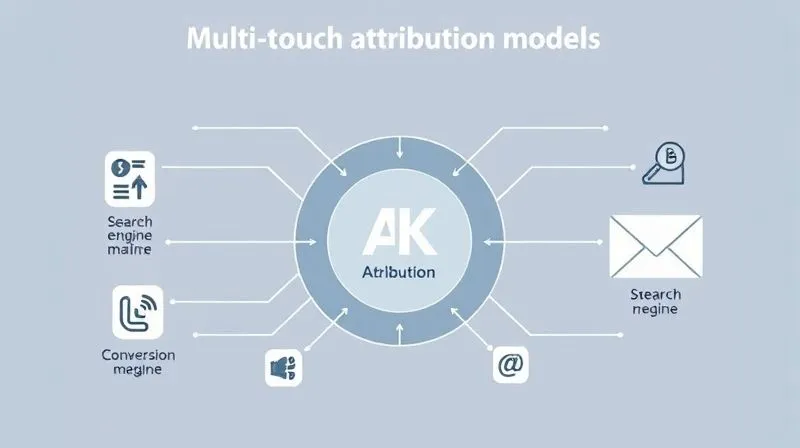
This provides a more holistic view of brand's impact, showing that while it may not always be the final touch, it's often the crucial first or middle touch that makes the final conversion possible. Tools like Google Analytics 4, Adobe Analytics, or dedicated attribution platforms can help in setting up these models. The key is to map out the typical customer journey and assign appropriate value to brand-centric interactions.
Leveraging Brand Equity Studies and Financial Valuation
For a truly compelling case on how to prove brand building ROI, you need to speak the language of financial valuation. Brand equity is not just a marketing buzzword; it's a measurable asset that contributes significantly to a company's enterprise value. Global consultancies like Interbrand and BrandZ regularly publish valuations of the world's top brands, demonstrating their immense financial worth.
Conducting internal brand equity studies can provide powerful data. These studies typically measure:
- Brand Awareness: Both aided and unaided recall.
- Brand Associations: What qualities people link to your brand.
- Perceived Quality: How consumers rate your product/service quality.
- Brand Loyalty: Likelihood of repeat purchase and recommendation.
- Brand Preference: How often your brand is chosen over competitors.
Quantifying these elements allows you to assign a monetary value to your brand. For instance, a strong brand can command a premium price, reduce the cost of future marketing campaigns, and enhance employee retention. These are all direct financial benefits. Harvard Business Review often publishes articles on methodologies for brand valuation, which can serve as excellent resources.
Case Study: How ‘InnovateTech’ Unlocked Brand Equity for Growth
InnovateTech, a B2B SaaS company, struggled to secure funding rounds despite strong product performance. Their executive team was skeptical of investing in "fuzzy brand marketing." I advised them to commission a comprehensive brand equity study. The study revealed InnovateTech had high perceived quality but low brand salience outside their existing customer base, leading to higher customer acquisition costs (CAC) compared to competitors.
Armed with this data, they launched a targeted brand campaign focused on thought leadership and industry recognition, rather than direct sales. Over 18 months, their brand equity score, particularly in 'brand salience' and 'relevance,' increased by 25%. This translated into a 15% reduction in CAC, a 10% increase in inbound qualified leads, and allowed them to secure a Series B funding round at a 20% higher valuation than initially projected. The executive team, seeing the direct financial impact, became avid brand champions.
Long-Term vs. Short-Term ROI: Educating for Strategic Patience
One of the biggest hurdles in proving brand building ROI is the inherent tension between short-term financial pressures and long-term strategic growth. Executives often operate on quarterly cycles, expecting immediate returns. Brand building, however, is akin to planting an oak tree; its initial growth is slow, but its long-term value and resilience are immense.
It's crucial to educate your executive team on this distinction. Not all marketing investments yield immediate, direct sales. Some are foundational, building the bedrock for future growth. Brand building primarily falls into this category. Its ROI manifests in sustained customer loyalty, reduced price sensitivity, stronger competitive moats, and improved talent attraction – benefits that accrue over years, not just quarters.
| Metric Type | Examples | Executive Focus |
|---|---|---|
| Short-Term (0-6 months) | Direct sales, lead generation, website traffic, immediate campaign ROI | Quarterly performance, quick wins, direct conversions |
| Mid-Term (6-18 months) | Brand consideration, customer retention rates, average order value, sentiment shifts | Customer lifetime value, market share growth, competitive positioning |
| Long-Term (18+ months) | Brand equity, brand reputation, talent attraction, premium pricing power | Sustainable growth, enterprise value, strategic advantage |
I advise establishing a balanced scorecard that includes both short-term performance metrics (e.g., campaign ROI, lead volume) and long-term brand health indicators (e.g., brand equity scores, customer lifetime value, employee engagement). This demonstrates that you are mindful of immediate needs while strategically investing in future growth. As marketing thought leader Seth Godin often emphasizes, "Marketing is not a short-term activity; it's a long-term commitment to building trust and reputation."

Presenting this dual perspective helps manage expectations and fosters a more strategic approach to marketing investment, moving executives beyond a purely transactional view.
Crafting a Compelling ROI Presentation: Speak Their Language
Even with impeccable data, a poorly delivered presentation can undermine all your efforts. When presenting to skeptical executive teams, your communication style is as important as your numbers. My experience has taught me that executives value clarity, conciseness, and a clear line of sight to financial impact.
- Start with the Business Problem: Reiterate the business challenge you're addressing (e.g., "Our declining market share in Q3 was a concern...").
- Present the Brand Solution: Explain how your brand building efforts specifically tackle that problem (e.g., "...and our brand campaign focused on innovation helped us regain ground.").
- Show the Impact with Data: Use strong visuals – charts, graphs, and dashboards – that clearly illustrate the ROI. Keep text to a minimum.
- Translate Metrics into Financial Terms: Always convert brand metrics into dollars and cents. Instead of "brand preference increased by 10%," say "this 10% increase in brand preference is projected to generate an additional $X million in revenue by reducing churn and increasing average order value."
- Offer Clear Recommendations: Conclude with actionable next steps and a clear ask for continued investment or strategic adjustments.
- Anticipate Objections: Be prepared to address common executive concerns about cost, timeline, and direct attribution. Have backup data ready.
Remember, your goal is not just to present data, but to tell a compelling story about how brand building is a strategic investment that drives tangible, measurable business value. Focus on the 'so what' for the executive team and the overall business.
Building Internal Champions and Iterative Reporting
Proving brand building ROI is not a one-time event; it's an ongoing process. To sustain momentum and continuously secure executive buy-in, you need to cultivate internal champions and establish a rhythm of iterative reporting.
- Engage Cross-Functional Leaders: Involve leaders from sales, product, HR, and finance early in the brand strategy and measurement process. When they see how brand impacts their own departmental goals, they become powerful advocates.
- Share Successes Broadly: Don't limit your ROI reports to just the C-suite. Share key wins and insights across the organization. This builds a culture that values brand and understands its contribution.
- Regular, Concise Updates: Provide frequent, but brief, updates on brand performance. A monthly dashboard showing key brand health indicators alongside business outcomes can keep the conversation alive without overwhelming executives.
- Be Agile and Adapt: Use feedback from executive reviews to refine your brand strategy and measurement approaches. Show that you are continuously learning, optimizing, and committed to maximizing return on investment.
By making brand ROI a regular, transparent discussion point, you transform it from a yearly battle for budget into a recognized pillar of strategic business growth. This consistent demonstration of value is the most effective way to address and overcome executive skepticism permanently.
Frequently Asked Questions (FAQ)
Question: How do I measure the ROI of brand awareness campaigns specifically? Measuring awareness ROI involves linking increased awareness to subsequent behaviors. You can track metrics like: direct website traffic from brand searches, increased branded search queries, higher direct traffic percentage, improved click-through rates (CTR) on paid ads when the brand is recognized, and ultimately, a decrease in customer acquisition costs (CAC) as awareness makes other marketing efforts more efficient. Surveys to gauge aided and unaided recall, combined with sales data, are crucial.
Question: What if my brand building efforts don't show immediate sales lifts? This is a common challenge. Brand building often has a delayed, cumulative effect. Focus on demonstrating mid-funnel metrics like increased brand consideration, improved sentiment, higher website engagement, or reduced bounce rates. Show how these 'leading indicators' correlate with future sales or customer lifetime value. Educate executives on the long-term compounding effects of brand equity versus short-term transactional marketing.
Question: Is there a universal formula for brand ROI? Unfortunately, no 'one-size-fits-all' formula exists, as brand ROI is highly context-dependent, varying by industry, business model, and specific objectives. However, the underlying principle is consistent: (Financial Gain from Brand - Brand Investment Cost) / Brand Investment Cost. The challenge lies in accurately quantifying the 'Financial Gain from Brand,' which requires linking brand metrics to business outcomes like increased revenue, reduced costs, higher customer lifetime value, or improved valuation, as discussed in this article.
Question: How often should I report on brand building ROI to executive teams? For long-term brand building, quarterly reports are generally appropriate for comprehensive ROI discussions. However, providing more frequent, concise updates (e.g., monthly dashboards) on key brand health indicators and their correlation to operational metrics can keep executives informed and engaged without overwhelming them. The goal is consistent communication, demonstrating ongoing progress and impact.
Question: What's the role of qualitative data in proving brand building ROI? Qualitative data is incredibly powerful for adding context and depth to your quantitative findings. Executive teams respond well to stories and direct customer feedback. Use customer testimonials, focus group insights, brand sentiment analysis from social listening, and verbatim survey responses to illustrate the 'why' behind the numbers. For example, a quote from a customer explaining why they chose your brand over a competitor due to trust (a brand attribute) can be more impactful than just a conversion rate percentage.
Key Takeaways and Final Thoughts
Proving brand building ROI to skeptical executive teams is not about magic; it's about meticulous planning, rigorous measurement, and compelling communication. It demands a shift in mindset from viewing brand as a 'soft' marketing activity to recognizing it as a strategic, financially impactful business asset.
- Align Brand Objectives with Business Outcomes: Ensure every brand initiative is tied to a clear, measurable business problem or opportunity.
- Speak the Language of Finance: Translate marketing metrics into dollars and cents, focusing on revenue generation, cost savings, and enterprise value.
- Leverage Advanced Data & Attribution: Utilize multi-touch attribution and brand equity studies to demonstrate comprehensive impact across the customer journey.
- Educate on Long-Term Value: Manage expectations by differentiating between short-term campaign ROI and the compounding, enduring value of brand equity.
- Craft a Powerful Narrative: Present data clearly, concisely, and with a compelling story that resonates with executive priorities.
- Build Internal Advocacy: Engage cross-functional leaders and provide consistent updates to foster a brand-centric organizational culture.
By mastering these strategies, you won't just justify your brand investments; you'll transform brand building into a recognized driver of sustainable growth and competitive advantage for your organization. The future of your brand, and indeed your business, depends on your ability to articulate its true value. Go forth, measure, and inspire confidence in the power of your brand.
Recommended Reading
- Unlock the Power: Strategies for Effective CSR Stakeholder Engagement
- Unlock Profit: How to Handle Dropshipping Returns & Refunds Like a Pro
- 7 Steps: Transform Vague Vision into Actionable Strategic Goals
- Unlock Business Insights: The Ultimate Guide to Solving Data Quality Issues
- Unlock the Secrets: Mastering Your Master Franchise Agreement Terms





Comments
Leave a comment below. Your email will not be published. Required fields marked with *