


How to Quantify the ROI of Leadership Performance Coaching Efforts?
For over two decades in the business world, I've witnessed countless organizations invest significantly in leadership development, only to struggle when asked the fundamental question: "What's the return on that investment?" It's a common dilemma, one that can undermine even the most impactful coaching initiatives if not addressed strategically.
The problem isn't a lack of belief in coaching's power; it's the perceived difficulty in translating improved 'soft skills' like communication, empathy, or strategic thinking into hard, quantifiable business outcomes. Many leaders feel the positive shift in their teams, but articulating that value in budget meetings often feels like an uphill battle, leading to under-resourcing or even the discontinuation of vital programs.
This guide is designed to arm you with the frameworks, metrics, and actionable strategies needed to confidently answer that "What's the ROI?" question. We'll move beyond anecdotal evidence to present a robust methodology for how to quantify the ROI of leadership performance coaching efforts, ensuring your investments are not only justified but seen as strategic drivers of organizational success.
Why Quantifying Coaching ROI Isn't Just "Nice to Have" – It's Essential
In today's data-driven business landscape, every investment must demonstrate tangible value. Leadership performance coaching, while inherently transformative, often falls into a grey area when it comes to measurement. However, I've learned that proving its impact isn't just about justifying costs; it's about strategic alignment and continuous improvement.
The Strategic Imperative
Without clear metrics, coaching can be perceived as a 'soft' benefit, easily cut during leaner times. Quantifying ROI elevates coaching from a perk to a critical business driver. It allows you to:
- Secure Future Funding: Demonstrate past success to justify continued or expanded investment.
- Optimize Programs: Understand what's working and what isn't, enabling data-informed adjustments.
- Enhance Credibility: Position HR and L&D as strategic partners who contribute directly to the bottom line.
- Attract & Retain Talent: Showcase a commitment to leadership development, a key factor for top talent.
"What gets measured, gets managed." This timeless adage holds especially true for leadership development. If we aren't measuring the impact of our coaching, we're essentially operating in the dark, hoping for the best rather than strategically driving toward it.
The Foundational Pillars: Defining Success Before You Measure
Before you even think about collecting data, you must clearly define what success looks like. This initial step is often overlooked, yet it's the cornerstone of any effective ROI measurement strategy. In my experience, a lack of clarity here is the primary reason organizations struggle to prove value.
Step 1: Align Coaching Goals with Business Objectives
Leadership coaching should never exist in a vacuum. Its objectives must directly support broader organizational goals. Are you aiming to improve innovation, reduce turnover, boost sales, or enhance customer satisfaction? Each of these will require different coaching focuses and, consequently, different metrics.
- Identify Key Business Challenges: What strategic problems is the organization currently facing?
- Determine Leadership's Role: How can improved leadership skills directly address these challenges?
- Translate to Coaching Objectives: Convert identified leadership needs into specific, measurable, achievable, relevant, and time-bound (SMART) coaching goals for individual leaders or teams.
- Gain Stakeholder Buy-in: Ensure senior leadership and participants agree on these goals and their connection to business outcomes.
Step 2: Establish Baseline Metrics
You can't measure improvement without knowing where you started. Baselines are crucial for demonstrating change over time. Collect data relevant to your coaching objectives *before* the coaching intervention begins.
This might include current employee engagement scores, specific performance KPIs for leaders or their teams, turnover rates, project completion rates, or customer satisfaction scores. Without these initial benchmarks, any 'after' data will lack context and persuasive power.

Direct Metrics: Tangible Indicators of Coaching Impact
These are the 'hard' numbers that often resonate most strongly with finance departments and executive boards. They directly link leadership behaviors to measurable business results.
Improved Employee Performance & Productivity
Effective leaders inspire higher performance. Coaching can lead to clearer goal setting, better delegation, and more motivated teams, all of which impact productivity. This is a critical area for how to quantify the ROI of leadership performance coaching efforts.
- Individual Leader KPIs: Track specific metrics related to the leader's direct responsibilities, such as project completion rates, budget adherence, or strategic initiative success.
- Team Performance Metrics: Monitor the collective output of the leader's team, including sales figures, production quotas, service delivery times, or error rates.
- 360-Degree Feedback Scores: Compare 'before' and 'after' assessments from peers, subordinates, and superiors to quantify improvements in leadership competencies.
| Metric | Before Coaching | After Coaching (6 Months) | Improvement |
|---|---|---|---|
| Project Completion Rate | 75% | 90% | +15% |
| Team Productivity (Units/Week) | 150 | 180 | +20% |
| Error Rate (per 1000 units) | 15 | 8 | -46.7% |
Reduced Employee Turnover & Enhanced Retention
Poor leadership is a leading cause of employee turnover. Coaching that improves a leader's ability to engage, motivate, and develop their team can significantly reduce churn. According to a Harvard Business Review article, the cost of replacing an employee can range from one-half to two times the employee's annual salary. Reducing turnover therefore represents substantial cost savings.
Track turnover rates within coached leaders' teams compared to uncoached teams or company averages. Also, consider the retention rates of high-potential employees under coached leaders versus others.
Increased Revenue & Profitability Contributions
Ultimately, leadership coaching should contribute to the organization's financial health. This can be a direct link, such as a sales leader improving their team's closing rates, or an indirect one, like improved project management leading to faster product launches and market capture.
Work with finance to attribute revenue growth, cost reductions, or increased profit margins to specific initiatives driven by coached leaders. This often requires careful analysis and attribution modeling, but it provides the most compelling evidence of ROI.
Indirect Metrics: Unpacking the Broader Organizational Benefits
While harder to directly monetize, these 'soft' metrics are crucial indicators of a healthier, more resilient organization, which eventually translates to hard numbers.
Enhanced Leadership Competencies & Skills
This is where the core of performance coaching lies. While not a dollar figure, improvements here are foundational for all other benefits. Measuring growth in specific competencies is vital.
- Pre/Post Assessments: Utilize standardized leadership assessments (e.g., DISC, Hogan, 360-degree feedback tools) before and after coaching to show skill development.
- Goal Attainment: Track the percentage of coaching goals successfully achieved by participants.
- Peer and Subordinate Feedback: Qualitative and quantitative feedback on observed behavioral changes in areas like communication, decision-making, and conflict resolution.
Improved Team Cohesion & Collaboration
A strong leader fosters a cohesive and collaborative team. Coaching can target areas like conflict resolution, psychological safety, and cross-functional cooperation. Measure this through team surveys, observation, and project success metrics that rely on teamwork.
Boosted Employee Engagement & Morale
Engaged employees are more productive, innovative, and loyal. Leadership directly impacts engagement. Track changes in engagement survey scores, absenteeism rates, and qualitative feedback sessions within teams led by coached individuals.

The Kirkpatrick Model & Beyond: A Framework for Evaluation
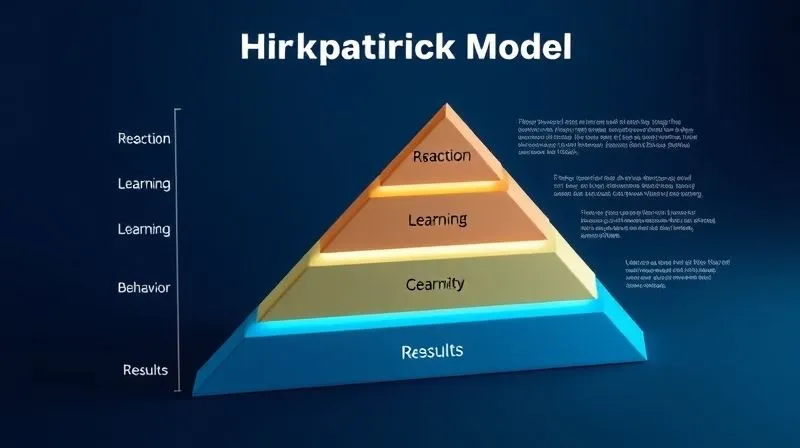
The Kirkpatrick Model is a widely recognized framework for evaluating the effectiveness of training programs, and it's highly applicable to leadership coaching. It provides a structured way to assess impact at different levels, allowing you to build a comprehensive ROI case.
Level 1: Reaction (Satisfaction)
This level measures how participants react to the coaching program. Did they find it engaging, relevant, and useful? While not an ROI metric itself, positive reactions are crucial for engagement and transfer of learning.
- Measurement: Post-session surveys, feedback forms, testimonials.
Level 2: Learning (Skill Acquisition)
Did participants acquire the intended knowledge, skills, or attitudes? This level assesses the immediate learning outcomes.
- Measurement: Pre/post assessments, quizzes, certification (if applicable), coaching session observations.
Level 3: Behavior (Application)
Did participants apply what they learned back on the job? This is where observable changes in leadership behavior come into play.
- Measurement: 360-degree feedback, performance reviews, peer observations, direct reports' feedback, behavioral change checklists.
Level 4: Results (Business Impact)
What were the tangible business outcomes as a result of the coaching? This is where you connect behavioral changes to the direct and indirect metrics discussed earlier.
- Measurement: Turnover rates, productivity metrics, revenue figures, customer satisfaction scores, cost savings.
While the Kirkpatrick Model traditionally stops at Level 4, many practitioners now advocate for a 'Level 5: ROI' where the financial benefits are explicitly calculated and compared against program costs. This integrated approach provides the most compelling narrative for stakeholders.
Calculating the ROI: From Data Points to Dollar Signs
This is the moment of truth: translating all your collected data into a clear financial return. It requires a systematic approach to cost-benefit analysis.
The Basic ROI Formula
The standard formula for calculating ROI is straightforward:
ROI = (Net Program Benefits - Program Costs) / Program Costs * 100%
Let's break down the components:
- Program Costs: Include all direct costs (coach fees, materials, administrative overhead) and indirect costs (participant time away from work).
- Net Program Benefits: This is the trickier part. It involves assigning monetary value to the improvements identified through your direct and indirect metrics.
Assigning Monetary Value to Soft Skills
This is where expertise and careful estimation come into play. For instance, if coaching reduced employee turnover by 5% in a leader's team, and you know the average cost of turnover, you can quantify the savings. If productivity increased, calculate the monetary value of that increased output. This is a crucial step in how to quantify the ROI of leadership performance coaching efforts effectively.
Case Study: How Apex Solutions Monetized Improved Communication
Apex Solutions, a medium-sized software development firm, faced persistent project delays due to poor cross-functional communication among their team leads. After implementing a targeted leadership coaching program focusing on communication and collaboration skills for 10 team leads, they observed significant changes.
Before Coaching: Average project delay of 15 days, estimated cost of $2,000 per delayed day (lost revenue, extended labor). Annual turnover in these teams was 25% for critical roles, costing approximately $75,000 per departure.
After Coaching (6 months): Average project delay reduced to 5 days. Turnover in coached teams dropped to 15%. The coaching program cost $30,000.
Calculation:
- Project Delay Savings: (15 days - 5 days) * $2,000/day * 10 projects/year = $200,000
- Turnover Savings: (25% - 15%) reduction in 10 critical roles = 1 leader saved per year. 1 * $75,000 = $75,000
- Total Benefits: $200,000 + $75,000 = $275,000
- Net Benefits: $275,000 - $30,000 (program cost) = $245,000
- ROI: ($245,000 / $30,000) * 100% = 816%
This compelling ROI of 816% allowed Apex Solutions to not only justify their investment but also secure budget for expanding the coaching program to other leadership tiers.
| Benefit Area | Estimated Annual Savings |
|---|---|
| Reduced Project Delays | $200,000 |
| Reduced Employee Turnover | $75,000 |
| Increased Team Productivity | $50,000 |
| Total Estimated Benefits | $325,000 |
Overcoming Challenges in ROI Measurement
Measuring ROI, particularly for human capital initiatives, isn't without its complexities. I've encountered these challenges repeatedly, and understanding them is the first step to mitigating them.
Isolation of Variables
It's often difficult to isolate the impact of coaching from other organizational changes (e.g., new strategies, market shifts, other training programs). To address this:
- Control Groups: If feasible, compare coached groups with similar uncoached groups.
- Pre/Post Data Analysis: Focus on changes within the coached group specifically.
- Participant & Manager Feedback: Ask directly about the perceived contribution of coaching to specific outcomes.
Long-Term Impact vs. Short-Term Gains
The full benefits of leadership coaching often materialize over months or even years. Initial ROI calculations might understate the true, sustained impact. Be transparent about this and consider staggered measurement points.
Data Collection & Consistency
Ensuring consistent, accurate data collection can be a logistical challenge. Establish clear protocols, leverage existing HRIS systems, and train managers on their role in providing feedback.
As Forbes Coaching Council members often emphasize, while the numbers are crucial, the narrative built around those numbers is equally powerful. Don't just present data; tell the story of transformation.

Frequently Asked Questions (FAQ)
What if my organization doesn't have robust baseline data? Even without perfect historical data, you can still establish a 'current state' baseline immediately before coaching begins. Use surveys, 360-degree feedback, and current performance metrics. While not as ideal as long-term trends, it still provides a point of comparison for future improvements. Emphasize that future programs will benefit from the data collection infrastructure you're building now.
Is it really possible to put a dollar figure on 'soft skills' like communication or emotional intelligence? Yes, indirectly. While you can't directly assign a price tag to 'better communication,' you can quantify its *outcomes*. For example, improved communication might lead to fewer project errors (cost savings), faster decision-making (time savings, increased market responsiveness), or reduced team conflict (less HR intervention, higher productivity). Each of these outcomes has a quantifiable financial impact.
How long should I wait after coaching to measure ROI? I recommend a phased approach. Measure initial reactions and learning immediately (Level 1 & 2). Behavioral changes (Level 3) should be assessed after 3-6 months. Business results (Level 4 & ROI) typically require 6-12 months, as organizational changes take time to manifest. Longer-term studies (1-2 years) can reveal sustained impact.
What's the biggest mistake organizations make when trying to quantify coaching ROI? The most common mistake is failing to link coaching goals directly to strategic business objectives from the outset. If the coaching isn't designed to solve a specific business problem, measuring its ROI becomes an arbitrary exercise. Start with 'why' – why are we investing in this coaching, and what business problem do we expect it to solve?
Should I involve a third-party evaluator for ROI measurement? For larger, more significant coaching initiatives, involving an independent third-party evaluator can add immense credibility and objectivity to your ROI claims. They bring specialized expertise in measurement methodologies and can help navigate the complexities of data attribution, making your findings more defensible to skeptical stakeholders.
Key Takeaways and Final Thoughts
Quantifying the ROI of leadership performance coaching is no longer an optional exercise; it's a strategic imperative for any organization committed to effective leadership development. By meticulously tracking both direct and indirect metrics, establishing clear baselines, and applying robust evaluation frameworks, you can move beyond anecdotal evidence to present a compelling, data-driven case for your coaching investments.
- Align & Baseline: Always start by linking coaching goals to business objectives and establishing clear baseline metrics.
- Holistic Measurement: Utilize a blend of direct (productivity, turnover, revenue) and indirect (engagement, skill development) metrics.
- Frameworks Provide Structure: Leverage models like Kirkpatrick to systematically evaluate impact at different levels.
- Monetize the 'Soft': Learn to translate behavioral changes into tangible financial benefits and cost savings.
- Communicate the Story: Data is powerful, but a compelling narrative about transformation and impact is what truly resonates.
Remember, proving the value of leadership coaching is an ongoing journey, not a one-time event. By embracing a data-driven mindset and continuously refining your measurement strategies, you'll not only secure the future of your leadership development programs but also solidify your role as a truly strategic partner in driving organizational success. The investment in leadership is an investment in your company's future, and now you have the tools to prove it.
Recommended Reading
- Mastering Quality Control: How to Perform Root Cause Analysis Effectively
- Unlock Long-Term Profit: How Conscious Capitalism Transforms Your Business
- The Ultimate Guide: Overcoming Global Competition Challenges for SMEs
- Mastering Global Remote Hiring: 7 Legal Pitfalls to Sidestep Now
- Why Support Channels Fail: 7 Fixes to Exceed Customer Expectations





Comments
Leave a comment below. Your email will not be published. Required fields marked with *