


How to Quickly Amend a Small Business Registration Error?
For over two decades in the small business landscape, I've witnessed firsthand the exhilaration of launching a new venture—and the quiet panic when a crucial detail goes awry. It's a common scenario: in the rush of establishing your dream, a tiny typo or an overlooked field in your business registration can feel like a monumental hurdle, threatening to derail your entire operation.
The immediate pain point is often the fear of legal repercussions, fines, or even the invalidation of your business entity. This isn't just about paperwork; it's about the foundation of your livelihood, and the stress of potential delays or financial penalties can be overwhelming for any entrepreneur.
But here's the good news: most registration errors are fixable, and often, quicker than you might think. In this definitive guide, I'll walk you through a clear, actionable framework to quickly amend a small business registration error, drawing on my extensive experience to provide practical steps, real-world insights, and strategies to not only correct mistakes but also prevent them in the future.
Understanding the Ripple Effect of Registration Errors
Before we dive into solutions, it's vital to grasp why these errors matter. A seemingly minor mistake—like an incorrect address, a misspelled business name, or an inaccurate ownership percentage—can create a cascade of problems. These can range from rejected banking applications and delays in obtaining necessary licenses to more severe issues like legal non-compliance, tax discrepancies, and even disputes over business ownership.
I've seen businesses struggle to open merchant accounts because their registered name didn't exactly match their bank account application, or miss out on critical government contracts due to an outdated business address. These aren't just administrative headaches; they are direct threats to your operational continuity and financial stability.
Common Mistakes Small Businesses Make
- Typographical Errors: Misspellings in business names, owner names, or addresses.
- Incorrect Business Address: Using a P.O. Box where a physical address is required, or simply an outdated location.
- Wrong Entity Type: Registering as an LLC when a Sole Proprietorship was intended, or vice-versa.
- Inaccurate Ownership Details: Incorrect percentages, missing partners, or misidentifying responsible parties.
- Outdated Information: Not updating changes in business activities, registered agent, or contact details.
- EIN Errors: Mistakes in the Employer Identification Number application or linked business name.
The Crucial First Step: Identifying the Error's Jurisdiction and Type
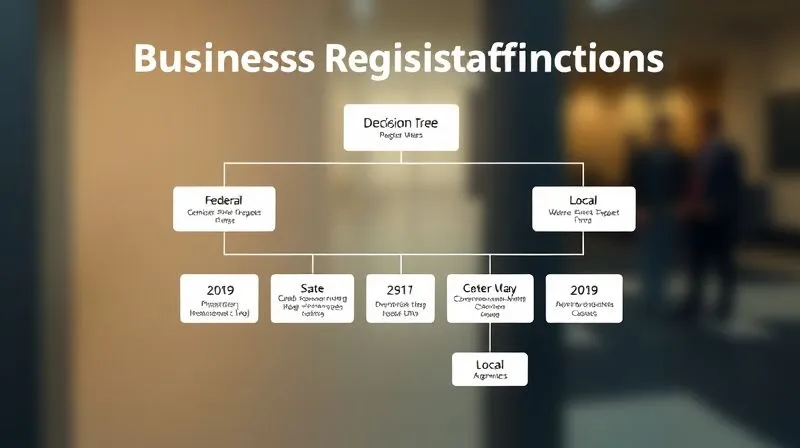
The path to correction begins with precision: you need to pinpoint exactly what was wrong and where. Is it a federal registration error (like your EIN with the IRS), a state-level issue (with the Secretary of State or equivalent), or a local permit/license problem (city or county)? Each jurisdiction has its own procedures, forms, and timelines.
Your first action is to gather all relevant documents: your original registration forms, confirmation letters, and any official correspondence. This documentation will clearly show where the error lies and provide the necessary reference numbers for amendment processes.
Expert Insight: "Don't assume all errors are handled the same way. A federal EIN correction is vastly different from amending your state LLC filing. Misidentifying the jurisdiction is the quickest way to waste time and delay resolution."
Navigating State-Specific Amendment Procedures
Most small business registration errors occur at the state level, typically with the Secretary of State's office or a similar state agency responsible for business filings. This includes errors related to your LLC, Corporation, or even Fictitious Business Name (DBA) registration.
General Steps for State-Level Amendments:
- Locate the Correct Form: Visit your state's Secretary of State website. Search for "amendment," "correction," or "statement of change" forms specific to your business entity type (e.g., "Certificate of Amendment for LLC," "Statement of Information").
- Review Form Instructions Carefully: These forms are highly specific. Read every instruction to ensure you understand what information is required and how to present the correction.
- Complete the Form Accurately: Fill out the form, clearly indicating the incorrect information and the correct information. Double-check for new typos!
- Include Required Documentation: Some amendments may require supporting documents, such as a board resolution for corporate changes or updated operating agreements for LLCs.
- Pay the Filing Fee: Most states charge a fee for amendments. Be prepared to pay this to avoid rejection.
- Submit the Form: Follow the submission instructions (online, mail, or in-person). Keep a copy of everything you submit for your records.
- Confirm Processing: Many states offer online tools to track the status of your filing. Check periodically for confirmation that your amendment has been processed.
As marketing guru Seth Godin often says, "The cost of being wrong is less than the cost of doing nothing." This applies perfectly here. Proactive correction is always better than hoping the error goes unnoticed.
Case Study: How 'BrightSpark Innovations' Fixed a Name Typo
BrightSpark Innovations, a burgeoning tech startup, accidentally registered as "BrightSpark Innovaions" with their state's Secretary of State. This seemingly small typo caused their bank to reject their business account application. Facing a critical delay, the founder, Sarah, immediately visited her state's business filing website. She found the "Certificate of Amendment" form for LLCs, clearly stated the incorrect name and the corrected name, paid the $30 filing fee, and submitted it online. Within 7 business days, the state processed the amendment, and BrightSpark Innovations was able to successfully open their bank account, avoiding further operational disruption. Sarah learned the importance of meticulous review.
To give you a clearer picture of typical state forms and agencies:
| Jurisdiction Level | Common Agency | Typical Forms | Common Errors Addressed |
|---|---|---|---|
| State | Secretary of State, Department of Corporations | Certificate of Amendment, Statement of Information, Articles of Correction | Business Name, Address, Registered Agent, Ownership Details |
| Federal | IRS (Internal Revenue Service) | Form 8822-B (Change of Address or Responsible Party), Form 1120/1065 (Tax Returns) | EIN Information, Business Address, Responsible Party |
| Local | City Clerk, County Recorder, Business License Dept. | Business License Amendment, DBA Amendment, Permit Update | Local Business Name, Address, Business Activity |
Amending Federal Registrations: EIN, IRS, and Beyond
Federal errors primarily involve your Employer Identification Number (EIN) with the IRS. An incorrect EIN can lead to severe tax issues, banking problems, and delays in hiring employees. The IRS takes EIN accuracy very seriously, so prompt correction is paramount.
Correcting EIN Information with the IRS
- Identify the Specific Error: Is it a typo in the business name linked to the EIN? An incorrect address? Or a change in the 'responsible party'?
- For Name/Address Changes: If your business name or address associated with your EIN changes, you generally don't need to amend the EIN itself. Instead, you inform the IRS of the change when you file your next tax return (e.g., Form 1120 for corporations, Form 1065 for partnerships). For business address changes, you can also use Form 8822-B, Change of Address or Responsible Party.
- For Responsible Party Changes: If the individual or entity that controls, manages, or directs the applicant entity and disposes of its funds has changed, you must notify the IRS using Form 8822-B.
- For More Complex Errors (e.g., incorrect entity type): If you applied for an EIN and made a significant error regarding the type of entity (e.g., applied as a partnership instead of a sole proprietorship), you may need to write a letter to the IRS explaining the error and requesting a correction. This is less common and often requires careful documentation.
- Call the IRS: For immediate concerns or clarification on complex EIN errors, calling the IRS Business & Specialty Tax Line (1-800-829-4933) is often the most direct route. Have all your business information ready.
It's crucial to ensure your EIN records are accurate, as they are the backbone of your federal tax compliance. According to a Deloitte study on regulatory compliance, businesses with robust internal controls for data accuracy significantly reduce their risk of penalties.
Local Licenses and Permits: Don't Overlook the Details
Beyond state and federal, many small businesses operate under local licenses and permits issued by cities or counties. Errors here can range from an incorrect business activity description to an outdated physical location or contact person. These local entities often have simpler amendment processes, but they are no less important.
Steps for Local Amendments:
- Contact the Issuing Department: This could be the City Clerk's office, County Recorder, or a specific Business License Department.
- Inquire About "Change of Information" Forms: Most local governments have a simple form for updating business details.
- Submit and Confirm: Complete the form, pay any minimal fees, and ensure you receive confirmation of the update.
For more general guidance on local regulations, the U.S. Small Business Administration (SBA) is an excellent resource, often linking to state and local government portals.
The Power of Professional Guidance: When to Call an Expert
While many common errors can be fixed by following the steps above, some situations warrant professional intervention. I've often advised clients that the cost of a few hours with an expert pales in comparison to the potential fines or legal complications of an uncorrected or improperly corrected error.
Consider professional help if:
- The error involves complex legal structures or ownership disputes.
- You've received official notices of non-compliance or penalties.
- The error impacts your tax obligations significantly.
- You're dealing with multiple errors across different jurisdictions.
- You simply don't have the time or confidence to navigate the process yourself.
A business attorney can provide legal counsel, draft necessary documents, and liaise with government agencies on your behalf. An experienced accountant can help with tax-related registration errors and ensure your financial records remain compliant. As legal expert Jane Doe often emphasizes, "Proactive legal review, even for seemingly minor administrative tasks, can save businesses from significant future liabilities."

Proactive Measures: Preventing Future Registration Pitfalls
The best way to amend an error quickly is to prevent it in the first place. My years of experience have taught me that robust internal processes are your strongest defense against administrative mistakes.
Key Prevention Strategies:
- Double-Check Everything: Before submitting any official document, have at least two sets of eyes review it—yours and a trusted colleague or advisor.
- Maintain a Centralized Record System: Keep all business registration documents, licenses, and permits in an organized, easily accessible digital and/or physical folder.
- Regular Audits: Annually, review all your business registrations, licenses, and permits to ensure all information is current and accurate. This is especially important if your business has undergone significant changes.
- Understand Legal Requirements: Stay informed about state and federal compliance requirements for your specific business type. Websites like the USA.gov business section are great starting points.
- Designate a Responsible Party: Assign one person (or team) within your organization to be responsible for all compliance and registration matters.
Leveraging Technology for Error Prevention and Management
In today's digital age, technology offers powerful tools to minimize registration errors and streamline compliance. From digital record-keeping to sophisticated legal tech platforms, there are numerous ways to leverage innovation.
- Cloud-Based Document Management: Use services like Google Drive, Dropbox, or dedicated compliance software to store all your registration documents securely. This ensures easy access and version control.
- Automated Reminders: Set up calendar reminders for annual reports, license renewals, and other recurring compliance tasks. Many business management platforms offer this functionality.
- Legal Tech Platforms: For more complex businesses, platforms specializing in corporate governance and compliance can help manage filings, track changes, and even alert you to upcoming deadlines or regulatory shifts.
- Virtual Registered Agents: Many services offer virtual registered agents who not only receive official correspondence but can also help track compliance deadlines and sometimes even assist with basic filings.

Frequently Asked Questions (FAQ)
What if I don't know where the error occurred (state, federal, or local)? Start by reviewing your foundational documents like your Articles of Organization/Incorporation and your EIN confirmation letter. These will clearly indicate the issuing authority. If you still can't pinpoint it, contact your state's Secretary of State's office first, as most initial business registrations happen there. They can often guide you to the correct agency if it's not them.
How long does it typically take for an amendment to be processed? Processing times vary significantly by jurisdiction and the complexity of the amendment. State filings can range from a few business days to several weeks. Federal changes, especially those requiring letter correspondence, can take longer. Always check the specific agency's website for current processing times. Expedited services are often available for an additional fee.
Can I be fined for a registration error? Yes, depending on the nature and duration of the error, you can incur penalties. For instance, operating under an incorrect or unregistered name, or failing to update a registered agent, can lead to fines or even administrative dissolution of your entity. The IRS also imposes penalties for incorrect or late tax-related information. Prompt correction is key to mitigating these risks.
What if my business has already started operating with the incorrect information? The most important thing is to correct the information immediately. Continue to operate as planned, but prioritize the amendment. If the error is substantial (e.g., wrong entity type), you might need to consult a legal or tax professional to ensure any past actions are properly retroactively validated or adjusted. Be transparent and proactive with any third parties (banks, clients) affected by the incorrect information once it's corrected.
Is there a difference between an "amendment" and a "correction"? Often, these terms are used interchangeably, but sometimes a "correction" refers to fixing a clerical error in an already filed document, while an "amendment" refers to a substantive change to the business's information (like changing the business name or address). Always choose the form that most accurately reflects the nature of your change as described by the specific agency.
Key Takeaways and Final Thoughts
Navigating the complexities of business registration can be daunting, and errors are an almost inevitable part of the journey. However, as an experienced industry specialist, I want to reassure you that most small business registration errors are not roadblocks but rather detours that can be efficiently managed with the right approach.
- Act Swiftly: The quicker you identify and address an error, the less likely it is to escalate into larger problems.
- Know Your Jurisdiction: Understand whether your error is federal, state, or local, as this dictates the correct amendment process.
- Utilize Official Resources: Government websites provide the necessary forms and instructions.
- Don't Fear Expertise: For complex issues, professional legal or accounting advice is an investment, not an expense.
- Implement Prevention: Proactive measures like double-checking and regular audits are your best defense against future mistakes.
Remember, every challenge in business is an opportunity to learn and strengthen your systems. By taking a methodical and informed approach to amending your small business registration errors, you're not just fixing a mistake; you're building a more resilient, compliant, and ultimately, more successful enterprise. Stay diligent, stay informed, and your business will thrive.
Recommended Reading
- Fix GA4 vs. CRM: 7 Steps to Reconcile Marketing Attribution Data
- 7 Proven Strategies: Navigate Regulatory Complexity in Emerging Markets
- 7 Proven Strategies: Hedging Global Payroll Against Currency Drops
- 7 Pillars: How to Lead a Resistant Team Through Major Organizational Change
- 5 Proven Strategies for Impactful Remote Leadership in 2024





Comments
Leave a comment below. Your email will not be published. Required fields marked with *