


How to Re-engage Customers at Risk of Churn Post-Service Issue?
For over 15 years in the trenches of customer service and business growth, I've witnessed firsthand how a single negative experience can unravel years of built-up customer loyalty. It's a common misconception that once a service issue is 'resolved,' the customer is automatically satisfied and secure. In my experience, the period immediately following a service hiccup is, in fact, the most precarious and critical for customer retention.
The pain point is palpable: you've invested heavily in acquiring customers, only to see them walk away post-issue, often quietly, without a second glance. This isn't just about losing a transaction; it's about losing future revenue, brand advocacy, and the trust you've worked so hard to cultivate. The silence after a service failure can be deafening, signaling a customer poised to churn, taking their business and potentially their network with them.
This article isn't just another 'fix-it' guide. I will share a definitive, expert-backed framework on how to re-engage customers at risk of churn post-service issue, drawing from real-world scenarios and proven strategies. You'll gain actionable steps, understand the psychology behind customer dissatisfaction, and learn how to transform potential detractors into loyal advocates, ensuring your business thrives even after the bumps in the road.
Understanding the Anatomy of Post-Service Churn Risk
Before we can re-engage, we must understand the landscape of dissatisfaction. It’s not simply about a broken product or a delayed delivery; it’s about the deeper emotional and psychological impact of a service failure.
The Psychological Impact of Service Failure
When a customer encounters a service issue, it's often more than an inconvenience; it's a violation of trust. They've invested their money, time, and belief in your brand, and when that expectation is unmet, it triggers a sense of betrayal. This emotional response is far more potent than the logical assessment of the problem itself. I've observed that customers don't just remember the issue; they remember how it made them feel.
This feeling of being let down can quickly escalate into frustration, anger, and ultimately, apathy – the most dangerous precursor to churn. Apathy means they no longer care enough to complain; they simply leave. Understanding this emotional journey is the first step in effective re-engagement.
Identifying Early Warning Signs of Dissatisfaction
Customers rarely churn without showing some signals. The key is to be attuned to these subtle, and sometimes not-so-subtle, indicators. These can range from a sudden drop in engagement with your product or service, decreased frequency of purchases, or even a change in their tone during subsequent interactions. Tools for sentiment analysis on support tickets, social media mentions, and direct feedback surveys become invaluable here.
I advocate for a proactive approach: monitoring customer behavior post-service resolution. Are they still logging in? Are they opening your emails? Are they interacting with your brand on social media? A decline in any of these metrics, especially after a recent service interaction, should raise a red flag and trigger your re-engagement protocol.

The Immediate Aftermath: Proactive Communication & Apology
The moments immediately following a service issue resolution are critical. It’s not enough to fix the problem; you must acknowledge the impact and communicate with empathy.
The Power of a Sincere Apology
A genuine apology is not an admission of weakness; it’s a powerful tool for rebuilding trust. It must go beyond a canned 'we're sorry for the inconvenience.' A sincere apology acknowledges the customer's specific pain, validates their feelings, and takes responsibility. I instruct my teams to use phrases like, 'I understand how frustrating it must have been when [specific issue occurred],' or 'We deeply regret the disruption this caused to your [specific area of impact].' This personalization makes all the difference.
A sincere apology demonstrates empathy and shows that you view your customers as individuals, not just statistics. It's the first brick in rebuilding a damaged relationship and is often cited as a key component of effective service recovery by experts in the field. Harvard Business Review often highlights the nuances of truly impactful apologies.
Transparent Communication: What Went Wrong and How it's Fixed
Beyond the apology, customers want transparency. They want to understand what happened and, more importantly, what steps have been taken to ensure it doesn't happen again. This doesn't mean sharing every technical detail, but it does mean providing a clear, concise explanation.
Transparency builds confidence. When you openly communicate the cause of the issue and the preventative measures implemented, you signal a commitment to continuous improvement. This shifts the customer's perception from 'they messed up' to 'they learned and improved.'
Here are the steps for immediate, proactive communication:
- Personalized Outreach: Within 24-48 hours of resolution, reach out directly (phone call or personalized email) from a senior representative or the agent who handled the issue.
- Acknowledge & Apologize: Reiterate empathy for the specific inconvenience caused.
- Explain Briefly: Provide a high-level, easy-to-understand explanation of the root cause.
- Detail Resolution & Prevention: Clearly state how the issue was resolved and what steps are being taken to prevent recurrence.
- Offer a Gesture: Consider a small, relevant gesture of goodwill (e.g., a discount, extended service, or personalized gift).
- Invite Further Feedback: Open the door for any lingering concerns or additional feedback.
"The most powerful apology is one that is followed by tangible action and transparent communication about how the mistake will lead to future improvement. Anything less is just words." - Expert Insight
Crafting a Personalized Recovery Plan: Beyond the Standard Fix
One size does not fit all when it comes to re-engaging customers. A truly effective strategy requires personalization, recognizing that different customers, and different service failures, demand tailored approaches.
Segmenting At-Risk Customers Based on Issue Severity & Value
Not all customers are created equal, nor are all service issues. A highly valuable, long-term customer experiencing a critical service outage deserves a different level of recovery effort than a new customer with a minor billing query. I always advocate for segmenting your at-risk customers based on two key factors:
- Customer Lifetime Value (CLV): High-CLV customers warrant more intensive, high-touch recovery efforts.
- Severity of the Service Issue: A major disruption requires a more significant gesture and more frequent follow-up than a minor inconvenience.
This segmentation allows you to allocate resources effectively and ensure that your most valuable relationships receive the appropriate level of care. It's about strategic investment in customer loyalty.
Tailored Solutions: From Refunds to Proactive Support
Once segmented, your recovery actions can be tailored. For a high-value customer affected by a severe issue, a full refund, a personalized phone call from a senior manager, and a proactive check-in service might be appropriate. For a new customer with a minor issue, a small discount on their next purchase or a personalized email follow-up might suffice.
Consider the 'Service Recovery Paradox' – where a successful recovery from a service failure can actually lead to higher customer satisfaction and loyalty than if no failure had occurred. This paradox hinges on the *quality* of the recovery. Offering something of genuine value, beyond simply fixing the original problem, can transform a negative experience into a positive one.
| Customer Segment | Recovery Action |
|---|---|
| High-Value, Severe Issue | Personalized call from executive, full refund/credit, dedicated account manager, proactive check-ins. |
| High-Value, Minor Issue | Personalized apology, significant discount, early access to new features, expedited support. |
| Mid-Value, Severe Issue | Personalized call from manager, partial refund/credit, significant discount on next purchase. |
| Mid-Value, Minor Issue | Personalized email apology, small discount or free add-on, follow-up survey. |
| Low-Value, Any Issue | Standard apology, resolution confirmation, optional small gesture (e.g., free trial extension). |
The Art of the Follow-Up: Rebuilding Trust, One Interaction at a Time
Re-engagement is not a one-and-done event. It's a continuous process of rebuilding trust and demonstrating commitment to the customer's satisfaction. The follow-up is where long-term loyalty is truly forged.
Strategic Check-ins: When and How Often?
The timing and frequency of follow-ups are crucial. Too soon or too often, and you risk appearing pushy or desperate. Too late or too infrequently, and the customer might feel forgotten or that their issue wasn't truly important. I recommend a multi-stage follow-up approach:
- Immediate Post-Resolution: A personalized message (email or call) confirming resolution and offering a direct line for any further issues.
- 1-Week Check-in: A brief, non-intrusive email or automated message asking if everything is still satisfactory.
- 1-Month Check-in: A more substantial check-in, perhaps offering a resource related to their usage or a small, relevant perk. This is also an opportunity to gauge their overall sentiment.
- Ongoing Engagement: Integrate them back into your regular customer communication, ensuring they receive value-added content, product updates, and exclusive offers.
The goal is to demonstrate sustained care, not just a reactive fix. This consistent attention reinforces your commitment to their experience and helps to slowly erase the memory of the negative incident.
Offering Exclusive Value: The 'Service Recovery Paradox' in Practice
As mentioned, the service recovery paradox suggests that customers can become even more loyal after a successful recovery than if no problem had occurred. To truly leverage this, you must offer something of *exclusive value* that goes beyond merely rectifying the mistake. This could be:
- A complimentary upgrade to a premium feature for a month.
- Early access to a new product or service.
- A personalized consultation or training session.
- A significant, non-expiring discount on future purchases.
The key is to make the gesture feel genuine and valuable to that specific customer. It's about demonstrating that you understand their needs and are willing to go the extra mile to earn back their trust and business. For more on this, you might find research on the topic enlightening, such as the studies often referenced by institutions like McKinsey & Company on customer experience.
Case Study: How StellarCo Transformed a Customer Complaint into Loyalty
Case Study: How StellarCo Transformed a Customer Complaint into Loyalty
StellarCo, a SaaS provider, faced a critical issue when a major software bug caused several of their enterprise clients to experience significant downtime. One such client, Alpha Corp, a long-standing partner, was particularly frustrated, threatening to terminate their contract. StellarCo's standard procedure would have been a credit and a bug fix.
However, applying the principles I advocate, StellarCo's Head of Customer Success personally called Alpha Corp's CEO, not just to apologize, but to explain the root cause and the immediate, detailed steps being taken to prevent recurrence. Beyond the standard credit, StellarCo offered Alpha Corp:
- A dedicated, senior technical account manager for the next six months.
- Complimentary access to a premium analytics module for a year, which Alpha Corp had been considering.
- Bi-weekly proactive check-ins from the account manager for the first two months, transitioning to monthly thereafter.
This personalized, high-touch recovery, coupled with the exclusive value, transformed Alpha Corp's sentiment. They not only remained a client but became one of StellarCo's strongest advocates, citing the company's handling of the crisis as a testament to its true commitment to customer partnership. This resulted in a 15% increase in Alpha Corp's annual contract value within 18 months, far outweighing the cost of the recovery efforts.
Leveraging Feedback for Continuous Improvement and Future Prevention
The re-engagement process isn't just about fixing past mistakes; it's about learning from them to prevent future ones. Customer feedback, especially after a service issue, is an invaluable resource for continuous improvement.
Implementing a Robust Feedback Loop Post-Resolution
Once the dust has settled, it’s crucial to solicit feedback on the recovery process itself. Did the customer feel heard? Was the resolution satisfactory? Was the follow-up appropriate? This can be done through:
- Short, targeted surveys: Focusing specifically on the service recovery experience.
- Direct phone calls: Especially for high-value customers, a call from a manager can uncover deeper insights.
- Net Promoter Score (NPS) surveys: Deploying an NPS survey a few weeks or months after the incident can gauge their overall sentiment shift.
The goal is to understand not just *what* went wrong, but *how* your recovery efforts were perceived. This qualitative data is gold for refining your processes.
Turning Insights into Action: Preventing Recurrence
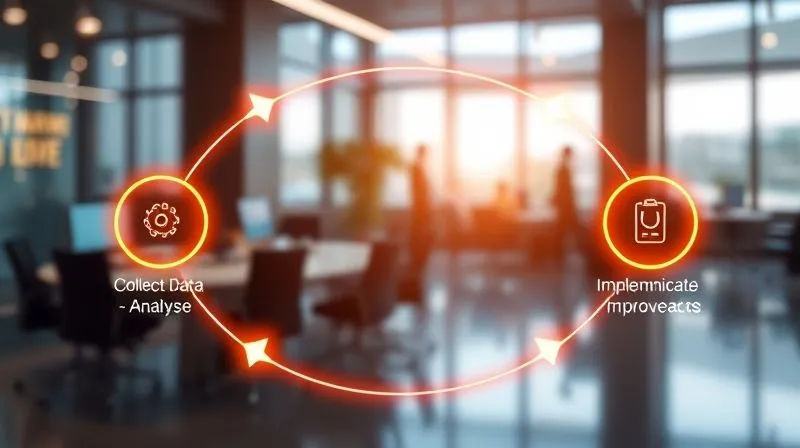
Collecting feedback is only half the battle; the other half is acting on it. I’ve seen countless companies gather data only to let it sit in a spreadsheet. To truly leverage feedback, you must:
- Analyze Trends: Look for patterns in feedback related to specific issues, departments, or products.
- Identify Root Causes: Go beyond the symptom to understand why the problem occurred in the first place.
- Implement Systemic Changes: This might involve updating training protocols, refining product features, improving internal communication, or streamlining processes.
- Communicate Changes: Where appropriate, communicate these improvements back to your customers. This reinforces your commitment to their experience and builds further trust.
This iterative process of feedback, analysis, action, and communication is fundamental to building a truly customer-centric organization that consistently minimizes churn risk. As Deloitte's research on customer experience often emphasizes, continuous improvement is key.
Empowering Your Frontline: Training for Empathy and Problem-Solving
Your customer service representatives are the face of your company, especially during moments of crisis. Their ability to handle difficult situations with empathy and efficiency is paramount to re-engagement.
Investing in Advanced Customer Service Training
Effective training goes far beyond teaching product knowledge or script adherence. It focuses on developing soft skills, critical thinking, and emotional intelligence. I advocate for training programs that include:
- Empathy Mapping: Helping agents understand the customer's emotional state during a service issue.
- Active Listening Techniques: Ensuring agents truly hear and acknowledge customer concerns.
- De-escalation Strategies: Equipping agents to handle angry or frustrated customers effectively.
- Problem-Solving Frameworks: Providing tools for agents to diagnose and resolve issues creatively, not just by following a checklist.
When agents feel confident and capable, they are better equipped to turn a negative interaction into a positive one, significantly improving the chances of successful re-engagement.
Delegating Authority for Swift Issue Resolution
Nothing frustrates a customer more than being bounced between departments or having to wait for a supervisor's approval for a simple solution. Empowering your frontline agents with the authority to resolve common issues on the spot is a game-changer for customer satisfaction and retention. This might include:
- The ability to issue small refunds or credits without managerial override.
- Discretion to offer compensatory gestures (e.g., free shipping, expedited service).
- Access to comprehensive customer history and knowledge bases for quick problem diagnosis.
This empowerment not only speeds up resolution but also signals to the customer that your company trusts its employees to do right by them. Research from Forbes on employee empowerment consistently shows its positive impact on customer experience.
Measuring Success: Metrics for Re-engagement and Churn Prevention
How do you know if your re-engagement efforts are working? You need to track the right metrics. It's not enough to simply fix the problem; you need to measure the long-term impact on customer behavior and loyalty.
Key Performance Indicators (KPIs) for Post-Service Recovery
Beyond traditional customer satisfaction scores, focus on KPIs that specifically reflect re-engagement and churn prevention:
- Churn Rate (Post-Issue): Track the percentage of customers who churn within a specific period after a service issue and subsequent re-engagement efforts.
- Customer Satisfaction (CSAT) Score: Specifically measure CSAT related to the resolution and recovery process.
- Net Promoter Score (NPS): Monitor changes in NPS among customers who experienced a service issue and were re-engaged. A positive shift indicates successful recovery.
- Repeat Purchase Rate/Engagement Metrics: For product-based businesses, track repeat purchases. For service-based, monitor login frequency, feature usage, or content consumption.
- Customer Effort Score (CES): How easy was it for the customer to get their issue resolved and feel re-engaged? Lower effort usually correlates with higher satisfaction.
Analyzing Long-Term Customer Lifetime Value (CLV)
The ultimate measure of successful re-engagement is its impact on Customer Lifetime Value. Did your recovery efforts prevent a valuable customer from churning, thereby preserving their future revenue stream? Did they even *increase* their spending or engagement post-recovery?
By comparing the CLV of customers who experienced a service issue and were successfully re-engaged versus those who churned, you can quantify the ROI of your re-engagement strategies. This data provides a compelling business case for investing in robust service recovery. For deeper insights into CLV, resources like Salesforce's guides on CLV can be very helpful.
| Metric | Goal | Impact |
|---|---|---|
| Churn Rate Post-Issue | Decrease by 20% | Directly measures retention effectiveness. |
| CSAT (Recovery Process) | Achieve 90% satisfaction | Indicates satisfaction with the solution and communication. |
| NPS (Post-Recovery) | Increase by 15 points | Reflects overall loyalty and advocacy. |
| Repeat Purchase Rate | Increase by 10% | Shows continued engagement and trust in the brand. |
| Customer Lifetime Value (CLV) | Maintain/Grow for at-risk segments | Quantifies the financial benefit of re-engagement. |

Beyond the Fix: Fostering Long-Term Loyalty
Re-engaging a customer after a service issue is a significant win, but the journey doesn't end there. True success lies in transforming that re-engagement into sustained, long-term loyalty and advocacy.
Proactive Engagement: Anticipating Needs
Once a customer has been successfully re-engaged, shift your focus from reactive problem-solving to proactive value delivery. This means anticipating their needs, offering personalized recommendations, and providing resources that help them maximize their experience with your product or service. Leverage data analytics to understand their usage patterns and preferences.
For example, if a customer previously had an issue with a specific feature, proactively send them an update when that feature is improved, or offer a tutorial. This shows you remember their past experience and are committed to making their future interactions seamless and valuable.
Building Community and Brand Advocates
A loyal customer is often a brand advocate. Encourage your successfully re-engaged customers to join your community forums, participate in beta programs, or share their positive experiences. When customers feel part of a community, their bond with your brand deepens.
Consider creating exclusive loyalty programs for long-term customers, offering unique perks or early access. These initiatives not only reward loyalty but also make customers feel valued and appreciated, turning them into your most powerful marketing asset. They become living proof that your brand stands by its customers, even when things go wrong.
Frequently Asked Questions (FAQ)
What if the customer is still angry despite my best efforts? In cases where anger persists, the key is continued empathy and active listening. Sometimes, customers primarily want to feel heard and validated. Offer a cooling-off period, then attempt a final, high-touch outreach from a senior leader, explicitly stating your understanding of their frustration and your commitment to making amends. Be prepared to offer a significant gesture of goodwill, but also recognize when a customer may be beyond recovery and focus your resources on those who are receptive.
How long should the re-engagement process typically take? The duration varies based on the severity of the issue and the customer's value. Immediate acknowledgment and initial resolution should happen within 24-48 hours. The active follow-up phase can range from a few weeks to a few months, with decreasing frequency. Long-term re-engagement then folds into your regular customer relationship management. The goal is to sustain consistent, value-driven communication until their trust is fully restored and their engagement patterns normalize.
Is it worth re-engaging all customers who are at risk of churn? No, it's not always feasible or strategically sound to re-engage every single customer. Prioritize based on Customer Lifetime Value (CLV), the severity of the issue, and the customer's potential for advocacy. Focus your most intensive efforts on high-value customers who have experienced significant issues. For lower-value customers or those with minor issues, a more automated or less resource-intensive re-engagement approach might be appropriate. Strategic allocation of resources is crucial.
How do I measure the ROI of re-engagement efforts? Measuring ROI involves comparing the cost of your re-engagement efforts (staff time, compensatory gestures, technology) against the value retained or gained. Track metrics like the prevention of churn among at-risk segments, increased Customer Lifetime Value for re-engaged customers, improved repeat purchase rates, and positive shifts in NPS. Quantify the revenue saved by retaining these customers and compare it to your investment. A positive ROI indicates successful strategies.
What role does technology play in effective customer re-engagement? Technology is foundational. CRM systems are essential for tracking customer interactions and issues. AI-powered sentiment analysis tools can identify at-risk customers early. Marketing automation platforms can facilitate personalized follow-up communications. Feedback collection tools help gather insights. By integrating these technologies, you can scale your re-engagement efforts, personalize interactions, and gain actionable insights more efficiently, making the process more proactive and data-driven.
Key Takeaways and Final Thoughts
Re-engaging customers at risk of churn post-service issue is not merely damage control; it's a profound opportunity to strengthen loyalty and build a more resilient customer base. It requires a blend of empathy, strategic communication, and proactive action.
- Acknowledge & Apologize Sincerely: Validate their experience and take responsibility.
- Personalize Recovery: Tailor solutions based on customer value and issue severity.
- Master the Follow-Up: Consistent, value-driven check-ins rebuild trust over time.
- Leverage Feedback: Turn insights into systemic improvements to prevent recurrence.
- Empower Your Team: Equip your frontline with the skills and authority to resolve issues effectively.
- Measure What Matters: Track specific KPIs to quantify success and demonstrate ROI.
In my years, I've seen that the true test of a company's commitment to its customers isn't when things go perfectly, but when they go wrong. By embracing these strategies, you're not just fixing a problem; you're transforming a potential loss into a powerful testament to your brand's dedication. Approach each at-risk customer with a clear strategy and a genuine desire to serve, and you'll not only re-engage them but forge a bond that lasts.
Recommended Reading
- 7 Proven Strategies: Stop New Hires Quitting Within 90 Days
- Unlock Your Edge: Market Analysis for Competitive Advantage
- Analytics Not Driving Decisions? 7 Fixes for Actionable Insights
- 7 Steps: How to Select Impactful KPIs for Explosive Business Growth
- 7 Proven Strategies to Productize Your Service Business for Scale





Comments
Leave a comment below. Your email will not be published. Required fields marked with *