


How to Recover a Critical Project Falling Behind Schedule
For over two decades in the trenches of project management, I've witnessed the unsettling silence that falls over a meeting room when someone finally admits: "Our critical project is falling behind schedule." It's a moment of truth, often preceded by weeks or even months of subtle slippage, missed milestones, and a growing sense of unease. I've been there, both as the one delivering the bad news and the one tasked with turning the ship around.
The stakes are always high. A critical project isn't just a deliverable; it often represents significant investment, strategic advantage, market entry, or even the viability of a department or company. When such a project falters, it triggers a cascade of negative effects: budget overruns, damaged stakeholder trust, team burnout, and a palpable sense of organizational anxiety. The pain point isn't just about the schedule; it's about the erosion of confidence and the potential for long-term strategic damage.
But here's the crucial insight I've gleaned from countless recovery missions: a project falling behind is rarely a death sentence. It's a call to action, an opportunity for decisive leadership, meticulous analysis, and strategic realignment. In this definitive guide, I'll share a battle-tested, 8-step framework – forged in real-world scenarios – that will equip you with the actionable strategies, expert insights, and the mindset needed to diagnose, reset, and successfully recover your critical project, no matter how dire the situation seems.
The Immediate Diagnostic: Where Did We Go Wrong?
When a critical project falls behind, the first instinct might be panic or blame. Resist it. My experience has taught me that effective recovery begins not with frantic activity, but with a calm, surgical diagnosis. You can't fix what you don't understand.
1. Stop the Bleeding: Halting Further Delays
Before you can move forward, you must prevent further backward slide. This isn't about solving the problem yet, but stabilizing the patient.
- Immediate Freeze: Temporarily halt non-essential activities or new feature requests to prevent further scope creep and allow for reassessment.
- Resource Re-focus: Redirect available resources to the most immediate, critical path tasks that are currently stalled or at risk.
- Communicate Urgency: Inform key stakeholders of a temporary pause for immediate assessment, ensuring transparency without alarm.
2. Deep Dive Analysis: Pinpointing Root Causes
This is where you put on your detective hat. Don't settle for surface-level symptoms. A delay in 'Task X' isn't the root cause; it's a symptom of something deeper – perhaps resource contention, unclear requirements, or technical debt.
"The most common mistake in project recovery is treating symptoms instead of diseases. Without an honest, data-driven root cause analysis, you're merely rearranging deck chairs on the Titanic." - My personal adage.
Conduct interviews with team members, analyze project documentation, and review historical data. Look for patterns in:
- Scope Creep: Uncontrolled changes and additions to project requirements.
- Poor Planning/Estimation: Unrealistic timelines, inadequate resource allocation, or overlooked dependencies from the outset.
- Resource Constraints: Lack of skilled personnel, high turnover, or shared resources being pulled into other priorities.
- Technical Debt/Complexity: Underestimated technical challenges, poor architecture, or unforeseen integration issues.
- Communication Breakdowns: Misunderstandings between teams, stakeholders, or external vendors.
- Risk Management Failures: Unidentified risks or inadequate mitigation strategies.
- External Dependencies: Delays from third-party vendors or regulatory approvals.
To aid in this analysis, I often use a framework like this:
| Root Cause Category | Common Indicators | Diagnostic Questions |
|---|---|---|
| Planning & Estimation | Consistently missed deadlines, high re-work, frequent scope changes | Were estimates bottom-up or top-down? How accurate were previous similar project estimates? |
| Resource Management | Team burnout, skill gaps, bottlenecks, idle time | Are resources over-allocated? Is there a clear skills matrix? |
| Communication & Collaboration | Misunderstandings, silos, duplicated effort, late issue detection | How frequently do teams sync? Is information flowing effectively between all parties? |
| Risk & External Factors | Sudden blockers, vendor delays, regulatory hurdles | Was a comprehensive risk register maintained? How are external dependencies managed? |

Re-Engaging Stakeholders: Communication as a Recovery Tool
Once you understand the 'what' and 'why' of the delay, your next critical step is to manage stakeholder perceptions and expectations. In my experience, transparency, even about bad news, builds more trust than sugarcoating or silence.
1. Transparent Communication: The Good, The Bad, The Plan
Gather your key stakeholders. Don't just email them. Schedule a dedicated meeting. Present a clear, concise, and honest assessment of the situation. This isn't about assigning blame but owning the challenge and outlining a path forward.
- Acknowledge the Delay: Clearly state the project is behind schedule and quantify the impact (e.g., "We are 4 weeks behind the original target.").
- Present Root Causes: Explain, without jargon, the primary reasons identified during your diagnostic phase.
- Outline the Recovery Plan: This is crucial. Don't just bring problems; bring solutions. Present your proposed steps for recovery, including any necessary trade-offs.
- Request Input (Carefully): Allow for questions and listen to concerns, but firmly guide the discussion towards constructive solutions rather than dwelling on past mistakes.
2. Resetting Expectations & Gaining Buy-in
This often involves tough conversations. You might need to adjust the project's scope, budget, or timeline. As marketing guru Seth Godin often says, "The market doesn't care about your stories, it cares about its stories." Your stakeholders care about their outcomes, so frame the recovery plan in terms of renewed value and achievable goals.
Secure their agreement on the revised plan. Without stakeholder buy-in, your recovery efforts will be constantly undermined by conflicting priorities or a lack of necessary support.
Strategic Reprioritization: Focusing on What Truly Matters
When a project is behind, you often can't do everything. This is the moment to ruthlessly prioritize, focusing only on elements that deliver maximum value and are absolutely essential to the project's core objectives.
1. Critical Path Analysis Revisited
Your original critical path might no longer be valid. Re-evaluate it with fresh eyes, considering current realities and any new constraints. Identify tasks that, if delayed, will directly push out the project end date.
- Identify True Dependencies: Map out all tasks and their logical relationships. Are there any 'soft' dependencies that can be re-sequenced or run in parallel?
- Recalculate Task Durations: Based on current team capacity and performance, provide realistic estimates for remaining critical tasks.
- Identify the New Critical Path: Use project management software to recalculate the longest sequence of tasks, determining the earliest possible completion date.

2. Scope Renegotiation & De-scoping
This is often the most painful but effective lever. Can any features, functionalities, or deliverables be deferred to a later phase, reduced in scope, or eliminated entirely without compromising the core value proposition?
- Minimum Viable Product (MVP) Focus: Define the absolute minimum set of features required to launch and deliver value. Everything else is secondary.
- Prioritization Matrix: Work with stakeholders to categorize features by 'Must Have,' 'Should Have,' 'Could Have,' and 'Won't Have' (MoSCoW method) or by value vs. effort.
- Formal Change Management: Document all scope changes and get formal approval from stakeholders. This protects your team and the project from future creep.
Resource Optimization: Unleashing Latent Potential
Often, projects fall behind not due to a lack of resources overall, but due to misallocated, underutilized, or bottlenecked resources. This step is about getting the right people on the right tasks at the right time.
1. Reallocating Talent & Expertise
Review your team's current assignments and skill sets. Are your most experienced or specialized team members working on the most critical tasks? Can less critical tasks be deferred or assigned to other team members to free up key personnel?
- Skill-Based Deployment: Match specific skills to the most challenging parts of the critical path.
- Cross-Training/Mentorship: While not a quick fix, investing in cross-training can reduce future single points of failure.
- External Support: Consider bringing in temporary contractors or consultants for specialized skills or to offload non-critical work.
2. Addressing Bottlenecks & Dependencies
Bottlenecks are often the silent killers of project schedules. They occur when one part of the process slows down, holding up everything downstream. Identifying and addressing these is paramount.
"In a critical project recovery, visibility into resource allocation and dependencies is not a luxury; it's a non-negotiable requirement for effective decision-making." - A lesson learned from countless recoveries.
Analyze your workflow to identify where tasks are piling up or waiting. This could be a specific individual, a team, a technical review process, or an external approval. Once identified, develop specific strategies to alleviate these bottlenecks, such as:
- Parallel Processing: Can tasks currently in sequence be run simultaneously?
- Load Balancing: Distribute work more evenly among team members.
- Process Streamlining: Can any approval steps or handoffs be expedited or removed?
Accelerated Execution Strategies: Gaining Momentum
Once you've diagnosed the problem, realigned expectations, and optimized resources, it's time to accelerate. This involves strategic techniques to shorten the remaining project duration.
1. Fast-Tracking & Crashing Techniques
These are classic project management acceleration methods:
- Fast-Tracking: Overlapping phases or tasks that would normally be performed sequentially. For example, starting development before design is 100% complete (with inherent risks). This requires careful risk management and communication.
- Crashing: Adding resources to critical path activities to shorten their duration. This often involves overtime, additional personnel, or specialized equipment. Crashing typically increases costs and can lead to diminishing returns or quality issues if not managed carefully.
2. Agile Sprints for Recovery
Even in traditionally waterfall projects, adopting an agile mindset for specific recovery phases can be incredibly effective. Breaking down large, stalled tasks into smaller, time-boxed sprints (1-2 weeks) can:
- Increase Visibility: Daily stand-ups and frequent demos provide immediate insight into progress and blockers.
- Boost Morale: Shorter cycles lead to quicker wins and a sense of accomplishment.
- Enable Rapid Adaptation: Allows for quick course correction based on immediate feedback.
Choosing between fast-tracking and crashing, or combining them, depends on your project's specific constraints and the nature of the tasks. Here's a quick comparison:
| Technique | Primary Impact | Cost Impact | Risk Profile |
|---|---|---|---|
| Fast-Tracking | Reduces schedule duration by overlapping tasks | Minimal direct cost increase, potential for rework costs | Higher risk due to potential rework, increased coordination needs |
| Crashing | Reduces schedule duration by adding resources | Significant cost increase (overtime, new resources) | Lower technical risk, higher risk of diminishing returns or burnout |
Risk Management Revisited: Proactive Safeguards
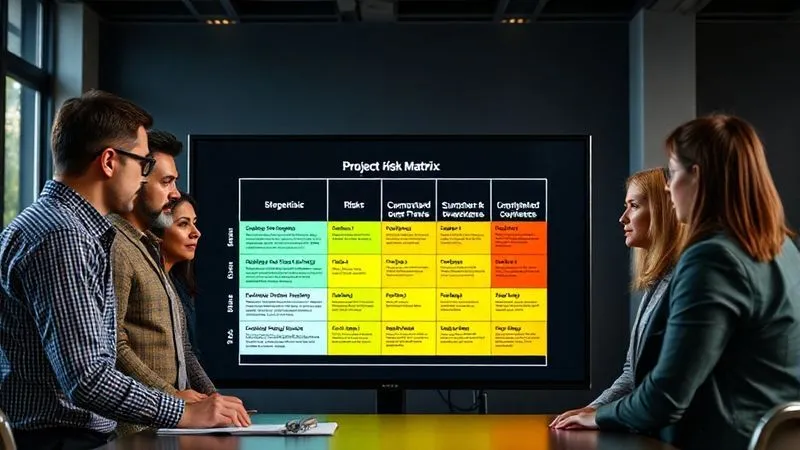
A project in recovery is inherently a project with elevated risk. Your initial risk assessment might be outdated. It's time for a thorough re-evaluation and the development of robust contingency plans.
1. Identifying New & Emerging Risks
The very act of recovery introduces new risks. Fast-tracking can lead to rework. Crashing can lead to burnout. De-scoping can impact user acceptance. Conduct a fresh risk identification session with your team and key stakeholders.
- Brainstorming: Facilitate sessions to identify all potential threats to the revised plan.
- Scenario Planning: Consider 'what if' scenarios for critical path tasks.
- External Environment Scan: Re-assess market conditions, competitor moves, or regulatory changes that might impact your recovery.
2. Developing Contingency Plans
For each high-priority risk, develop a specific contingency plan. This isn't just about identifying the risk; it's about having a pre-defined response ready to go if it materializes.
- Mitigation Strategies: Actions to reduce the probability or impact of the risk.
- Contingency Reserves: Allocate specific budget and schedule buffers for known risks.
- Trigger Conditions: Define clear indicators that will activate your contingency plan.
Monitoring & Control: Sustaining the Recovery
A recovery plan is only as good as its execution and the vigilance with which it's monitored. This phase is about establishing a tight feedback loop to ensure you stay on track and can adapt quickly.
1. Establishing Enhanced Tracking Mechanisms
Standard project tracking might not be sufficient for a project in recovery. You need more granular, frequent, and visible progress updates.
- Daily Stand-ups: Short, focused meetings to discuss progress, plans for the day, and blockers.
- Burn-down/Burn-up Charts: Visual representations of work remaining or work completed against the revised schedule.
- Key Performance Indicators (KPIs): Track specific metrics relevant to your recovery, such as task completion rates, defect rates, or resource utilization.
- Critical Path Monitoring: Daily checks on critical path tasks to ensure they are on schedule.
2. Regular Review Cadence
Beyond daily checks, establish a more frequent, formal review cadence with stakeholders.
- Weekly Progress Reviews: Share status updates, discuss any new issues, and present revised forecasts.
- Bi-weekly Steering Committee Meetings: For executive stakeholders, focus on strategic alignment, budget, and major decisions.
Case Study: How TechSolutions Recovered Project Zenith
TechSolutions, a mid-sized software firm, found their flagship 'Project Zenith' – a critical platform upgrade – six weeks behind schedule due to unforeseen technical complexities and a key developer leaving. Panic was setting in. By implementing the robust monitoring and control I advocated, they turned the tide. They initiated daily stand-ups focused exclusively on critical path tasks, introduced a visual burn-down chart for the recovery sprint, and held mandatory bi-weekly 'Deep Dive' sessions with lead developers and architects. This granular visibility quickly exposed new blockers, which were then immediately addressed. Within four weeks, they had not only caught up but gained two weeks on their revised schedule, ultimately delivering the project only two weeks later than the original deadline, a significant win given the initial six-week deficit.
Leadership & Team Morale: The Human Element of Recovery
Finally, and perhaps most importantly, never underestimate the human element. A project in crisis takes a toll on the team. Your leadership, empathy, and ability to rebuild confidence are paramount.
1. Empathetic Leadership in Crisis
Your team is likely stressed, possibly burnt out, and perhaps even demoralized. As a leader, you need to be their rock.
- Be Visible & Accessible: Be present, listen to their concerns, and offer support.
- Protect Your Team: Shield them from unreasonable external pressures where possible, allowing them to focus on execution.
- Celebrate Small Wins: Acknowledge progress, even minor ones. This builds momentum and morale.
- Lead by Example: Demonstrate resilience, focus, and a positive, problem-solving attitude.
2. Rebuilding Team Confidence
Confidence is a fragile thing. When a project falls behind, it can erode quickly. You need to actively work to rebuild it.
- Clear Vision: Reiterate the importance of the project and the value of their contribution.
- Empowerment: Give team members autonomy and ownership over their tasks within the recovery plan.
- Skill Development: Offer support and training if skill gaps were identified as a root cause.
- Fairness: Ensure workloads are distributed equitably and recognize extra effort.

Frequently Asked Questions (FAQ)
How do I handle uncooperative stakeholders during recovery? Uncooperative stakeholders can derail even the best recovery plan. My approach involves a combination of data-driven persuasion and empathetic listening. First, present the unvarnished data on the project's status and the impact of continued delays. Clearly articulate the trade-offs required. Second, actively listen to their specific concerns and priorities. There's often a legitimate reason for their stance. Frame your recovery plan not just as fixing a problem, but as aligning with their core objectives, even if it means adjusting scope or timeline. Sometimes, an external, neutral facilitator can help bridge communication gaps and facilitate consensus.
When is it too late to recover a project? This is a tough question, and the answer is rarely black and white. It's 'too late' when the cost of recovery (time, money, resources, opportunity cost) far outweighs the value of the project's successful completion. Indicators include: fundamental flaws in the project's premise, unsustainable resource requirements, complete loss of stakeholder trust, or external market conditions making the project obsolete. Before pulling the plug, ensure you've exhausted all viable recovery strategies and have a clear, data-backed assessment of the costs vs. benefits of continuation. Sometimes, a controlled termination is a more strategic decision than a prolonged, agonizing recovery.
What's the role of project management software in recovery? Project management software (e.g., Jira, Asana, Microsoft Project, Monday.com) is indispensable during recovery. It provides the central source of truth for tasks, dependencies, resource allocation, and progress tracking. During recovery, leverage its advanced features: visualize the critical path, run 'what-if' scenarios for schedule compression, track resource utilization in real-time, and create custom dashboards for recovery-specific KPIs. The ability to quickly adjust schedules, reassign tasks, and generate precise reports for stakeholders is crucial for agility and transparency.
How do I prevent future project delays after recovery? Recovery is a learning experience. To prevent recurrence, you must institutionalize the lessons learned. This includes conducting a thorough post-mortem (lessons learned) session to document root causes and effective recovery actions. Update your project management methodologies, refine estimation processes, improve risk management frameworks, and invest in better communication protocols. Furthermore, foster a culture of early warning, where team members feel safe to report potential issues proactively, rather than letting them fester.
Can I recover a project without additional budget? Recovering a critical project without additional budget is challenging but often feasible, especially if the original budget had some contingency. It primarily relies on strategic de-scoping, re-prioritization, and resource reallocation. You'll need to be ruthless about what stays in scope and what gets deferred. Focus on delivering the absolute minimum viable product (MVP) to achieve the core objectives. This often means sacrificing 'nice-to-have' features. Crashing (adding resources) is usually off the table without more budget, so fast-tracking (overlapping tasks) and optimizing existing team efficiency become your primary levers. Transparent communication with stakeholders about these trade-offs is crucial.
Key Takeaways and Final Thoughts
Recovering a critical project falling behind schedule is one of the most demanding yet rewarding challenges a project manager can face. It's a true test of leadership, analytical prowess, and resilience. But it's not an insurmountable obstacle. The key is to act decisively, systematically, and with unwavering focus on the core objectives.
- Diagnose Before Prescribing: Understand the root causes, not just the symptoms.
- Communicate Relentlessly: Transparency builds trust, even with bad news.
- Prioritize Ruthlessly: Focus on the critical path and essential scope.
- Optimize Resources: Ensure the right people are on the right tasks.
- Accelerate Strategically: Use fast-tracking or agile sprints where appropriate.
- Manage Risks Actively: Anticipate and plan for new threats.
- Monitor Continuously: Maintain tight control and adapt quickly.
- Lead Empathetically: Support and motivate your team through the challenge.
As I've learned over my career, every project setback is an opportunity for growth and refinement. By embracing this structured approach, you won't just recover your critical project; you'll emerge with a stronger team, more robust processes, and invaluable experience that will serve you well in all future endeavors. The path forward demands courage and clarity, but with these steps, you are well-equipped to turn the tide and bring your project back to success. For further insights on effective project leadership, consider exploring resources like Harvard Business Review's Project Management section or the Project Management Institute's extensive library on project recovery. Additional insights on strategic project rescue can also be found in articles on Forbes, offering diverse perspectives on turning around failing initiatives.
Recommended Reading
- Team Rejects Crucial Shifts? 7 Expert Steps to Navigate Organizational Change
- Fixing Financial Forecasts: 7 Expert Strategies for Precision
- Critical Project Delegation: 5 Strategies for Control & Quality Assurance
- 7 Proven Strategies: Stop Losing Small Business Clients to New Rivals NOW!
- Data Breach? 7 Immediate Legal Steps to Protect Your Business & Customers





Comments
Leave a comment below. Your email will not be published. Required fields marked with *