

How to Reduce B2C Abandoned Carts from Unexpected Shipping Costs
For over 15 years in the B2C e-commerce space, I've seen countless businesses struggle with a silent conversion killer: the dreaded 'shipping shock.' It's that moment when a customer, excited about their purchase, reaches the checkout only to be blindsided by an unexpected shipping fee, causing them to hit the back button faster than you can say 'conversion lost.'
This isn't just a minor hiccup; it's a fundamental breakdown of trust and a major contributor to abandoned carts. You've done the hard work of attracting them, engaging them, and getting them to commit to a purchase, only for an unforeseen cost to snatch victory from the jaws of conversion.
But here's the good news: this problem is entirely solvable. In this definitive guide, I'll share my battle-tested strategies and actionable frameworks designed to help you proactively address and eliminate the pain point of unexpected shipping costs, ultimately showing you how to reduce B2C abandoned carts from this persistent issue and significantly boost your bottom line.
The Silent Killer: Understanding the Impact of Shipping Shock
It's a statistic that haunts e-commerce managers: Baymard Institute consistently reports that 'extra costs too high (shipping, taxes, fees)' is the number one reason for cart abandonment, often accounting for over 50% of all exits. This isn't just about the money; it's about unmet expectations and a perceived lack of transparency.
"In the digital age, trust is the new currency. Ambiguity in pricing, especially around shipping, is a direct assault on that trust, leading to immediate customer churn."
The Psychology of 'Surprise' Costs
Customers arrive at your checkout with an estimated mental cost for their purchase. When a significant, uncommunicated shipping fee is suddenly added, it triggers a strong negative emotional response. This 'surprise' feels like a hidden charge, eroding the goodwill you've painstakingly built throughout their journey.
It can feel like a bait-and-switch, even if it's unintentional. The perceived value of the product diminishes, and the friction introduced by recalculating their budget or considering alternatives is often enough to send them packing.
Strategy 1: Embrace Radical Transparency from the Outset
The most effective way to combat unexpected shipping costs is to make them 'expected.' Transparency isn't just a buzzword; it's a foundational principle for building customer trust and reducing checkout friction. Don't hide shipping costs until the very last step.
Displaying Costs Clearly on Product Pages
One of the biggest mistakes I see businesses make is waiting until the final checkout page to reveal shipping costs. This is too late. Your goal should be to provide an estimated shipping cost as early as possible in the customer journey.
- Product Page Calculator: Integrate a small tool on your product pages that allows customers to input their zip code for an instant shipping estimate.
- Estimated Shipping Ranges: For products where exact costs vary widely, display a clear range (e.g., "Shipping starts from $X.XX") or a minimum threshold for free shipping.
- Prominent Shipping Policy Link: Make sure your detailed shipping policy is easily accessible from every product page and the cart.
Leveraging Geo-Location for Accurate Estimates
Modern e-commerce platforms and plugins often allow for geo-location services. By detecting a user's IP address, you can provide a highly accurate, pre-calculated shipping estimate on product pages or directly in the cart, even before they formally enter their address.
This proactive approach eliminates the guesswork and allows customers to make informed decisions earlier, reducing the likelihood of a last-minute shock. It shows you value their time and are upfront about all costs.
Strategy 2: Offer Dynamic and Flexible Shipping Options
Customers love choice, especially when it comes to delivery. Not everyone values speed over cost, or vice versa. Providing a range of shipping options empowers customers and gives them control over their final spend.
Tiered Shipping Models: Speed vs. Cost
Think beyond a single standard shipping option. Offer different tiers that cater to various customer needs and budgets. This could include:
- Economy Shipping: Slower delivery, but significantly cheaper or even free.
- Standard Shipping: A balanced option for speed and cost.
- Expedited/Express Shipping: For customers who need their items quickly and are willing to pay a premium.
Clearly outlining the costs and estimated delivery times for each tier allows customers to choose what works best for them, preventing the feeling of being forced into an expensive option.
Click & Collect / Local Pickup Options
If you have physical retail locations or a warehouse accessible to customers, offering a "Click & Collect" or local pickup option can be a massive cart abandonment reducer. This provides a completely free shipping alternative for local customers and is a growing trend in B2C retail.
It not only eliminates shipping costs but also offers convenience for customers who prefer to pick up items on their schedule. Promote this option clearly on your product pages and during checkout.
| Shipping Option | Cost | Benefit |
|---|---|---|
| Standard (3-5 Days) | $5.99 | Economical choice, reliable delivery |
| Express (1-2 Days) | $14.99 | Fastest delivery for urgent needs |
| Local Pickup | Free | Convenient, no shipping cost, eco-friendly |
Strategy 3: Strategically Integrate Shipping Costs into Pricing
The concept of "free shipping" is a powerful psychological trigger. While nothing is truly free, how you present shipping costs can significantly impact perceived value and conversion rates. This strategy involves smart pricing adjustments.
The Art of 'Free Shipping' Thresholds
One of the most effective ways to offer "free shipping" without eroding margins is to implement a minimum order value for eligibility. This not only eliminates the shipping cost objection for many but also acts as a powerful incentive to increase your Average Order Value (AOV).
For example, if your average order is $40, setting a free shipping threshold at $50 can encourage customers to add another item to their cart to qualify. Experiment with different thresholds to find the sweet spot that boosts AOV without deterring purchases.
"Customers don't mind spending more if they feel they are getting something extra of value, and 'free shipping' is often perceived as a significant bonus."
Bundling and Subscription Models
Consider bundling products together and incorporating shipping costs into the bundle price, presenting it as a single, all-inclusive figure. This opaque pricing can make the overall offer more attractive than seeing separate product and shipping lines.
For recurring purchases, subscription models can offer "free shipping" as a core benefit. Customers pay a recurring fee, and shipping is absorbed, creating a predictable cost and a strong value proposition. This is particularly effective for consumables or repeat-purchase items.
Strategy 4: Implement Smart Cart Recovery & Re-engagement
Even with the best strategies, some carts will still be abandoned. The goal then shifts from prevention to recovery. This is where targeted re-engagement efforts become crucial to how to reduce B2C abandoned carts.
Targeted Email Campaigns with Shipping Incentives
An abandoned cart email sequence is a must-have. For carts abandoned specifically due to shipping costs, a targeted email offering a shipping discount or even free shipping can be incredibly effective. Ensure your email platform can segment these particular abandonments.
- First Email (1-2 hours after abandonment): Gentle reminder, asking if they had issues, linking back to the cart.
- Second Email (24 hours after): Highlight product benefits, social proof, and perhaps a small shipping discount (e.g., "10% off shipping for the next 24 hours").
- Third Email (48-72 hours after): A stronger incentive, potentially free shipping, with a clear expiration to create urgency.
Exit-Intent Pop-ups and On-Site Messaging
When a customer shows signs of leaving your checkout page (e.g., mouse moving towards the 'back' button or closing the tab), an exit-intent pop-up can be your last chance. This pop-up could offer a small shipping discount or reiterate your transparent shipping policy.
Similarly, use subtle on-site messaging (e.g., a banner at the top of the checkout page) to remind customers of free shipping thresholds or available low-cost shipping options. This acts as a gentle nudge to reconsider before leaving.
Strategy 5: Optimize Your Checkout Flow for Simplicity and Speed
While shipping costs are a primary culprit, a cumbersome checkout process can exacerbate the problem. A long, complex, or confusing checkout makes any additional cost feel more burdensome. Streamlining the process is key.
Guest Checkout & One-Page Checkout
Force-registering customers is a major turn-off. Always offer a guest checkout option. Furthermore, move towards a one-page checkout experience where all necessary information (shipping, billing, payment) is on a single, scrollable page.
This reduces the perceived effort and the number of clicks required, making the journey to purchase smoother. Each additional step or page gives a customer another opportunity to abandon their cart, especially when confronted with shipping costs.
Progress Indicators and Trust Badges
Use clear progress indicators (e.g., "Step 1 of 3") so customers know exactly where they are in the process and how much is left. This manages expectations and reduces frustration.
Display prominent trust badges (SSL certificates, payment provider logos, security seals) throughout the checkout process. This reassures customers that their information is safe and builds confidence, making them less likely to second-guess a purchase due to shipping costs.
Case Study: How 'ShopLocal Goods' Boosted Conversions
ShopLocal Goods, a mid-sized online retailer specializing in artisanal home decor, faced a significant cart abandonment rate, with unexpected shipping costs being the top reported reason. Their previous checkout process involved a 4-step sequence where shipping was calculated only on the final page.
By implementing a two-pronged strategy – first, displaying an estimated shipping cost calculator directly on product pages, and second, consolidating their checkout into a single, streamlined page with a prominent free shipping threshold banner – they saw remarkable results. Within three months, their cart abandonment rate dropped by 18%, and their Average Order Value increased by 12% as customers added more items to qualify for free shipping. This move not only addressed the core issue of shipping shock but also improved the overall user experience.
Strategy 6: Leverage Technology for Real-Time Shipping Calculations
Manual shipping calculations are prone to errors and delays. Integrating technology to provide real-time, accurate shipping rates is essential for transparency and efficiency.
Integrating with Carrier APIs
Most major shipping carriers (UPS, FedEx, USPS, DHL) offer Application Programming Interfaces (APIs) that allow your e-commerce platform to pull live shipping rates based on product weight, dimensions, origin, and destination. Platforms like Shopify, WooCommerce, and Magento have built-in integrations or robust plugins for this.
This ensures that the shipping cost presented to the customer is always accurate and up-to-date, eliminating discrepancies and unexpected charges. It also allows you to offer more nuanced shipping options based on actual carrier costs.
AI-Powered Predictive Shipping Tools
The next frontier in shipping optimization involves AI. These tools can analyze historical data, current traffic, and even weather patterns to predict optimal shipping routes and costs. While more advanced, they can help you offer competitive rates and even identify opportunities for localized fulfillment to reduce shipping expenses.
Investing in these technologies might seem significant, but the return on investment through reduced abandonment and increased customer satisfaction is often substantial.
Strategy 7: Continuously Analyze Data and A/B Test Your Approaches
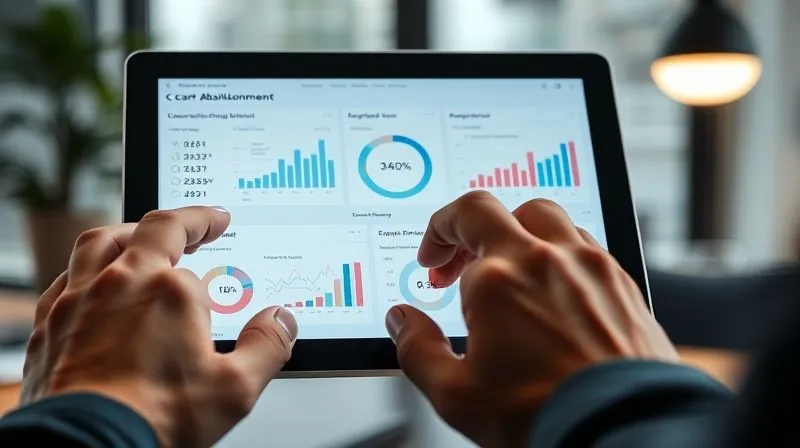
Your work isn't done once you implement these strategies. The e-commerce landscape is constantly evolving, and customer expectations shift. Continuous monitoring, analysis, and testing are vital for sustained success in how to reduce B2C abandoned carts.
Key Metrics to Monitor for Cart Abandonment
Keep a close eye on these metrics in your analytics:
- Cart Abandonment Rate: The percentage of customers who add items to their cart but don't complete the purchase.
- Checkout Abandonment Rate: Specifically, abandonment during the checkout process itself.
- Shipping Cost as an Abandonment Reason: If your analytics platform tracks this, it's invaluable.
- Average Order Value (AOV): To see the impact of free shipping thresholds.
- Conversion Rate: The ultimate measure of success.
Tools like Google Analytics, Hotjar, and your e-commerce platform's built-in analytics can provide these insights. Look for trends, spikes, and specific points of friction in the checkout funnel.
A/B Testing Shipping Presentation & Offers
Don't guess; test! A/B test different approaches to shipping:
- Placement of Shipping Info: On product page vs. in cart vs. checkout.
- Messaging: "Shipping calculated at checkout" vs. "Free shipping over $50."
- Free Shipping Thresholds: Experiment with different values ($50 vs. $75).
- Shipping Options: Compare the impact of offering 2 vs. 3 vs. 4 options.
Even small changes can lead to significant improvements. Always base your decisions on data, not assumptions. As Harvard Business Review emphasizes, a customer-centric approach driven by data is crucial for long-term growth.
| A/B Test Variable | Hypothesis | Expected Impact |
|---|---|---|
| Shipping Cost Display (Product Page vs. Cart) | Displaying on product page reduces shock | Higher conversion rate from product to cart, fewer exits at checkout |
| Free Shipping Threshold ($50 vs. $75) | Lower threshold encourages more purchases | Increased Average Order Value (AOV), potentially higher overall revenue |
| Shipping Option Naming (Standard vs. Economy) | 'Economy' feels more budget-friendly | Higher selection rate for the lowest-cost option, perceived value increase |
Frequently Asked Questions (FAQ)
What's the ideal shipping cost display method? The ideal method is proactive and transparent. I recommend displaying an estimated shipping cost (or a link to a calculator) on product pages, and then confirming the exact cost clearly in the shopping cart and at the very start of the checkout process. Never wait until the final payment step.
Does free shipping always mean higher profits? Not necessarily. While free shipping can boost conversions and AOV, it must be carefully managed to avoid eroding profit margins. Strategically incorporating shipping costs into product pricing or using free shipping thresholds are ways to offer it profitably. Always analyze your margins and customer behavior.
How often should I review my shipping strategy? I recommend reviewing your shipping strategy at least quarterly, or whenever there's a significant change in carrier rates, product mix, or market conditions. A/B testing should be an ongoing process, allowing for continuous optimization.
What's the role of customer service in reducing cart abandonment? An accessible and responsive customer service team can be invaluable. If a customer abandons a cart due to a shipping question, having easy access to live chat or phone support can resolve their query quickly and prevent the abandonment. They can also provide valuable feedback on common shipping concerns. Forbes highlights the power of empathy in customer experience, which includes clear communication around costs.
Can I really eliminate all unexpected shipping costs? While you can't control every external factor, you can eliminate the *unexpectedness* of shipping costs. By being radically transparent, offering choices, and leveraging technology, you can ensure customers are fully aware of all costs upfront, thereby removing the 'surprise' element that leads to abandonment.
Key Takeaways and Final Thoughts
Reducing B2C abandoned carts from unexpected shipping costs isn't a one-time fix; it's an ongoing commitment to transparency, customer choice, and strategic optimization. Here's what I want you to remember:
- Transparency is Paramount: Communicate shipping costs early and clearly.
- Offer Choice: Provide diverse shipping options to suit different needs.
- Strategic Pricing: Leverage free shipping thresholds and bundling to increase perceived value.
- Recover Actively: Use targeted emails and exit-intent offers for abandoned carts.
- Optimize Checkout: Simplify your process to reduce friction.
- Embrace Technology: Use APIs for real-time, accurate shipping rates.
- Analyze & Test: Continuously monitor metrics and A/B test your strategies.
By implementing these expert-level strategies, you're not just fixing a leaky funnel; you're building stronger customer trust, enhancing the overall shopping experience, and ultimately driving sustainable sales growth for your B2C business. Start today, and watch your conversion rates soar as you turn shipping shock into shipping satisfaction. The global e-commerce market is vast; don't let avoidable shipping surprises hold you back from your share.
Recommended Reading
- 7 Critical Steps: How to Avoid Losing Money on a Bad Franchise Investment
- Decoding AI Content Copyright: 7 Legal Truths Every Creator Needs
- Rapid, Cost-Effective Asia Entry: 7 Proven Strategies for Swift Market Growth
- Analytics Not Driving Decisions? 7 Fixes for Actionable Insights
- Unlock Your Exit: 7 Steps to Sell a Profitable Small Business with No Buyer Interest





Comments
Leave a comment below. Your email will not be published. Required fields marked with *