


How to Reduce Customer Churn Affecting Recurring Revenue?
For over 15 years in the trenches of business growth and sales strategy, I've seen countless companies struggle with a silent, insidious killer: customer churn. It's not just a statistic; it’s a direct drain on your hard-earned recurring revenue, a testament to unfulfilled promises, or perhaps, simply a misunderstanding of customer needs.
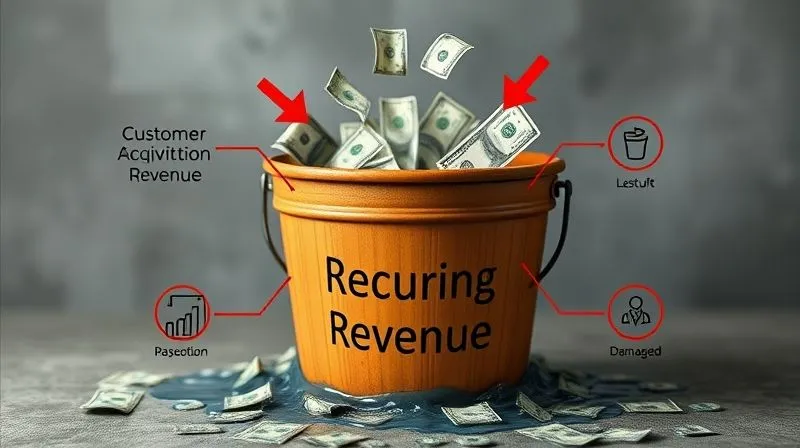
The pain point is palpable: you invest heavily in acquiring customers, only to watch a significant portion slip away month after month, quarter after quarter. This leaky bucket syndrome doesn't just impact your bottom line; it erodes team morale, stifles innovation, and makes sustainable growth an uphill battle. It's a problem that demands a strategic, multi-faceted approach, not just a quick fix.
In this definitive guide, I will share the actionable frameworks, real-world insights, and expert strategies I've cultivated over years of experience. You'll learn not just how to reduce customer churn affecting recurring revenue, but how to transform your customer relationships into an unshakeable foundation for sustained growth, leveraging data, empathy, and proactive engagement.
Understanding the True Cost of Churn: Beyond Lost Revenue
Many businesses mistakenly view customer churn solely as the loss of immediate revenue from a cancelled subscription or a lapsed contract. However, the true cost runs far deeper, impacting your entire financial ecosystem and future growth potential. It's a complex equation that includes lost lifetime value (LTV), wasted customer acquisition costs (CAC), and the intangible but powerful damage to your brand reputation.
Consider the resources you pour into marketing, sales, and onboarding to bring a new customer aboard. When that customer churns, all those investments are effectively nullified, and you're left scrambling to replace them, often at an even higher cost. This continuous cycle of acquisition and attrition creates an unsustainable model, making it incredibly difficult to scale profitably.
"Churn is not just a revenue problem; it's a strategic indicator of your product-market fit, customer experience, and overall business health. Ignoring it is akin to ignoring a gaping wound while planning a marathon." – Industry Specialist Insight
Proactive Engagement: Building Relationships Before They Falter
The best way to reduce customer churn affecting recurring revenue is to prevent it from happening in the first place. This requires a shift from reactive problem-solving to proactive relationship building, ensuring your customers feel valued, understood, and consistently receive value from your offerings.
The Power of Onboarding: Setting the Stage for Success
A stellar onboarding experience is arguably the most critical phase in the customer journey. It's not just about showing them how to use your product; it's about helping them achieve their desired outcomes quickly and efficiently. A poorly onboarded customer is a churn risk waiting to happen.
- Personalized Welcome: Don't just send a generic email. Assign a dedicated customer success manager (CSM) or offer a personalized video walkthrough to address their specific goals.
- Goal-Oriented Setup: Help customers define their 'quick wins' and guide them through the initial steps to achieve those victories. This builds immediate confidence and demonstrates value.
- Resource Provision: Provide easy access to tutorials, FAQs, and support channels. Ensure they know where to go for help without feeling overwhelmed.
- Early Check-ins: Schedule proactive check-ins at 7, 30, and 90-day marks. These aren't sales calls; they're opportunities to gauge satisfaction, answer questions, and reinforce value.
- Educate on Advanced Features: Once basic adoption is solid, gently introduce more advanced features that can further enhance their experience and deepen their commitment.
Consistent Communication: More Than Just Check-ins
Beyond onboarding, maintaining a consistent, relevant communication cadence is vital. This isn't about spamming; it's about delivering value and fostering a sense of partnership. The goal is to keep your brand top-of-mind and reinforce the ongoing benefits they receive.
- Value-Driven Content: Share blog posts, webinars, or case studies that help customers solve problems related to your product or industry.
- Product Updates & Enhancements: Inform them about new features or improvements. Highlight how these changes directly benefit them.
- Personalized Outreach: Send tailored emails based on their usage patterns or milestones. "Congratulations on achieving X with our product!" can go a long way.
- Feedback Requests: Actively solicit feedback through surveys (NPS, CSAT) and direct conversations. Show that you listen and act on their input.
| Engagement Type | Frequency | Goal |
|---|---|---|
| Personalized Onboarding Call | Once (initial) | Establish rapport, ensure quick wins |
| Monthly Value Newsletter | Monthly | Share tips, updates, reinforce value |
| Proactive Usage Review | Quarterly | Identify underutilization, offer solutions |
| Customer Feedback Survey | Bi-annually | Gauge satisfaction, gather insights |
| Product Feature Announcement | As released | Drive adoption of new functionalities |
Leveraging Data & Analytics: Identifying At-Risk Customers Early
In my experience, one of the most powerful tools in your arsenal for how to reduce customer churn affecting recurring revenue is robust data analytics. You can't fix what you don't measure, and you can't prevent what you don't predict. By diligently tracking key metrics and patterns, you can identify customers who are showing early warning signs of dissatisfaction or disengagement.
Key Churn Metrics to Monitor Relentlessly
Understanding these metrics is the first step towards data-driven retention strategies:
- Churn Rate: The percentage of customers who stopped using your product or service over a given period.
- Customer Lifetime Value (CLTV): The total revenue a business can reasonably expect from a single customer account throughout their relationship.
- Net Promoter Score (NPS): Measures customer loyalty and willingness to recommend your product/service. Low scores are a red flag.
- Customer Satisfaction Score (CSAT): Measures how satisfied customers are with a specific interaction or your service.
- Product Usage Frequency & Depth: Are customers logging in regularly? Are they utilizing core features? Declining usage is a strong churn indicator.
- Time to Value (TTV): How quickly new customers realize the promised benefits of your product. A longer TTV correlates with higher churn.
Predictive Analytics: Spotting the Warning Signs
Beyond basic metrics, predictive analytics allows you to move from reactive to proactive. By analyzing historical data, machine learning models can identify patterns that precede churn, flagging customers who are likely to leave before they even explicitly signal dissatisfaction. This gives your customer success team a critical window to intervene.
Case Study: How InnovateTech Reduced Churn with Predictive Analytics
InnovateTech, a B2B SaaS company, faced a persistent 15% monthly churn rate, significantly impacting their recurring revenue. They were losing customers before their CSMs could even react. By implementing a predictive analytics model, they began tracking user login frequency, feature adoption rates, support ticket volume, and even sentiment analysis from customer interactions.
The model identified customers whose usage dipped below a certain threshold for three consecutive weeks, or who opened more than two high-severity support tickets without resolution within 48 hours. These 'at-risk' customers were immediately flagged for a personalized outreach from their CSM, offering proactive support, re-engagement strategies, or a direct conversation to understand their challenges. Within six months, InnovateTech saw their monthly churn rate drop to 8%, directly attributing the 7% reduction to their predictive churn prevention program. This resulted in a 25% increase in annual recurring revenue from their existing customer base.
Implementing predictive models doesn't have to be daunting:
- Define Churn Indicators: Start by identifying 3-5 clear signals that historically precede churn in your business.
- Gather & Clean Data: Ensure your customer data (usage, support, billing, demographics) is accurate and accessible.
- Choose Your Tools: Utilize CRM integrations, business intelligence platforms, or even simple spreadsheet analysis to start. Advanced users might explore machine learning platforms.
- Develop Intervention Strategies: For each identified risk factor, have a clear, actionable plan for your customer success team.
- Iterate & Refine: Continuously monitor the effectiveness of your predictions and interventions, adjusting your model as you learn more.
Exceptional Customer Service: Turning Problems into Loyalty Opportunities
Even with the best proactive strategies, problems will arise. How your organization handles these moments can profoundly impact customer loyalty and, consequently, your recurring revenue. Exceptional customer service isn't just about solving problems; it's about making customers feel heard, valued, and confident that you're a trustworthy partner.
Empowering Your Support Team: Beyond Scripted Responses
Your front-line support team is often the first and last point of contact for a frustrated customer. Empowering them with the right tools, training, and autonomy to resolve issues efficiently and empathetically is paramount. This means moving beyond rigid scripts and enabling them to truly connect with customers.
- Comprehensive Training: Equip them with deep product knowledge and advanced problem-solving skills.
- Empathy & Active Listening: Train them to genuinely understand the customer's frustration, not just the technical issue.
- Access to Information: Provide seamless access to customer history, past interactions, and relevant knowledge bases.
- Empowerment to Act: Give them the authority to offer solutions, escalate appropriately, or even provide small gestures of goodwill (e.g., a temporary discount for a significant inconvenience).
The Feedback Loop: Listening, Learning, and Acting
Customer service interactions are a goldmine of feedback. Every complaint, every suggestion, every question holds valuable insights into how you can improve your product or service and reduce churn. Establishing a robust feedback loop ensures these insights don't get lost.
As marketing guru Seth Godin often says, "Don't find customers for your products, find products for your customers." This philosophy extends directly to customer service. Listen to what your customers are struggling with, identify recurring themes, and feed that information back to product development, marketing, and sales teams. This iterative process of listening and improving is a cornerstone of sustainable growth and helps significantly with how to reduce customer churn affecting recurring revenue. A recent article in Harvard Business Review highlighted the shift from transactional support to relationship-building customer service as a key differentiator in today's competitive landscape.
Value Reinforcement: Continuously Proving Your Worth
Customers stay when they perceive continuous, evolving value. If your product or service remains static, or if customers aren't regularly reminded of its benefits, they will eventually question why they are paying for it. Value reinforcement is about consistently demonstrating that your offering is indispensable to their success.
Product Innovation & Feature Adoption: Keeping Things Fresh
In dynamic markets, standing still means falling behind. Regular product innovation, driven by customer feedback and market trends, ensures your offering remains competitive and relevant. However, simply releasing new features isn't enough; you must also drive adoption.
- Targeted Feature Announcements: Highlight new features that directly address specific customer pain points.
- In-App Guidance: Use tooltips, walkthroughs, and contextual help to guide users through new functionalities.
- Webinars & Tutorials: Offer live or recorded sessions demonstrating how to leverage new features for maximum benefit.
According to a Deloitte study on customer loyalty, companies that consistently innovate and provide new value are significantly more likely to retain customers long-term. This continuous evolution is a direct answer to how to reduce customer churn affecting recurring revenue in a competitive market.
Success Stories & Testimonials: Social Proof as Retention Fuel
Showcasing how other customers are succeeding with your product provides powerful social proof and reminds existing customers of the potential they might not yet be fully realizing. This isn't just for acquisition; it's a potent retention tool.
- Case Studies: Detail specific customer achievements, highlighting the problems they solved and the quantifiable results they achieved using your solution.
- Testimonials: Feature positive quotes and video testimonials prominently on your website, in newsletters, and during customer check-ins.
- User-Generated Content: Encourage customers to share their experiences and successes on social media, creating a vibrant community around your brand.
Strategic Pricing & Packaging: Aligning Value with Cost
Pricing is often a sensitive area, but it's a critical component of customer retention. If customers perceive a misalignment between the value they receive and the price they pay, churn becomes inevitable. Strategic pricing and packaging are about creating offerings that cater to diverse needs while clearly articulating the value proposition for each tier.
Tiered Offerings: Catering to Diverse Needs
Not all customers have the same needs or budget. Offering a range of pricing tiers allows customers to choose the plan that best fits their current requirements, with options to scale up as their needs grow. This flexibility can significantly reduce churn caused by customers feeling locked into an unsuitable plan.
- Basic Tier: Essential features for entry-level users or smaller businesses.
- Standard Tier: More advanced features, increased usage limits, and perhaps priority support for growing businesses.
- Premium/Enterprise Tier: Comprehensive features, dedicated account management, custom integrations, and specialized support for large organizations.
Renewal Strategies: Making Re-commitment Easy
The renewal process itself can be a point of friction that leads to churn. Make it as seamless and value-driven as possible. Proactive communication, clear value articulation, and flexible options are key.
- Early Communication: Start renewal conversations 60-90 days out, giving customers ample time to review and ask questions.
- Value Recap: Provide a personalized report highlighting their usage, key achievements, and the value they've gained over the past contract period.
- Offer Flexibility: Be open to discussing contract terms, payment options, or even offering a temporary grace period if a customer is facing short-term challenges.
- Incentivize Long-Term Commitments: Offer discounts or additional features for customers who commit to longer contract terms.
| Pricing Tier | Key Features | Ideal For | Churn Risk Factor |
|---|---|---|---|
| Starter | Basic analytics, 1 user, email support | Small teams, solopreneurs | Higher if value isn't quickly realized |
| Pro | Advanced analytics, 5 users, priority chat support, integrations | Growing businesses | Moderate, if features are underutilized |
| Enterprise | Custom analytics, unlimited users, dedicated CSM, API access | Large organizations | Lower, due to deep integration and dedicated support |
Building a Robust Customer Success Culture: Everyone Owns Retention
Ultimately, how to reduce customer churn affecting recurring revenue is not just the responsibility of the customer success team. It requires a holistic, company-wide commitment. Every department, from sales and marketing to product development and finance, plays a role in fostering customer loyalty.
From Sales to Support: A Unified Approach
Break down silos and ensure a seamless handover and consistent customer experience across all touchpoints. Sales should set realistic expectations, marketing should attract the right customers, and product should deliver on promises. When every department understands its role in customer retention, the entire organization becomes a retention machine.
- Shared Metrics: Implement company-wide KPIs that include customer retention and LTV, not just new customer acquisition.
- Cross-Functional Training: Educate all teams on customer success principles and the impact of their roles on customer satisfaction.
- Internal Communication: Establish clear channels for sharing customer feedback, success stories, and potential churn risks across departments.
Incentivizing Retention: Aligning Internal Goals
To truly embed a customer success culture, you must align internal incentives. If sales teams are only rewarded for new logos, they may oversell or bring in customers who are not a good fit, leading to higher churn. Instead, consider tying a portion of compensation to retention metrics.
As a study published in the Journal of Marketing Research suggests, organizational culture profoundly impacts customer-centricity and, by extension, retention. When everyone from the CEO to the newest intern understands that customer retention is a shared goal, your chances of success skyrocket. This fundamental shift in mindset is perhaps the most impactful strategy for long-term recurring revenue stability.
Frequently Asked Questions (FAQ)
Q: What's the single most impactful thing I can do to reduce churn immediately? A: While there's no magic bullet, focusing intensely on your onboarding process and ensuring new customers achieve their first "win" quickly is often the fastest way to see a reduction in early-stage churn. Combine this with proactive, value-driven check-ins during the first 90 days.
Q: How do I calculate my churn rate accurately? A: Your churn rate is typically calculated as (Number of customers lost during a period / Number of customers at the beginning of the period) x 100. Ensure you define your "period" (monthly, quarterly, annually) and consistently apply it. For revenue churn, replace "customers lost" with "recurring revenue lost."
Q: My customers are leaving due to price. What should I do? A: Price is often a proxy for perceived value. Before lowering prices, deeply understand *why* they perceive a lack of value. Is it a missing feature? Poor support? Or simply that they don't see how your solution impacts their bottom line? Address the underlying value perception first. Consider tiered pricing or value-added services before outright price cuts.
Q: How can I re-engage customers who have already churned? A: Implement a 'win-back' strategy. This involves analyzing why they left, addressing those issues (if possible), and offering a compelling reason to return (e.g., a special offer, a new feature that solves their old problem). Personalized outreach and demonstrating you've listened to their past feedback are crucial.
Q: Is it better to focus on acquiring new customers or retaining existing ones? A: While both are vital, studies consistently show that retaining an existing customer is significantly cheaper than acquiring a new one (often 5-25 times less expensive). Furthermore, loyal customers tend to spend more, refer others, and are more forgiving. A balanced approach with a strong emphasis on retention usually yields the best long-term recurring revenue growth.
Key Takeaways and Final Thoughts
Reducing customer churn affecting recurring revenue is not a one-time project; it's an ongoing commitment, a philosophy embedded in every facet of your business. It demands vigilance, empathy, and a data-driven approach. By understanding the true cost of churn, proactively engaging with your customers, leveraging analytics to predict departures, delivering exceptional service, and continuously reinforcing value, you can transform your customer relationships from transactional to truly transformative.
- Proactive Engagement: Invest heavily in onboarding and consistent, value-driven communication.
- Data-Driven Decisions: Monitor key metrics and utilize predictive analytics to identify and intervene with at-risk customers early.
- Exceptional Service: Empower your support teams and establish robust feedback loops.
- Continuous Value: Innovate, drive feature adoption, and showcase customer success stories.
- Company-Wide Culture: Ensure every department understands and contributes to customer retention.
The journey to mastering customer retention is continuous, but the rewards are immense: stable recurring revenue, amplified lifetime value, and a loyal customer base that becomes your most powerful growth engine. Embrace these strategies, commit to your customers' success, and watch your business thrive.
Recommended Reading
- Unlock the Secrets: How to Get More Customer Feedback Survey Responses
- Why Do Customers Fume Over Support Channel Hops? 7 Fixes!
- Boost Call Center Success: Agent Performance Metrics Revealed
- Startup Cash Crunch? How to Solve Cash Flow Problems - Fast!
- Unlocking Innovation: How to Build a Thriving Ecosystem Effectively





Comments
Leave a comment below. Your email will not be published. Required fields marked with *