


How to Reduce Customer Effort at Critical Service Touchpoints?
For over 15 years in the customer service and experience trenches, I've witnessed countless businesses inadvertently bleed customers, not because of a bad product or service, but due to a far more insidious culprit: sheer customer effort. It’s a silent killer of loyalty, often overlooked in the pursuit of 'delight' when, in reality, customers simply crave ease.
Think about your own experiences. How often have you abandoned a purchase, canceled a subscription, or switched providers simply because the process was too cumbersome, the information too hard to find, or the resolution too complex? This isn't just an inconvenience; it's a profound pain point for your customers, leading to frustration, negative word-of-mouth, and ultimately, churn. The problem is clear: high customer effort at critical service touchpoints directly erodes trust and diminishes the perceived value of your offerings.
In this definitive guide, I'm going to share a strategic framework, drawing from my extensive experience and industry best practices, designed to systematically identify and eliminate these friction points. You'll gain actionable tactics, real-world examples, and expert insights to transform your customer journey from a labyrinth into a smooth, effortless path, fostering deeper loyalty and driving sustainable growth.
Understanding the 'Effortless Experience' Paradigm
Before we dive into solutions, we must first truly grasp the concept of 'customer effort.' It's more than just a metric; it's a fundamental shift in how we approach customer service. While customer satisfaction (CSAT) and Net Promoter Score (NPS) are valuable, the Customer Effort Score (CES) often provides a more direct correlation to loyalty and repurchase intent.
CES measures the ease of a customer's interaction with your company. A high CES indicates that customers had to exert significant effort to resolve an issue, make a purchase, or get information. Conversely, a low CES signifies an effortless experience. Research has consistently shown that reducing customer effort is a more powerful driver of loyalty than attempting to 'delight' customers with extraordinary, but often inconsistent, service moments.
“The single biggest driver of customer loyalty is not delight, but ease. Reducing customer effort is the most powerful lever you have for improving loyalty.” – Harvard Business Review
This insight, popularized by the Harvard Business Review article, 'Stop Trying to Delight Your Customers,' underscores a critical truth: customers primarily want their problems solved quickly and easily. Any friction point in their journey is a potential deal-breaker. Our goal, therefore, is to identify and systematically dismantle these sources of friction.
Mapping Your Customer Journey: Uncovering Hidden Pain Points
You cannot effectively reduce customer effort if you don't know where the effort is being exerted. This is where a robust customer journey map becomes your most invaluable tool. It allows you to step into your customers' shoes and see their interactions with your brand from their perspective, revealing hidden complexities and frustrating bottlenecks.
The Power of Journey Mapping
A comprehensive journey map is more than just a flowchart; it's a narrative of your customer's experience, from initial awareness to post-purchase support. It helps you visualize every touchpoint and the emotions, thoughts, and actions associated with each.
- Define Your Customer Personas: Understand who your customers are. What are their goals, motivations, and pain points? Different personas will have different journeys and effort tolerances.
- Identify All Touchpoints: List every single interaction point a customer has with your brand – website visits, social media, emails, phone calls, in-store experiences, product usage, billing, support, etc. Don't miss any.
- Document Actions, Thoughts, and Feelings: For each touchpoint, detail what the customer is doing, what they're thinking (their expectations, questions), and how they're feeling (frustrated, confused, delighted). This empathy mapping is crucial.
- Pinpoint Pain Points and Moments of Truth: Actively look for areas where customer effort is high. These are often characterized by negative emotions, repeat actions, or channel switching. These are your 'moments of truth' – where loyalty is won or lost.
- Prioritize and Act: Not all pain points are equal. Prioritize those that have the greatest impact on customer loyalty and business outcomes.
By mapping these journeys, I've seen companies uncover glaring inefficiencies they were completely blind to, such as requiring customers to re-enter information across different departments or forcing them through convoluted self-service portals before allowing human interaction.

Empowering Self-Service: The First Line of Defense Against Effort
In today's digital age, customers often prefer to help themselves. Providing robust, intuitive self-service options is not about cutting costs; it's about respecting your customers' time and empowering them to find solutions on their own terms, reducing their effort significantly.
Building an Intelligent Knowledge Base
A well-structured knowledge base is more than just a collection of FAQs; it's a dynamic, searchable library of information designed to answer common questions and guide customers through processes.
- Identify Common Queries: Analyze support tickets, chatbot interactions, and website search terms to understand what customers are frequently asking.
- Create Clear, Concise, and Actionable Articles: Use simple language, step-by-step instructions, screenshots, and videos. Avoid jargon.
- Optimize for Search: Ensure articles are easily discoverable through both your website's search function and external search engines (SEO). Use relevant keywords.
- Regularly Update and Maintain: Information quickly becomes outdated. Schedule regular reviews and updates to ensure accuracy and relevance.
Leveraging AI-Powered Chatbots
While often criticized, well-implemented AI chatbots can be a tremendous asset in reducing customer effort, especially for routine inquiries.
- 24/7 Availability: Customers can get instant answers outside of business hours, eliminating waiting times.
- Instant Answers: For common questions, chatbots provide immediate resolution, bypassing queues.
- Frees Up Agents: By handling routine queries, chatbots allow human agents to focus on more complex, high-value issues, improving overall service quality.
“The goal of a chatbot isn't to replace human interaction, but to elevate it by handling the mundane, allowing humans to focus on the meaningful.” – Industry Insight
The key is to design chatbots that seamlessly hand off to human agents when they encounter complex or sensitive issues, ensuring a truly effortless transition rather than a frustrating dead end.
| Self-Service Channel | Pros | Cons |
|---|---|---|
| Knowledge Base/FAQ | 24/7 access, comprehensive info, cost-effective | Requires regular updates, can be overwhelming if poorly organized, lacks personalization |
| AI-Powered Chatbot | Instant responses, handles routine queries, always available, scalable | Limited by programming, can frustrate users with complex issues, requires careful training |
| Community Forums | Peer-to-peer support, fosters community, user-generated content | Moderation required, information can be inconsistent, not suitable for urgent issues |
Proactive Service: Anticipating Needs Before They Become Problems
The best customer service is often the one customers don't even realize they received. Proactive service involves anticipating potential issues and addressing them before they impact the customer, dramatically reducing perceived effort.
Data-Driven Proactivity
This strategy relies heavily on data analytics. By leveraging your CRM, purchase history, website behavior, and even IoT device data, you can predict potential problems. For example:
- Shipping Notifications: Beyond just tracking numbers, proactively inform customers of potential delays or successful deliveries.
- Renewal Reminders: Send timely, clear reminders for subscriptions or warranties, offering easy renewal options.
- Product Usage Monitoring: For SaaS products, identify users who might be struggling based on their in-app behavior and offer targeted assistance.
Automated Alerts and Notifications
Set up systems to automatically trigger alerts for customers when a potential issue arises that affects them:
- Service Outages: Notify customers immediately of planned maintenance or unexpected downtime, providing estimated resolution times.
- Low Stock Alerts: For products a customer has shown interest in, notify them when stock is running low.
- Security Alerts: Inform customers of suspicious account activity or necessary password changes.
Case Study: How ConnectCo Reduced Inbound Calls with Proactive Notifications
ConnectCo, a mid-sized internet service provider, faced constant high call volumes related to service outages and billing inquiries. After analyzing their data, I helped them implement a proactive notification system. They started automatically sending SMS and email alerts to affected customers during service interruptions, including estimated fix times. For billing, they integrated a system that sent reminders 3 days before due dates and immediate alerts for failed payments, with a direct link to a self-service payment portal. Within six months, ConnectCo saw a 25% reduction in inbound support calls related to these issues, significantly lowering customer effort and improving overall satisfaction.
Streamlining Agent-Assisted Interactions
While self-service and proactive measures reduce volume, human interaction remains critical. When customers do need to speak to an agent, the experience must be as effortless as possible. This means eliminating common frustrations like repeating information, being transferred multiple times, or dealing with uninformed agents.
Omnichannel Integration
This is paramount. Customers interact with brands across multiple channels – phone, email, chat, social media. An omnichannel strategy ensures that all these interactions are connected and that customer context follows them, regardless of the channel they choose.
As Zendesk often emphasizes, true omnichannel means an agent can see a customer's previous chat conversation, email exchanges, and even recent website activity before they even say hello. This eliminates the need for the customer to repeat their story, a major source of effort and frustration.
Agent Empowerment and Training
Your agents are the frontline of effort reduction. They need the right tools, knowledge, and authority to resolve issues efficiently.
- Comprehensive Training: Equip agents with deep product knowledge, empathy training, and advanced problem-solving skills.
- Access to Information: Provide agents with unified desktop tools that give them a 360-degree view of the customer, including interaction history, purchase data, and relevant knowledge base articles.
- Empowerment to Resolve: Give agents the authority to make decisions and offer solutions without constant escalation to supervisors. This speeds up resolution and reduces customer frustration.
Reducing Handoffs and Repeat Explanations
Every time a customer is transferred, or has to explain their issue again, their effort score skyrockets. Focus on:
- First Contact Resolution (FCR): Train and empower agents to resolve issues on the first interaction whenever possible.
- Intelligent Routing: Direct customers to the most appropriate agent or department based on their query, using IVR systems or chatbot pre-qualification.
- Internal Collaboration: Foster seamless communication between departments so that if a handoff is necessary, the receiving agent is fully briefed.

Simplifying Processes and Policies
Often, the greatest sources of customer effort are not external but internal. Complex, outdated internal processes and rigid customer-facing policies can create unnecessary hurdles for your customers.
Auditing Internal Workflows
Just as you map the customer journey, you need to map your internal processes. Every internal step that impacts a customer interaction should be scrutinized.
- Identify Bottlenecks: Where do requests get stuck? Which departments cause delays?
- Eliminate Redundancy: Are multiple teams performing similar tasks? Are approvals unnecessarily complex?
- Streamline Handoffs: Ensure smooth, documented transitions between internal teams, minimizing information loss.
I've personally seen companies discover that their refund process involved five different departments and required customers to fill out the same information three times, leading to weeks of delay and immense customer frustration. Simplifying this process can have a profound impact.
Re-evaluating Customer-Facing Policies
Your policies, while designed to protect the business, should also be designed with the customer in mind. Are they creating unnecessary friction?
- Return Policies: Are they clear, easy to understand, and straightforward to execute? Can customers initiate returns online without needing to call?
- Warranty Claims: Is the process for filing a claim simple? Are requirements clearly communicated?
- Subscription Changes/Cancellations: Is it as easy to cancel or modify a subscription as it was to sign up? 'Roach motel' cancellation processes are a surefire way to generate negative sentiment.
“If your policies are designed to make it hard for customers, you're not protecting your business; you're actively driving them away.” – Expert Opinion
Be courageous in challenging long-standing policies. If a policy consistently generates high customer effort, the cost of that effort (in terms of churn and reputation) likely outweighs the perceived benefit of the policy itself.
The Role of Feedback and Continuous Improvement
Reducing customer effort is not a one-time project; it's an ongoing commitment. The customer journey is dynamic, and your efforts must evolve with it. Continuous feedback and a culture of improvement are essential.
Collecting Effort-Focused Feedback (CES)
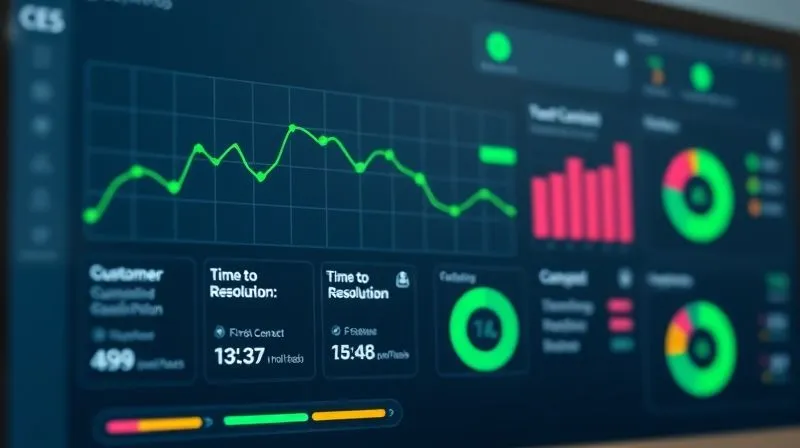
The most direct way to measure effort is through Customer Effort Score (CES) surveys. These are typically short, post-interaction surveys asking customers to rate the ease of their experience on a simple scale.
As platforms like Qualtrics demonstrate, integrating CES surveys into your customer journey at key touchpoints (e.g., after a support interaction, after a purchase, after using a self-service tool) provides immediate, actionable insights into where effort is highest. Beyond the score, always include an open-text field for qualitative feedback; the 'why' behind the score is invaluable.
Closing the Loop and Iterating
Collecting feedback is only half the battle. The real power comes from acting on it.
- Analyze Feedback: Regularly review CES data, identify trends, and pinpoint specific areas of high effort.
- Implement Changes: Based on your analysis, implement targeted improvements to processes, policies, or self-service tools.
- Measure Impact: After implementing changes, continue to monitor CES to see if your efforts are truly reducing customer friction. A/B test different approaches if necessary.
- Communicate Internally: Share successes and lessons learned across teams. Celebrate improvements and foster a company-wide commitment to reducing customer effort.
This iterative cycle of feedback, action, and measurement ensures that your efforts are always aligned with actual customer needs and continuously drive improvements in the effortless experience.
Frequently Asked Questions (FAQ)
What's the difference between CES, CSAT, and NPS, and why is CES often prioritized for loyalty? While all three are important CX metrics, they measure different aspects. CSAT (Customer Satisfaction) measures short-term satisfaction with a specific interaction or product. NPS (Net Promoter Score) measures overall customer loyalty and willingness to recommend. CES (Customer Effort Score) specifically measures the ease of interaction. CES is often prioritized for loyalty because research indicates that reducing effort is a stronger predictor of future repurchase and advocacy than simply delighting customers. An effortless experience builds trust and minimizes reasons to churn, whereas delight can be inconsistent and may not overcome fundamental friction.
How do I convince leadership to invest in effort reduction initiatives? Frame your proposal around tangible business outcomes. Highlight the direct correlation between high customer effort and increased churn, reduced lifetime value, negative reviews, and higher operational costs (e.g., increased call volume, longer handling times). Present data from your customer journey mapping showing specific pain points and their estimated business impact. Showcase successful case studies (like ConnectCo's) where effort reduction led to measurable improvements in retention, sales, or efficiency. Position it as a strategic investment in long-term profitability and competitive advantage, not just a 'nice-to-have.'
What are common pitfalls when trying to reduce customer effort? A major pitfall is focusing solely on technology without addressing underlying process or policy issues. Another is assuming you know where customer effort lies without actually mapping the journey and collecting feedback. Failing to empower agents with the right tools or authority, creating 'dead-end' self-service options, and neglecting to iterate based on continuous feedback are also common mistakes. A siloed approach, where different departments don't collaborate on the customer journey, also leads to fragmented and high-effort experiences.
How long does it take to see results from effort reduction initiatives? The timeline varies depending on the complexity of the changes. Simple fixes, like optimizing a knowledge base article or streamlining a single policy, can show immediate improvements in CES within weeks. More extensive initiatives, such as implementing a full omnichannel system or redesigning core internal processes, might take several months to fully roll out and demonstrate significant, sustained impact. The key is to start small, measure frequently, and build momentum with visible successes.
Can AI truly replace human interaction in reducing effort, or is it just a tool? AI is a powerful tool for reducing effort, particularly for routine queries and proactive notifications, but it's not a complete replacement for human interaction. Its strength lies in handling predictable, high-volume tasks, freeing human agents to focus on complex, empathetic, or emotionally charged situations where human nuance is indispensable. The goal is to create a seamless blend of AI and human support, where AI handles the initial effort reduction, and humans step in effortlessly when needed, ensuring the customer always gets the most efficient and effective resolution.
Key Takeaways and Final Thoughts
The quest for an effortless customer experience is not merely a trend; it's a strategic imperative for any business aiming to thrive in today's competitive landscape. By systematically addressing customer effort at every critical touchpoint, you're not just improving service; you're building a foundation of trust, fostering deep loyalty, and driving sustainable growth.
- Map Your Journey: Understand your customer's path to identify true pain points.
- Empower Self-Service: Provide intuitive tools like knowledge bases and smart chatbots.
- Be Proactive: Anticipate needs and solve problems before they arise.
- Streamline Agent Interactions: Ensure human help is efficient, informed, and empathetic.
- Simplify Internally: Audit processes and policies that inadvertently create customer friction.
- Listen and Iterate: Use CES feedback for continuous improvement.
Remember, your customers value their time and energy above almost anything else. By committing to an effortless experience, you're not just meeting their expectations; you're exceeding them in the most meaningful way. Start small, measure your impact, and watch as your efforts transform casual customers into loyal advocates. The journey to effortless is ongoing, but the rewards are profound.
Recommended Reading
- How to Ensure Fair Performance Reviews in a Hybrid Work Model: 5 Steps
- Unlock the Secret: How to Effectively Manage Credit Risk in Your Small Business
- Mastering Currency Risk: Your Ultimate Guide to Exchange Rate Mitigation
- Why VCs Reject Your Startup Pitch: 7 Key Mistakes to Avoid
- 7 Proven Ways to Uncover Hidden Project Risks Proactively





Comments
Leave a comment below. Your email will not be published. Required fields marked with *