

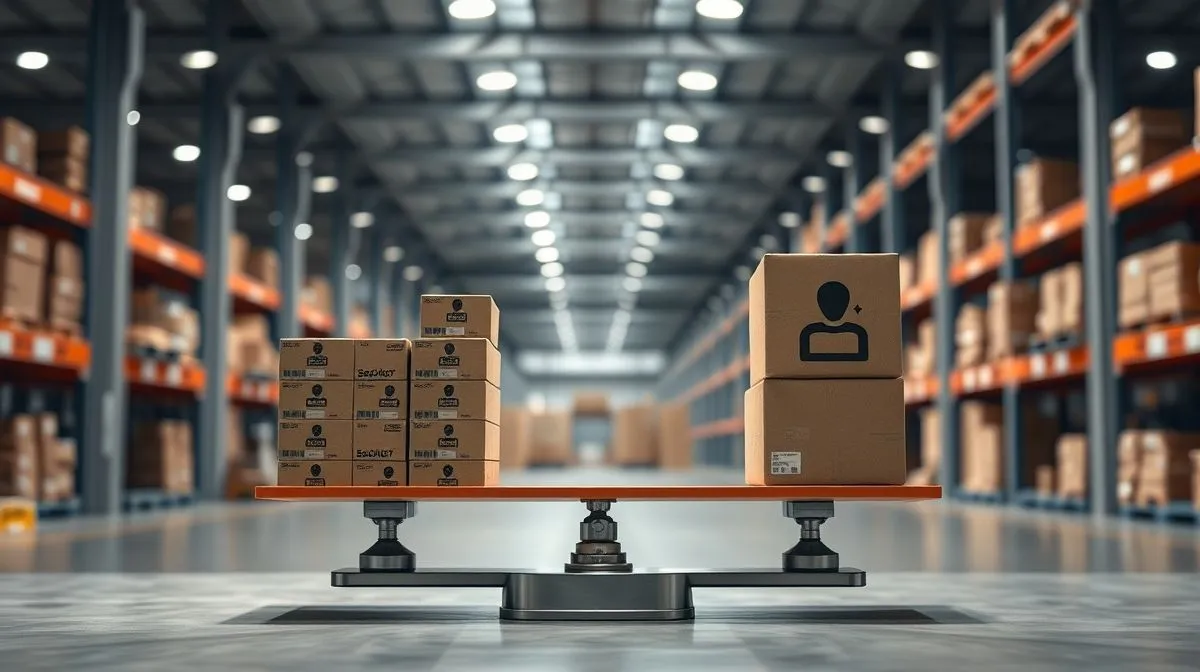
How to reduce inventory carrying costs without impacting service?
For over two decades in operations management, I've witnessed the silent killer of profitability in countless businesses: excessive inventory carrying costs. It's a common trap – companies hoard stock out of fear of stockouts, tying up crucial capital and incurring hidden expenses that erode their bottom line.
This isn't just about warehouse rent; it's about the cost of capital, obsolescence, insurance, spoilage, and even the opportunity cost of what that money could have done elsewhere. The dilemma is always the same: how do you cut these costs without creating service level nightmares for your customers?
In this definitive guide, I'll share seven battle-tested strategies that I've seen successfully implemented across various industries. We'll delve into actionable frameworks, a real-world case study, and expert insights to help you master the delicate balance of reducing inventory carrying costs without impacting service. Prepare to optimize your operations and unlock significant working capital.
Understanding the True Cost of Inventory
Before we dive into solutions, let's truly understand what we're fighting. Many businesses only see the cost of purchasing inventory. However, the true cost of inventory is far more insidious, often ranging from 15% to 40% of its value annually. This isn't just a number; it's capital that could be reinvested, debt that could be paid, or innovation that could be funded.
Beyond the Obvious: Capital, Storage, and Obsolescence
I've always broken down carrying costs into several critical categories:
- Capital Costs: This is the interest paid on money borrowed to purchase inventory, or the opportunity cost of capital that could be invested elsewhere. According to a study by Harvard Business Review, inefficient working capital management, often driven by excess inventory, significantly hampers profitability.
- Storage Costs: Rent, utilities, maintenance, security, and depreciation of warehouse equipment all add up. The larger your inventory, the more space and resources it demands.
- Service Costs: Insurance, taxes, and administrative expenses related to managing inventory, including IT systems and personnel.
- Risk Costs: This is perhaps the most overlooked category. It includes obsolescence (items becoming outdated or expiring), shrinkage (theft, damage, spoilage), and deterioration. Think about fashion trends, tech cycles, or perishable goods – holding onto these too long is a guaranteed loss.
Understanding these facets is the first step toward effective reduction. You can't fix what you don't fully comprehend.
Strategy 1: Masterful Demand Forecasting & Planning
The bedrock of efficient inventory management is accurate demand forecasting. If you know what your customers will buy, you can stock precisely what's needed, significantly reducing the need for excessive safety stock and thus, inventory carrying costs.
- Harness Historical Data: Look beyond just the last year. Analyze sales trends over multiple years, accounting for seasonality, promotions, and economic cycles. Identify patterns and anomalies.
- Integrate Market Intelligence: Sales teams, marketing insights, economic indicators, and competitor analysis provide invaluable qualitative data. Combine this with your quantitative data for a holistic view.
- Collaborative Planning (S&OP): Implement a robust Sales & Operations Planning (S&OP) process. This cross-functional collaboration ensures that sales, marketing, operations, and finance are aligned on a single forecast. In my experience, this alone can cut forecasting errors by 15-20%.
- Forecast at the Right Level: Don't try to forecast every single SKU perfectly. Start with product families or categories and then drill down to individual SKUs where appropriate, especially for high-value or high-volume items.
Leverage Technology: Predictive Analytics
Modern Enterprise Resource Planning (ERP) systems and specialized forecasting software use advanced algorithms, including machine learning, to process vast amounts of data and identify subtle patterns. These tools can often predict demand with far greater accuracy than manual methods, especially for complex product portfolios. Investing in the right technology here is not a cost, but a critical enabler for how to reduce inventory carrying costs without impacting service.
Strategy 2: Optimize Safety Stock & Reorder Points
Safety stock is the buffer you keep to guard against demand variability or supply chain disruptions. While necessary, excessive safety stock is a major driver of carrying costs. The goal is to minimize it while maintaining your desired service level.
I always advise my clients to move from static, arbitrary safety stock levels to dynamic, data-driven calculations.
- Determine Your Desired Service Level: What percentage of customer orders do you want to fulfill immediately from stock? 95%? 98%? This directly impacts your safety stock requirement. Higher service levels typically mean more safety stock, but there's a point of diminishing returns.
- Analyze Lead Time Variability: How consistent are your supplier lead times? If they fluctuate wildly, you'll need more safety stock. Work with suppliers to reduce this variability.
- Quantify Demand Variability: How much does your demand fluctuate day-to-day or week-to-week? Use statistical methods (like standard deviation) to measure this.
- Calculate Dynamic Reorder Points: Instead of fixed reorder points, calculate them dynamically based on current demand forecasts, lead times, and desired service levels. Many advanced inventory management systems can do this automatically.
"The art of inventory management lies not in accumulating goods, but in accumulating intelligence about what is truly needed, exactly when it's needed." - Operations Management Expert
By precisely calibrating safety stock, you can significantly reduce inventory carrying costs without compromising your ability to meet customer demand, directly addressing how to reduce inventory carrying costs without impacting service.
Strategy 3: Embrace Vendor-Managed Inventory (VMI) & Consignment
One of the most powerful strategies to shift the burden of inventory carrying costs is to leverage your suppliers through VMI or consignment models.
In a Vendor-Managed Inventory (VMI) system, the supplier takes responsibility for managing and replenishing your inventory levels. They monitor your stock, issue purchase orders, and ensure you never run out, all while aiming to optimize their own production and delivery schedules. This shifts the forecasting and carrying cost responsibility, as inventory technically belongs to the vendor until it's consumed or sold by you.
With Consignment Inventory, the supplier places inventory at your location, but you don't pay for it until you actually use or sell it. This is the ultimate way to reduce your inventory carrying costs, as you hold zero capital cost for that stock until it generates revenue.
- Reduced Capital Outlay: The most obvious benefit. You free up cash that would otherwise be tied up in inventory.
- Lower Storage Costs: While you still provide the space, the supplier is incentivized to optimize stock levels, potentially reducing your overall storage footprint.
- Minimized Obsolescence Risk: Since the supplier owns the inventory until consumption, they bear the risk of obsolescence or damage.
- Improved Service Levels: Suppliers, being responsible for replenishment, are highly motivated to ensure you have what you need, when you need it.
Case Study: FlowTech Solutions' VMI Success
FlowTech Solutions, a mid-sized distributor of specialized electronic components, faced a perennial challenge: high inventory carrying costs for hundreds of niche, yet critical, components. Their service levels were good, but profitability was squeezed by 25% annual carrying costs on their $5M average inventory.
I advised them to pilot a VMI program with their top three component suppliers. They provided the suppliers with real-time sales data and agreed-upon service level targets. The suppliers then took responsibility for managing the minimum and maximum stock levels at FlowTech's warehouse.
Within 18 months, FlowTech reduced its average inventory value for these components by 30%, translating to a $1.5M reduction in tied-up capital and an estimated $375,000 annual saving in carrying costs. Crucially, their service level for these components actually improved by 2%, as suppliers, with full visibility, were more proactive in replenishment. This demonstrated a clear path for how to reduce inventory carrying costs without impacting service.
Strategy 4: Streamline Warehouse Operations & Layout
An inefficient warehouse directly contributes to higher carrying costs through increased labor, damaged goods, and wasted space. Optimizing your physical operations can yield surprising reductions.
- Implement ABC Analysis: Categorize your inventory based on value and volume. 'A' items (high value, high volume) should be stored in easily accessible locations to minimize handling time. 'C' items (low value, low volume) can be stored more compactly.
- Optimize Picking Paths: Design your warehouse layout and picking routes to minimize travel time for order pickers. This reduces labor costs and increases throughput.
- Cross-Docking: For incoming goods that are immediately needed for outgoing orders, implement cross-docking. This bypasses storage altogether, directly moving goods from inbound to outbound docks, dramatically cutting storage time and costs.
- Improve Storage Density: Utilize vertical space with high-rise shelving, narrow-aisle racking, or automated storage and retrieval systems (AS/RS). Every square foot of your warehouse has a cost; maximize its utility.
As detailed in reports by leading supply chain consultants like Deloitte, operational efficiency in the warehouse is a cornerstone of overall supply chain performance and cost reduction.
Strategy 5: Implement Just-In-Time (JIT) Principles with Caution
The Just-In-Time (JIT) philosophy aims to receive goods only as they are needed for production or sale, minimizing inventory to virtually zero. While highly effective for reducing carrying costs, JIT requires extreme precision and robust supply chain resilience.
I always emphasize that JIT is not a 'set it and forget it' system; it's a culture of continuous improvement and meticulous planning.
- Strong Supplier Relationships: JIT relies heavily on suppliers delivering exact quantities, on time, every time. Foster deep, collaborative relationships based on trust and shared goals.
- Robust Quality Control: With no buffer stock, a defective batch can halt your entire operation. Implement stringent quality checks at the supplier's end and upon receipt.
- Stable Production Schedules: JIT works best with predictable, level production. Volatile demand or production schedules make JIT very risky.
- Flexible Workforce: Your internal operations must be agile enough to handle varying workloads and rapid changes.
Implementing JIT can dramatically reduce inventory carrying costs, but it shifts the risk. It's not for every business, particularly those with highly unpredictable demand or unreliable supply chains. However, even adopting aspects of JIT, like reducing batch sizes or increasing delivery frequency, can yield benefits in how to reduce inventory carrying costs without impacting service.
Strategy 6: Strategic Supplier Relationship Management
Your suppliers are not just vendors; they are extensions of your own operations. Strategic partnerships can unlock significant opportunities to reduce inventory carrying costs.
- Negotiate Lead Times: Shorter and more reliable lead times directly translate to lower safety stock requirements. Work with suppliers to achieve this, perhaps through long-term contracts or shared forecasting.
- Flexible Order Minimums: Can you negotiate lower minimum order quantities (MOQs)? This allows you to order smaller batches more frequently, reducing your inventory holding.
- Return Policies & Consignment Options: Explore agreements that allow you to return unsold or slow-moving inventory, or as discussed, move to consignment models.
- Supplier Performance Monitoring: Continuously track supplier performance on lead time, quality, and on-time delivery. Share this feedback to drive continuous improvement.
"Your supply chain is only as strong as its weakest link. Invest in robust, collaborative relationships with your key suppliers, and they will become partners in your inventory reduction journey." - Industry Veteran
A well-managed supplier network is crucial for how to reduce inventory carrying costs without impacting service, ensuring goods flow smoothly without excessive buffer stock.
Strategy 7: Enhance Product Lifecycle Management (PLM)
Managing your products from introduction to obsolescence is vital for controlling inventory. Slow-moving, obsolete, or end-of-life products are pure cost sinks.
- Proactive Obsolescence Planning: As new products are introduced, have a clear plan for phasing out older versions. This includes understanding the remaining demand, planning final production runs, and setting realistic end-of-life dates.
- Strategic Liquidation: Don't let obsolete inventory sit and rot. Develop strategies for clearing it out quickly: discount sales, bundling, selling to liquidators, or even donating (with tax benefits). The goal is to recover some value and free up space.
- Demand Shaping for End-of-Life Products: Use pricing strategies or promotions to accelerate sales of products nearing their end-of-life, ensuring you clear stock before it becomes completely unsellable.
- Regular SKU Rationalization: Periodically review your entire product catalog. Are there products that no longer contribute significantly to revenue or profit but still incur carrying costs? Consider discontinuing them.
By actively managing the lifecycle of each product, you prevent the accumulation of dead stock, a significant contributor to inventory carrying costs. This proactive approach ensures that your inventory remains lean and relevant, directly supporting the goal of how to reduce inventory carrying costs without impacting service.
Frequently Asked Questions (FAQ)
Question? Is Just-In-Time (JIT) always suitable for all businesses, especially small ones?
Detailed answer: No, JIT is not a universal panacea. While its principles are admirable, full JIT implementation requires extremely predictable demand, highly reliable suppliers, and robust internal processes. For small businesses with less leverage over suppliers or volatile demand, a hybrid approach – focusing on reducing batch sizes, improving forecasting, and strengthening supplier relationships – is often more realistic and less risky than full JIT. The goal is to be 'just enough' in time, not necessarily 'just in time' to the extreme.
Question? How often should I review my inventory policies and strategies?
Detailed answer: Inventory policies should be reviewed at least annually, but more frequently if your business experiences significant changes such as new product introductions, shifts in market demand, supplier disruptions, or economic volatility. Key performance indicators (KPIs) like inventory turnover, days of supply, and stockout rates should be monitored continuously, triggering deeper reviews if they deviate from targets. A quarterly deep dive, coupled with ongoing monitoring, is a healthy rhythm for most businesses.
Question? What's the biggest mistake companies make when trying to cut inventory costs?
Detailed answer: In my experience, the biggest mistake is focusing solely on cost reduction without understanding the impact on service levels. Companies often slash safety stock indiscriminately or delay orders, leading to increased stockouts, backorders, and ultimately, frustrated customers and lost sales. The critical balance, as emphasized throughout this article, is how to reduce inventory carrying costs without impacting service. A short-term cost saving is quickly overshadowed by long-term damage to customer relationships and brand reputation.
Question? Can technology truly replace human judgment in inventory management?
Detailed answer: Technology, particularly advanced analytics and AI, can significantly enhance inventory management by processing vast data, identifying complex patterns, and automating routine tasks. However, it cannot entirely replace human judgment. Experienced professionals bring intuition, market knowledge, strategic foresight, and the ability to handle unforeseen disruptions that algorithms might miss. The most effective approach is a synergistic one: leveraging technology for efficiency and insight, while empowering human experts for strategic decisions and nuanced problem-solving.
Question? How do I measure the impact of my inventory reduction efforts on service levels?
Detailed answer: To measure the impact, you need clear KPIs for service levels. These include: Order Fill Rate (percentage of orders fulfilled completely from stock), On-Time Delivery Rate, Backorder Rate (percentage of orders that couldn't be fulfilled immediately), and Customer Satisfaction Scores related to product availability. Track these metrics rigorously before and after implementing inventory reduction strategies. If your inventory costs are going down while these service metrics remain stable or improve, you've achieved success in how to reduce inventory carrying costs without impacting service.
Recommended Reading
- Unlock Peak Performance: Best Practices for Successful Project Closing!
- SEO Optimization for Small Business Website: The Ultimate Guide
- Unlock Growth: Applying Hypothesis Testing for Business Strategy Validation
- Boost Your Career: How to Improve Analytical Skills at Work
- Unlock Your Potential: How to Improve Delegation Skills at Work?
Key Takeaways and Final Thoughts
Reducing inventory carrying costs without impacting service is not a one-time project; it's an ongoing commitment to operational excellence and strategic foresight. It demands a holistic view of your supply chain, from forecasting and supplier relationships to warehouse efficiency and product lifecycle management.
- Data is Your Ally: Accurate forecasting and data-driven decision-making are paramount.
- Partnerships Matter: Collaborate deeply with your suppliers to share risk and optimize flow.
- Balance is Key: Never sacrifice customer service for short-term cost savings.
- Technology Empowers: Leverage modern tools to gain visibility and automate processes.
- Continuous Improvement: Inventory management is an iterative process; always seek better ways.
By systematically applying these strategies, you'll not only unlock significant working capital and boost profitability but also build a more resilient, agile, and customer-centric supply chain. The journey may require effort, but the rewards – a leaner operation and consistently satisfied customers – are well worth it. Begin today, and watch your operational efficiency transform.





Comments
Leave a comment below. Your email will not be published. Required fields marked with *