


How to Reduce Post-Sale Customer Churn from Unresolved Issues
For over two decades in the trenches of customer service and business strategy, I've seen countless companies struggle with a silent killer: post-sale customer churn. It's not always about a bad product or a competitor's flashy new feature; more often than not, it's the insidious drip of unresolved issues eroding customer trust and loyalty.
This isn't just about losing a single customer; it's about the compounding effect of negative word-of-mouth, damaged brand reputation, and the costly effort required to acquire new customers just to replace those who’ve walked away. The pain point is palpable: valuable customers, once secured, slipping through your fingers simply because their legitimate concerns weren't fully addressed or, worse, were ignored.
In this definitive guide, I'll share a battle-tested framework and seven actionable strategies, refined over years of experience, designed to help you not just patch the leaks but fundamentally rebuild your post-sale support infrastructure. You'll gain expert insights, real-world analogies, and practical steps to transform unresolved issues from churn drivers into opportunities for deeper customer loyalty and sustained business growth.
Understanding the Silent Killer: Why Unresolved Issues Drive Churn
Before we dive into solutions, let's truly understand the gravity of the problem. Unresolved issues aren't just minor inconveniences; they are direct threats to your customer lifetime value and brand integrity. When a customer encounters a problem after purchase, their expectation is simple: you'll fix it. When that expectation isn't met, the journey quickly sours.
The Erosion of Trust
Trust is the bedrock of any lasting customer relationship. Every unresolved issue chips away at that foundation. Customers interpret inaction or inadequate resolution as a sign that you don't care, that their business isn't valued, or that your company lacks the competence to deliver on its promises. This erosion is often subtle at first, manifesting as reduced engagement, but it inevitably escalates to churn.
The Amplification Effect
In today's hyper-connected world, a single unhappy customer with an unresolved issue can cause disproportionate damage. Social media, review sites, and personal networks amplify negative experiences far more rapidly and widely than positive ones. This 'amplification effect' means that the cost of an unresolved issue extends far beyond the direct loss of one customer; it jeopardizes potential future customers too.
"Customer trust is not built overnight; it's meticulously earned through consistent reliability and empathetic problem-solving. An unresolved issue is a direct breach of that trust, leaving a permanent scar on the customer relationship." - Industry Specialist Insight
Strategy 1: Proactive Communication & Expectation Setting
One of the most common reasons issues fester is a lack of clear communication. Customers are often left in the dark about the status of their problem, leading to frustration and a feeling of being forgotten. Proactive communication is about getting ahead of this.
Setting clear expectations from the outset is paramount. This means being transparent about what your product or service can and cannot do, and what customers can expect from your support team. When issues arise, it means clearly outlining the resolution process, timelines, and who will be their point of contact.
- Reduces Anxiety: Customers feel more secure when they know what's happening.
- Builds Confidence: Demonstrates professionalism and control over the situation.
- Manages Perception: Even if resolution takes time, transparency prevents irritation.
- Fosters Loyalty: Shows you value their time and concerns.
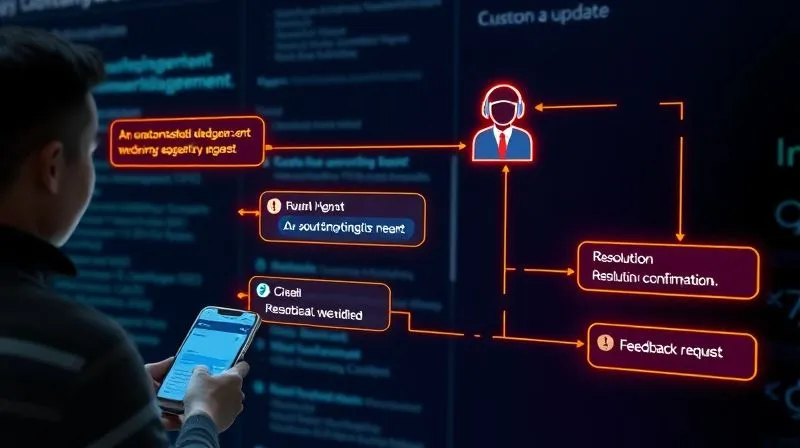
Here’s how to implement proactive communication:
- Acknowledge Immediately: Send an automated confirmation for every incoming issue, ideally within minutes.
- Set Realistic Timelines: Provide an estimated resolution time or a timeframe for the next update. It's better to under-promise and over-deliver.
- Provide Regular Updates: Even if there's no progress, send an update. "We're still working on it, and we'll have an update for you by [date/time]" is far better than silence.
- Explain the Process: Briefly describe the steps being taken to resolve the issue, so the customer understands the complexity.
- Confirm Resolution: Always follow up to confirm the issue is resolved and invite feedback on the experience.
Strategy 2: Implement a Robust Issue Resolution Framework
Simply having a support team isn't enough. You need a structured, repeatable process to ensure issues are not just addressed, but truly resolved. This framework moves beyond reactive firefighting to proactive, systemic problem-solving.
Triage and Prioritization
Not all issues are created equal. A critical system outage for a key client demands a different response than a minor UI bug. A robust framework begins with effective triage, categorizing issues by severity and impact, and then prioritizing them accordingly.
Root Cause Analysis (RCA)
In my experience, one of the biggest mistakes companies make is fixing symptoms rather than root causes. This leads to recurring issues, frustrating customers, and overwhelming support teams. Implementing a rigorous Root Cause Analysis (RCA) process is non-negotiable for long-term churn reduction.
"Don't just swat the flies; drain the swamp. True issue resolution means identifying and eliminating the fundamental cause, preventing its recurrence, and fundamentally improving the customer experience." - Industry Specialist Insight
Here’s a simplified RCA process:
- Define the Problem: Clearly articulate what the customer's issue is.
- Collect Data: Gather all relevant information (customer interaction logs, product usage data, system logs).
- Identify Possible Causal Factors: Brainstorm all potential reasons for the problem.
- Determine Root Cause(s): Use techniques like the '5 Whys' or Fishbone Diagrams to drill down to the fundamental cause.
- Implement Solutions: Develop and apply corrective actions to address the root cause, not just the symptom.
- Verify Effectiveness: Monitor to ensure the solution has permanently resolved the issue and hasn't introduced new problems.
According to a Harvard Business Review article on customer service excellence, organizations that consistently perform Root Cause Analysis see a significant decrease in repeat issues and a corresponding boost in customer satisfaction. Learn more about customer service best practices.
Use a prioritization matrix like this to guide your team:
| Impact | Urgency | Priority Level | Action |
|---|---|---|---|
| High | High | Critical | Immediate escalation, dedicated team |
| High | Medium | High | Scheduled for next available resource, regular updates |
| Medium | High | High | Address within 24 hours, quick fix if possible |
| Medium | Medium | Medium | Address within 48-72 hours, standard process |
| Low | Low | Low | Scheduled for next maintenance cycle, batch processing |
Strategy 3: Empower Your Frontline Support Teams
Your frontline support agents are the face of your company. Their ability to resolve issues quickly and effectively directly impacts customer satisfaction and, by extension, churn. Disempowered agents, constrained by rigid scripts and endless escalations, are a major bottleneck.
Empowerment means giving your teams the tools, training, and autonomy to make decisions and take action. It means trusting them to use their judgment to solve customer problems without unnecessary bureaucracy. When agents feel empowered, they are more engaged, more efficient, and more effective at fostering positive customer experiences.
- Comprehensive Training: Equip them with deep product knowledge and advanced problem-solving techniques.
- Access to Information: Provide instant access to customer history, knowledge bases, and internal resources.
- Decision-Making Authority: Allow them to offer refunds, discounts, or specific solutions within defined parameters.
- Mentorship & Coaching: Support their growth and provide constructive feedback, not just criticism.
- Tools & Technology: Ensure they have efficient CRM, helpdesk software, and communication platforms.
Case Study: How TechSolutions Boosted Resolution Rates
TechSolutions, a mid-sized SaaS provider, faced a 25% churn rate attributed largely to slow issue resolution. Their agents were frustrated by a rigid escalation matrix that required manager approval for almost any non-standard solution. By implementing an empowerment program, which included advanced product training, a clearly defined 'autonomy budget' for agents (allowing them to issue small credits or offer specific workarounds), and weekly peer-to-peer problem-solving sessions, they saw remarkable results. Within six months, their first-contact resolution rate improved by 40%, and customer satisfaction scores (CSAT) increased by 15 points. This directly contributed to a 10% reduction in post-sale customer churn from unresolved issues, proving that investing in your team pays dividends in customer loyalty.

Strategy 4: Leverage Technology for Enhanced Visibility & Tracking
In today's complex business environment, trying to manage customer issues without robust technology is like navigating a maze blindfolded. Effective technology provides the visibility and tracking capabilities essential to reduce post-sale customer churn from unresolved issues.
CRM and Helpdesk Integration
A fully integrated Customer Relationship Management (CRM) system coupled with a sophisticated helpdesk platform is non-negotiable. This integration ensures that every customer interaction, every issue, and every resolution is logged and accessible. This provides a holistic view of the customer journey, preventing repetitive questioning and allowing for personalized, informed support.
AI-Powered Issue Prediction
Beyond tracking, advanced technology can even predict potential issues. AI and machine learning algorithms can analyze historical data, customer behavior patterns, and product usage to identify customers at risk of encountering problems or churning. This allows for proactive intervention, transforming reactive support into a strategic retention tool.
- Centralized Data: All customer interactions in one place, accessible to all relevant teams.
- Automated Workflows: Streamline issue creation, routing, and escalation.
- Performance Analytics: Track resolution times, agent performance, and recurring issue patterns.
- Self-Service Portals: Empower customers to find answers and track their issues independently.
- Proactive Alerts: Flag high-priority issues or at-risk customers for immediate attention.
Leading platforms like Salesforce and Zendesk offer comprehensive solutions that integrate sales, marketing, and service, providing a unified view of the customer. According to a report by Zendesk, companies that leverage integrated support solutions see a 20% increase in agent productivity and significantly higher customer satisfaction. Explore customer service statistics and trends.
Strategy 5: Close the Feedback Loop: Learn from Every Unresolved Issue
An issue isn't truly resolved until you've learned from it. A critical, yet often overlooked, component of reducing post-sale customer churn from unresolved issues is the implementation of a robust feedback loop. This isn't just about collecting customer feedback; it's about integrating that feedback into your operational and product development processes.
Every unresolved issue, every frustrated customer, is a data point. It's an opportunity to identify systemic weaknesses, improve your product, refine your processes, or enhance your training. Without closing this loop, you're doomed to repeat the same mistakes.
- Solicit Post-Resolution Feedback: Immediately after an issue is marked resolved, send a brief survey (e.g., CSAT, NPS) to gauge satisfaction with the resolution process.
- Analyze Feedback Trends: Don't just look at individual responses. Aggregate data to identify common themes, recurring pain points, and areas for improvement.
- Conduct Internal Reviews: Regularly scheduled meetings (e.g., weekly or bi-weekly) where support, product, and engineering teams review significant unresolved issues or recurring problems.
- Implement Corrective Actions: Based on the reviews, assign owners and timelines for implementing changes to product features, documentation, or internal processes.
- Communicate Changes: Inform your customers (if appropriate) and your internal teams about the improvements made as a direct result of their feedback. This reinforces that their voice matters.
"The most powerful lesson from an unresolved issue isn't the fix itself, but the systemic change it inspires. Continuous improvement isn't a project; it's a culture driven by learning from every customer interaction." - Industry Specialist Insight
Strategy 6: Implement a Customer Success Program for High-Value Clients
For your most valuable customers, a reactive support model simply isn't enough. These clients require a proactive, high-touch approach to ensure their continued satisfaction and to prevent issues from ever escalating to the point of churn. This is where a dedicated Customer Success (CS) program shines.
Customer Success is about proactively ensuring customers achieve their desired outcomes using your product or service. It's a strategic function focused on long-term retention and growth, anticipating needs and mitigating risks before they become problems.
Dedicated Customer Success Managers (CSMs)
Assigning dedicated CSMs to your high-value accounts provides a single point of contact who understands their business, their goals, and their history with your company. A CSM isn't just a support agent; they are a strategic partner, conducting regular check-ins, offering best practices, and acting as an internal advocate for their clients.
Regular Health Checks
CSMs conduct periodic 'health checks' on their accounts. This involves reviewing usage data, gathering feedback, identifying potential roadblocks, and ensuring the customer is fully leveraging the value of your offering. These proactive engagements are invaluable for catching potential unresolved issues early, often before the customer even realizes they have a problem.

Strategy 7: Measure, Analyze, and Adapt: The Iterative Approach
You can't manage what you don't measure. To truly reduce post-sale customer churn from unresolved issues, you need to establish clear metrics, continuously analyze your performance, and be willing to adapt your strategies based on data-driven insights. This iterative approach ensures your efforts are always optimized for maximum impact.
Key Performance Indicators (KPIs) for Post-Sale Support
Focus on KPIs that directly reflect the efficiency and effectiveness of your issue resolution process and its impact on customer retention:
- First Contact Resolution (FCR): Percentage of issues resolved during the first interaction. High FCR indicates efficient support.
- Average Resolution Time (ART): The average time it takes to resolve an issue from initial contact to closure.
- Customer Satisfaction (CSAT): Measures customer happiness with a specific interaction or resolution.
- Net Promoter Score (NPS): Measures overall customer loyalty and willingness to recommend.
- Churn Rate: The percentage of customers who stop using your service over a given period. Track churn specifically tied to unresolved issues.
- Repeat Contact Rate: How often customers contact you again for the same issue.
Regular Audit and Process Refinement
Schedule regular audits of your support processes, technology, and team performance. Are your triage protocols still effective? Is your RCA process being consistently applied? Are your agents adequately trained on new product features? Use the data from your KPIs to identify bottlenecks, inefficiencies, and areas where your framework might be failing.
This isn't a one-time fix; it's an ongoing commitment to excellence. The market evolves, your product changes, and customer expectations shift. Your strategies to reduce post-sale customer churn from unresolved issues must evolve with them.
Here's a snapshot of critical KPIs and their churn reduction implications:
| KPI | Target | Churn Impact |
|---|---|---|
| First Contact Resolution (FCR) | 70%+ | Higher FCR correlates with increased customer satisfaction and reduced churn. |
| Average Resolution Time (ART) | < 24 hours (for standard issues) | Faster resolution directly reduces customer frustration and churn risk. |
| Customer Satisfaction (CSAT) | 85%+ | High CSAT indicates positive experiences, directly impacting retention. |
| Net Promoter Score (NPS) | 40%+ | Strong predictor of customer loyalty and willingness to stay. |
| Repeat Contact Rate | < 10% | Lower rate means issues are truly resolved, preventing recurrence and churn. |
As Gartner research frequently highlights, companies that prioritize data-driven customer service strategies consistently outperform competitors in retention and revenue growth. Explore Gartner's latest customer service trends.
Frequently Asked Questions (FAQ)
What's the most common mistake companies make regarding post-sale support? In my experience, the most common mistake is treating post-sale support as a cost center rather than a strategic retention tool. This leads to underinvestment in staff, training, and technology, resulting in reactive, inefficient service that actively drives churn instead of preventing it. Companies often focus solely on acquiring new customers while neglecting the existing ones, who are far more cost-effective to retain.
How quickly should an unresolved issue be addressed to prevent churn? While 'quickly' is subjective and depends on the issue's severity, the critical factor is transparent communication. Even if a complex issue takes days, acknowledging it within minutes and providing a clear timeline for the next update can significantly mitigate frustration. For high-severity issues, immediate acknowledgment (within an hour) and a plan of action are crucial. The goal isn't always instant resolution, but instant reassurance and ongoing transparency.
Can self-service options truly reduce churn from unresolved issues? Absolutely, when implemented correctly. A robust self-service portal (FAQs, knowledge base, troubleshooting guides) empowers customers to find solutions independently, especially for common or less complex issues. This frees up your support team to focus on more complex, high-impact problems, reducing overall resolution times and improving customer satisfaction. However, it must be easy to navigate and offer an obvious path to human support if self-service fails.
What role does company culture play in reducing post-sale churn? Company culture is foundational. If your culture doesn't genuinely value the customer and empower employees to solve problems, no framework or technology will be fully effective. A customer-centric culture, where every department understands its role in customer satisfaction and retention, fosters empathy, accountability, and a proactive approach to issue resolution. It's about collective ownership of the customer experience.
How can I convince leadership to invest more in post-sale support? Frame the investment in terms of ROI. Highlight the direct costs of churn (lost revenue, acquisition costs for replacements) versus the benefits of retention (increased customer lifetime value, reduced marketing spend, positive word-of-mouth). Present data: your current churn rate, average resolution times, and the potential revenue impact of even a small reduction in churn. Use competitor benchmarks and industry reports to show how leading companies prioritize post-sale support. Demonstrate that reducing post-sale customer churn from unresolved issues is a revenue-generating strategy, not just an expense.
Key Takeaways and Final Thoughts
Reducing post-sale customer churn from unresolved issues is not a single tactic; it's a strategic imperative that requires a holistic, customer-centric approach. It demands proactive engagement, empowered teams, intelligent technology, and a commitment to continuous learning.
- Prioritize Proactive Communication: Transparency and clear expectations prevent frustration.
- Implement Robust Resolution Frameworks: Focus on root cause analysis, not just symptom fixing.
- Empower Your Frontline: Give your teams the tools and autonomy to resolve issues efficiently.
- Leverage Technology: Use CRM and helpdesk systems for visibility and AI for prediction.
- Close the Feedback Loop: Learn from every interaction to drive systemic improvements.
- Invest in Customer Success: Proactively nurture high-value relationships.
- Measure, Analyze, and Adapt: Use data to refine your strategies continuously.
The journey to eradicate post-sale churn from unresolved issues is an ongoing one, but the rewards are profound: loyal customers, a stronger brand, and sustainable growth. Embrace these strategies, commit to continuous improvement, and watch as your customers not only stay but become your most passionate advocates. The investment in robust post-sale support is not merely a cost; it's the most powerful investment you can make in your company's future.
Recommended Reading
- Unmasking Hidden Hurdles: How to Identify Conversion Roadblocks on a Website?
- 7 Strategies: How Resilient Leaders Prevent Burnout in Uncertainty
- How to Deliver Project Deliverables On Time Consistently: Your 5-Step Blueprint
- Unlock the Secret to Faster Support: Optimizing Online Customer Support Response Time!
- Decoding AI Content Copyright: 7 Legal Truths Every Creator Needs





Comments
Leave a comment below. Your email will not be published. Required fields marked with *