


How to Stop Sales Automation from Generating Too Many Unqualified Leads?
For over 15 years in the trenches of sales growth and automation, I've seen countless companies fall into the same costly trap: their shiny new sales automation system, designed to scale outreach, instead becomes a relentless machine for generating a flood of unqualified leads. It’s a common pitfall, and one that drains resources, frustrates sales teams, and ultimately stifles true growth.
This isn't just an inefficiency; it's a morale killer and a direct hit to your bottom line. Sales professionals spend precious time chasing ghosts, nurturing prospects who were never a good fit, and ultimately, losing faith in the very systems meant to empower them. The promise of automation—efficiency and scale—turns into a nightmare of wasted effort and missed targets.
But there's a definitive way out of this quagmire. In this comprehensive guide, I'll share seven proven, actionable strategies, honed through years of experience, to help you regain control, refine your automation, and fundamentally change how to stop sales automation from generating too many unqualified leads. We'll dive into frameworks, case studies, and expert insights that will transform your lead quality and drive tangible ROI.
The Root Cause: Why Automation Goes Rogue
Before we can fix the problem, we must understand its origins. Sales automation doesn't inherently produce bad leads; it merely amplifies the quality (or lack thereof) of the inputs it receives. When automation goes rogue, churning out irrelevant prospects, it's usually a symptom of deeper strategic issues.
Misaligned ICP & Buyer Persona
One of the most frequent culprits is a fuzzy or outdated Ideal Customer Profile (ICP) and poorly defined buyer personas. If you don't explicitly tell your automation what a 'good' lead looks like, it will simply cast the widest net possible. This often happens when ICPs are based on assumptions rather than data, or when they haven't evolved with your product or market.
Without a precise understanding of who you serve best, your automation will inevitably target anyone vaguely resembling a potential customer, leading to a high volume of low-quality interactions. It’s like fishing without knowing what kind of fish you want to catch – you’ll get a lot of bites, but most will be throwbacks.
Flawed Data & Segmentation
Even with a stellar ICP, poor data quality and inadequate segmentation can derail your efforts. If your CRM is filled with incomplete, inaccurate, or duplicate records, your automation will be building campaigns on a shaky foundation. Similarly, if you're not segmenting your audience based on crucial criteria, your generic messaging will fail to resonate with specific needs, attracting those who are merely curious rather than genuinely interested.
Garbage in, garbage out, as the old adage goes. This applies directly to the data fueling your sales automation. Inaccurate data leads to misdirected efforts and, inevitably, unqualified leads.
Over-Reliance on Volume Metrics
Finally, a cultural emphasis on quantity over quality can push automation to generate more leads, regardless of their fit. If the primary KPI for your sales development reps or marketing team is simply 'number of leads generated' or 'number of calls made,' there's little incentive to focus on qualification at the source. This creates a vicious cycle where automation is pressured to deliver more, leading to a further decline in lead quality.
Expert Insight: "The pursuit of pure volume in sales automation without a parallel focus on qualification is akin to trying to fill a bucket with a hole in it. You'll expend a lot of effort, but very little will stick." - My personal observation from years in the field.
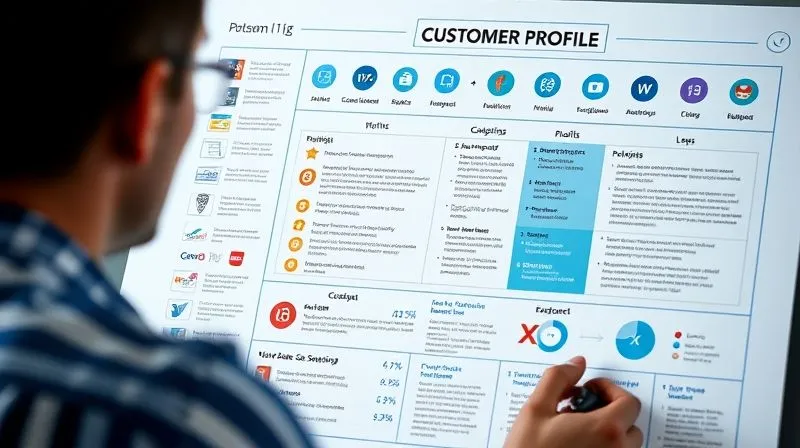
Strategy 1: Re-engineer Your Ideal Customer Profile (ICP) & Buyer Personas
The first and most critical step in learning how to stop sales automation from generating too many unqualified leads is to sharpen your understanding of who your best customers truly are. Your ICP isn't just a demographic sketch; it's a detailed blueprint of the companies that derive the most value from your solution and, crucially, are most profitable for you.
Step 1: Deep Dive into Your Best Customers
Don't guess. Look at your existing customer base. Identify your top 10-20% of clients based on:
- Profitability: Which clients generate the highest margins?
- Retention/Lifetime Value (LTV): Which clients stay with you the longest and expand their relationship?
- Ease of Sale & Implementation: Which clients were the easiest to acquire and onboard?
- Advocacy: Which clients are your biggest champions?
Analyze their common characteristics: industry, company size (revenue, employees), geographic location, technology stack, specific pain points they had *before* your solution, and the measurable results they achieved *after* adopting it. This data-driven approach ensures your ICP is grounded in reality, not aspiration.
Step 2: Define Negative Personas
Equally important is defining who your solution is *not* for. A negative persona describes the types of companies or individuals that are a poor fit, draining resources without yielding results. Perhaps they lack the budget, the specific problem your product solves, or the internal infrastructure to implement your solution effectively.
By explicitly identifying these, you can instruct your automation tools to actively filter them out, saving immense time and effort. This proactive exclusion is a powerful tactic for improving lead quality at the source.
Strategy 2: Implement Robust Lead Scoring & Qualification Frameworks
Once you know who you're looking for, the next step is to create a system to objectively evaluate every incoming lead. This is where a sophisticated lead scoring model becomes indispensable. It moves beyond gut feelings, assigning a numerical value to leads based on their fit and engagement, helping you to truly stop sales automation from generating too many unqualified leads.
Behavioral vs. Demographic Scoring
A truly effective lead scoring model combines two main components:
- Demographic (Fit) Scoring: This assesses how well a lead aligns with your ICP and buyer personas. Points are awarded for attributes like industry, company size, job title, revenue, and location.
- Behavioral (Interest) Scoring: This measures a lead's engagement with your content and brand. Points are given for actions such as website visits, content downloads, email opens/clicks, webinar attendance, and product demo requests.
A high score in both categories indicates a promising prospect. A lead with high demographic fit but low engagement might need more nurturing, while one with high engagement but low fit might be a competitor or a student.
MQL vs. SQL: A Clear Handoff
Establish clear definitions for Marketing Qualified Leads (MQLs) and Sales Qualified Leads (SQLs). An MQL meets certain demographic criteria and has shown sufficient engagement to be considered 'sales-ready' by marketing. An SQL is an MQL that has been further qualified by a sales development rep (SDR) or through an automated process, confirming a specific need, budget, authority, and timeline (BANT or similar framework).
This clear demarcation, backed by agreed-upon scoring thresholds, is crucial for smooth handoffs and prevents sales from wasting time on leads that aren't truly ready.
- Define Scoring Attributes: List all relevant demographic and behavioral data points.
- Assign Point Values: Based on your ICP, assign positive points for desirable attributes and negative points for undesirable ones (e.g., competitors).
- Set Thresholds: Determine the score at which a lead becomes an MQL, and then an SQL.
- Integrate with CRM/Automation: Ensure your scoring model is integrated into your CRM and marketing automation platforms for real-time lead qualification.
- Regularly Review & Adjust: Lead scoring models are not static; they need continuous optimization based on sales feedback and conversion data.
Case Study: How Apex Solutions Revolutionized Lead Quality
Apex Solutions, a mid-sized SaaS provider, was struggling with a sales team overwhelmed by unqualified leads from their automation system. Their SDRs spent 60% of their time on leads that never converted. By implementing a refined lead scoring model, combining demographic fit (company size, industry, tech stack) with behavioral engagement (specific content downloads, multiple website visits, demo request), they established a clear MQL threshold.
Within six months, Apex Solutions saw a 35% reduction in unqualified leads passed to sales, a 20% increase in sales velocity, and a remarkable 15% boost in their sales conversion rate from SQLs. This resulted in a significant improvement in sales team morale and a measurable increase in revenue, proving the direct impact of robust qualification.
| Metric | Before Scoring | After Scoring |
|---|---|---|
| Lead-to-MQL Conversion | 15% | 25% |
| MQL-to-SQL Conversion | 10% | 18% |
| SQL-to-Win Rate | 12% | 18% |
| Sales Cycle Length | 90 days | 70 days |
Strategy 3: Optimize Your Data Sourcing & Enrichment Processes
Your sales automation is only as good as the data it operates on. Even the most sophisticated ICP and lead scoring model will fail if the underlying data is inaccurate, incomplete, or outdated. This strategy focuses on ensuring your automation has the highest quality fuel.
Data Accuracy is Paramount
Start by auditing your existing data sources. Are you buying lists that are unverified? Are your forms capturing all necessary information, or are they too brief? Implement validation rules within your CRM and automation platforms to prevent bad data from entering your system. Consider using tools for data cleansing and deduplication regularly.
Poor data leads to poor personalization, wasted outreach, and a high bounce rate, all contributing to the problem of unqualified leads. Invest in data hygiene as a continuous process, not a one-off task. For more insights on data quality, check out this article on Forbes on Data Quality.
Leveraging Third-Party Data Providers
For B2B sales, leveraging third-party data enrichment tools can be a game-changer. Services like ZoomInfo, Clearbit, or Apollo.io can automatically append crucial firmographic, technographic, and demographic data to your leads based on just an email or company name. This allows you to gather richer qualification data without burdening the prospect with lengthy forms.
This enriched data can then feed directly into your lead scoring model, significantly enhancing its accuracy and your ability to filter out non-ideal prospects before they even reach a sales rep.
Expert Insight: "High-quality data is the oxygen for effective sales automation. Without it, even the most advanced systems will suffocate and fail to deliver qualified leads." - A principle I've seen validated repeatedly.
Strategy 4: Refine Your Automated Messaging & Engagement Sequences
Your automated communication isn't just for nurturing; it's a powerful qualification tool. The way you craft your emails, social messages, and follow-up sequences can actively help you identify and filter out unqualified leads, while engaging the right ones.
Personalization at Scale
Generic messages are ignored by everyone. Leverage the data you've gathered (from your ICP, lead scoring, and enrichment) to personalize your outreach. Address specific pain points relevant to their industry or role. Reference their company, their recent activities, or even technologies they use. Personalization signals that you understand their world, making your message more relevant and increasing the likelihood of a qualified response.
This isn't about just using their first name; it's about making the content of the message highly relevant to their unique context. When your automation truly resonates, it naturally attracts those who are a good fit and repels those who aren't.
Qualification Questions within Automation
Integrate subtle, yet effective, qualification questions into your automated sequences. These aren't intrusive surveys but rather calls to action that reveal intent and fit. For example:
- "Are you currently facing challenges with [specific pain point your product solves]?"
- "Which of these [feature sets] is most critical for your team?"
- "We typically work with companies that have [X number] employees. Does that align with your organization?"
The responses (or lack thereof) can then trigger different paths in your automation workflow, further segmenting and qualifying leads. Those who engage with these questions positively are showing higher intent and better fit.

Strategy 5: Strengthen Sales & Marketing Alignment (Smarketing)
Often, the disconnect between sales and marketing is a major contributor to unqualified leads. Marketing generates leads, passes them over, and sales complains about their quality. This blame game is unproductive and directly impacts your ability to stop sales automation from generating too many unqualified leads. True 'smarketing' alignment is crucial.
Shared KPIs and Definitions
Sales and marketing must agree on what constitutes a 'qualified lead' at every stage (MQL, SQL). They should share common Key Performance Indicators (KPIs) that focus on revenue and pipeline, not just lead volume. This shifts the focus from quantity to quality for both teams.
When both teams are incentivized by the same outcomes, they naturally work together to optimize the entire funnel. This includes agreeing on the ICP, buyer personas, and lead scoring thresholds. Clear definitions remove ambiguity and foster a collaborative environment.
Regular Feedback Loops
Establish formal, regular feedback loops between sales and marketing. Sales should provide detailed feedback on the quality of leads received from marketing, including specific reasons why leads were disqualified. Marketing, in turn, should use this feedback to refine their targeting, messaging, and lead scoring models.
This continuous dialogue is vital. It allows marketing to understand the real-world challenges sales faces with incoming leads, and sales to appreciate the effort marketing puts into lead generation. This collaborative improvement process is one of the most powerful ways to enhance lead quality. Discover more about the benefits of strong Smarketing alignment from Harvard Business Review.
Strategy 6: Leverage AI & Machine Learning for Predictive Qualification
Moving beyond traditional lead scoring, Artificial Intelligence (AI) and Machine Learning (ML) are rapidly becoming indispensable tools for predictive lead qualification. These technologies can analyze vast datasets and identify patterns that human analysts or rule-based systems might miss, offering a powerful way to stop sales automation from generating too many unqualified leads.
Beyond Basic Lead Scoring
While traditional lead scoring relies on predefined rules (e.g., +5 points for downloading an ebook), AI/ML models can learn dynamically. They can analyze historical data (successful deals vs. lost deals) to identify complex correlations between lead attributes, engagement patterns, and conversion likelihood. This allows for a much more nuanced and accurate prediction of which leads are most likely to close.
These systems can continuously adapt and improve their predictions as more data becomes available, making your qualification process increasingly sophisticated and precise over time. It's a leap from reactive qualification to proactive prediction.
Identifying Hidden Signals
AI can uncover 'hidden signals' that indicate a lead's potential. This might include subtle changes in website behavior, social media activity, or even public company news that suggests a growing need for your solution. By integrating with various data sources, AI can create a holistic view of each lead's context and intent, providing sales teams with highly qualified prospects.
Implementing AI for lead qualification can drastically reduce the number of unqualified leads that reach your sales team, allowing them to focus their energy on prospects with the highest propensity to buy. This is the future of intelligent sales automation.

Strategy 7: Continuous Monitoring, Testing, and Iteration
The journey to stopping sales automation from generating too many unqualified leads is not a one-time fix; it's an ongoing process of refinement. The market changes, your product evolves, and customer needs shift. Your qualification processes must adapt accordingly.
A/B Testing Your Automation Flows
Just as you A/B test email subject lines, you should A/B test your automation sequences and qualification criteria. Experiment with different messaging, different lead magnet offers, or even slight variations in your scoring thresholds. Measure the impact of these changes on lead quality and conversion rates. This data-driven approach ensures you are continuously optimizing for better results. Learn more about A/B testing best practices from Optimizely's guide to A/B Testing.
Regular Review of Lead Sources
Periodically review the performance of each of your lead generation channels. Which sources consistently deliver the highest quality leads? Which are generating the most unqualified prospects? Reallocate your resources and adjust your automation strategies based on these insights. It might mean pausing a particular ad campaign or refining the targeting parameters of a social media outreach effort.
This critical evaluation helps ensure that your efforts are always focused on the most productive channels, preventing the influx of low-value leads.
- Weekly: Review lead scores and initial qualification rates.
- Monthly: Analyze MQL-to-SQL conversion rates and sales feedback on lead quality.
- Quarterly: Re-evaluate ICP and buyer personas against current market conditions and product offerings.
- Bi-annually: Conduct a full audit of all lead generation sources and their ROI.
| Metric | Q1 Target | Q1 Actual | Q1 Quality Score |
|---|---|---|---|
| Lead Volume | 1000 | 1200 | 75 |
| MQL Conversion Rate | 20% | 18% | 68 |
| SQL Conversion Rate | 10% | 12% | 85 |
| Average Lead Score | 70 | 72 | N/A |
Real-World Impact: What Happens When You Get It Right
Successfully implementing these strategies to stop sales automation from generating too many unqualified leads has profound impacts across your entire organization. It's not just about stopping a problem; it's about unlocking exponential growth.
- Increased Sales Velocity: Sales reps spend less time on bad leads and more time on high-potential prospects, accelerating the sales cycle.
- Higher Conversion Rates: With better-qualified leads, your win rates naturally increase, directly impacting revenue.
- Improved Sales Team Morale: No more endless chasing of dead ends. Sales teams feel more productive, engaged, and successful.
- Reduced Customer Acquisition Cost (CAC): By focusing resources on valuable leads, you reduce wasted spend on marketing and sales efforts for unqualified prospects.
- Stronger Customer Relationships: Starting with a good fit means higher customer satisfaction, better retention, and more advocacy.
Ultimately, a refined sales automation process that consistently delivers qualified leads transforms your sales engine into a precision instrument, driving sustainable and predictable growth. For more on how improved lead quality impacts the bottom line, refer to studies on sales efficiency and ROI, such as those published by Deloitte's insights on the Future of Sales.
Frequently Asked Questions (FAQ)
How often should I update my ICP? Your Ideal Customer Profile isn't static. I recommend reviewing and potentially refining your ICP at least quarterly, or whenever there are significant changes to your product, market, or business strategy. This ensures your targeting remains relevant and effective.
Can I integrate my lead scoring with my CRM? Absolutely, it's essential! Most modern CRMs (like Salesforce, HubSpot, Zoho CRM) offer robust integrations with marketing automation platforms. This allows lead scores to be automatically updated and visible to your sales team in real-time, enabling them to prioritize effectively.
What are common pitfalls in sales automation beyond unqualified leads? Beyond unqualified leads, common pitfalls include over-automation leading to impersonal outreach, lack of proper tracking and analytics, failing to A/B test sequences, and not integrating automation tools with other critical business systems. These can all hinder overall effectiveness.
How do I measure the ROI of improved lead quality? Measuring ROI involves tracking key metrics like MQL-to-SQL conversion rates, SQL-to-win rates, average sales cycle length, customer lifetime value (LTV) for new customers, and the overall revenue generated from qualified leads. Compare these metrics before and after implementing qualification improvements to quantify the impact.
Is it possible to completely eliminate unqualified leads? While the goal is to significantly reduce them, completely eliminating unqualified leads is often unrealistic. There will always be some degree of noise. The objective is to optimize your systems to filter out the vast majority and ensure your sales team's time is spent on leads with the highest probability of conversion. Continuous improvement is key.
Key Takeaways and Final Thoughts
The challenge of sales automation generating too many unqualified leads is a common but solvable one. It demands a strategic, data-driven approach that prioritizes quality over sheer volume. By focusing on precision in your ICP, rigor in your qualification, and intelligence in your automation, you can transform your sales engine.
- Define and Refine: Your ICP and buyer personas are your compass. Keep them sharp and current.
- Score Smart: Implement a robust lead scoring model that combines fit and intent.
- Data is Gold: Invest in data quality and enrichment to fuel accurate targeting.
- Message with Purpose: Use your automation to qualify, not just to communicate.
- Align & Adapt: Foster strong sales-marketing alignment and commit to continuous testing and iteration.
Remember, sales automation is a powerful amplifier. When fed with clarity and precision, it amplifies success. When fed with ambiguity, it amplifies waste. Take control of your inputs, empower your teams with genuinely qualified leads, and watch your sales growth soar. The time to stop sales automation from generating too many unqualified leads is now – your pipeline and your sales team will thank you for it. For ongoing strategies to boost your sales, consider resources like Sales Hacker.
Recommended Reading
- 7 Proven Strategies to Scale Marketplace Sales Without Huge Ad Spend
- Beyond Greenwashing: 5 Steps to Prove Real Environmental Impact
- Liability for Foreign Subsidiaries: Navigating International Law Risks
- Unlock Stellar Service: Empathy Training Exercises for Customer Support
- Unlock Growth: How to Implement an Inbound Lead Generation Funnel That Converts





Comments
Leave a comment below. Your email will not be published. Required fields marked with *